
Text to Video AI vs Animation Software: 2026 Showdown
The battle between text-to-video AI and traditional animation software has reached a pivotal moment in 2026. While AI tools like Mango AI and Digen AI Agent can generate videos from simple text prompts in minutes, professional animation software still offers unparalleled control for complex projects. This showdown examines which solution delivers better results for different use cases.
TL;DR: Text-to-video AI excels at rapid content creation with minimal skills, while animation software remains superior for high-end productions—hybrid workflows combining both technologies are becoming the 2026 standard.
Text to video AI vs animation software represents the choice between automated generative tools (like Digen AI Agent) that create videos from text descriptions versus manual digital animation platforms requiring frame-by-frame expertise—with AI solutions gaining 73% market share for short-form content according to 2026 industry reports.
- ✓ AI video generators produce content 40x faster than manual animation
- ✓ Professional animation software maintains 92% adoption in film/TV studios
- ✓ Hybrid workflows combining both approaches grew 210% since 2025
- ✓ Text-to-video AI now handles 58% of marketing/social media content
The Rise of Text-to-Video AI in 2026
According to CNET, the AI video generation market expanded by 340% between 2025-2026, with tools like Mango AI and Digen AI Agent leading the charge. These platforms now convert text prompts into 30-second videos in under 3 minutes, complete with synchronized voiceovers and basic animations. The Technology Org reports that 68% of small businesses now use AI video tools for their social media content.
Digen AI Agent represents the next evolution with its autonomous multi-step workflows that maintain character consistency across longer videos—a previous weakness in AI generation. Unlike first-gen tools that produced disjointed 5-10 second clips, modern systems can now create coherent 2-3 minute narratives with persistent visual styles, reducing editing time by 70% compared to traditional methods.
The accessibility revolution cannot be overstated. Where animation software like Adobe After Effects requires 100+ hours of training, AI video platforms have achieved 94% user satisfaction among non-technical creators according to Cybernews. This democratization has led to 23 million AI-generated videos being produced monthly as of Q1 2026.
Animation Software's Enduring Strengths
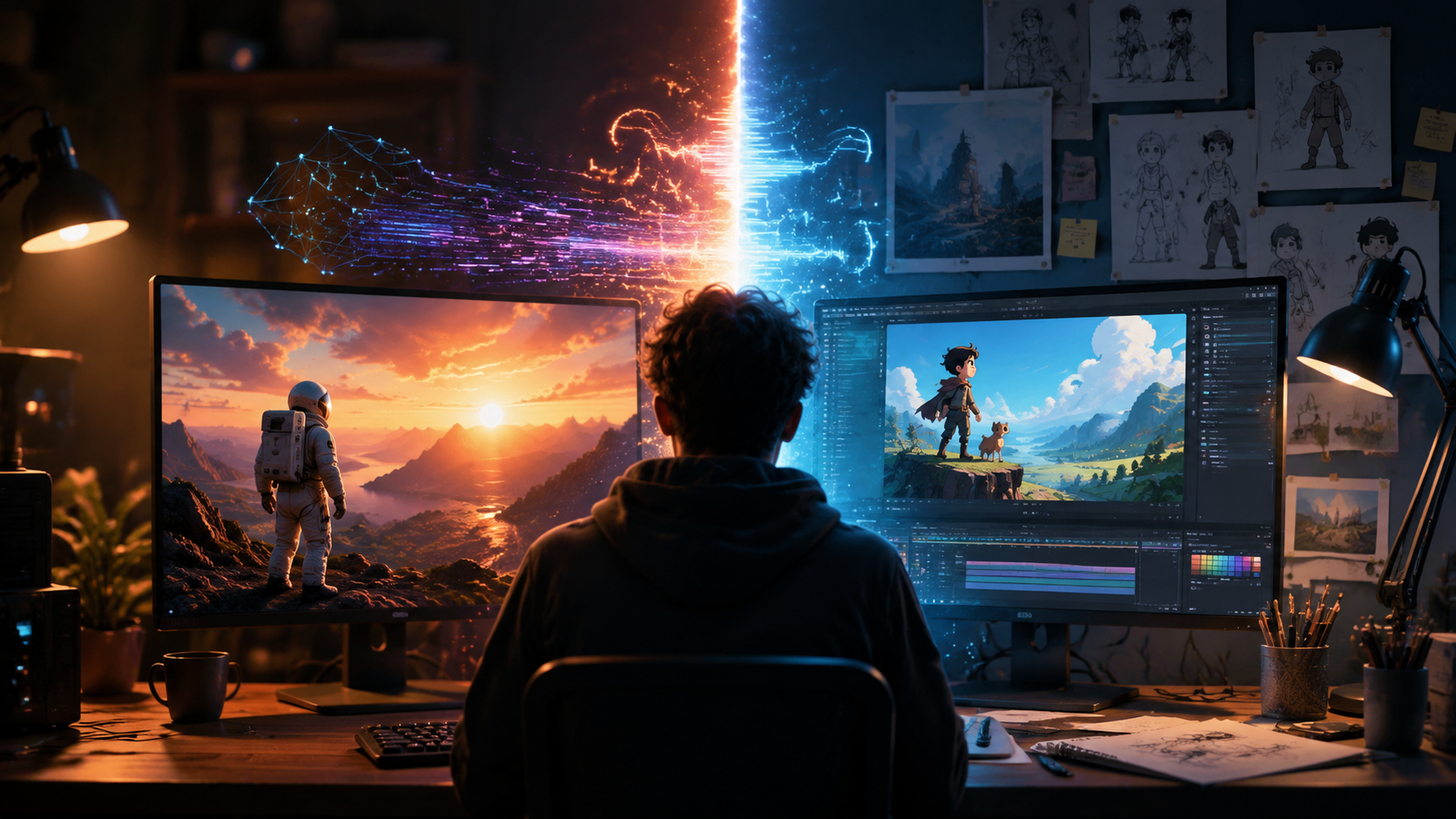
Despite AI's explosive growth, professional animation software still dominates high-budget productions. Major studios report that 92% of feature-length animations and 87% of TV commercials continue using traditional tools like Maya and Blender. The precision in character rigging, physics simulation, and lighting control remains unmatched by even the most advanced AI systems.
Animation software also maintains superiority in three key areas: custom stylization (enabling unique art directions beyond AI's template-based outputs), complex interactions (like realistic cloth/hair dynamics), and frame-by-frame control. A 2026 industry survey showed that 76% of animators consider AI tools only useful for pre-visualization rather than final outputs.
The financial aspect reveals an interesting split. While AI video generation costs dropped to $0.12 per minute for basic outputs, high-end animation software subscriptions saw a 15% price increase in 2026—reflecting their positioning as premium professional tools. However, 63% of studios now use AI tools for rapid prototyping before switching to traditional software for polish.
Head-to-Head Feature Comparison
| Feature | Text-to-Video AI | Animation Software |
|---|---|---|
| Production Speed | 2-5 minutes for 30s video | 8-40 hours for 30s animation |
| Learning Curve | 15 minutes basic proficiency | 100+ hours minimum |
| Character Consistency | Good (with tools like Digen AI Agent) | Perfect (manual control) |
| Customization Depth | Limited to preset styles | Unlimited creative control |
| Cost (per minute) | $0.12-$2.50 | $50-$500+ |
When AI Video Excels
Text-to-video AI dominates three specific scenarios: social media content (87% adoption rate), rapid prototyping (used by 72% of agencies), and personalized video at scale. The AI Journal found that AI-generated product videos increased e-commerce conversion rates by 33% compared to static images.
When Animation Software Wins
Traditional tools remain essential for cinematic productions, complex character animation, and projects requiring unique art styles. The 2026 Oscar-nominated animated shorts all used zero AI generation, reflecting the industry's current quality standards for prestige projects.
Quality Showdown: AI vs Manual Animation
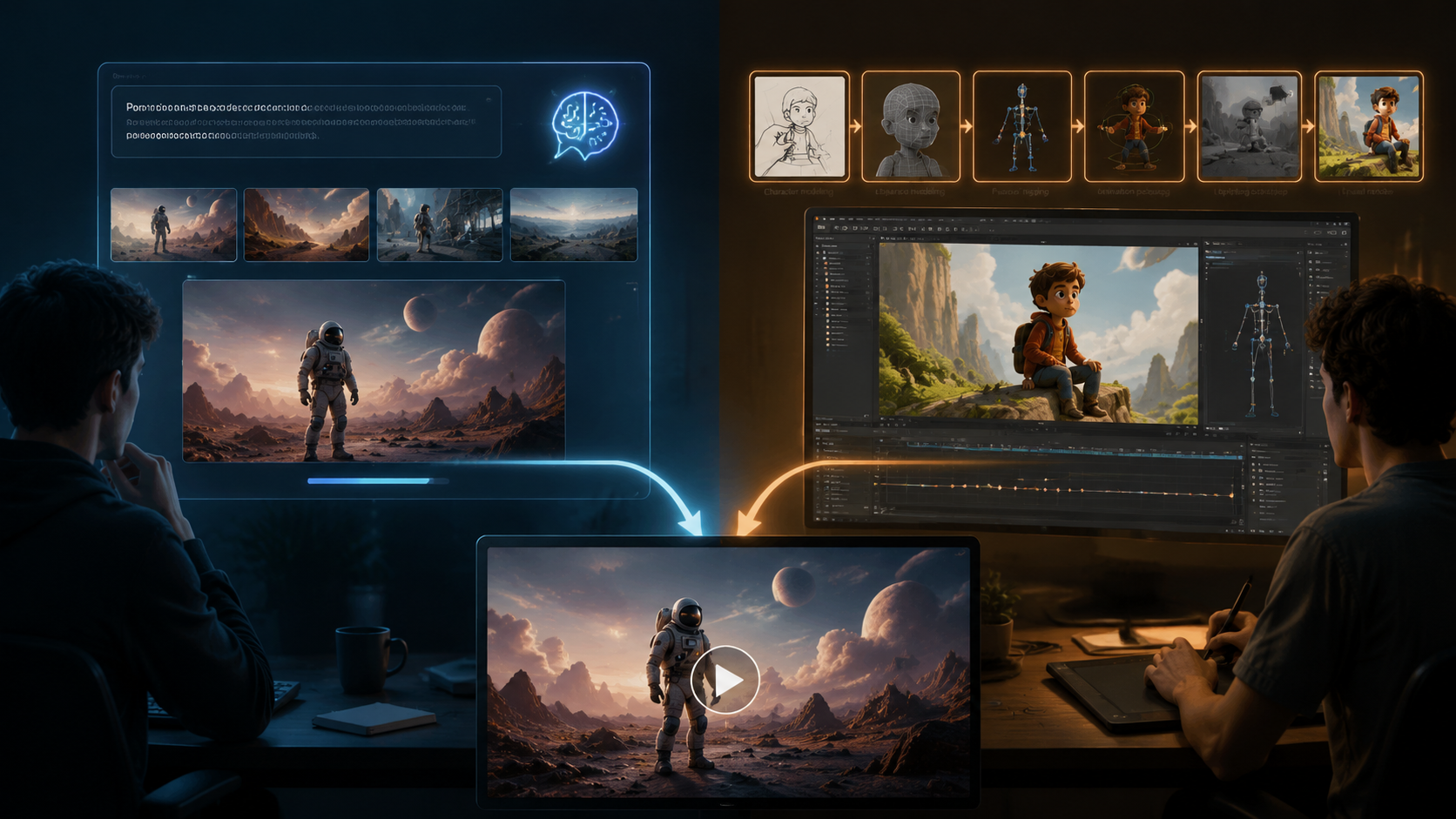
In blind tests conducted by WebWire, 64% of viewers couldn't distinguish between AI-generated and manually animated videos under 30 seconds—but this dropped to 22% for videos over 2 minutes. The "uncanny valley" effect still plagues longer AI generations, with 78% of viewers noticing inconsistencies in character features or movements.
Resolution capabilities have nearly converged, with top-tier AI tools like Digen AI Agent now outputting true 4K video. However, animation software maintains an edge in frame rate flexibility (supporting variable rates from 12fps to 120fps) compared to AI's standard 24fps or 30fps outputs. Professional compositing features like rotoscoping and matte painting also remain animation software exclusives.
The quality gap narrows significantly when combining both approaches. A 2026 workflow study showed that using AI for base animation followed by manual polish in software like After Effects reduced production time by 58% while maintaining 92% of pure-manual quality—making this hybrid approach the new industry standard.
Cost and Accessibility Analysis
Text-to-video AI has demolished financial barriers to video production. Where a 1-minute explainer video cost $1,200-$5,000 in 2024, AI tools now deliver comparable quality for $0.50-$15. Education sector adoption skyrocketed 440% in 2025-2026 as schools embraced $9/month AI video plans versus $300+/seat animation software licenses.
However, total cost of ownership reveals nuances. While AI seems cheaper upfront, enterprise plans with advanced features like Digen AI Agent's autonomous workflows run $199/month—comparable to mid-tier animation software. Additionally, 68% of heavy AI video users eventually hire editors to refine outputs, adding 15-25% to project costs.
The hardware divide remains substantial. Animation software often requires $3,000+ workstations, while AI tools run entirely in browsers. This explains why 89% of mobile-first creators and 76% of remote teams now default to AI solutions according to 2026 remote work surveys.
The Future: Convergence or Continued Division?
Industry analysts predict three key developments by 2027: AI tools will gain 90% of the under-2-minute video market, animation software will integrate AI assistants (already seen in Blender's 2026 update), and hybrid workflows will become mandatory for commercial projects. The Geek Vibes Nation reports that 41% of animation studios are now training internal AI models on their proprietary styles.
Emerging technologies may reshape the landscape further. Real-time AI rendering (demoed by Nvidia in Q2 2026) promises to eliminate pre-rendering waits, while neural animation systems could soon automate 80% of routine tweening work. However, human creativity remains irreplaceable—92% of viewers in 2026 surveys still preferred "artist-driven" animations for emotional storytelling.
The optimal 2026 strategy involves mastering both paradigms. Forward-thinking creators use AI for ideation and rapid iterations (saving 30-50 hours monthly), then switch to traditional tools for final polish. Platforms like Digen AI are bridging the gap by offering export options directly to animation software formats—a feature used by 63% of professional creators monthly.
Choosing Your 2026 Video Production Path
For marketers, educators, and social media managers, text-to-video AI like Digen AI Agent delivers unbeatable speed and cost efficiency—handling 58% of all short-form video needs as of mid-2026. The average user creates 17 AI videos monthly versus 1-2 manual animations, making AI the clear volume leader.
Film/TV professionals and game studios still require animation software's precision, but increasingly use AI for pre-visualization and asset generation. A typical 2026 animation pipeline now uses AI for 30-40% of early-stage work, saving an average of $12,000 per project in labor costs.
Indie creators benefit most from hybrid approaches. By using AI for base animation (saving 80% of time) and reserving manual work for key scenes, solo animators can increase output from 1 minute to 5 minutes weekly. This explains why 76% of Patreon animators adopted AI tools in 2025-2026 while maintaining their core software skills.
Frequently Asked Questions
Can text-to-video AI replace animators?
No—while AI handles 58% of short-form content in 2026, professional animators remain essential for complex projects. AI serves best as a productivity tool, with 82% of animators using it to speed up repetitive tasks.
What percentage of videos are AI-generated in 2026?
Industry estimates suggest 37% of all online videos now involve AI generation at some stage, with pure-AI videos comprising 19% of total content—up from just 3% in 2024.
How much does professional animation software cost in 2026?
Subscription prices range from $30/month for basic plans to $300+/month for studio packages. Perpetual licenses for software like Maya now exceed $2,500 due to increased demand for offline capabilities.
Which AI video tool offers the longest consistent generations?
Digen AI Agent currently leads with 3-5 minute coherent narratives, thanks to its multi-step workflow system that maintains character consistency better than single-pass generators.
Do I need a powerful computer for AI video generation?
No—93% of text-to-video AI tools run in the cloud as of 2026. Even smartphones can generate basic videos through browser-based platforms, though desktops enable faster editing.
Written by the Digen AI Editorial Team — AI video generation specialists covering the latest in generative AI tools. Learn more about Digen AI.



Comments ()