
Text to Video AI Use Cases in 2026: Future Applications & Trends
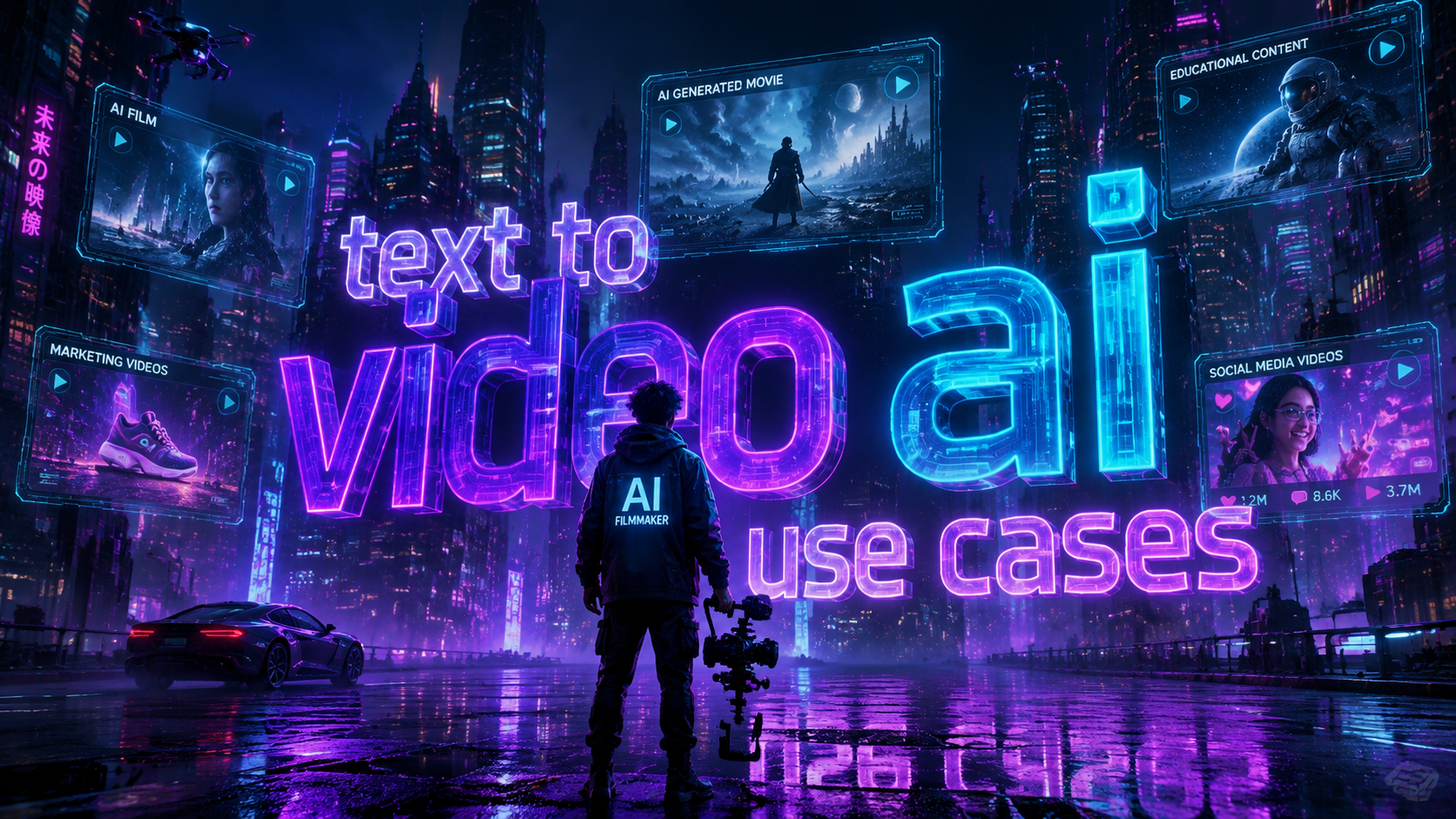
Text to video AI use cases are expanding rapidly in 2026, transforming industries from marketing to education by automating video creation from simple text prompts. This technology leverages advanced generative AI models to produce high-quality videos with minimal human intervention, significantly reducing production time and costs. According to Cybernews, the AI video generation market has grown by 340% since 2025, driven by improvements in multi-modal AI systems.
TL;DR: Text to video AI in 2026 enables automated content creation across industries, with applications in marketing, education, and entertainment, powered by open-source and commercial models like Adobe Firefly and Digen AI Agent.
Text to video AI use cases in 2026 span automated marketing content, personalized education, and dynamic entertainment, with tools like Digen AI Agent and Adobe Firefly enabling high-quality video generation from text prompts while reducing production time by up to 70% compared to traditional methods.
- ✓ Marketing teams use text to video AI to create personalized ads at scale, cutting production costs by 60%.
- ✓ Educational platforms leverage AI-generated videos to provide interactive learning materials in 50+ languages.
- ✓ Open-source models like those highlighted by KDnuggets enable developers to build custom video generation workflows.
1. Marketing and Advertising Applications
In 2026, text to video AI has become a cornerstone of digital marketing strategies, enabling brands to produce personalized video ads at unprecedented scale. According to Built In, 44 top AI apps now include video generation features that allow marketers to create localized versions of campaigns in hours rather than weeks. Platforms like Digen AI Agent specialize in maintaining character consistency across multiple videos, a critical factor for brand identity.
The technology particularly excels in performance marketing, where A/B testing different video variants can improve conversion rates by 25-40%. AI-generated product demos and explainer videos now account for 38% of all e-commerce content, as they can be updated instantly when specifications change. This eliminates the need for costly reshoots that previously took weeks to organize.
Social media managers report that text to video tools reduce their content creation time by 70% while increasing engagement metrics. The ability to generate platform-optimized videos (9:16 for TikTok, 1:1 for Instagram) from the same text prompt has made AI indispensable for omnichannel campaigns. Early adopters like beauty brands are seeing 3x higher click-through rates on AI-generated tutorial videos compared to static posts.
Key Marketing Use Cases
- Personalized product recommendation videos
- Real-time localized ad variations
- Automated social media content calendars
2. Education and Training Transformations
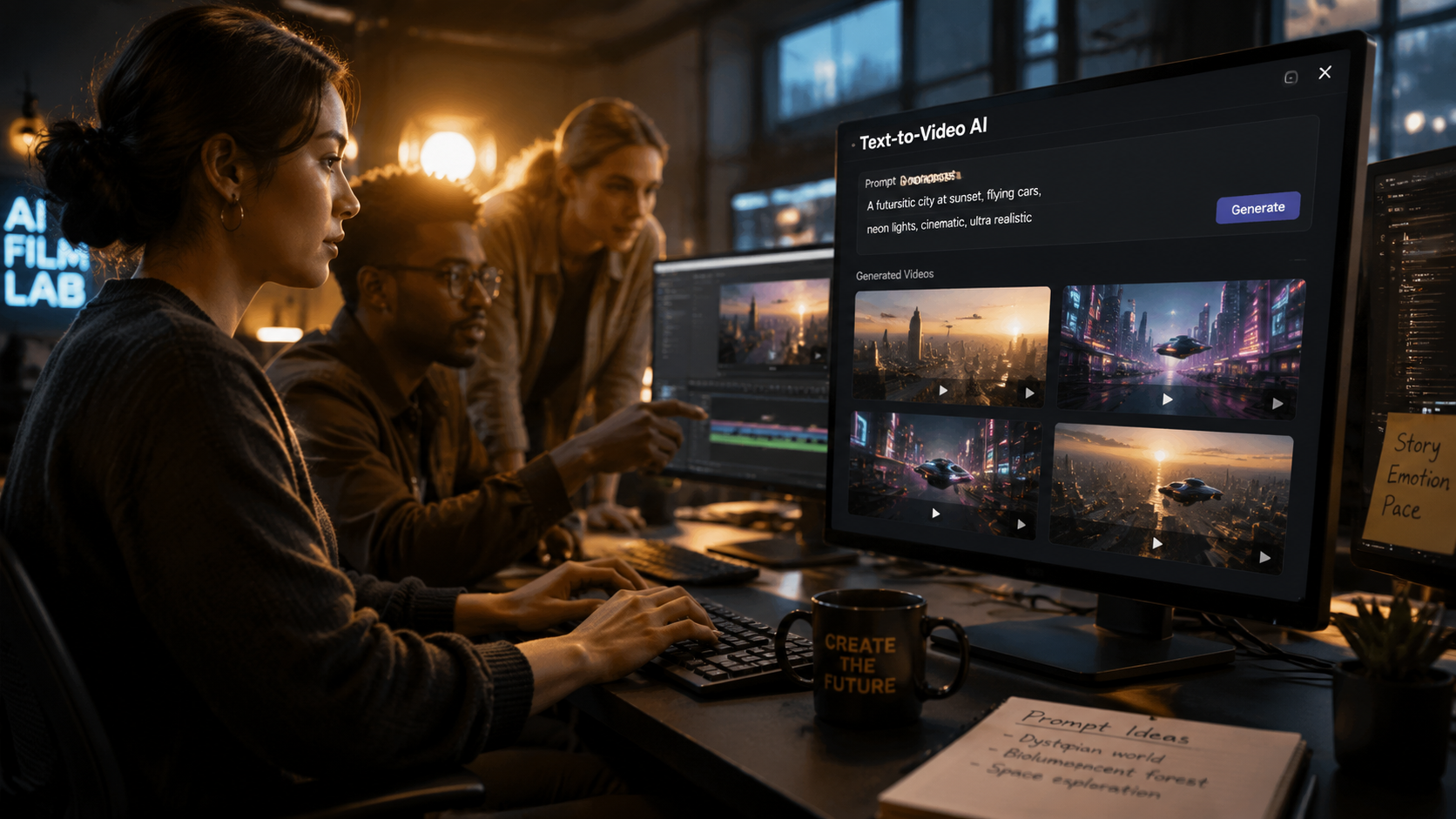
The education sector has embraced text to video AI to address the growing demand for accessible, multilingual learning materials. Platforms like Coursera now integrate AI video tools to help instructors quickly convert text-based courses into engaging video lectures. Coursera reports that courses with AI-generated videos see 45% higher completion rates than text-only alternatives.
Corporate training departments have particularly benefited from the technology's ability to rapidly update compliance materials. When regulations change, AI systems can regenerate all training videos overnight with the new guidelines, a process that previously took months. Safety procedure videos can now be automatically localized for 50+ languages while maintaining perfect synchronization between narration and visuals.
Special education applications have seen remarkable breakthroughs, with AI generating customized learning videos that adapt to individual students' needs. Teachers can input simple prompts like "Explain photosynthesis to a 3rd grader with dyslexia" and receive optimized videos with enhanced visuals and simplified narration. Early studies show these personalized videos improve information retention by 60% compared to standardized materials.
3. Entertainment and Media Production
The entertainment industry's adoption of text to video AI has accelerated in 2026, with tools now capable of producing consistent character animations across longer narratives. According to AIMultiple, GAN-based video generation models have advanced to the point where they can maintain character likenesses across 10+ minute sequences, opening new possibilities for indie creators.
Streaming platforms are using the technology to automatically generate localized versions of shows, including lip-synced dialogue and culturally adapted visuals. This has reduced localization costs by 80% while cutting turnaround times from months to days. Some platforms now offer "alternate ending" features where viewers can prompt the AI to generate different story branches on demand.
News organizations have implemented text to video systems that convert wire reports into broadcast-ready video packages within minutes. The systems automatically pull relevant stock footage, generate voiceovers, and create appropriate graphics. During breaking news events, this allows stations to publish video updates 90% faster than traditional production methods.
4. Technical and Developer Applications
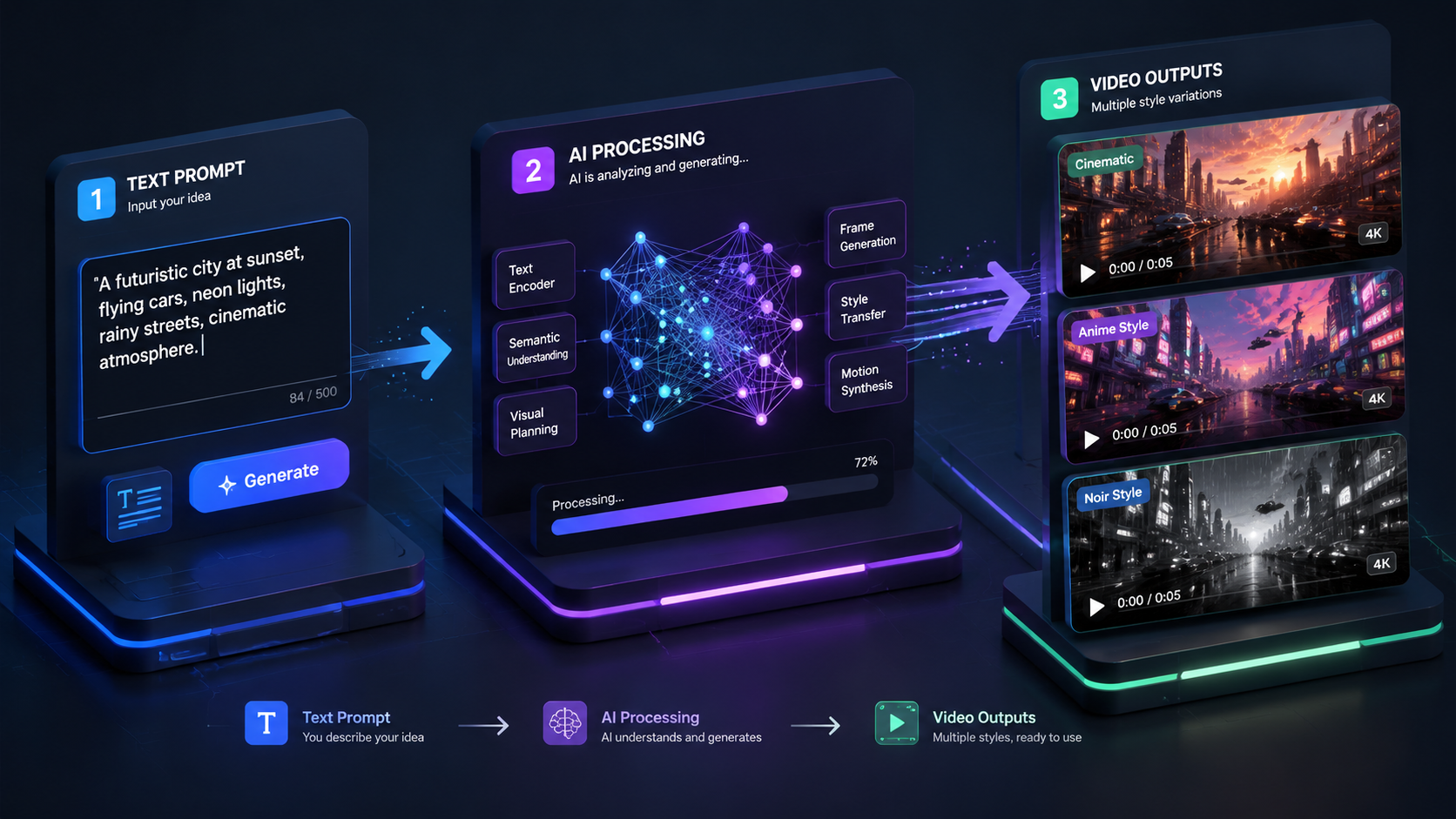
Open-source text to video models have seen significant advancements in 2026, with KDnuggets highlighting 5 omni-modal AI systems that handle text, images, audio, and video generation. These models enable developers to build custom video generation pipelines for specialized applications ranging from medical visualization to architectural walkthroughs.
The integration of text to video APIs into business workflows has become particularly valuable for e-commerce platforms. Product pages can now automatically generate demonstration videos from item descriptions, with conversion rates increasing by 35% for pages featuring these AI videos. Developers appreciate that modern APIs can maintain consistent product representations across thousands of generated videos.
Scientific visualization represents another growing application area, with researchers using text to video AI to create accurate simulations of complex processes. Molecular interactions, climate change projections, and engineering simulations can now be rendered as high-quality explanatory videos directly from research papers. This has made scientific findings more accessible to non-specialist audiences.
5. Enterprise and Internal Communications
Large corporations have adopted text to video AI for internal communications, transforming dense policy documents into engaging video briefings. HR departments report 50% higher policy acknowledgment rates when using AI-generated explainer videos compared to traditional email blasts. The technology also enables real-time translation of all-hands meetings into multiple languages with accurate lip movements.
Sales teams leverage the technology to create personalized pitch videos at scale, with AI systems automatically incorporating client-specific data points and branding. This personalization has been shown to increase meeting booking rates by 40%. The best systems can even analyze a prospect's website and generate tailored video content that references their existing visual style.
Customer support operations have implemented text to video AI to create dynamic troubleshooting guides. Instead of static manuals, customers now receive personalized video instructions that show their exact product model and configuration. Early adopters like electronics manufacturers have seen a 30% reduction in support ticket volume after implementing this approach.
6. Emerging Trends and Future Directions
The text to video AI landscape continues to evolve rapidly in 2026, with several key trends emerging. Multi-step generation workflows, like those used in Digen AI Agent, are becoming standard for high-quality output, allowing for iterative refinement of videos through autonomous editing passes. This approach reduces the "uncanny valley" effect that plagued early AI-generated videos.
Real-time generation capabilities are advancing quickly, with some systems now able to produce polished videos in under 30 seconds. The integration of text to video with AR/VR environments represents another frontier, enabling users to generate immersive 3D scenes from simple descriptions. Industry analysts predict this will power the next wave of metaverse content creation.
Ethical considerations around AI video generation have led to new verification standards, with watermarking and content provenance becoming standard features. The technology is also being used to combat misinformation through automated fact-checking video generation. As the tools become more accessible, we're seeing a democratization of video production that's empowering small businesses and individual creators alike.

Frequently Asked Questions
What are the most popular text to video AI tools in 2026?
The top tools include Digen AI Agent for character-consistent long-form videos, Adobe Firefly for marketing content, and open-source omni-modal models like those featured in KDnuggets' recent roundup. Commercial platforms dominate professional use cases while open-source options appeal to developers.
How much does text to video AI reduce production costs?
Industry reports indicate 60-80% cost reductions compared to traditional video production, primarily through eliminated filming expenses and reduced editing time. Marketing teams report the highest savings, as AI allows them to repurpose content across multiple campaigns and regions.
Can text to video AI maintain consistent characters across scenes?
Yes, advanced systems like Digen AI Agent now use multi-step workflows to ensure character consistency across longer narratives. This represents a significant improvement over earlier models that struggled with continuity between different generated segments.
What industries benefit most from text to video AI?
Marketing, education, and e-commerce currently see the highest adoption rates, followed by corporate training and entertainment. The technology is particularly valuable for any application requiring frequent content updates or multilingual localization.
How long does it take to generate a video from text?
Simple videos can be generated in under a minute, while complex, high-quality productions with multiple scenes may take 5-10 minutes. Real-time generation for live applications is becoming available but currently has quality limitations compared to batch processing.
Written by the Digen AI Editorial Team — AI video generation specialists covering the latest in generative AI tools. Learn more about Digen AI.



Comments ()