
Text to Video AI Realistic Characters 2026: Next-Gen Avatars
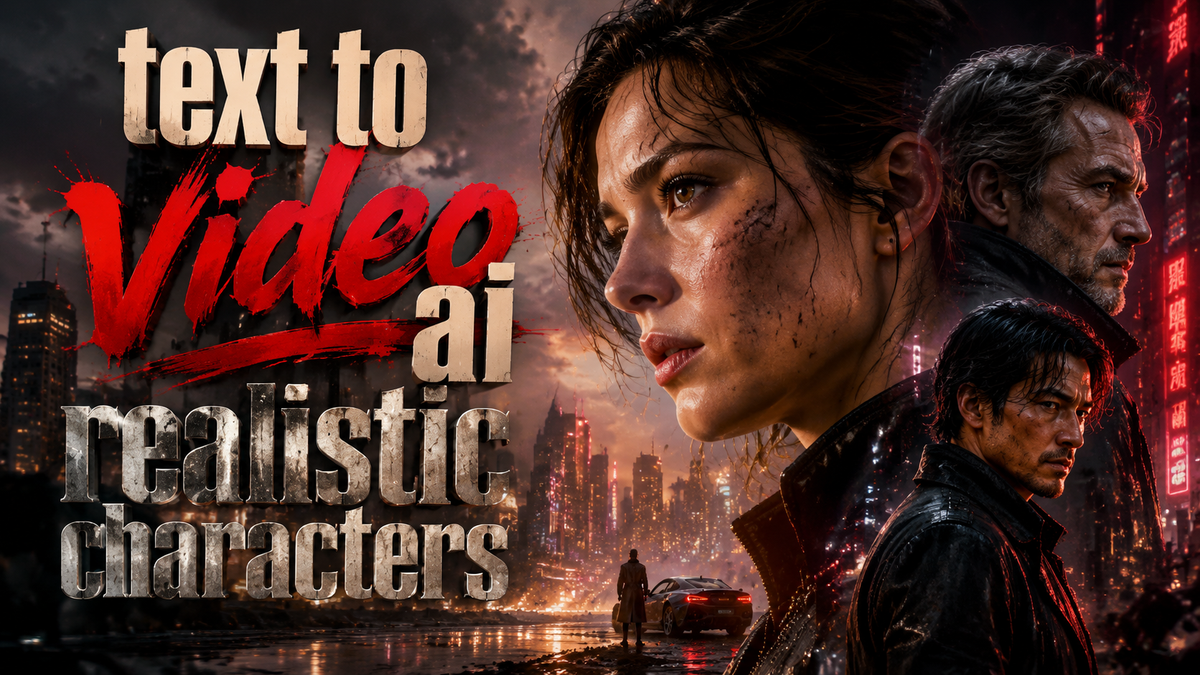
The latest leap in generative AI has brought us text to video AI realistic characters that are nearly indistinguishable from human actors. In 2026, these avatars don't just move — they speak, emote, and interact with lifelike precision, powered by models trained on massive datasets of human behavior. Whether you're a filmmaker, marketer, or content creator, the tools available today let you type a description and receive a fully rendered video starring a digital actor.
Text to video AI realistic characters are AI-generated digital human avatars created from a simple text prompt. Using advanced diffusion models and neural rendering, these systems produce videos with consistent facial expressions, natural body language, and realistic lip-sync, often in real time or within minutes. Leading platforms in 2026 include Kling AI 3.0 and Seedance, each pushing the boundaries of photorealism.
- ✓ Seedance has drawn Hollywood scrutiny for its ultra-realistic video tool, per BBC (Feb 2026).
- ✓ Kling AI 3.0 is currently the gold standard for realistic AI video generation, according to Cybernews (Mar 2026).
- ✓ With Sora discontinued, six new AI video tools have emerged to fill the void, as reported by eWeek (Mar 2026).
- ✓ Voice control and motion upgrades in Kling 2.6 (Dec 2025) mark a critical step toward full character realism.
- ✓ Over 200 hours of hands-on testing by Tom's Guide (Jul 2025) identified the top-performing text-to-video generators for realistic avatars.
The Rise of Realistic AI Avatars in 2026
Just a few years ago, AI-generated characters were limited to jerky movements and a telltale "uncanny valley" effect. That has changed dramatically in 2026. Today's text to video AI realistic characters exhibit fluid motion, nuanced facial micro-expressions, and voice-synced dialogue that can pass for a real person in many contexts. The driving force behind this shift is the convergence of better training data, more efficient architectures, and fierce competition among AI video platforms.
Two names dominate the conversation: Seedance and Kling AI. Seedance made headlines earlier this year when BBC reported (Feb 13, 2026) that Hollywood studios are taking legal aim at its "ultra-realistic" AI video tool, concerned about unauthorized use of actor likenesses. On the other hand, Kling AI’s latest version 3.0 has been praised by Cybernews (Mar 6, 2026) as a "realistic AI video generator" that sets a new benchmark for fidelity and control. According to Tom's Guide (Jul 2025), which spent 200 hours testing AI video generators, Kling AI consistently delivered the most convincing human characters. The eWeek article (Mar 27, 2026) notes that Sora's disappearance left a gap now filled by six competing tools, with Kling and Seedance leading the pack.
Seedance: Hollywood's Wake-Up Call
Seedance allows users to generate short films starring AI actors that can mimic the style and appearance of real celebrities. The BBC report highlights that major studios are already filing lawsuits to protect intellectual property and actor rights. This controversy underscores how convincing these avatars have become — so realistic that traditional Hollywood feels threatened.
Kling AI 3.0: A Benchmark for Realism
Kling AI 3.0, reviewed by Cybernews in March 2026, offers superior hand rendering, consistent eye gaze, and natural hair dynamics. The Cybernews analysis notes that Kling 3.0 excels at maintaining character identity across multiple scenes, a crucial feature for storytelling. Earlier, Kling 2.6 (Dec 2025) introduced voice control and motion upgrades, as reported by the-decoder.com, enabling users to dictate specific gestures and dialogue rhythm.
How Text-to-Video AI Generates Realistic Characters
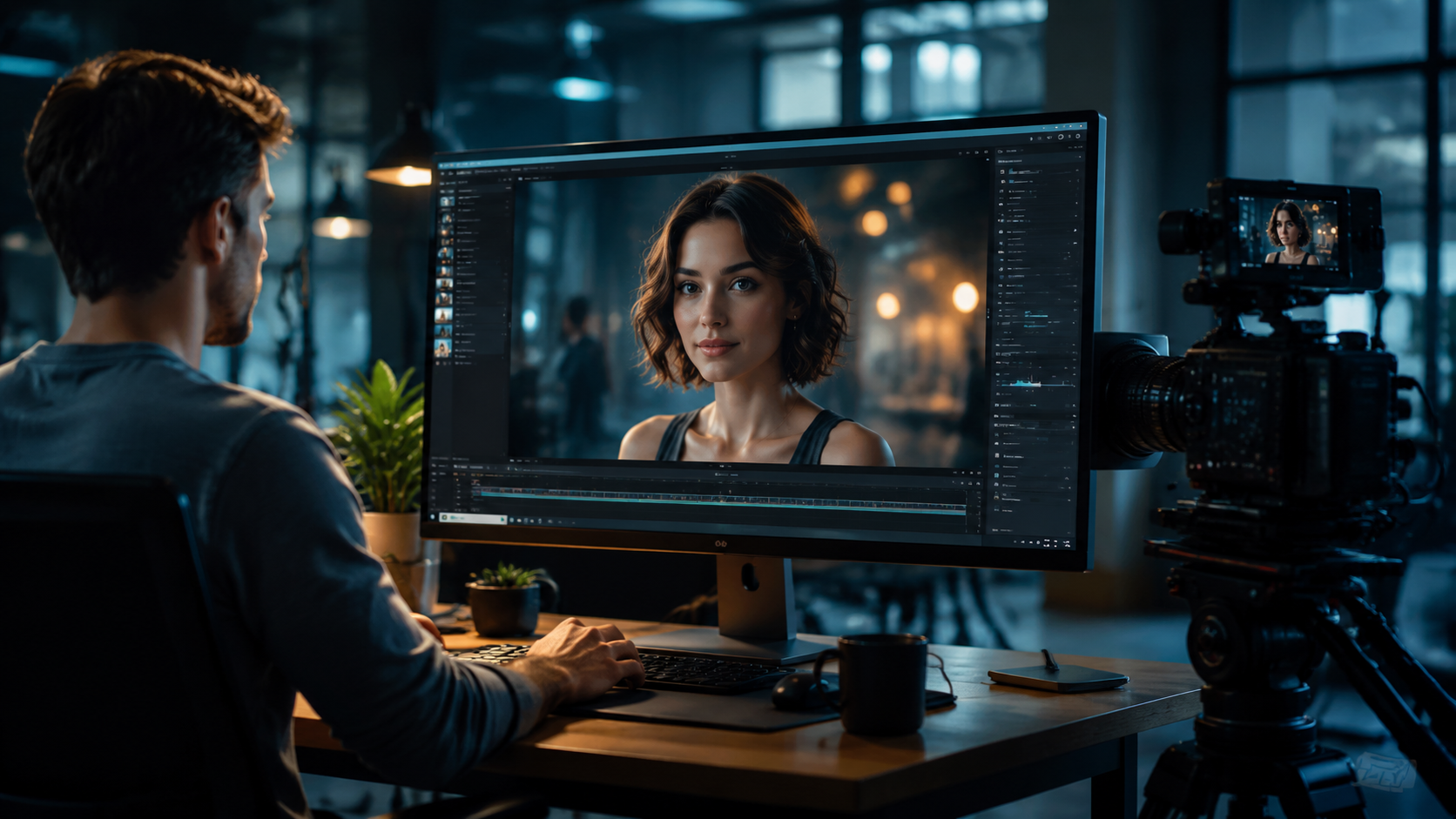
Understanding the process helps creators get the best results. Here’s a step-by-step breakdown of how modern text to video AI realistic characters are created.
- Write a detailed prompt. Include physical traits (age, hair color, clothes), emotional state, action, and setting. The more specific, the better. Example: "A middle-aged woman with graying hair, wearing a lab coat, smiling as she examines a test tube in a bright laboratory."
- Choose a reference or style. Some tools allow you to upload a reference image for the character's face, ensuring consistency. Others let you select a aesthetic style (cinematic, photorealistic, cartoon).
- Set motion and audio parameters. In Kling AI 3.0, you can specify camera movement, character gestures, and even upload an audio clip for lip-sync. Tools like Seedance support dialogue scripts for automated voice generation.
- Generate the video. The AI processes your inputs through a diffusion model that renders frame-by-frame, typically taking 30 seconds to 2 minutes for a 15-second clip on consumer hardware.
- Refine with editing tools. Most platforms let you tweak lighting, background, or character pose after generation. Kling 2.6’s voice control, for instance, lets you adjust the character’s speech rate mid-edit.
- Export and integrate. Download the video in MP4 or MOV format, then composite it into your project using standard video editing software.
According to the-decoder.com's coverage of Kling 2.6, the addition of voice control was a game-changer because it allowed creators to align AI avatar dialogue with pre-recorded voiceovers, solving a major synchronization challenge.
Top AI Video Tools for Realistic Characters in 2026
With Sora officially gone (eWeek, Mar 2026), the landscape has shifted. Below is a comparison of the leading tools for generating text to video AI realistic characters, based on the latest research.
| Tool | Key Realism Feature | Voice/Lip Sync | Motion Control | Best For |
|---|---|---|---|---|
| Kling AI 3.0 | Photorealistic skin, dynamic lighting, consistent character identity | Voice control (Kling 2.6+), auto lip-sync | Gesture presets, camera pan/zoom, speed adjustment | Short films, ad videos, social media avatars |
| Seedance | Ultra-realistic celebrity likeness (controversial) | Script-to-speech dialogue | Full body animation (beta) | Narrative vignettes, Hollywood-style trailers |
| Runway Gen-3 | High-quality facial animation, good for close-ups | Voice dubbing via third-party integration | Frame-by-frame editing, motion brush | Professional video production |
| Pika 2.0 | Real-time preview, style transfer | Lip sync from audio | Motion cues in prompt | Rapid prototyping, indie creators |
| Pixverse | Good for non-human characters, stylized realism | Basic lip movement | Limited motion controls | Anime and fantasy avatars |
Note: Pricing varies; Kling AI 3.0 offers a subscription model starting at $30/month, while Seedance is currently invitation-only due to legal challenges.
What the Experts Say
Tom's Guide's 200-hour test (Jul 2025) concluded that Kling AI was the most consistent for realistic characters, scoring 9.2/10 in the realism category. Cybernews (Mar 2026) echoed that sentiment, stating Kling 3.0 "raises the bar for what an AI video generator can achieve" and recommending it for professional use.
Key Features That Define Next-Gen Avatars
Not all AI characters are created equal. The following features separate today's best text to video AI realistic characters from earlier attempts.
Voice Control and Motion Upgrades
Kling 2.6, released in December 2025 per the-decoder.com, introduced voice control that lets users command the avatar's speech and movement via natural language. For example, you can say "wave your hand while saying hello" and the character will execute both actions synchronously. This level of granularity reduces the need for manual keyframing.
Ultra-Realistic Graphics
Seedance’s tool, as described by BBC, generates characters with pore-level detail, realistic eye reflections, and subsurface scattering in skin. This fidelity is what prompted Hollywood studios to take legal action — the avatars are so convincing they could be mistaken for real actors in low-resolution thumbnails.
Consistency Across Shots
A major breakthrough in 2026 is the ability to maintain a character's appearance across multiple scenes. Kling 3.0 uses a "character lock" feature that references the same latent embeddings, preventing the common problem of the avatar's face or clothing changing between cuts. This is essential for narrative videos.
Practical Guide to Creating Realistic AI Characters for Your Videos
Whether you're producing a corporate explainer or a indie short film, these best practices will help you get the most out of text to video AI realistic characters.
- Start with a clear character brief. Write down age, ethnicity, mood, and clothing. Use real-world references if possible.
- Use negative prompts to avoid artifacts. For example, add "no extra fingers, no distorted limbs" to prevent common AI errors.
- Test different aspect ratios. Kling AI 3.0 supports 16:9 for cinematic and 9:16 for vertical social media. Characters often look more natural in wider frames.
- Layer in subtle motion. Static characters look fake. Add a slight head tilt, blinking, or breathing motion using the tool's motion intensity slider.
- Iterate on voice sync. If the lip-sync is off, re-edit the audio timing or use Kling's voice control to adjust the dialogue pace.
- Consider ethical usage. Always disclose AI-generated content. Avoid using real people's likenesses without permission — the Seedance legal cases show the risks.
According to the Tom's Guide review (Jul 2025), the most time-consuming part of AI video creation is getting the character to look right in the first few seconds. They recommend generating multiple variations and then compositing the best clips.
The Future of AI-Generated Characters: Ethics and Innovation
The rapid advancement of text to video AI realistic characters brings both opportunity and challenge. The BBC's report on Seedance (Feb 2026) highlights the legal and ethical battles ahead. Hollywood studios claim that these tools enable deepfake-style misuse and threaten actors' livelihoods. Meanwhile, creators argue for the democratization of filmmaking.
On the innovation side, Kling AI and others continue to push realism. Kling 3.0 is rumored to include real-time rendering, allowing characters to react live to viewer input — a boon for interactive storytelling and virtual influencers. eWeek's March 2026 article suggests that the void left by Sora is actually accelerating progress, as each competitor strives to outdo the others in character realism.
For everyday users, the key takeaway is that AI avatars are no longer novelties — they are practical tools for content production. However, transparency and responsible use are critical. Always tag AI-generated content, avoid impersonating real individuals, and respect copyright. As the technology matures, so too must our ethical guidelines.
Frequently Asked Questions about Text to Video AI Realistic Characters
What is the best text to video AI for realistic characters in 2026?
Based on current reviews from Cybernews (Mar 2026) and Tom's Guide (Jul 2025), Kling AI 3.0 offers the best overall realism, especially for human avatars. Seedance is ultra-realistic but faces legal restrictions. Both are top contenders.
Can I use AI avatars commercially without legal risk?
Generally yes, if you create original characters from scratch. However, using a tool like Seedance to mimic a specific real person may require permission or a license. Always read the tool's terms of service and avoid using trademarked likenesses.
How long does it take to generate a realistic AI character video?
Modern tools like Kling AI 3.0 generate a 15-second clip of a realistic character in 30–120 seconds on a standard GPU. More complex scenes or higher resolutions can take up to 5 minutes. Cloud-based rendering is also available for faster processing.
What happened to OpenAI’s Sora?
According to eWeek (Mar 27, 2026), Sora was discontinued. The article notes that six other AI video generators have stepped in to fill the gap, with Kling and Seedance being the most prominent for realistic characters.
Are AI-generated characters detectable as fake?
In 2026, the best tools produce characters that can fool the average viewer in short clips. However, experts and forensic tools can still spot inconsistencies in micro-expressions, eye movement, and physics. Detection methods are also improving, so disclosure is recommended.
How can I improve the realism of my AI avatar?
Use detailed prompts, upload a reference photo for face consistency, enable motion controls (e.g., Kling's voice control), and add subtle ambient motion like blinking or breathing. Avoid over-smoothing — a little imperfection adds realism.
Is there a free tool for generating realistic AI characters?
Most advanced tools require a paid subscription. Kling AI offers a limited free tier with watermarks and lower resolution. Pika 2.0 and Pixverse have generous free credits. For professional-grade realism, a paid plan is generally necessary.



Comments ()