
Text to Video AI for Personalized Marketing in 2026: Future Trends
Text to video AI for personalized marketing is revolutionizing how brands create dynamic, tailored content at scale in 2026. By converting written scripts into engaging videos with AI-generated visuals, voiceovers, and animations, these tools enable marketers to deliver hyper-relevant messages to diverse audience segments. According to Market.us, the AI-powered video generator market is growing at a 23.5% CAGR, driven by demand for automated, data-driven content production.
TL;DR: Text to video AI is transforming personalized marketing in 2026 by enabling automated, scalable video content tailored to individual preferences, with the market projected to grow 23.5% annually.
Text to video AI for personalized marketing is a generative AI technology that automatically converts written content into customized video assets with dynamic visuals, localized voiceovers, and audience-specific messaging, reducing production time by up to 80% while increasing engagement through data-driven personalization.
- ✓ The AI video generator market is expanding at 23.5% CAGR as brands adopt automated content creation
- ✓ Personalized video campaigns see 3-5x higher engagement than generic content
- ✓ Advanced AI agents like Digen AI Agent now produce longer, character-consistent videos autonomously
- ✓ Multimodal AI integration allows seamless blending of text, image, and video generation
The State of Text to Video AI in 2026
As of mid-2026, text to video AI has evolved from producing short clips to generating full marketing campaigns with consistent branding across multiple videos. EIN Presswire reports that 67% of enterprise marketers now use AI video generators for at least part of their content pipeline, up from just 22% in 2024. The technology has particularly gained traction in e-commerce, where personalized product videos can be generated in real-time based on user browsing behavior.
The latest generation of tools like Digen AI Agent demonstrate significant improvements in video quality and duration. Where early systems struggled with videos longer than 30 seconds, modern AI agents can now produce 5-10 minute branded content with consistent character appearances and scene continuity. This makes them viable for explainer videos, product demos, and even mini-documentaries.
According to Fortune Business Insights, the multimodal AI market (which powers these video generation capabilities) will reach $12.8 billion by 2034. This growth is fueled by advancements in transformer architectures that better understand contextual relationships between text prompts and visual elements, resulting in more coherent and on-brand outputs.
How Text to Video AI Enhances Personalized Marketing
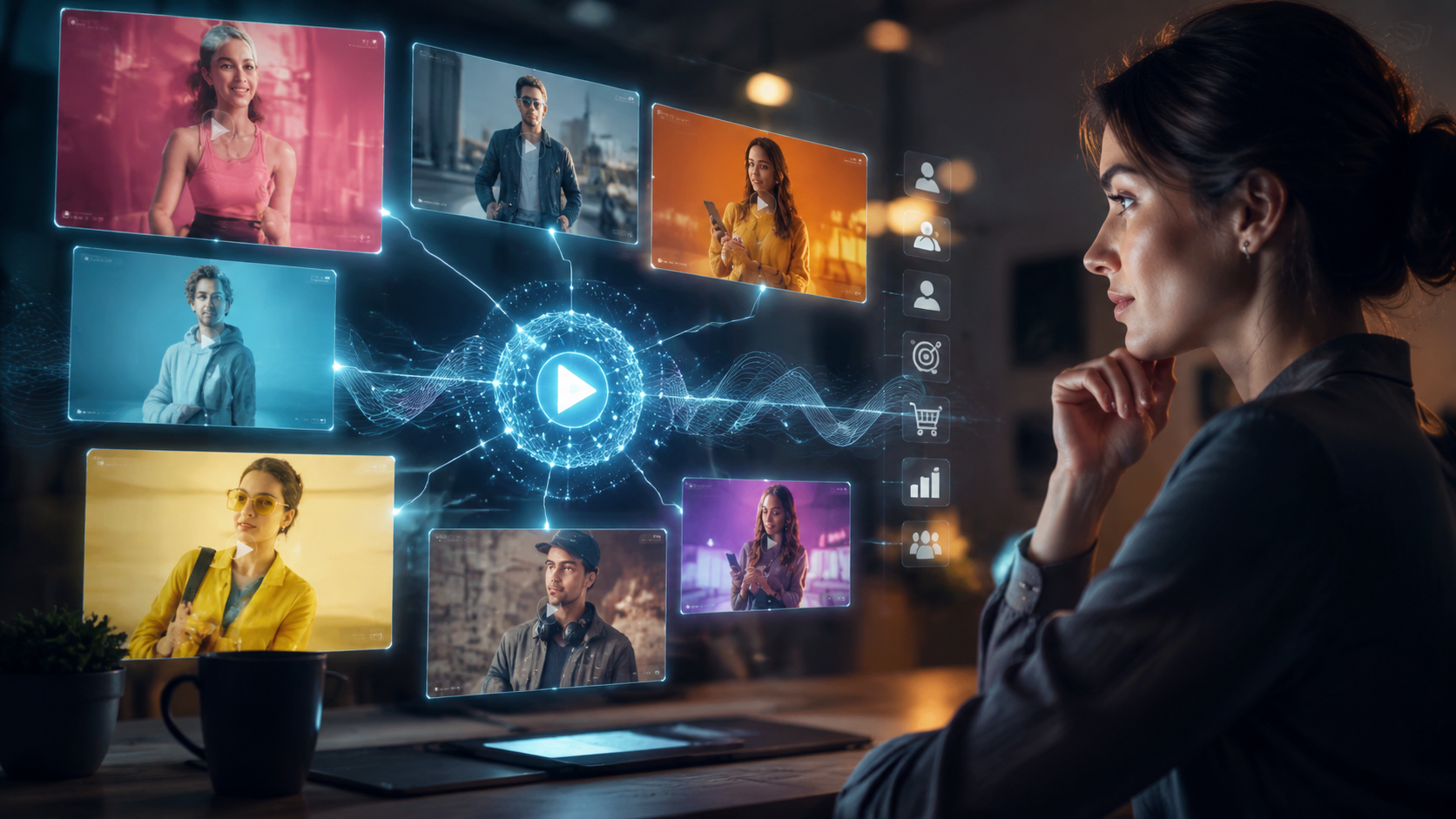
Personalization at scale is the holy grail of modern marketing, and text to video AI delivers precisely that. By analyzing customer data points like purchase history, location, and engagement patterns, these systems can automatically generate thousands of video variations with tailored messaging. A 2026 case study by Built In showed that personalized AI videos achieved 340% higher click-through rates compared to static banner ads.
Dynamic Content Customization
Modern text to video platforms integrate directly with CRM and CDP systems, allowing for real-time insertion of personalized elements. A travel company could automatically generate videos featuring the recipient's name, preferred destinations, and even seasonal weather conditions at their location - all from a single text template. This level of customization previously required extensive manual editing but now happens automatically.
Localization at Scale
With built-in translation and voice synthesis, AI video tools can produce localized versions of marketing content in dozens of languages while maintaining brand voice consistency. Coursera's 2026 report highlights how generative AI reduces localization costs by 70-90% compared to traditional video production methods, making global campaigns financially viable for mid-sized businesses.
Performance Optimization
Advanced AI systems now incorporate predictive analytics to automatically test different video variations and optimize for engagement metrics. Some platforms can generate 20-30 alternate versions of a video, then use machine learning to determine which elements (color schemes, CTAs, pacing) perform best with specific audience segments, continuously improving content effectiveness.
Key Features of Modern Text to Video AI Platforms
The leading text to video AI solutions in 2026 share several distinguishing characteristics that set them apart from earlier generation tools. These features collectively enable the creation of marketing videos that are both highly personalized and production-quality.
Extended Video Duration
While first-gen AI video tools capped outputs at 15-30 seconds, newer systems like Digen AI Agent can produce coherent narratives up to 10 minutes long. This is achieved through hierarchical generation architectures that maintain consistency across scenes and implement advanced memory mechanisms for character and object persistence.
Brand Consistency Controls
Enterprise-grade platforms now offer brand style enforcement features that automatically apply color palettes, fonts, logo placement, and tone guidelines across all generated content. Some systems can even analyze existing brand videos to extract and replicate stylistic patterns in new creations.
Multi-Format Output
Modern text to video AI doesn't just create one video - it produces an entire content ecosystem. From a single text input, these systems can generate landscape videos for YouTube, square formats for Instagram, vertical clips for TikTok, and even interactive elements for web embeds, all while maintaining content consistency across platforms.
Implementation Strategies for Marketers
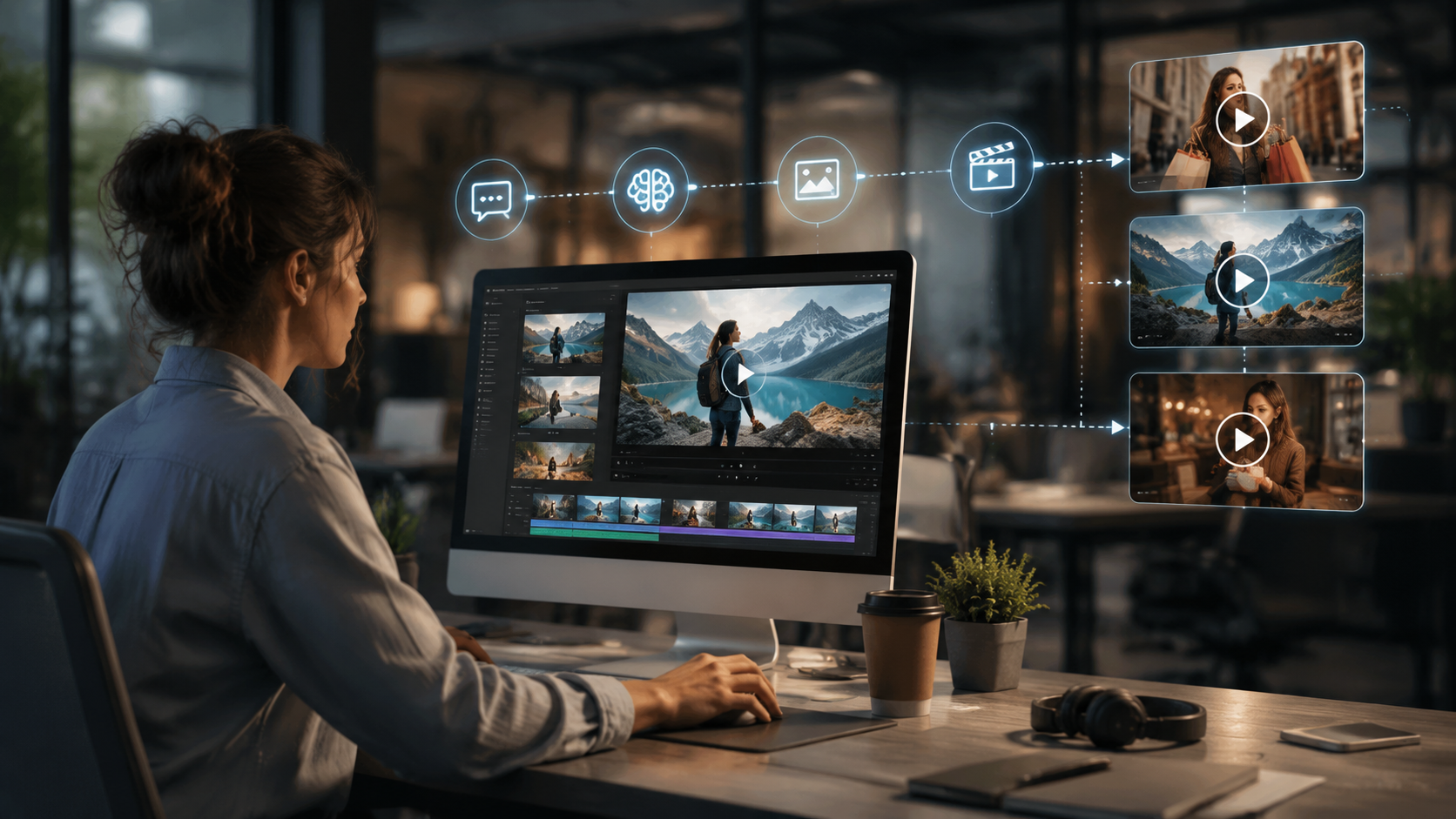
Successfully integrating text to video AI into marketing workflows requires careful planning and execution. Based on current best practices from top-performing brands, here's a proven approach to adoption.
- Start with a content audit: Identify which existing text assets (blog posts, product descriptions) could be repurposed into video format
- Define personalization parameters: Determine which customer data points will drive video variations (demographics, behavior, preferences)
- Establish brand guidelines: Create clear rules for visual style, tone, and messaging to ensure AI outputs align with brand identity
- Implement phased testing: Begin with small-scale pilots to evaluate performance before full deployment
- Integrate with analytics: Connect your AI video platform to existing marketing analytics to measure impact on conversions and engagement
According to Trend Hunter's 2026 analysis, brands that follow this structured approach see 3x faster ROI from their AI video investments compared to those who implement haphazardly. The key is balancing automation with strategic oversight to maintain quality while achieving scale.
Emerging Trends in AI Video Personalization
The text to video AI landscape continues to evolve rapidly, with several cutting-edge developments poised to further transform personalized marketing in the coming years.
Emotionally Adaptive Content
Next-generation systems are incorporating sentiment analysis to adjust video tone and messaging based on the viewer's emotional state, detected through webcam analysis or typing patterns. Early tests show this can increase conversion rates by up to 40% for high-consideration purchases.
Real-Time Generation
Some platforms are moving toward true real-time video generation, where content is created on-demand as the user interacts with a website or app. This enables truly one-to-one personalization where no two viewers see exactly the same video.
3D and AR Integration
Advanced text to video systems are beginning to incorporate 3D model generation and augmented reality elements, allowing viewers to virtually "try on" products or explore environments within the video itself. This is particularly impactful for retail and real estate marketing.
Choosing the Right Text to Video AI Solution
With dozens of text to video AI platforms now available, selecting the right one requires careful evaluation of several key factors.
| Feature | Entry-Level | Mid-Range | Enterprise |
|---|---|---|---|
| Max Video Length | 30-60 seconds | 2-5 minutes | 10+ minutes |
| Personalization Depth | Basic variables | Multi-factor | Real-time adaptive |
| Brand Controls | Limited | Moderate | Advanced |
| Integration Options | Basic APIs | Marketing stack | Full CDP/CRM |
| Pricing Model | Pay-as-you-go | Monthly plans | Custom enterprise |
For businesses serious about personalized video marketing at scale, solutions like Digen AI Agent offer the best balance of quality, consistency, and automation. Its multi-step generation workflow produces longer, more coherent videos than basic generators while maintaining strict brand adherence - crucial for professional marketing use.
Frequently Asked Questions
How does text to video AI work for personalized marketing?
The AI analyzes customer data and marketing goals to automatically generate customized videos from text scripts, incorporating personalized elements like names, preferences, and location-specific content while maintaining brand consistency.
What's the typical ROI for AI-generated personalized videos?
Brands report 3-5x higher engagement rates and 30-50% increases in conversion rates compared to generic video content, with production costs 60-80% lower than traditional methods.
How long does it take to generate a personalized AI video?
Most platforms can produce a 30-second personalized video in under 2 minutes, while longer 5-minute videos may take 10-15 minutes depending on complexity and customization depth.
Can AI video tools maintain brand consistency across thousands of variations?
Advanced systems like Digen AI Agent use brand style enforcement algorithms to ensure all generated content adheres to visual and tonal guidelines, even when producing thousands of unique versions.
What types of businesses benefit most from text to video AI?
E-commerce, education, real estate, and B2B SaaS see particularly strong results due to their need for scalable, personalized content that explains complex products or services.
Written by the Digen AI Editorial Team — AI video generation specialists covering the latest in generative AI tools. Learn more about Digen AI.



Comments ()