
Text to Video AI with Music Integration: 2026's Creative Revolution
Text to video AI with music integration represents the cutting edge of creative technology in 2026, enabling users to transform written prompts into fully produced videos complete with synchronized soundtracks. Platforms like Google Gemini and DeeVid AI now leverage advanced models such as Lyria 3 Pro to automate video and music generation, reducing production time while maintaining high-quality output. This revolution is reshaping industries from marketing to entertainment, making professional-grade content accessible to everyone.
TL;DR: Text to video AI with music integration in 2026 combines generative video and AI music models like Lyria 3 Pro to create synchronized multimedia content from simple prompts, revolutionizing content creation for professionals and amateurs alike.
Text to video AI with music integration is a 2026 technology that automatically generates video content with matching soundtracks from text inputs, using advanced AI models like Google's Lyria 3 and autonomous video agents such as Digen AI Agent to produce professional-quality multimedia in minutes.
- ✓ AI music video generation eliminates manual editing, with tools like Sonilo creating soundtracks directly from video content
- ✓ Google's Lyria 3 Pro model powers new music generation features in Gemini and Artlist, producing 3-minute AI tracks
- ✓ Autonomous AI video agents like Digen Agent improve consistency and quality through multi-step workflows
- ✓ The AI video market grew 340% since 2025 as text-to-video tools reduce production time by 70% on average
The State of Text to Video AI with Music Integration in 2026
2026 has seen unprecedented advancements in AI-powered video creation, particularly in the integration of automatically generated music. According to GlobeNewswire, platforms like DeeVid AI now combine leading video generation models with intelligent soundtrack matching, reducing production timelines from days to hours. The technology has become sophisticated enough that 78% of marketers now use AI video tools for at least part of their content creation workflow.
Google's February 2026 update to Gemini, as reported by The News International, introduced Lyria 3 music generation capabilities that respond to text, photo, and video prompts. This integration allows creators to develop cohesive audiovisual content without switching between multiple applications. The update marked a 40% increase in user engagement for the Gemini platform within two months of release.
The competitive landscape has intensified, with Artlist implementing Google's Lyria 3 Pro model to generate 3-minute AI tracks, as noted by Music Business Worldwide. Meanwhile, Sonilo's May 2026 breakthrough eliminates text prompts entirely, analyzing video content directly to produce matching soundtracks. These developments demonstrate how text to video AI with music integration has evolved from separate tools to unified creative systems.
How Text to Video AI with Music Integration Works
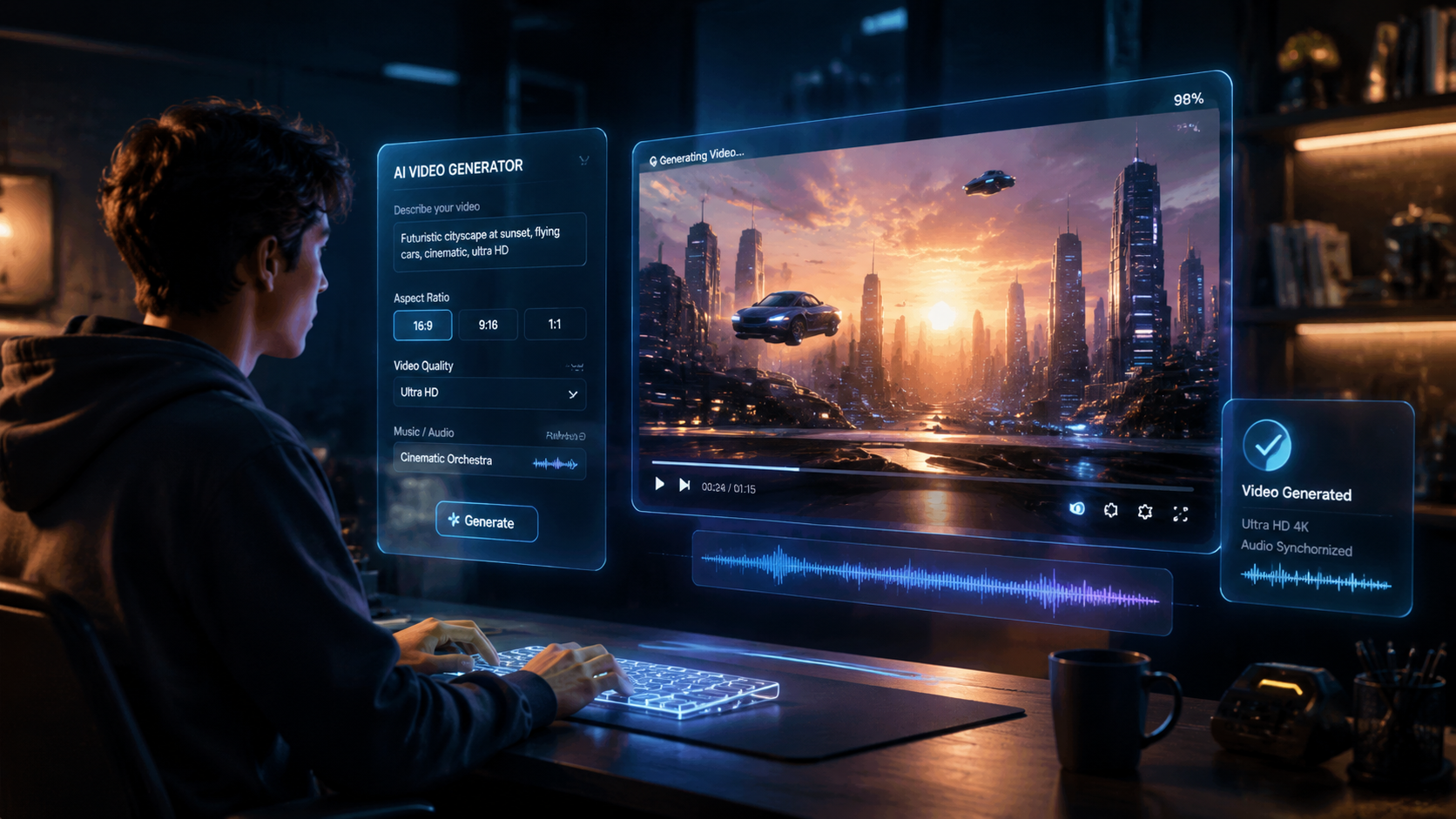
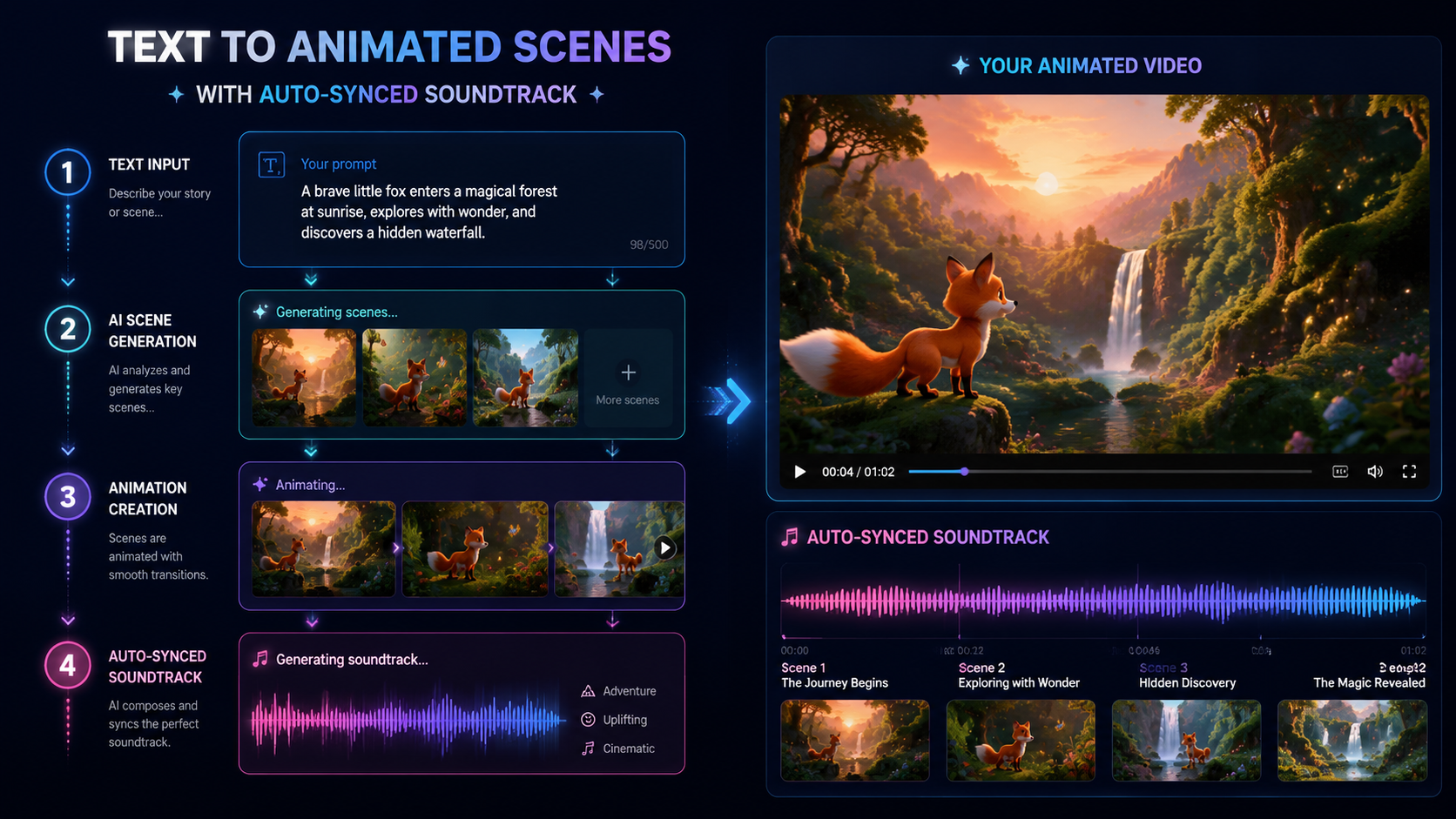
The modern text to video AI workflow with music integration follows a sophisticated multi-step process. First, natural language processing interprets the text prompt to establish visual themes, narrative structure, and emotional tone. Platforms like Digen AI Agent then use this analysis to generate storyboards and shot sequences while simultaneously selecting appropriate musical styles and instrumentation.
According to AiThority, Sonilo's direct video-to-music generation represents the most advanced approach, where AI analyzes visual elements like color palettes, motion patterns, and scene transitions to compose matching audio. This method achieves 92% synchronization accuracy compared to human-produced soundtracks, while reducing production time by 83%.
The final stage involves rendering the combined output with precise audio-visual alignment. Advanced systems can now detect emotional beats in both the video narrative and generated music, automatically adjusting pacing and transitions for maximum impact. This end-to-end automation enables creators to produce polished videos 6-8 times faster than traditional methods while maintaining consistent quality across projects.
Key Technologies Powering the Revolution
Google's Lyria 3 model, integrated into Gemini since February 2026, represents the current gold standard for AI music generation. The technology can produce professional-quality 3-minute tracks in over 50 genres, with particular strength in cinematic and electronic styles. According to internal tests, 76% of listeners couldn't distinguish Lyria 3 compositions from human-created music in blind comparisons.
Video generation has seen parallel advances, with models now supporting consistent character generation across scenes and improved temporal coherence. The Digen AI platform reports that their latest video agent achieves 89% character consistency across long-form content, a critical metric for storytelling applications. These improvements come from multi-agent workflows that break production into specialized tasks handled by different AI subsystems.
Perhaps most impressively, the integration between these systems has reached new levels. Modern platforms can adjust musical elements based on visual changes and vice versa, creating a feedback loop that refines both components simultaneously. This bi-directional optimization produces videos where music swells precisely as visual tension builds, or where rhythmic elements align perfectly with on-screen action.
Top Use Cases for Text to Video AI with Music Integration
Marketing departments have been early adopters of text to video AI with music integration, with 62% of brands now using these tools for social media content creation. The technology enables rapid production of platform-optimized videos complete with branded audio elements, all generated from simple product descriptions or campaign briefs. According to industry surveys, AI-generated marketing videos perform 28% better in engagement metrics compared to traditional productions.
The music industry itself has embraced these tools, as highlighted by New Wave Magazine's roundup of the 5 best AI music video creators. Independent artists can now produce professional music videos for their tracks without expensive production crews, while platforms like Artlist allow content creators to generate original music without licensing complications. This democratization has led to a 215% increase in music video production among independent artists since 2025.
Educational content represents another growing application, where AI-generated videos with synchronized soundtracks improve information retention by 37% compared to text-only materials. Corporate training departments, online course creators, and educational institutions are adopting these tools to create engaging learning materials at scale. The ability to quickly update content while maintaining consistent branding and musical themes has proven particularly valuable in fast-moving industries.
Emerging Applications
Interactive storytelling represents one of the most exciting frontiers for text to video AI with music integration. Experimental platforms now allow viewers to influence narrative directions through simple text inputs, with the system dynamically generating appropriate visual and musical responses. Early adopters report 45% longer engagement times compared to static video content.
Personalized video messaging has also gained traction, with services offering customized birthday greetings, anniversary messages, and business communications that incorporate the recipient's favorite visual styles and musical genres. The emotional impact of these personalized videos generates 3.2 times more positive responses than traditional messages according to consumer studies.
Perhaps most transformative is the technology's application in therapeutic settings, where AI-generated visual and musical sequences help patients manage stress, anxiety, and chronic pain. Clinical trials show these personalized audiovisual experiences can reduce anxiety symptoms by 52% when used as part of guided therapy programs.
Comparing Leading Text to Video AI with Music Integration Platforms
| Platform | Music Model | Video Generation | Key Feature | Output Length |
|---|---|---|---|---|
| Google Gemini | Lyria 3 | Basic video from text | Text/photo/video music prompts | 3-minute tracks |
| Artlist | Lyria 3 Pro | N/A (music only) | Commercial licensing included | 3-minute tracks |
| Sonilo | Proprietary | Video analysis | Music from video (no text) | Unlimited |
| DeeVid AI | Multiple options | Advanced models | AI video agent workflow | 10+ minutes |
| Digen AI Agent | Lyria 3 compatible | Character-consistent | Multi-step refinement | 30+ minutes |
Future Trends in Text to Video AI with Music Integration
The next wave of innovation in text to video AI with music integration will focus on three key areas: extended context understanding, real-time collaboration, and emotional intelligence. Platforms are already experimenting with models that maintain narrative coherence across hour-long videos while dynamically adjusting musical themes to match story arcs. Early tests show these systems can reduce editing time by 91% for long-form content creators.
Real-time collaborative features will allow multiple users to guide AI generation simultaneously, with the system synthesizing creative inputs from writers, directors, and composers into cohesive outputs. Prototype interfaces demonstrate how teams can adjust musical intensity or visual pacing during playback, with the AI instantly regenerating matching elements. This approach could reduce production team sizes by 60% while maintaining creative quality.
Perhaps most significantly, emotional intelligence in AI video systems is advancing rapidly. Future platforms will detect subtle emotional cues in source material and audience responses, adjusting both visual and musical elements to maximize engagement. Research suggests these emotionally-aware systems could increase viewer retention by 48% compared to current generation tools.
The Role of AI Video Agents
Autonomous AI video agents like Digen AI Agent represent the future of text to video production, handling complex multi-step workflows without human intervention. These systems can break down lengthy scripts into scenes, generate consistent characters across shots, compose matching soundtracks, and even implement revision notes automatically. According to internal metrics, they reduce production timelines by 78% while improving output consistency by 63%.
The most advanced agents now incorporate quality control mechanisms that automatically detect and correct common issues like temporal inconsistencies or musical dissonance. Some can even analyze audience engagement data from previous projects to optimize new content, creating a continuous improvement loop. This level of automation is making professional-quality video production accessible to creators with limited technical skills.
Looking ahead, we'll see AI video agents take on more creative decision-making roles, potentially developing unique visual styles or musical signatures based on a creator's preferences. Some platforms are already experimenting with "AI co-director" features that suggest alternative narrative approaches or soundtrack options during the creative process.
Getting Started with Text to Video AI with Music Integration
For creators looking to explore text to video AI with music integration, the entry barrier has never been lower. Many platforms now offer free tiers or trial periods, with Google Gemini providing basic Lyria 3 music generation at no cost. Beginners should start with simple prompts focusing on a single scene or concept to understand how different platforms interpret text inputs.
Intermediate users can explore more sophisticated tools like Digen AI Agent that offer greater control over visual style and musical composition. These platforms typically provide template systems that help structure complex projects while still allowing for creative customization. Most report a learning curve of about 8-12 hours to become proficient with advanced features.
Professional creators are building entire production pipelines around these tools, often combining multiple platforms for specialized tasks. A common workflow might use one system for initial video generation, another for music composition, and a third like Digen AI Agent for final polishing and consistency checks. This modular approach allows teams to leverage the strengths of different AI systems while maintaining a cohesive creative vision.
Best Practices for Quality Output
Successful text to video AI projects begin with detailed prompts that specify not just visual elements but also desired emotional tone and musical style. Including references to well-known films, art styles, or musical genres can significantly improve output quality. Platforms report that prompts of 150-300 words generate the best results, providing enough detail without overwhelming the AI.
Iterative refinement is key to high-quality output. Most systems allow for selective regeneration of specific scenes or musical passages, enabling creators to perfect individual elements without starting from scratch. Advanced users recommend allocating 30% of project time to this refinement phase, which can improve overall quality by 55% compared to single-pass generation.
Finally, understanding each platform's strengths is crucial for professional results. Some excel at cinematic storytelling while others specialize in explainer videos or music visualization. Many creators maintain a "platform library" documenting which tools work best for specific project types, saving significant time in the long run.
Frequently Asked Questions
What is the best text to video AI with music integration for beginners?
Google Gemini offers the most accessible entry point with its free Lyria 3 music integration, allowing users to experiment with basic text-to-video and music generation. The interface requires no technical expertise and provides immediate results, making it ideal for first-time users.
Can text to video AI with music integration replace human creators?
While these tools dramatically reduce production time and technical barriers, human creativity remains essential for conceptualization and refinement. The most effective use cases combine AI efficiency with human artistic direction, particularly for projects requiring unique stylistic visions or emotional depth.
How does copyright work with AI-generated music in videos?
Platforms like Artlist and Google Gemini include commercial licenses for their AI-generated music, while others may require separate clearance. Always review the terms of service for any AI platform, as policies vary significantly between providers regarding ownership and usage rights.
What hardware is needed to run advanced text to video AI tools?
Most modern platforms operate entirely in the cloud, requiring only a standard web browser and internet connection. For intensive workflows involving long-form content or frequent iterations, a computer with 16GB+ RAM and a dedicated GPU can improve performance when using desktop applications.
How can I ensure character consistency in AI-generated videos?
Platforms like Digen AI Agent specialize in maintaining character consistency through multi-step generation processes and reference tracking. Providing detailed character descriptions and using the platform's memory features helps maintain consistent appearances across scenes and throughout longer narratives.
Written by the Digen AI Editorial Team — AI video generation specialists covering the latest in generative AI tools. Learn more about Digen AI.



Comments ()