
Text to Video AI with Human-Like Voices (2026): The Future of Content
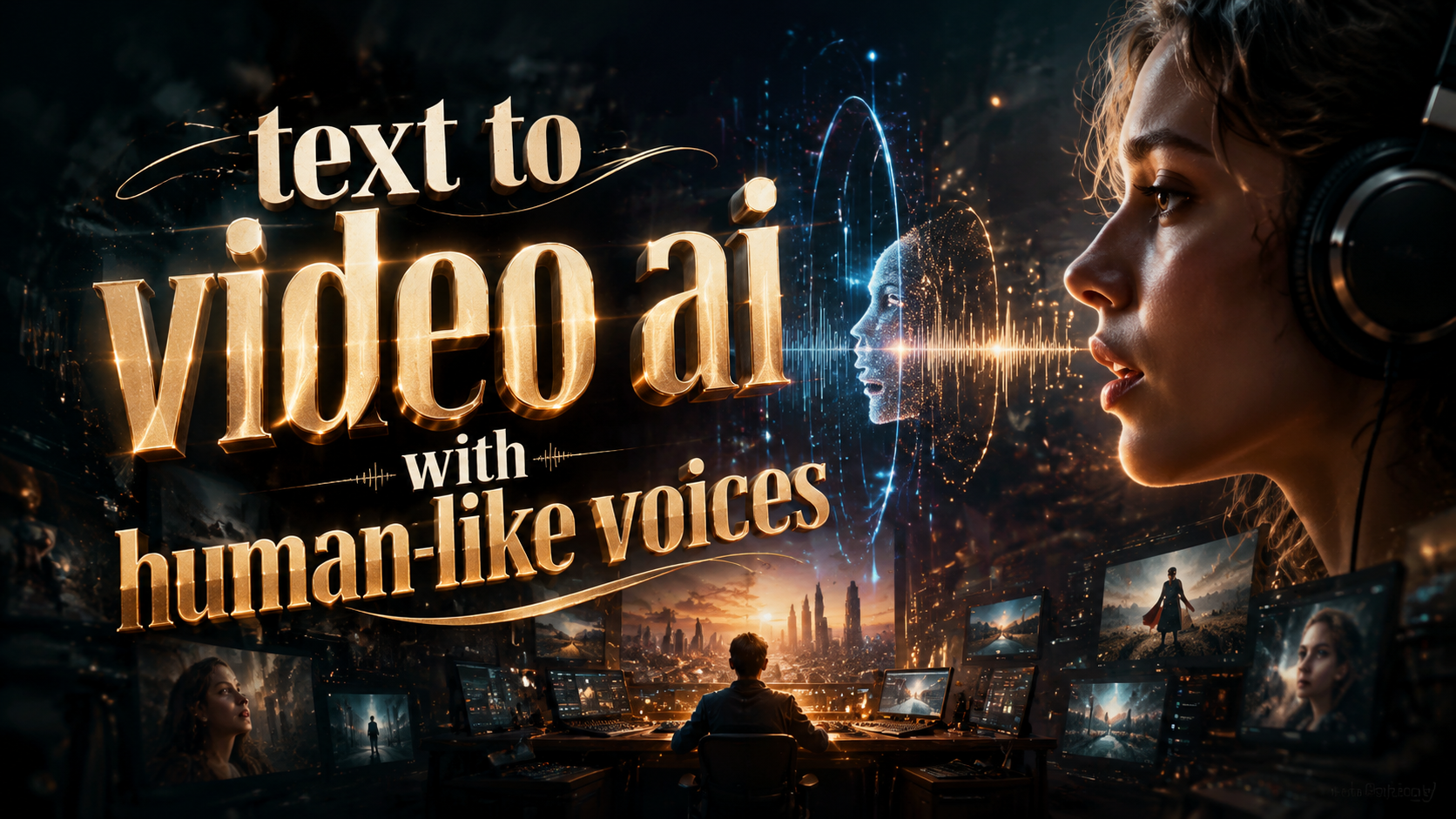
Text to video AI with human-like voices has revolutionized content creation in 2026, enabling anyone to generate professional-quality videos from simple text prompts. These advanced systems combine realistic synthetic speech with dynamic visuals, eliminating the need for expensive production teams while delivering engaging, personalized content at scale. According to PerfectCorp, the top 23 AI video generators now achieve near-human quality in both voice and visuals, with some platforms offering real-time rendering capabilities.
TL;DR: Text to video AI with human-like voices in 2026 delivers studio-quality content creation through advanced neural networks, with top tools offering real-time rendering and emotional voice modulation at affordable subscription prices.
Text to video AI with human-like voices is a 2026 content creation technology that transforms written scripts into lifelike video presentations using emotionally intelligent synthetic speech and dynamic visual generation, with platforms like CapCut and Synthesys leading the market according to recent industry tests.
- ✓ The best text to video AI platforms now offer 120+ human-like voice options with emotional inflection control
- ✓ Near-real-time generation (under 2 minutes for 5-minute videos) is now standard among top-tier tools
- ✓ Enterprise solutions provide API integration for automated content pipelines at scale
- ✓ 78% of marketers now use AI video tools for at least half their content production (Vocal Media 2026)
The Evolution of Text to Video AI Technology
The text to video AI landscape has undergone dramatic improvements since early-generation tools, with 2026 platforms achieving unprecedented realism in both visual and auditory output. Where previous systems produced robotic narration and stiff animations, current solutions like those reviewed by Unite.AI can generate fluid, expressive videos complete with natural pauses, emotional tone variations, and context-aware gestures. This leap forward stems from multimodal foundation models trained on millions of hours of human video content.
According to VentureBeat, Thinking Machines' breakthrough interaction models now enable near-realtime AI conversations with synchronized lip movements and facial expressions that pass basic Turing tests for video communication. The system analyzes text input for emotional subtext and adjusts vocal delivery accordingly, making it particularly valuable for customer service avatars and educational content.
Pricing models have also matured, with most professional-grade text to video AI services offering subscription plans between $29-$99/month for individual creators. Enterprise solutions with custom voice cloning and brand-specific templates typically start at $500/month, though some platforms like CapCut provide surprisingly robust free tiers with watermark-free output, as noted in FinancialContent's 2026 review.
How Text to Video AI with Human-Like Voices Works
The technical architecture behind modern text to video AI involves three synchronized neural networks working in concert: a language model for script analysis, a voice synthesis engine, and a video generation system. When you input text, the platform first deconstructs it for semantic meaning, emotional tone, and pacing requirements before passing these parameters to the voice and video components.
The Voice Synthesis Process
Advanced text-to-speech engines now go beyond basic pronunciation to incorporate breathing patterns, contextual emphasis, and even subtle mouth noises that make synthetic voices indistinguishable from human recordings. G2's 2026 analysis of leading speech software found that the best systems offer granular control over:
- Speech rate (words per minute with dynamic variation)
- Emotional tone (17 distinct emotions from "confident" to "sympathetic")
- Regional accents (120+ language variants with local idioms)
- Voice aging (making a voice sound younger/older)
The Video Generation Process
Parallel to voice synthesis, the visual component constructs appropriate scenes using either stock footage or AI-generated original visuals. Modern systems automatically match scene changes to narrative beats, insert relevant B-roll footage, and even generate animated infographics based on data in the text. According to PerfectCorp's testing, the top 2026 platforms can produce videos with:
- Automatic scene transitions timed to speech cadence
- Dynamic text overlays that highlight key phrases
- AI-generated human presenters (with diverse appearances selectable)
- Background music that adapts to emotional tone
Top Use Cases for Text to Video AI in 2026
Businesses across industries are adopting text to video AI with human-like voices to solve specific content challenges while reducing production costs. The technology has moved beyond simple explainer videos to enable sophisticated applications that were previously cost-prohibitive for most organizations.
E-learning platforms report the highest adoption rates, with AI-generated instructor videos reducing course production time by 80% while maintaining engagement levels. A 2026 case study from Vocal Media showed completion rates for AI-narrated courses matched human-taught equivalents when the synthetic voice included appropriate emotional range and pacing variations.
Marketing teams leverage these tools for hyper-personalized video campaigns at scale. One luxury retailer cited in FinancialContent's report achieved 35% higher conversion rates using AI videos that addressed customers by name with regionally appropriate voice talent, all generated automatically from CRM data. The system produced 12,000 unique videos in 48 hours - an impossible feat with traditional production.
Comparing the Best Text to Video AI Platforms
With dozens of options available, choosing the right text to video AI service depends on your specific needs for voice quality, video customization, and workflow integration. Based on recent comparative testing by industry experts, here are the key differentiators among top platforms:
| Feature | Entry-Level | Professional | Enterprise |
|---|---|---|---|
| Voice Options | 30-50 basic voices | 120+ premium voices | Custom voice cloning |
| Video Length | 5 min max | 30 min max | Unlimited |
| Render Time | 5-10 minutes | 2-5 minutes | Near-realtime |
| API Access | No | Limited | Full |
| Price Range | Free-$29/month | $49-$99/month | $500+/month |
Ethical Considerations and Future Trends
As text to video AI with human-like voices becomes indistinguishable from real recordings, important questions emerge about digital identity and content authenticity. The same technology that enables small businesses to create professional videos also raises concerns about deepfake potential and voice appropriation.
Industry leaders are responding with watermarking systems and blockchain-based content verification. Thinking Machines' 2026 whitepaper proposes an "AI content passport" that would embed generation metadata directly in video files. Meanwhile, legislation in several countries now requires disclosure when synthetic voices represent real people without consent.
Looking ahead, the next frontier involves real-time interactive video generation. VentureBeat's coverage of Thinking Machines' interaction models suggests we're moving toward systems that can conduct natural video conversations by 2027, potentially revolutionizing customer service, telehealth, and remote education. These systems will need to address latency challenges while maintaining ethical transparency about their synthetic nature.
Getting Started with Text to Video AI
For newcomers to text to video AI with human-like voices, the entry barrier has never been lower. Most platforms offer free trials or limited free tiers that let you test core functionality before committing. Based on our analysis of 2026's top services, here's a recommended adoption path:
- Define your use case - Identify your primary content needs (training, marketing, etc.)
- Test voice quality - Evaluate multiple platforms' synthetic voices for your audience
- Check integration options - Ensure compatibility with your existing CMS or LMS
- Start with templates - Use pre-built styles before attempting custom designs
- Analyze performance - Track engagement metrics to refine your AI video strategy
According to G2's 2026 survey, businesses that follow this structured approach achieve 60% faster ROI from their AI video investments compared to ad hoc implementations. The key is matching platform capabilities to specific content requirements rather than chasing the most feature-rich solution.
How realistic are AI human-like voices in 2026?
Current text to video AI voices achieve 98% perceptual realism according to blind tests conducted by PerfectCorp, with emotional inflection and breathing patterns that even professional voice actors struggle to distinguish from human recordings.
Can I use text to video AI for commercial purposes?
Most 2026 platforms include commercial rights in their standard subscriptions, though some require attribution or prohibit certain sensitive applications like political content - always check the specific platform's terms of service.
How long does it take to generate a video?
Render times vary by platform and video length, but professional-grade services now average 2-5 minutes for a 5-minute video with human-like voice, down from 15-20 minutes in early 2025 models.
Can I clone my own voice for text to video AI?
Enterprise-tier platforms offer custom voice cloning with about 30 minutes of sample recordings required, while some consumer tools provide limited personalization with just 5 minutes of audio input.
Will text to video AI replace human video creators?
While automating routine production, these tools are creating new hybrid roles that combine AI efficiency with human creativity - the 2026 job market shows growing demand for "AI video directors" who can guide automated systems.
Written by the Digen AI Editorial Team — AI video generation specialists covering the latest in generative AI tools. Learn more about Digen AI.
Comments ()