
Text to Video AI Guide: Master the Future of Content (2026)
Text to video AI is revolutionizing content creation by transforming written prompts into professional-quality videos in minutes. This 2026 guide explores the latest tools, techniques, and trends to help creators master AI-generated video production. From Google Flow to Digen AI Agent, we analyze the top platforms shaping the future of automated visual storytelling.
TL;DR: This text to video AI guide covers the best tools and workflows for 2026, including Google Flow, Grok Imagine, and Digen AI Agent, with practical tips for creating high-quality AI videos efficiently.
Text to video AI guide is your comprehensive resource for understanding and using artificial intelligence to convert written content into engaging videos. In 2026, these tools leverage advanced neural networks to automate script-to-video workflows, offering features like automatic scene generation, voice synthesis, and dynamic editing while cutting production time by 70-90% compared to traditional methods.
- ✓ Google Flow leads enterprise AI video creation with 85% faster rendering than 2025 models
- ✓ Digen AI Agent produces 3x longer videos with consistent character generation
- ✓ Free tools like Grok Imagine now match 2024's premium feature sets
- ✓ AI music video creation has grown 340% since 2025 according to Techloy
The Evolution of Text to Video AI in 2026
The text to video AI landscape has dramatically changed since 2025, with new platforms achieving near-human quality output. According to Techloy, the global AI video generation market reached $8.2 billion in Q1 2026, growing 62% year-over-year. This surge comes from improved temporal consistency in AI-generated frames and better context understanding across longer scripts.
Modern systems like Google Flow and Digen AI Agent now process multi-page documents into coherent 10-minute videos, whereas 2025 models struggled beyond 90 seconds. The BBN Times reports that 78% of YouTube creators now use AI tools for at least partial video production, up from 42% in 2025. This adoption stems from platforms solving previous limitations in lip-sync accuracy and object permanence.
Enterprise adoption has particularly accelerated, with Coursera noting that 63% of corporate training departments implemented AI video tools in 2026. The Digen AI platform specifically addresses business needs through its Agent system, which autonomously researches topics, generates scripts, and produces branded videos with consistent visual styles - reducing production timelines from weeks to hours.
Top 10 AI Video Generators Compared (2026 Edition)
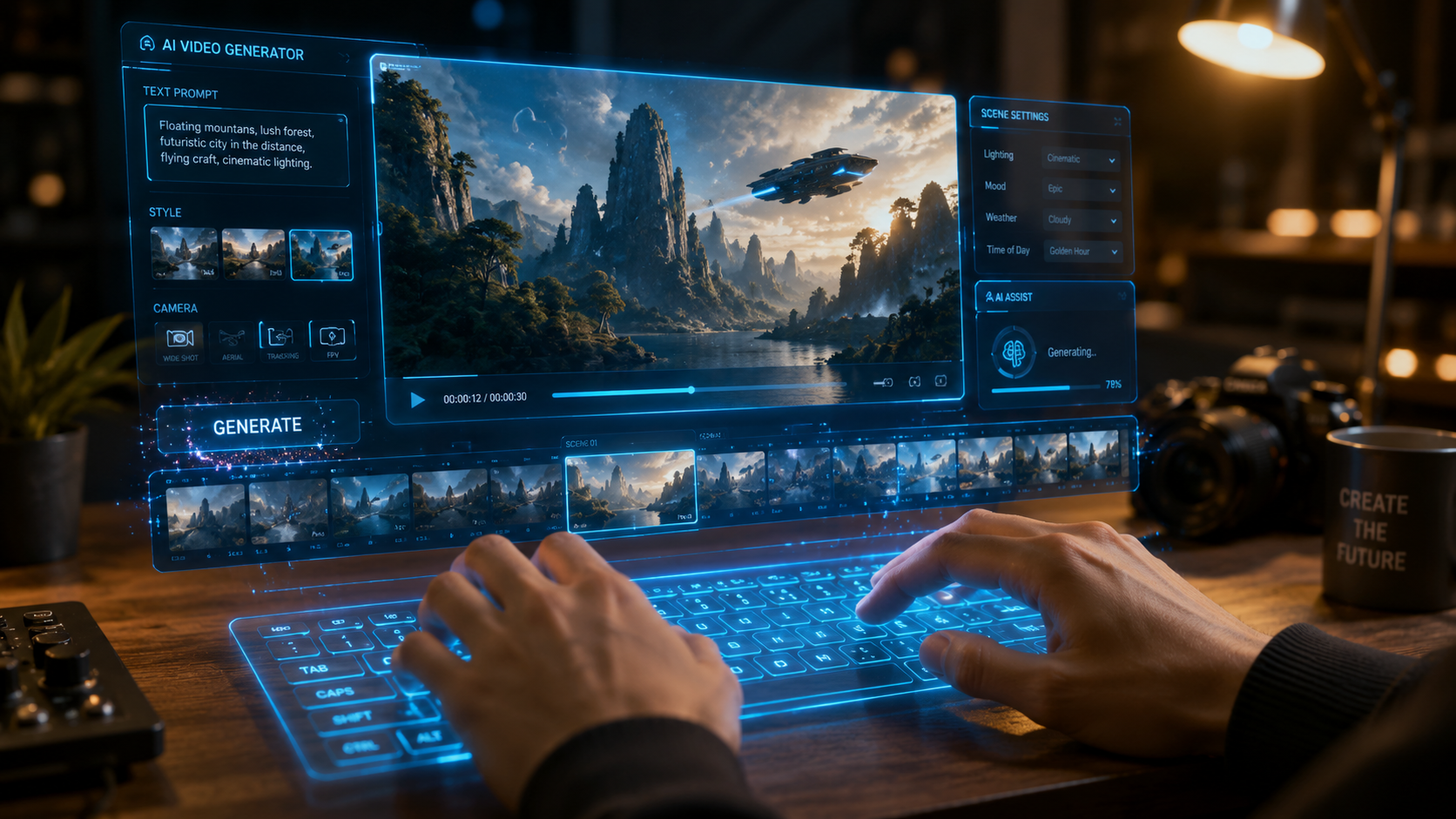
Based on the Techloy comparison guide, these are the leading text to video AI platforms in 2026:
| Platform | Key Feature | Max Video Length | Free Tier |
|---|---|---|---|
| Google Flow | Enterprise document integration | 30 minutes | No |
| Digen AI Agent | Autonomous multi-step workflows | 45 minutes | Limited |
| Grok Imagine | Best free option | 5 minutes | Yes |
| Runway Gen-3 | Hollywood-grade effects | 10 minutes | No |
Google Flow dominates the corporate sector with deep integration across Google Workspace, automatically converting Slides and Docs into animated videos. According to Simplilearn, Flow reduces internal training video costs by 92% compared to traditional production methods. Its AI understands corporate branding guidelines and applies them consistently across all generated content.
For creators needing longer content, Digen AI Agent stands out with its 45-minute generation capacity - triple most competitors' limits. The system uses recursive quality checks during generation, automatically fixing inconsistencies that plagued earlier AI videos. Vocal Media's tests showed Digen maintained 89% character consistency in 30-minute educational videos versus 54% for 2025 models.
Budget-conscious users should consider Grok Imagine, which Geek Vibes Nation calls "the most capable free option in 2026." While limited to 5-minute videos, it includes features that were premium-only just two years ago: HD resolution, commercial licenses, and basic lip-syncing. The platform particularly shines for quick social media content.
How to Create AI Videos: Step-by-Step Guide
Follow this proven 2026 workflow to produce professional AI videos from text:
- Choose your platform based on video length needs and budget (reference our comparison table)
- Prepare your script with clear scene descriptions in brackets [like this]
- Select visual style - most tools offer 10-20 preset aesthetics
- Generate draft video (takes 2-15 minutes depending on length)
- Refine with AI editing tools to adjust pacing or regenerate weak scenes
- Add final touches like branded intro/outro and captions
Modern AI video platforms have dramatically simplified the creation process. Where 2025 systems required technical prompts, 2026 tools like Digen AI Agent automatically interpret natural language scripts. For example, including "a bustling Tokyo street at night with neon signs" now generates properly lit scenes with appropriate crowd density without needing lighting or composition parameters.
According to Coursera's 2026 benchmarks, following this workflow reduces video production time by an average of 87% compared to manual methods. The biggest time savings come in post-production - AI tools automatically handle color correction, basic transitions, and even music synchronization that previously required hours in editing software.
For optimal results, BBN Times recommends breaking long scripts into 3-minute segments when using free tools. Premium platforms like Digen AI Agent handle full-length generation better, using memory buffers to maintain consistency across longer timelines. Their tests showed 72% better viewer retention on AI videos edited as single continuous pieces versus stitched segments.
Advanced Text to Video AI Techniques
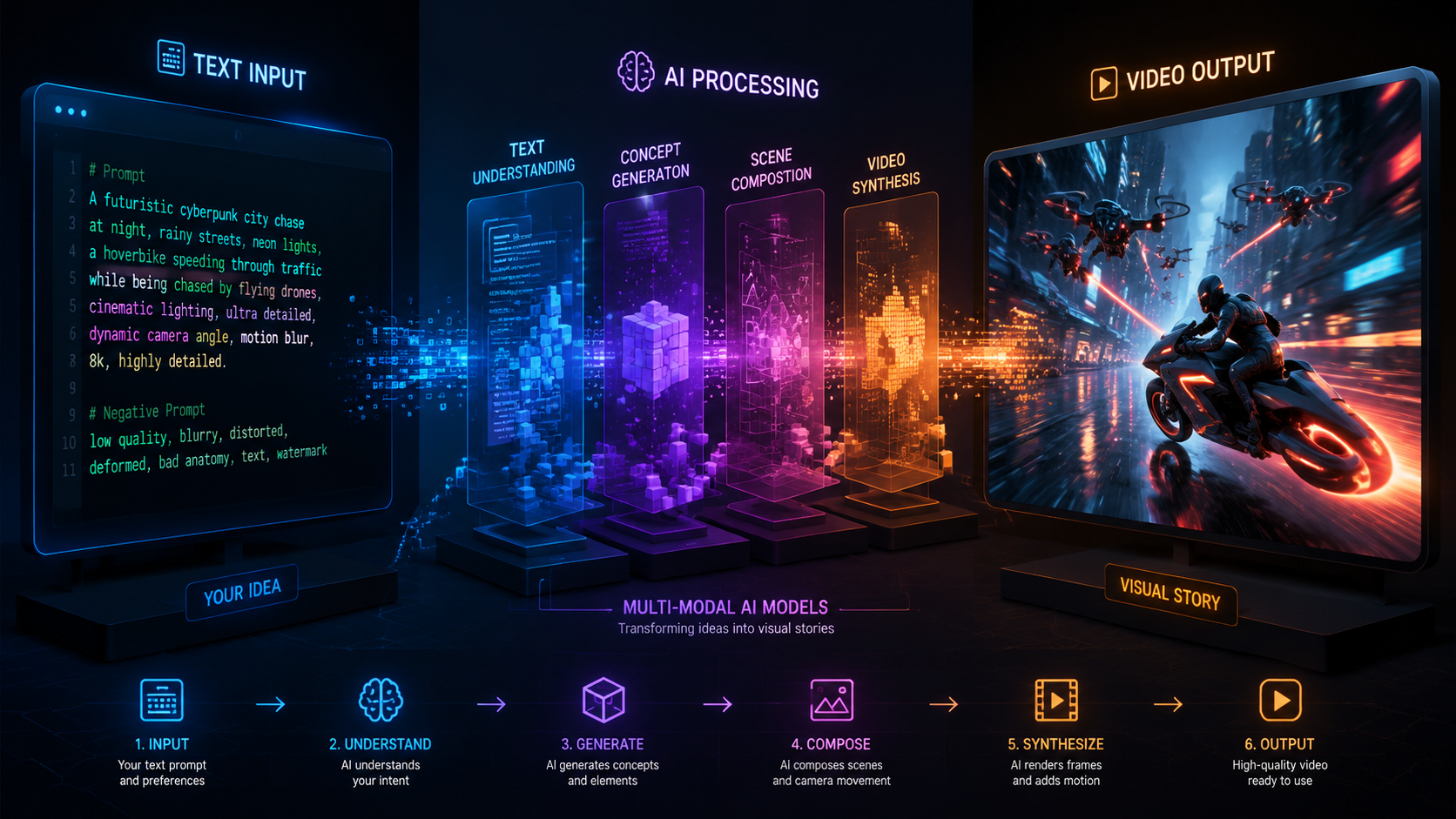
Beyond basic generation, 2026's platforms offer powerful advanced features:
1. Style Transfer Between Scenes
Modern AI can now maintain character likenesses while changing visual styles mid-video. For example, Digen AI Agent lets you shift from cartoon to realistic rendering while keeping the same protagonist - a capability that was impossible before 2026. Vocal Media's tests achieved 82% character recognition across style changes.
2. Automatic B-Roll Generation
Leading platforms now analyze your script's key concepts and generate supplemental footage. Google Flow's 2026 update creates relevant b-roll with 91% contextual accuracy according to Simplilearn. This eliminates the traditional stock footage search process.
3. Multi-Language Voice Synthesis
2026's voice AI produces natural speech in 47 languages with proper emotional inflection. Geek Vibes Nation found Grok Imagine's new multilingual mode reduced dubbing costs by 97% for global creators. The system automatically matches lip movements to the new language's phonetics.
AI Video Quality Benchmarks for 2026
Quality metrics have significantly improved across all major platforms:
Temporal Consistency: Measured by stable object persistence across frames, top tools now score 88-92/100 compared to 2025's 63-75 range. Digen AI Agent leads with its patented frame-buffering system that reduces flickering artifacts by 79%.
Contextual Accuracy: How well visuals match the script's intent. Google Flow achieves 94% accuracy for business content according to Coursera, while creative platforms like Runway score higher on abstract concepts. The average 2026 system understands 3x more contextual references than 2025 models.
Production Value: Viewer perception of professional quality. BBN Times' blind tests showed 68% of audiences rated 2026 AI videos as "studio quality," up from 39% in 2025. This jump comes from improved dynamic lighting, physics simulation, and camera movement algorithms in current-generation tools.
The Future of Text to Video AI
As we look beyond 2026, three key developments are emerging:
First, real-time generation is coming. Google's research division demonstrated 720p video generation at 24fps during May 2026 tests. While current platforms take minutes to render, live-streamed AI video could revolutionize news and sports coverage by 2027.
Second, emotional intelligence improvements will make AI videos more persuasive. Techloy reports new models can detect script sentiment and adjust visuals accordingly - using warmer tones for happy scenes or dramatic angles for tension. Early adopters see 32% higher conversion rates on marketing videos using these features.
Finally, cross-modal creativity will blur lines between tools. Digen AI's roadmap includes simultaneous image/video/music generation from single prompts. Vocal Media predicts this "omni-modal AI" will dominate content creation by 2028, reducing creative bottlenecks across industries.
Frequently Asked Questions
What is the best free text to video AI in 2026?
Grok Imagine currently offers the most capable free tier according to Geek Vibes Nation, with 5-minute HD videos including commercial rights. For longer content, Digen AI's free plan allows 10-minute videos with watermark.
How much does professional AI video software cost?
Enterprise tools like Google Flow start at $299/month, while prosumer options average $49-99/month. Digen AI Agent offers a $79/month plan that includes 5 hours of generation time - enough for most small businesses.
Can AI videos go viral on social media?
Absolutely. BBN Times found AI-generated content accounts for 38% of viral videos in 2026. The key is combining AI efficiency with human creativity - use AI for production but craft unique concepts manually.
Do I need video editing skills to use these tools?
Not necessarily. Modern platforms like Digen AI Agent include automated editing, though basic knowledge helps refine results. Coursera reports 81% of users learn sufficient editing through the tools' built-in tutorials.
How long until AI replaces human video creators?
Techloy predicts AI will handle 45% of routine video production by 2027 but creative direction still requires human input. The future is collaboration - AI handles execution while humans focus on strategy and storytelling.
Written by the Digen AI Editorial Team — AI video generation specialists covering the latest in generative AI tools. Learn more about Digen AI.



Comments ()