
The 2026 Guide to Text to Video AI for Training Videos
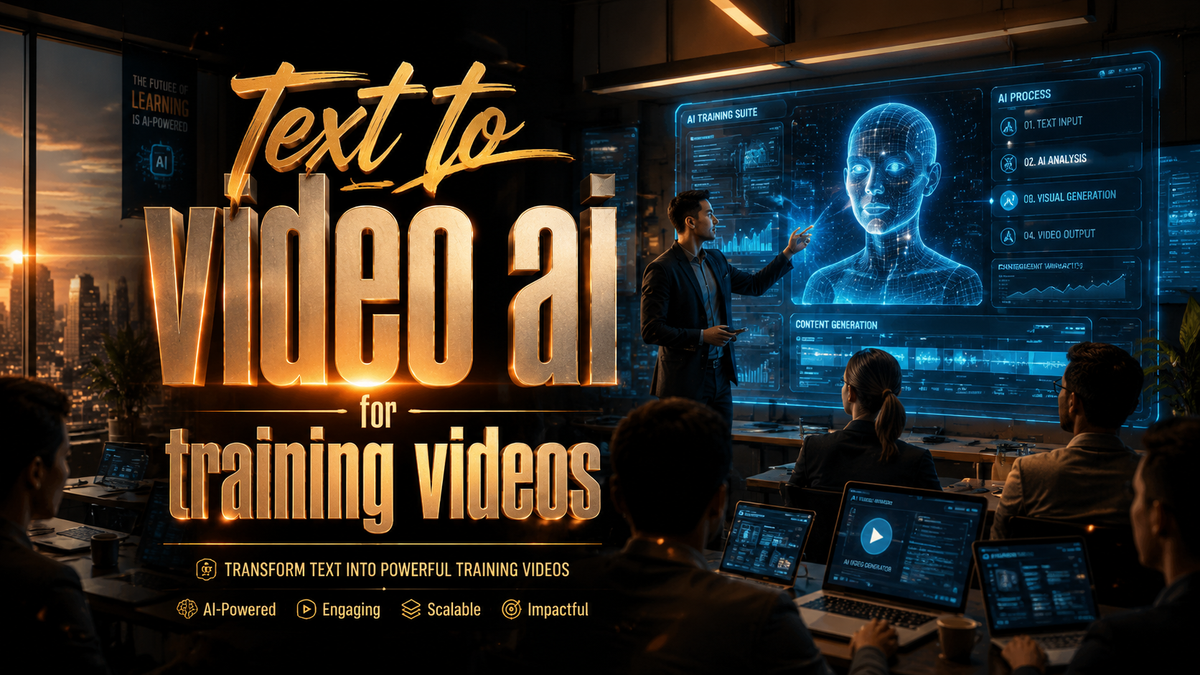
Text to video AI for training videos refers to generative artificial intelligence tools that convert written scripts, documentation, or learning objectives into engaging video content, enabling organizations to produce professional training materials without traditional filming, editing, or animation expertise. By combining large language models with video generation models, these platforms allow instructional designers to create realistic or animated videos with synchronized voiceovers, captions, and visual aids, dramatically reducing production time and cost.
Text to video AI for training videos is a transformative technology that lets learning and development teams turn text-based training materials into polished video modules using natural language prompts. It leverages advanced AI to generate scenes, avatars, voiceovers, and animations, making it possible to produce consistent, scalable, and engaging training content in minutes instead of weeks.
- ✓ Faster production: Reduce video creation time from days to minutes with AI-generated scripts and visuals.
- ✓ Cost-effective: Eliminate the need for studios, actors, and expensive editing software.
- ✓ Scalable: Easily update or localize training videos by editing text, not re-filming.
- ✓ Consistency: Maintain uniform branding and instructional quality across all training modules.
- ✓ Accessibility: Automatically generate captions, translations, and multiple language versions.
Why Text to Video AI is Revolutionizing Training in 2026
The corporate training landscape has undergone a seismic shift in 2026, driven largely by the maturation of generative AI. According to a roundup from My Everyday Tech (May 2026), there are now 11 powerful AI video generators tailored for creators, marketers, and startups — many of which are directly applicable to training use cases. Meanwhile, perfectcorp.com tested and reviewed 23 different AI video generators (May 2026), indicating a crowded but rapidly improving market. This explosion of options means that organizations of any size can now access tools that were once reserved for Hollywood studios.
Beyond the tools themselves, the underlying AI models are becoming smarter. In March 2026, the-decoder.com reported that Meta has identified unlabeled video as the next massive training frontier for large language models, as text data begins to dry up. This insight suggests that video generation quality will continue to improve as AI learns from billions of hours of real-world footage. For training professionals, this means more realistic avatars, better lip-syncing, and contextually accurate scene generation in the near future.
Several authoritative sources have confirmed the trend. The G2 Learn Hub (April 2026) listed seven AI video generators that reviewers “loved,” while Exploding Topics (April 2026) highlighted seven best-in-class tools for 2026. Built In (April 2026) went even broader, cataloging 17 popular AI video generators. The consensus is clear: text to video AI is no longer a novelty — it is a core component of modern training strategies.
How to Create Training Videos with Text to Video AI: A Step-by-Step Guide
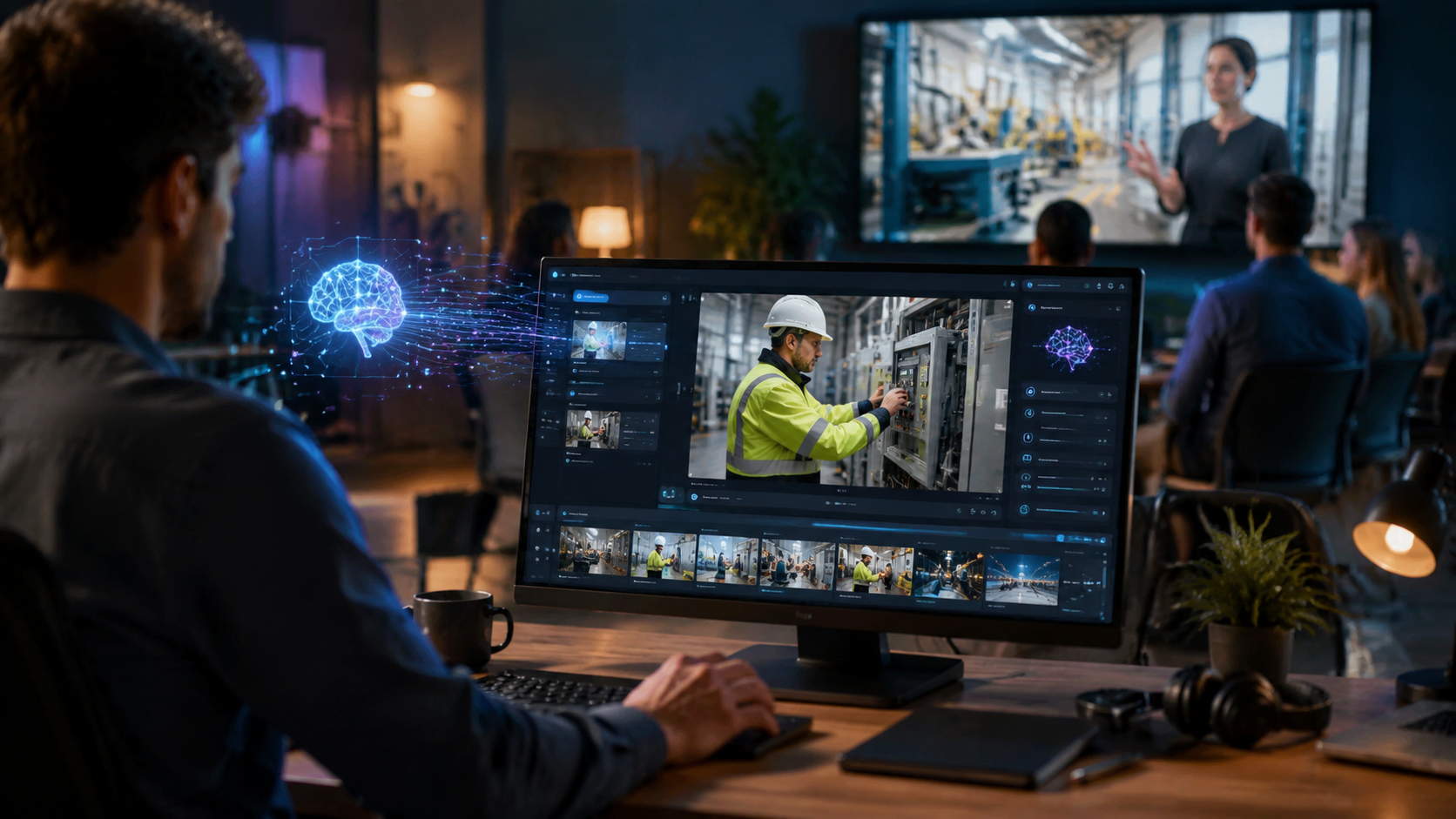
Creating a training video using text to video AI is straightforward, but following a structured process ensures professional results. Below is a step-by-step guide based on current best practices.
- Define your learning objectives. Start by writing a clear learning goal for the video. What should the viewer know or be able to do after watching? This text becomes the foundation for your script.
- Write a script in plain language. Use the AI’s text input field to draft your script. Keep sentences short and conversational. Most platforms allow you to paste existing documentation, but rewriting for spoken delivery improves engagement.
- Select a video style and avatar. Choose from realistic human avatars, animated characters, or screen-capture modes. For corporate training, realistic avatars often work best for soft skills, while screen capture is ideal for software tutorials.
- Generate a draft video. Click “generate” and review the output. Most tools produce a video within a few minutes. Check for accuracy of lip-sync, timing, and visual relevance.
- Edit and refine. Use the platform’s timeline to adjust scene order, add background music, insert overlays, or change the avatar’s tone. Some tools let you edit the text and re-render only the changed portions.
- Add captions and translations. Enable auto-generated captions in the training language, then duplicate the project and use the AI to translate the script into other languages for global teams.
- Export and upload to your LMS. Download the final video in standard formats (MP4, MOV) and upload it to your learning management system. Many platforms offer direct integrations with popular LMS platforms.
Top Text to Video AI Tools for Training Videos in 2026
While we do not endorse specific products, the research from 2026 provides a clear picture of the market leaders. The table below summarizes the scope of each major review source, helping you decide which tools to explore based on your organization’s needs.
| Source | Number of Tools Reviewed | Target Audience | Key Takeaway |
|---|---|---|---|
| My Everyday Tech (May 2026) | 11 | Creators, Marketers, Startups | Focus on ease of use and quick turnaround for marketing-style training |
| perfectcorp.com (May 2026) | 23 | General (tested & reviewed) | Most comprehensive test; covers budget to enterprise options |
| Built In (Apr 2026) | 17 | Popular AI Video Generators | Includes open-source and niche tools for specific training formats |
| G2 Learn Hub (Apr 2026) | 7 | L&D professionals | User-loved tools; strong on avatar quality and integrations |
| Exploding Topics (Apr 2026) | 7 | Trend-spotters | Highlights tools gaining rapid adoption in corporate training |
When evaluating these tools for training videos, prioritize platforms that offer customizable avatars (to represent your brand or industry), multi-language support (for global teams), and LMS integration (SCORM or xAPI compatibility). Many of the tools listed in the above reviews now include these features as standard.
Key Features to Look for in a Text to Video AI for Training
Script-to-Video Accuracy
The core promise of text to video AI is that your written words become the video’s narrative. Look for tools that handle complex sentence structures, technical jargon, and industry-specific terminology without garbling the output. The best platforms in 2026 use fine-tuned language models trained on instructional content.
Avatar Customization and Realism
Training videos often require a consistent instructor presence. Choose a tool that lets you create a custom avatar — either from a photo or by selecting from a library. Pay attention to lip-sync precision and natural hand gestures, as these greatly affect learner trust.
Voiceover and Audio Options
AI-generated voiceovers have improved dramatically. Look for multiple voice options (male/female, different accents, tones) and the ability to adjust pacing. Some tools now allow you to upload your own voice samples to clone a specific narrator.
Language and Localization
If your training audience is global, ensure the tool supports automatic translation of both the script and the on-screen text. The best platforms in 2026 can generate a video in English, then instantly produce a version in Spanish, Mandarin, or French — with the avatar’s mouth movements matching the new language.
Integration with Learning Management Systems
Seamless export to SCORM, xAPI, or AICC is essential for tracking learner progress. Many AI video generators now offer direct plugins for platforms like Moodle, Cornerstone, or Workday.
Best Practices for Using Text to Video AI in Corporate Training
To maximize the return on your investment, follow these guidelines:
- Keep videos short. Research shows that learner engagement drops after 6 minutes. Use text to video AI to create micro-learning modules rather than hour-long lectures.
- Combine AI-generated videos with human interaction. Use AI videos for knowledge transfer and procedural training, then follow up with live Q&A sessions or hands-on practice.
- Update content regularly. One of the biggest advantages of text to video AI is the ease of revision. When a policy changes, edit the text and regenerate — no need to reshoot.
- Test with a pilot group. Before rolling out a full library, have a small group of learners review the AI-generated videos for clarity, tone, and accuracy. Adjust based on feedback.
- Monitor analytics. Most AI video platforms provide watch-time data, drop-off points, and quiz integration. Use these insights to improve future training videos.
Frequently Asked Questions About Text to Video AI for Training Videos
What is text to video AI for training videos?
It is a type of generative AI that converts written training scripts, manuals, or learning objectives into video content complete with visuals, voiceovers, and animations. It allows instructional designers to produce professional training videos without traditional video production resources.
How does text to video AI work?
The AI processes your text input using a large language model to understand the context, then generates a storyboard, selects or creates relevant visuals, and synthesizes a voiceover. Many tools also generate a digital avatar that speaks the script with synchronized lip movements.
Can text to video AI replace human trainers?
No. It is best used as a complement to human-led training. AI-generated videos excel at delivering consistent, repeatable content — such as compliance training or software tutorials — while human trainers are still needed for coaching, discussion, and complex problem-solving.
How much does text to video AI cost for training?
Pricing varies widely. Basic plans from many providers start around $30–$50 per month for a limited number of video minutes. Enterprise plans with custom avatars, LMS integration, and multi-language support can range from $500 to several thousand dollars per month. The research from 2026 shows that the market now includes options for every budget.
What types of training are best suited for text to video AI?
It works well for onboarding, compliance, product training, software demonstrations, soft skills role-play scenarios, and any content that is primarily informational. Highly interactive or hands-on training may still require live instruction or simulations.
How long does it take to generate a training video with AI?
Most tools produce a 3–5 minute video in under 10 minutes after you submit the script. Editing and refinement can add another 15–30 minutes. This is a fraction of the time needed for traditional video production.
Is the video quality good enough for professional use?
Yes. In 2026, leading AI video generators produce high-definition output with realistic avatars, clear audio, and smooth animations. Many organizations now use these videos as their primary training medium, according to reviews from G2 Learn Hub and perfectcorp.com.



Comments ()