
Text to Video AI for Storyboarding: 2026 Strategy Guide
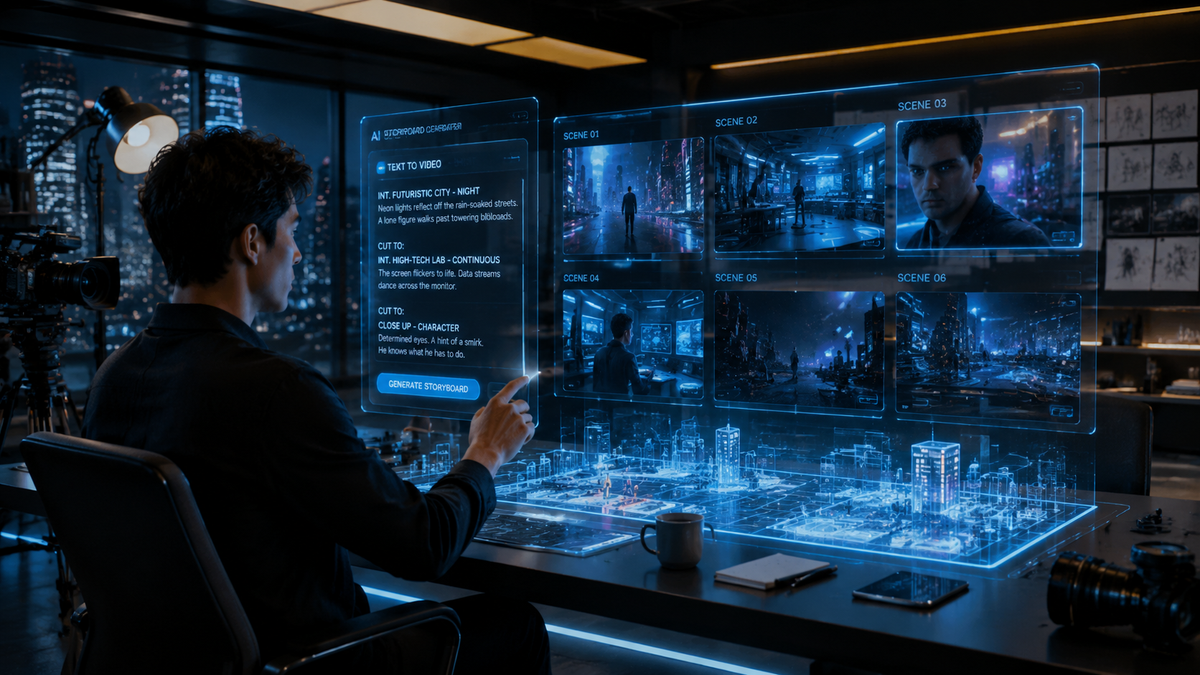
Text to video AI for storyboarding is the process of using generative artificial intelligence to transform written scripts or prompts into sequential visual scenes, allowing filmmakers and creators to pre-visualize motion, composition, and pacing before production begins. In 2026, this technology has evolved from static image generation to dynamic, high-fidelity video clips that serve as "living storyboards," drastically reducing the time and cost associated with traditional hand-drawn or 3D pre-visualization.
Text to video AI for storyboarding is a generative technology that converts descriptive text into cinematic video sequences to map out film, TV, and advertising projects. By 2026, tools like Sora 2 Pro and Seedance 2.0 have made it possible to generate consistent characters and camera movements, allowing creators to validate visual narratives instantly without manual sketching.
- ✓ AI storyboarding reduces pre-production timelines by up to 80% compared to traditional manual methods.
- ✓ New 2026 releases like Seedance 2.0 and Sora 2 Pro offer advanced character consistency for episodic content.
- ✓ Integration with platforms like Google Vids and Gemini AI has democratized professional-grade pre-vis tools for small developers.
- ✓ Hybrid workflows combining AI generation with human creative direction are now the industry standard for film and TV production.
The Evolution of Pre-Production: Text to Video AI for Storyboarding in 2026
The landscape of film and television production has undergone a seismic shift as we move through 2026. According to McKinsey & Company, AI is reinventing the core of film and TV production by automating the most labor-intensive aspects of the creative pipeline. What used to take weeks of back-and-forth between directors and storyboard artists now happens in real-time. Text to video AI for storyboarding has transitioned from a niche experimental tool into a foundational pillar of the modern studio system.
The primary driver of this change is the ability to maintain visual continuity across multiple generated clips. In previous years, AI struggled with "hallucinations" and inconsistent character designs. Today, the latest models utilize advanced spatial awareness and temporal consistency algorithms. This allows a director to describe a character in the first scene and have that exact same character appear in different lighting and angles in the fiftieth scene, ensuring the storyboard functions as a coherent blueprint for the final shoot.
How to Implement Text to Video AI for Storyboarding
- Script Breakdown: Input your screenplay or scene description into an AI-integrated script editor to identify key visual beats.
- Style Training: Select or upload reference images to define the cinematic style, color palette, and lighting requirements for the storyboard.
- Prompt Engineering: Use descriptive prompts focusing on camera movement (e.g., "tracking shot," "low-angle pan") to guide the AI’s video generation.
- Iterative Generation: Generate multiple versions of each scene using tools like Sora 2 Pro or Seedance 2.0 to explore different blocking options.
- Sequence Assembly: Compile the generated clips into a timeline to review pacing, dialogue timing, and emotional flow.
Key Technologies Shaping the 2026 Storyboard Landscape
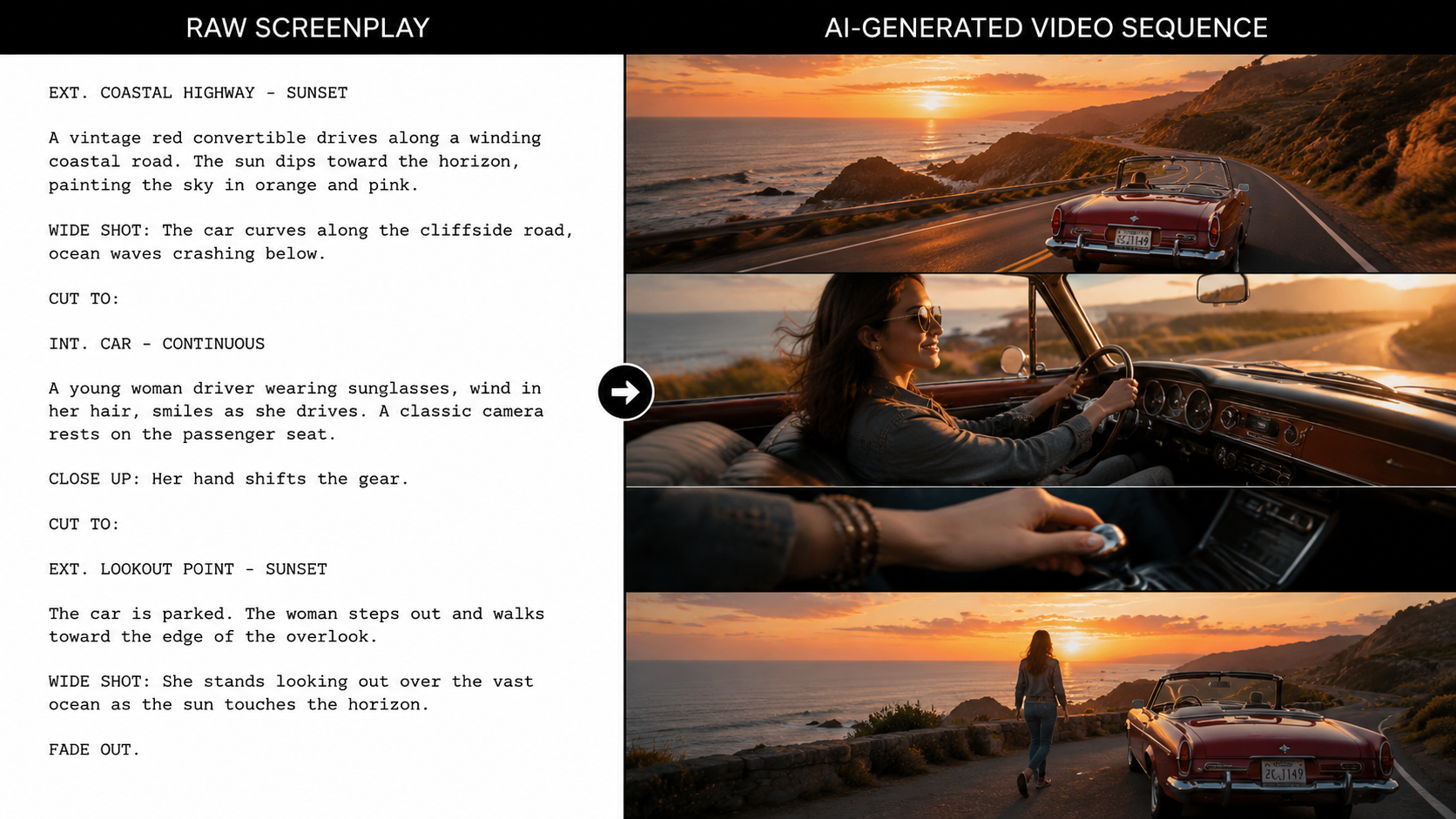
Several major breakthroughs have defined the current year's technological capabilities. Notably, the release of Seedance 2.0 by Flova AI in April 2026 has introduced unprecedented support for video generation that respects physics and complex human motion. This allows storyboarders to visualize difficult stunts or intricate choreography with a level of realism that was previously impossible without a full VFX team. Programming Insider reports that these AI storyboard generator tools are fundamentally changing how developers build video content platforms, moving toward "generative-first" architectures.
Furthermore, accessibility has reached an all-time high. While high-end tools like Sora 2 Pro once required exclusive invites, platforms like Sara2.ai now offer streamlined access to storyboard-specific modules. This democratization ensures that independent creators and small-scale developers can compete with major studios in terms of visual planning and pitch quality. The integration of Gemini AI tools into Google Vids also provides a free tier for advanced AI features, making professional-grade storyboarding accessible to educators and corporate trainers.
| Feature | Sora 2 Pro (Sara2.ai) | Seedance 2.0 (Flova AI) | Google Vids (Gemini) |
|---|---|---|---|
| Primary Strength | Cinematic photorealism and lighting | Physics-based motion and consistency | Ease of use and workspace integration |
| Max Clip Length | 120 Seconds | 90 Seconds | 60 Seconds |
| Character Locking | Advanced (Multi-angle) | State-of-the-art (Action-sync) | Standard (Template-based) |
| Best For | Feature Films & High-end Ads | Action Sequences & Animation | Corporate & Educational Content |
Strategic Advantages of Using Text to Video AI for Storyboarding
The strategic implementation of text to video AI for storyboarding offers more than just speed; it offers a deeper level of creative exploration. Traditional storyboarding is often limited by the artist's speed; if a director wants to try a completely different camera angle, it might take another day of sketching. With AI, that alternative "vibe" can be generated in minutes. This encourages a more iterative and experimental approach to cinematography, where the cost of failure is virtually zero.
According to the Kidscreen AI Tool Guide released in February 2026, the animation industry has been the fastest to adopt these workflows. By using AI to generate "living" storyboards, showrunners can test the comedic timing of a scene or the impact of a visual gag before a single frame of final animation is rendered. This "fail-fast" mentality saves millions in production budgets by catching narrative or visual issues in the pre-visualization phase rather than during expensive post-production cycles.
Improving Stakeholder Communication
One of the most significant hurdles in production is conveying a vision to investors or clients. A static 2D storyboard requires the viewer to use their imagination to fill in the gaps. Text to video AI provides a near-final look at the movement and mood of a project. When a director presents a generated video sequence, the stakeholder sees exactly what the final product will feel like, leading to faster approvals and fewer "creative differences" later in the process.
Cost Reduction in Pre-Visualization
Historically, high-end pre-visualization (Pre-vis) was reserved for blockbuster films with budgets exceeding $100 million. By 2026, text to video AI has brought these costs down by a factor of ten. Small indie films can now produce high-quality pre-vis that rivals major studio productions, allowing them to secure funding more easily and plan complex shoots with precision, minimizing on-set overtime and wasted resources.
Future-Proofing Your Workflow for 2027 and Beyond
As we look toward the end of 2026, the convergence of text to video AI and real-time game engines is the next frontier. The "Text to Video AI for storyboarding" keyword is increasingly associated with "Neural Scene Reconstruction," where AI doesn't just generate a flat video but a 3D environment that can be explored in VR. Creators who master the art of AI prompting and sequence management today will be the leaders of the immersive production houses of tomorrow.
To stay ahead, professionals should focus on "hybrid literacy." This means understanding both the technical limitations of AI—such as its tendency to struggle with highly specific spatial relationships—and the artistic necessity of human intervention. The most successful storyboards in 2026 are those where the AI provides the "heavy lifting" of rendering and motion, while the director provides the nuanced "soul" through refined prompting and expert editing.
Ethical Considerations and Industry Standards
With the rise of powerful generative tools, the industry has moved toward standardized "AI-Assisted" credits. Organizations are emphasizing the importance of using licensed datasets, a feature highlighted in recent updates to professional platforms. Ensuring that your storyboarding workflow respects intellectual property while leveraging the efficiency of AI is crucial for long-term viability in the professional film and media landscape.
Frequently Asked Questions
What is text to video AI for storyboarding?
It is a generative AI process where creators input descriptive text prompts to generate short video sequences that serve as a visual plan for a film, commercial, or animation. It replaces or augments traditional hand-drawn storyboards with dynamic, moving visuals.
How does Sora 2 Pro help with storyboarding?
Sora 2 Pro, accessible through platforms like Sara2.ai, allows for the creation of high-fidelity video clips that maintain consistent characters and environments. This is essential for storyboarding because it ensures the visual narrative remains coherent across different scenes and shots.
Is AI storyboarding replacing human artists?
In 2026, AI is viewed as a collaborative tool rather than a replacement. While it handles the rapid generation of visuals, human storyboard artists and directors are still required to provide the creative vision, emotional depth, and specific directorial intent that AI cannot yet replicate.
Can I use Google Vids for professional storyboarding?
Yes, Google Vids has integrated advanced Gemini AI tools that allow users to generate video content for free. While it is highly effective for corporate and educational storyboarding, it also serves as an entry-point for filmmakers looking to quickly mock up scene concepts.
What is the benefit of Seedance 2.0 for action scenes?
Seedance 2.0, released by Flova AI, features enhanced physics-based motion algorithms. This makes it particularly useful for storyboarding action sequences, as it can accurately simulate realistic movement and interactions, providing a more reliable blueprint for stunt coordinators.
In conclusion, the integration of text to video AI for storyboarding is no longer a futuristic concept—it is the current standard for efficient, creative, and cost-effective production in 2026. By leveraging tools like Seedance 2.0 and Sora 2 Pro, creators can bridge the gap between imagination and visual reality faster than ever before.



Comments ()