
Text to Video AI for Small Business: 2026 Growth Guide
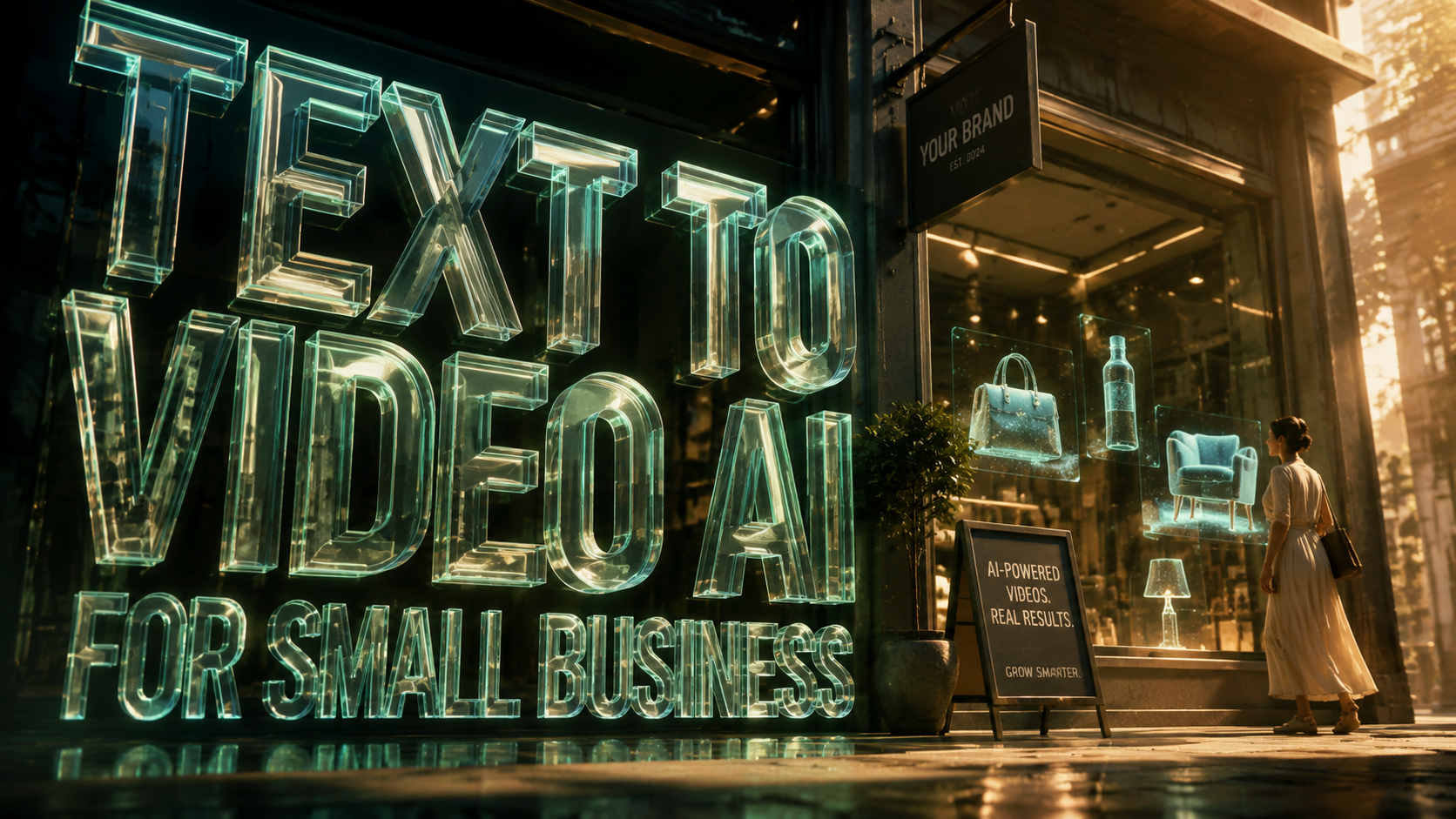
Using text to video ai for small business is the most efficient way to scale digital marketing in 2026, allowing companies to convert written scripts into high-quality visual content in minutes. By leveraging advanced generative models like Sora 2 Video (S2V) and Gemini Omni, small businesses can now produce professional-grade advertisements, tutorials, and social media clips without the overhead costs of traditional film crews or expensive editing suites.
Text to video AI for small business is a generative technology that uses natural language processing and computer vision to transform text prompts into fully realized video files. In 2026, these tools have evolved beyond simple animations to create photorealistic footage, integrated voiceovers, and synchronized soundtracks, enabling rapid content production at a fraction of historical costs.
- ✓ Text to video AI reduces production time from weeks to under 30 minutes for professional-grade assets.
- ✓ New 2026 models like Sora 2 Video (S2V) offer enhanced spatial consistency and physical accuracy for small business products.
- ✓ The integration of multimodal systems like Gemini Omni allows for a seamless creative workflow from ideation to final render.
- ✓ Small firms are increasingly focusing on niche-specific AI products rather than broad ecosystems to maintain brand identity.
How to Implement Text to Video AI for Small Business in 2026
The barrier to entry for video marketing has effectively collapsed. In 2026, small businesses are no longer limited by their lack of technical editing skills or high-end camera equipment. Instead, the focus has shifted toward prompt engineering and creative direction. The ability to iterate on visual concepts in real-time allows for hyper-personalized marketing campaigns that were previously only accessible to Fortune 500 companies with massive budgets.
According to research from Business Review (April 2026), a small business can now create a professional AI-generated video in under 30 minutes by following a streamlined digital workflow. This speed allows for "reactive marketing," where a business can produce a video response to a trending topic or a customer inquiry within the same hour the event occurs.
Step-by-Step Guide to AI Video Creation
- Define the Script and Visual Prompt: Start with a clear objective. Use an AI writing assistant to generate a script, then refine it into a detailed prompt that describes the lighting, camera angles, and specific product features you want to highlight.
- Select the Right AI Engine: Choose a platform based on your needs. For photorealistic product shots, Sora 2 Video (S2V) is often preferred, while Gemini Omni is excellent for integrated workflows that require heavy data processing and creative brainstorming.
- Generate and Iterate: Input your prompt and generate an initial draft. Use "inpainting" or "refinement" tools to adjust specific elements of the video, such as changing a background or modifying the actor’s expression, without regenerating the entire clip.
- Add Multimodal Elements: Layer in AI-generated voiceovers and background music. Most 2026 platforms allow you to sync the audio directly with the visual cadence of the video automatically.
- Export and Distribute: Render the final video in formats optimized for specific platforms, such as vertical 9:16 for social stories or 16:9 for your business website and YouTube.
The Evolution of Sora 2 Video (S2V) and Gemini Omni

The landscape of text to video ai for small business has been fundamentally altered by the release of Sora 2 Video (S2V) and Gemini Omni. As reported by On Pattison in early 2026, S2V has introduced "Physics-Engine Integration," which ensures that objects in the video move according to real-world gravity and momentum. This is a massive leap forward for small businesses in the e-commerce sector, as it allows for realistic product demonstrations that don't suffer from the "uncanny valley" effects seen in earlier AI versions.
Meanwhile, ipsnews.net highlights that Gemini Omni is changing the creative workflow by offering a "multimodal ecosystem." Unlike standalone generators, Gemini Omni can analyze a business's existing brand guidelines, previous successful ad copy, and current market trends to suggest the most effective video styles. This holistic approach ensures that the AI-generated content remains consistent with the brand's established voice and visual identity.
Key Features of 2026 AI Video Platforms
| Feature | Sora 2 Video (S2V) | Gemini Omni | Specialized Small-Firm AI |
|---|---|---|---|
| Primary Strength | Photorealistic physical accuracy | Integrated creative workflow | Niche product focus |
| Generation Speed | High (2-5 minutes) | Ultra-High (Real-time) | Variable |
| Customization | Deep frame-by-frame control | Automated brand alignment | Template-based simplicity |
| Best For | Cinematic commercials | Social media & data-driven ads | Product explainers & tutorials |
Why Small Businesses Are Winning with AI Video
The differentiation in the AI market has become a significant advantage for smaller players. As noted by eu.36kr.com, there is a clear divide in the industry: big firms are building massive ecosystems, while smaller AI startups are focusing on highly specialized products. This "product-centric" focus by smaller developers means that a local bakery or a boutique consulting firm can find an AI tool specifically designed for their niche, rather than using a one-size-fits-all solution.
Furthermore, PCMag (May 2026) reports that the latest video editing software now incorporates "AI Co-pilots" that handle the tedious aspects of production, such as color grading, noise reduction, and subtitle synchronization. For a small business owner, this means the "technical debt" of learning complex software is virtually eliminated. The focus returns to the core message: why should a customer choose your business?
Cost Efficiency and ROI in 2026
In the past, a single high-quality video production could cost a small business anywhere from $2,000 to $10,000. In 2026, the subscription-based model of text-to-video tools has brought that cost down to a monthly fee that often covers unlimited or high-volume generation. This shift from "capital expenditure" to "operating expense" allows for much better cash flow management. Small businesses can now afford to test ten different video ads to see which performs best, rather than betting their entire quarterly budget on a single production.
Best Practices for Text to Video AI for Small Business
To maximize the impact of text to video ai for small business, users must move beyond the "novelty" phase. It is no longer enough to simply have an AI video; the video must be strategically sound. One of the most effective strategies in 2026 is the use of "localized AI content." By prompting the AI to include local landmarks or specific regional dialects in the voiceover, small businesses can create a sense of community and trust that global competitors cannot easily replicate.
According to G2 Learn Hub, which tested the 7 best AI video generators of 2026, the most successful small businesses are those that use AI to augment human creativity rather than replace it. They recommend using AI to handle the heavy lifting of visual generation while keeping a human "in the loop" for the final creative sign-off and emotional resonance check. This ensures that the content doesn't feel robotic or disconnected from the local customer base.
Optimizing AI Videos for Search and Social
Search engines in 2026 have become highly sophisticated at indexing video content. When using text-to-video tools, it is vital to ensure that the metadata—such as the video transcript, title, and descriptions—is optimized for both human users and generative search engines. Using your primary keyword, "text to video ai for small business," within the first few seconds of the audio and in the closed captions can significantly improve your visibility in video search results.
The Future of AI Video: Beyond 2026
As we look toward the latter half of the decade, the integration of AI video into every touchpoint of the customer journey seems inevitable. We are already seeing the rise of "interactive AI videos," where viewers can click on items within the video to purchase them or ask the video questions in real-time. For small businesses, this means the video becomes more than just a marketing asset; it becomes a 24/7 virtual salesperson and customer support agent.
The trend of "S2V" (Sora 2 Video) is just the beginning. We expect to see even deeper integration with Virtual Reality (VR) and Augmented Reality (AR) platforms, where a small business can generate a 3D video environment from a text prompt, allowing customers to "walk through" a store or experience a service before they buy. The agility of small businesses allows them to adopt these technologies much faster than larger, more bureaucratic organizations.
Is AI video generation expensive for a small business in 2026?
No, most professional-grade AI video tools now offer tiered subscription models specifically for small businesses, typically ranging from $30 to $100 per month. This provides access to high-end features like Sora 2 Video and Gemini Omni without the need for significant upfront investment.
How long does it take to create a video with text to video AI?
Current 2026 technology allows for the creation of a polished, professional video in under 30 minutes. This includes the time spent on prompt engineering, generation, and adding final touches like AI voiceovers and background music.
Do I need technical skills to use text to video AI for small business?
Minimal technical skills are required as most platforms use natural language interfaces. If you can describe what you want in writing, the AI can generate the visual content, though a basic understanding of prompt engineering will help achieve better results.
Can AI-generated videos look like real footage?
Yes, with the release of models like Sora 2 Video (S2V) in 2026, AI is capable of producing photorealistic footage that is often indistinguishable from traditional film. These models have vastly improved spatial consistency and physical accuracy.
Is the content generated by AI legally owned by my business?
In 2026, most major AI video platforms have updated their terms of service to grant full commercial rights to the user. However, it is always recommended to check the specific licensing agreement of the tool you are using to ensure compliance with local copyright laws.



Comments ()