
Text to Video AI for Marketing Agencies: 2026 Strategy Guide
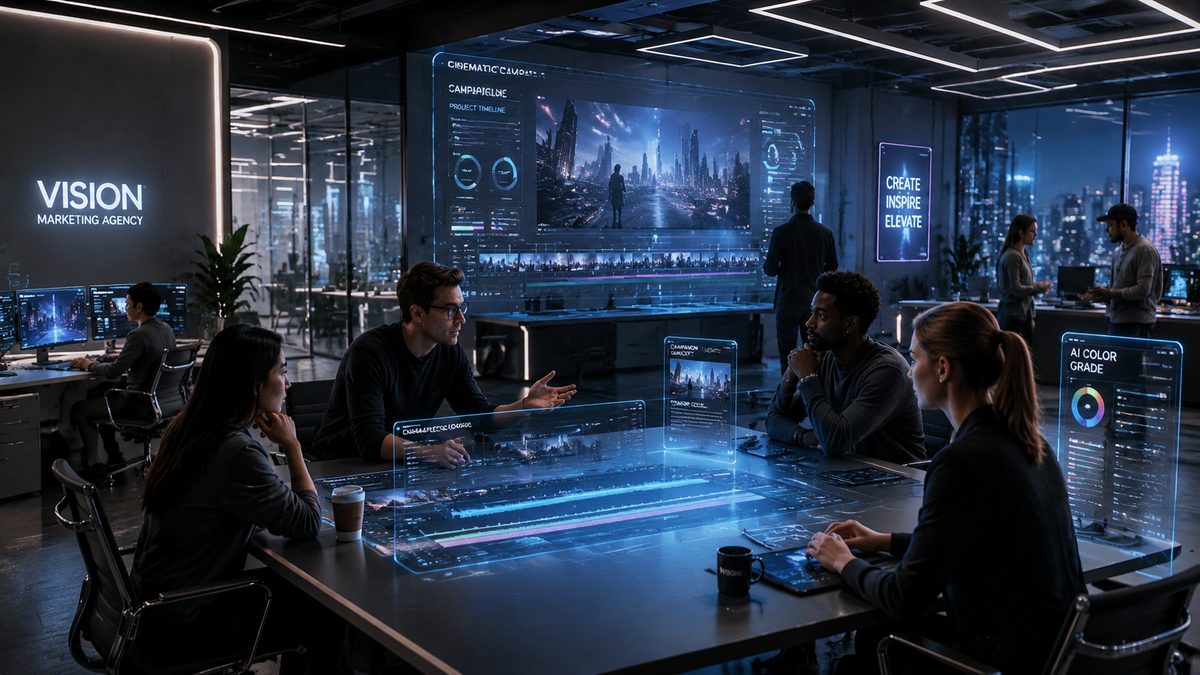
Using text to video AI for marketing agencies is the strategic application of generative artificial intelligence to transform written scripts, briefs, or prompts into high-quality cinematic video content. In 2026, this technology has evolved from a novelty into a core operational necessity, allowing agencies to scale creative production without the traditional overhead of physical shoots or lengthy manual animation cycles.
Text to video AI for marketing agencies is a generative technology that automates the production of video assets from text-based inputs. By leveraging advanced diffusion models and neural rendering, agencies can instantly generate social media ads, explainers, and personalized client presentations, effectively bridging the gap between creative ideation and final delivery at a fraction of historical costs.
- ✓ Text to video AI reduces production timelines from weeks to minutes, enabling real-time campaign pivots.
- ✓ The market for AI-powered animation generators is currently expanding at a CAGR of 32%, according to Market.us.
- ✓ Modern tools like Seedance 2.0 offer specialized features tailored for professional marketers and high-fidelity brand consistency.
- ✓ Agencies are shifting toward an "agency-in-a-box" model to compete with emerging AI startups that threaten traditional service structures.
The Evolution of Text to Video AI for Marketing Agencies in 2026
As we navigate through 2026, the landscape of digital marketing has been fundamentally altered by the democratization of high-end video production. Agencies no longer view AI as a futuristic experiment but as a baseline requirement for survival. The recent surge in "agency-in-a-box" tools has created a new frontier for independent firms, allowing small teams to produce global-scale campaigns that previously required massive production crews and million-dollar budgets.
According to recent reports from Digiday, these tools are democratizing creativity, enabling boutique agencies to compete directly with holding companies. This shift is driven by the rapid maturation of generative models that can now handle complex lighting, physics, and emotional nuance in human characters. For a marketing agency, this means the ability to iterate on video concepts in front of a client during a live meeting, turning a script revision into a rendered video file in less than sixty seconds.
The financial implications are equally significant. Business Insider recently highlighted a startup that raised $4.5 million on a pitch deck specifically designed to replace traditional marketing agency functions with AI-driven workflows. This competitive pressure is forcing established agencies to integrate text to video AI deeper into their value proposition, moving away from billing for "hours worked" and toward billing for "creative strategy and brand impact."
Step-by-Step Implementation of AI Video Workflows
- Script Optimization: Use AI text generation tools to create a structured screenplay or storyboard based on the client's campaign goals.
- Model Selection: Choose a generative engine (such as Seedance 2.0) that aligns with the visual style—whether it’s hyper-realistic, 3D animation, or motion graphics.
- Prompt Engineering: Input detailed stylistic prompts, including camera angles, lighting conditions (e.g., "golden hour"), and brand-specific color palettes.
- Iterative Rendering: Generate low-resolution previews to confirm composition before committing to high-definition final renders.
- Post-Production Integration: Use AI-driven editing suites to add voiceovers, localized captions, and background scores that sync perfectly with the visual rhythm.
Market Dynamics and Economic Impact
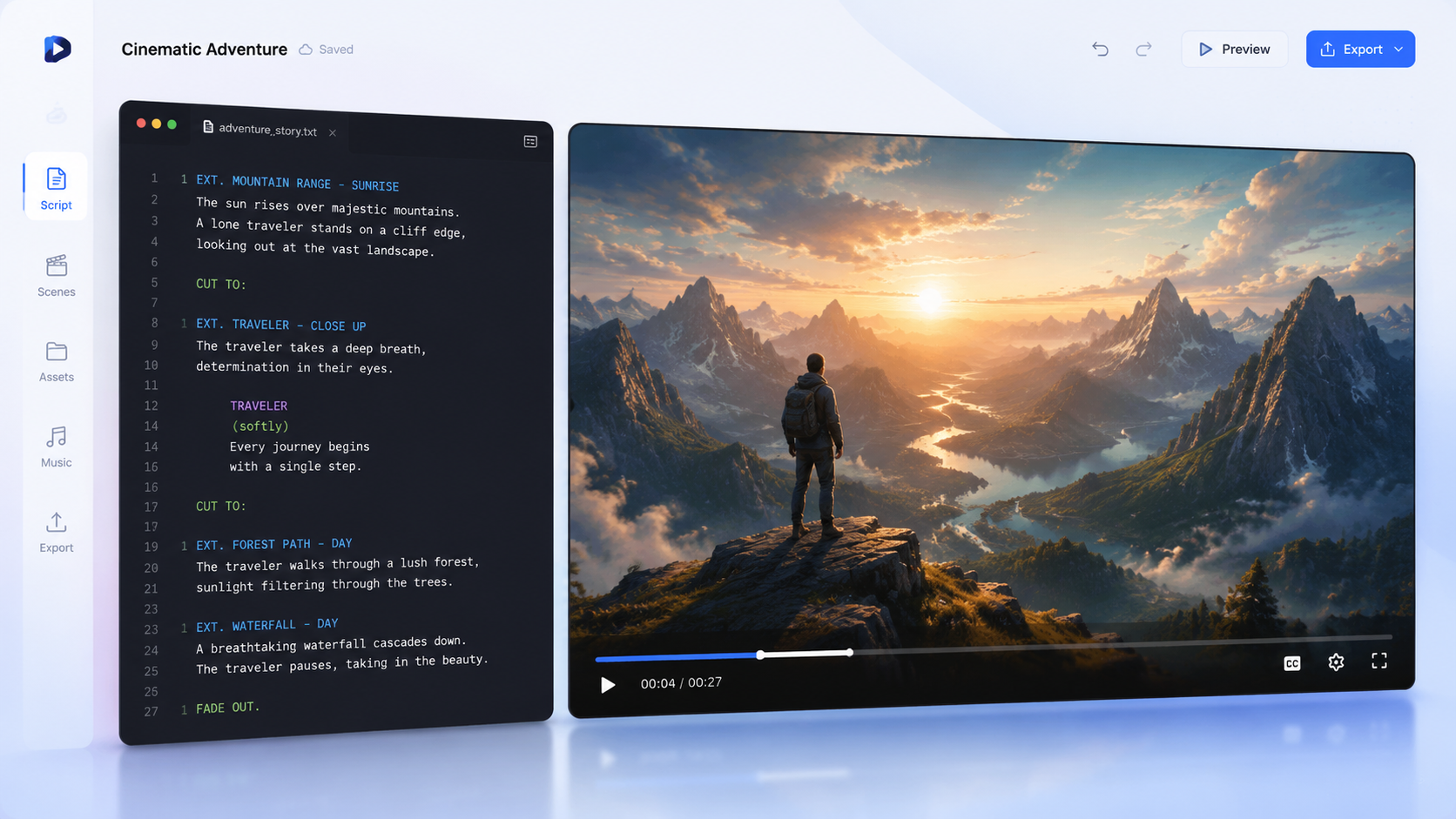
The economic scale of this transition is staggering. Recent data from Market.us indicates that the AI-powered animation generator market is growing at a Compound Annual Growth Rate (CAGR) of 32% as of early 2026. This growth is fueled by the insatiable demand for short-form video content on platforms like TikTok, Reels, and various immersive spatial environments. For marketing agencies, this growth represents both a challenge and an opportunity to capture new revenue streams through high-volume content packages.
On recent earnings calls, as reported by PRWeek, executives across the Fortune 500 are increasingly discussing how they are reallocating marketing spend toward AI-driven initiatives. They are looking for agency partners who can demonstrate a mastery of text to video AI to provide better ROI. Agencies that fail to adopt these tools are finding themselves excluded from RFPs as brands seek the efficiency and agility that generative AI provides.
Comparing Top AI Video Features for Agencies
| Feature Category | Legacy Video Production | 2026 AI Video Strategy |
|---|---|---|
| Turnaround Time | 2–6 Weeks | 5–10 Minutes |
| Cost per Asset | $5,000 - $50,000+ | $10 - $100 |
| Scalability | Limited by staff/equipment | Near-infinite via cloud rendering |
| Personalization | One-size-fits-all | Hyper-personalized per user segment |
| Revision Speed | Days (requires reshoots) | Seconds (text prompt update) |
Advanced Use Cases for Text to Video AI for Marketing Agencies
The application of text to video AI for marketing agencies goes far beyond simple social media posts. In 2026, leading agencies are using these tools for high-level strategic functions. One prominent use case is "Synthetic A/B Testing." Instead of testing two different ad versions, agencies can now generate 500 variations of a video ad, each tailored to a specific demographic, and let AI algorithms determine which visual cues perform best in real-time.
Furthermore, the launch of Seedance 2.0 in March 2026 has introduced "Temporal Consistency 3.0," a feature that allows characters to maintain the exact same facial features and clothing across different video clips. This was a major hurdle in previous years but is now a solved problem, allowing agencies to create "AI Brand Ambassadors"—virtual influencers owned entirely by the agency or the client, capable of appearing in thousands of unique videos without ever needing a physical spokesperson.
Key Use Cases for Agencies
- Dynamic Product Showcases: Transforming a static product description into a 360-degree cinematic commercial.
- Localized Global Campaigns: Automatically changing the background, language, and cultural nuances of a video to suit 50 different international markets.
- Interactive Pitch Decks: Replacing static slides with custom-generated videos that visualize the "future state" of a client's brand.
- Educational & Explainer Content: Converting complex whitepapers into engaging 2-minute animated summaries for B2B clients.
Overcoming the "Agency-in-a-Box" Threat
The rise of "agency-in-a-box" tools is a double-edged sword. While it allows independent agencies to perform like giants, it also allows brands to bring many creative functions in-house. To counter this, successful agencies in 2026 are positioning themselves as "AI Orchestrators." They aren't just selling the video; they are selling the strategic prompt engineering, the ethical oversight, and the brand soul that AI cannot yet replicate on its own.
As noted by AIMultiple in their March 2026 case studies, the most successful AI implementations in marketing involve a "Human-in-the-Loop" (HITL) model. This ensures that while the text to video AI handles the heavy lifting of rendering and animation, the agency’s creative directors focus on the emotional resonance and narrative arc. This hybrid approach ensures that the output doesn't feel "uncanny" or "robotic," which is a common pitfall of purely automated systems.
Agencies are also finding success by offering "AI Governance" services. With the 2026 legal landscape surrounding AI-generated content becoming more complex, agencies provide a layer of protection by ensuring that all AI-generated assets are compliant with copyright laws and that the data used to train specific models is ethically sourced. This high-level consultancy is something a standalone software tool cannot provide.
Future-Proofing Your Agency for 2027 and Beyond
Looking ahead, the integration of text to video AI for marketing agencies will only deepen. We are already seeing the emergence of "Multi-Modal Brains" where the AI doesn't just generate video, but also analyzes the live performance data of that video and automatically suggests visual edits to improve conversion rates. The agency of the future is essentially a high-tech laboratory where data and creativity are fused through generative models.
To stay ahead, agencies must invest in continuous upskilling. The role of the "Video Editor" is evolving into the "Prompt Cinematographer." Training teams to understand the nuances of lighting, pacing, and color theory in the context of AI parameters is essential. According to PRWeek’s analysis of recent earnings calls, the companies that are winning are those that treat AI as an "efficiency multiplier" rather than a "cost-cutting tool."
By 2027, we expect the distinction between "AI video" and "traditional video" to vanish entirely. Every piece of content will likely have some element of AI enhancement, whether it’s a background replacement, a digitally aged actor, or a completely synthetic environment. Agencies that master these workflows today will be the ones defining the visual language of the next decade.
Is text to video AI for marketing agencies expensive to implement?
No, the barrier to entry has dropped significantly in 2026. Most agencies use a SaaS-based model with monthly subscriptions ranging from $50 to $500, which is a fraction of the cost of traditional video production equipment and labor.
Can AI-generated videos be copyrighted in 2026?
Current 2026 regulations generally allow for the copyrighting of works that have significant human creative input. Marketing agencies provide this by crafting the prompts, directing the sequences, and editing the AI output into a cohesive brand story.
Does text to video AI replace the need for creative directors?
Actually, it enhances their role. Creative directors are now free from the technical constraints of production and can focus entirely on high-level storytelling, strategy, and brand consistency, using AI as their "digital film crew."
What is the best tool for professional agency work?
While many tools exist, Seedance 2.0 is currently a leader for marketers due to its advanced character consistency and high-resolution output capabilities released in March 2026.
How do clients react to AI-generated video content?
Data shows that as long as the quality is high and the message is relevant, consumers do not differentiate between AI and human-made content. In fact, the ability to personalize AI video often leads to higher engagement rates than generic traditional video.



Comments ()