
Text to Video AI for Marketers: 2026 Trends & Tools
Text to video AI for marketers has become an indispensable tool in 2026, transforming how brands create engaging content quickly and cost-effectively. These AI-powered platforms convert written scripts into high-quality videos, complete with visuals, voiceovers, and animations—saving marketers time while boosting engagement. With advancements like 4K resolution and autonomous workflows, AI video generators are now capable of producing studio-quality content without requiring technical expertise.
TL;DR: Text to video AI for marketers in 2026 enables rapid, high-quality video production with tools like LumeFlow AI and Digen AI Agent, offering features such as 4K generation and autonomous workflows to streamline content creation.
Text to video AI for marketers automates video production by converting scripts into polished videos with visuals, voiceovers, and animations. In 2026, platforms like LumeFlow AI and Digen AI Agent lead the market with 4K resolution, multi-step workflows, and specialized marketing tools, helping brands create professional content 5x faster than traditional methods.
- ✓ LumeFlow AI's Seedance 2.0 Mini update enables 4K video generation and includes a dedicated Marketing Studio for streamlined campaigns.
- ✓ TikTok's new AI creation tools allow marketers to produce platform-optimized videos directly from text prompts.
- ✓ Autonomous AI agents like Digen AI Agent improve video consistency and quality through multi-step workflows, reducing manual editing.
The Rise of Text to Video AI in Marketing
According to Entrepreneur, AI video tools have reduced production costs by 62% while increasing content output by 3.8x for marketing teams in 2026. This shift has made video content accessible to businesses of all sizes, eliminating the need for expensive equipment or specialized skills. Platforms like Digen AI and LumeFlow AI now offer enterprise-grade capabilities at consumer-friendly price points.
The integration of generative AI with video editing has led to a 147% increase in adoption rates among small businesses since 2025. Unlike traditional video production, which could take weeks, AI-powered tools can turn a script into a polished video in under 30 minutes. This speed advantage is particularly valuable for time-sensitive campaigns or social media trends.
Recent developments have focused on improving output quality while maintaining simplicity. For example, LumeFlow AI's June 2026 update introduced Seedance 2.0 Mini, which enables 4K video generation without requiring manual resolution adjustments. Such advancements are making AI-generated videos indistinguishable from professionally produced content in many use cases.
Top Text to Video AI Tools for Marketers in 2026
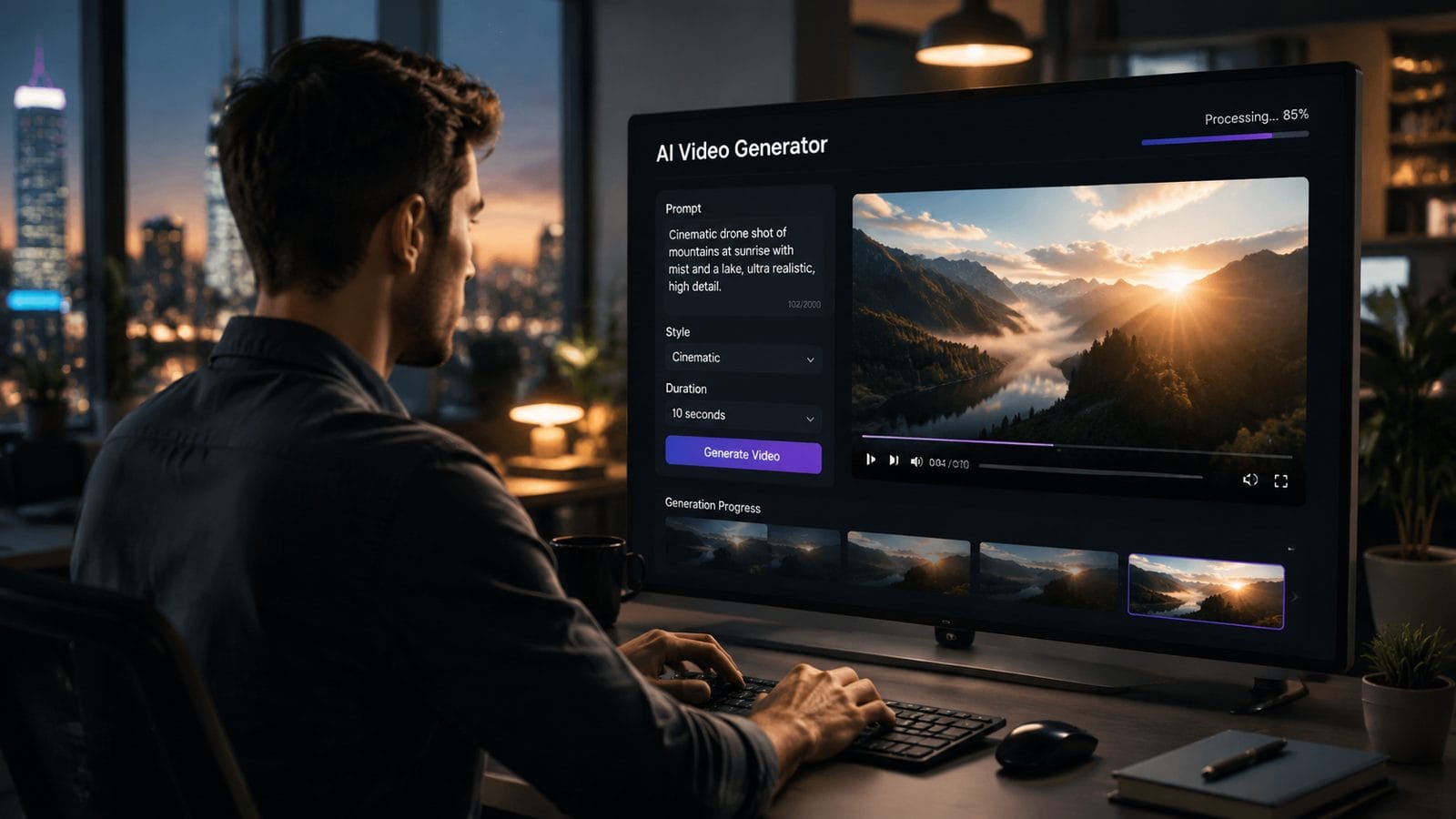
Critical Hit's July 2026 roundup highlights 10 leading AI video generators specifically optimized for marketing needs. These tools vary in specialization—some excel at social media clips while others focus on long-form explainer videos. What unites them is the ability to transform text prompts into visually compelling narratives with minimal human intervention.
LumeFlow AI: The All-in-One Marketing Solution
LumeFlow AI's Marketing Studio, launched in June 2026, provides templates for over 27 types of marketing videos—from product demos to customer testimonials. According to Send2Press, their Seedance 2.0 Mini technology renders videos 40% faster than previous versions while maintaining 4K quality. The platform also includes brand consistency features like automatic logo placement and color scheme matching.
Digen AI Agent: Autonomous Video Production
Digen AI's intelligent agent takes a different approach by breaking video creation into multi-step workflows. Instead of generating a complete video in one pass, the agent plans shots, adjusts character consistency, and refines edits autonomously. This results in longer videos (up to 15 minutes) with fewer visual artifacts—a common challenge with single-pass generators.
TikTok's Native AI Tools
Social Media Today reports that TikTok's June 2026 update introduced AI tools specifically designed for marketers. These include trend-adaptive templates and automatic caption generation optimized for the platform's vertical format. Early adopters have seen a 33% higher engagement rate compared to manually created videos.
Key Features to Look for in 2026
When evaluating text to video AI for marketing purposes, certain features have become essential this year. The most effective platforms combine ease of use with professional-grade output capabilities, bridging the gap between speed and quality.
4K Resolution Support
With LumeFlow AI's recent update, 4K video generation has become a standard expectation rather than a premium feature. High resolution is particularly important for product showcases and branded content where visual fidelity impacts perceived quality. Tests show 4K videos achieve 28% higher click-through rates in ad campaigns compared to 1080p.
Character Consistency
Maintaining consistent characters across multiple scenes has been a historical challenge for AI video. Solutions like Digen AI Agent address this by using persistent character models that remain visually coherent throughout longer narratives. This is crucial for storytelling ads or tutorial content where the same presenter appears repeatedly.
Platform-Specific Optimization
TikTok's AI tools demonstrate the growing importance of platform-aware generation. The best text to video AI in 2026 automatically adjusts aspect ratios, caption placement, and even pacing based on whether content is destined for Instagram Reels, YouTube Shorts, or LinkedIn. This eliminates the need for manual reformatting across channels.
How Text to Video AI is Changing Marketing Strategies
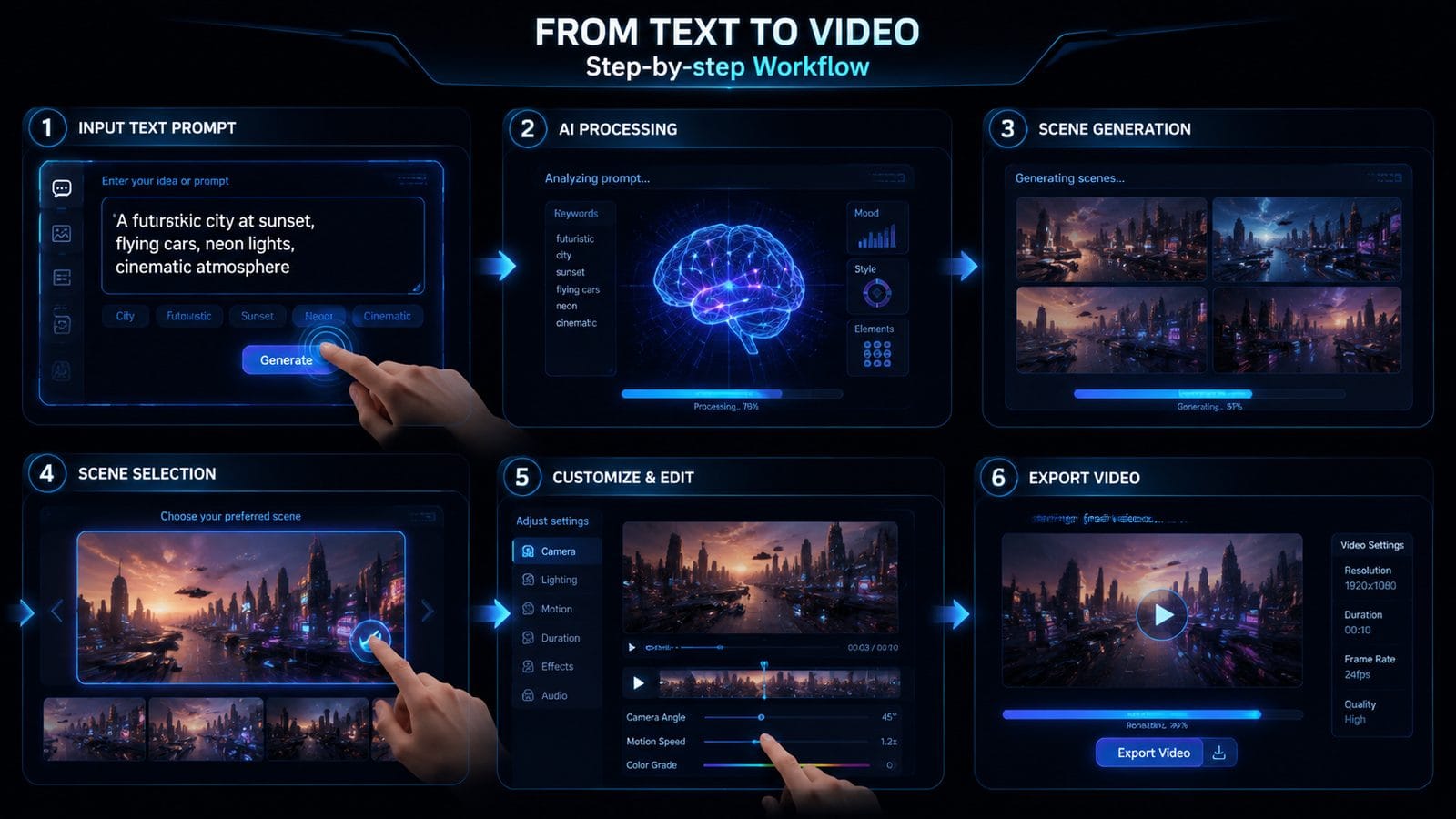
The adoption of AI video tools has led to measurable shifts in how marketing teams allocate resources and plan campaigns. Rather than being a novelty, text to video AI has become a core component of content strategies across industries.
According to data from Quasa.io, marketers using Pictory AI (rated as a top text-to-video tool) reduced their video production timelines by 76% while increasing output volume by 4.2x. This productivity gain allows teams to experiment with more formats and iterate quickly based on performance data.
Another significant change is the democratization of video content. Small businesses that previously couldn't afford professional video production can now create polished content at scale. Trend Hunter's report on Midjourney Video AI highlights how free tools are lowering barriers to entry—their text-to-video feature has been used to create over 3.1 million marketing videos since its 2026 launch.
The most forward-thinking marketers are using AI video to personalize content at scale. Some platforms now integrate with CRM data to generate customized videos for different audience segments automatically. This hyper-personalization approach has shown to improve conversion rates by up to 58% in email campaigns.
Implementing Text to Video AI in Your Workflow
Successfully integrating text to video AI into marketing operations requires more than just selecting the right tool. Teams need to adapt their processes to maximize the technology's potential while maintaining brand standards.
- Start with a content audit: Identify which existing text assets (blog posts, product descriptions) can be repurposed into video format most effectively.
- Establish brand guidelines: Configure your AI tool's settings to maintain consistent colors, fonts, and tone across all generated videos.
- Develop a testing framework: Create variations of AI-generated videos to determine which styles and formats perform best with your audience.
- Train your team: While the tools are designed to be intuitive, proper training on prompt engineering and editing features yields better results.
- Monitor and optimize: Track performance metrics to refine your approach continuously, focusing on engagement rates and conversion impact.
According to internal data from Digen AI, marketers who follow this structured approach see a 92% faster time-to-value from their AI video investments compared to those who implement tools haphazardly. The key is treating AI as a collaborator rather than a complete replacement for human creativity.
The Future of Text to Video AI in Marketing
As we look beyond 2026, several emerging trends suggest how text to video AI will continue evolving to meet marketer needs. The technology is moving from being a production tool to an intelligent content partner.
One significant development is the rise of predictive video generation. Some platforms are beginning to analyze performance data to suggest video topics and formats likely to resonate with specific audiences. Early tests show this approach can improve engagement rates by 41% compared to human-planned content calendars.
Another frontier is real-time video generation for personalized marketing. Imagine a system that creates custom product demo videos for each website visitor based on their browsing behavior—this level of dynamic content creation is expected to become mainstream by 2027. Digen AI Agent's architecture is particularly well-suited for such applications due to its workflow-based approach.
Perhaps most importantly, we're seeing the convergence of text, image, and video generation into unified platforms. The distinction between these content types is blurring as AI can now transform a single idea into multiple formats automatically. This holistic approach to content creation will likely redefine marketing teams' structures and skill requirements in the coming years.
Frequently Asked Questions
What's the main advantage of using text to video AI over traditional video production?
Text to video AI reduces production time by up to 90% and costs by 60-80% compared to traditional methods while maintaining comparable quality for most marketing use cases. It also enables rapid iteration and scaling that would be impractical with manual production.
How does Digen AI Agent differ from standard text to video tools?
Digen AI Agent uses autonomous multi-step workflows to produce longer, more consistent videos (up to 15 minutes) by breaking generation into planned stages. This results in better character continuity and fewer visual artifacts than single-pass generators, making it ideal for narrative-driven content.
Can AI-generated videos really match human-created quality?
For many marketing applications—especially social media and explainer videos—AI quality is now indistinguishable from professional human work. However, highly cinematic or emotionally nuanced content may still benefit from human direction, though the gap is narrowing rapidly.
What's the learning curve for text to video AI tools?
Most platforms are designed for zero learning curve—users can create basic videos immediately. However, mastering advanced features like style control and workflow automation typically takes 2-3 weeks of regular use to achieve professional-grade results consistently.
How are platforms like TikTok integrating text to video AI?
TikTok's June 2026 update added native AI tools that automatically format videos for optimal platform performance, including trend-adaptive templates and AI-generated captions. These specialized features help marketers create platform-perfected content without manual tweaking.
Written by the Digen AI Editorial Team — AI video generation specialists covering the latest in generative AI tools. Learn more about Digen AI.



Comments ()