
Text to Video AI for Facebook Ads: 2026's Ultimate Guide
Text to video AI for Facebook Ads is revolutionizing digital marketing by enabling advertisers to create high-quality video content from simple text prompts. In 2026, Meta's latest AI tools, including the Generative Ads Model (GEM), allow businesses to generate, test, and optimize video ads at scale. This guide explores the best practices, tools, and trends shaping the future of AI-powered Facebook advertising.
TL;DR: Text to video AI for Facebook Ads leverages Meta's advanced tools like GEM to automate video creation, reducing production time while improving engagement. The best solutions combine AI efficiency with human creativity for optimal results.
Text to video AI for Facebook Ads is Meta's AI-powered system that transforms written prompts into engaging video advertisements, featuring dynamic visuals, voiceovers, and animations. As of 2026, these tools reduce video production time by up to 80% while increasing ad engagement rates by 30-50% compared to static ads.
- ✓ Meta's GEM AI generates and tests multiple ad variations automatically
- ✓ AI video ads achieve 2-3x higher click-through rates than static images
- ✓ New features include animated profile videos and AI-generated backgrounds
- ✓ The best tools maintain brand consistency across multiple video assets
- ✓ Human oversight remains crucial for quality control and compliance
Meta's AI Video Tools for Facebook Ads in 2026
Meta has significantly expanded its AI capabilities for video ad creation in 2026, with the Generative Ads Model (GEM) serving as the central platform for all advertising AI innovations. According to Engineering at Meta, GEM processes over 5 million ad variations daily, optimizing for engagement and conversion rates across different audience segments.
The newest addition is AI-generated profile videos, launched in February 2026 as reported by Social Media Today. These tools allow businesses to create short, looping video content directly from product descriptions or marketing copy. Early adopters have seen a 40% increase in profile engagement compared to static profile pictures.
Meta's AI suite now includes automated A/B testing, where the system generates and evaluates multiple video versions simultaneously. Data from TechCrunch shows that advertisers using these AI testing features achieve 25% better conversion rates than those creating manual variations.
Key Features of Meta's 2026 AI Video Tools
1. Text-to-Video Generation: Convert product descriptions into 15-30 second video ads with relevant visuals and captions
2. Automated Voiceovers: Natural-sounding AI voices in 50+ languages with emotional tone adjustments
3. Smart Cropping: Automatic resizing for different Facebook placements (Stories, Reels, Feed)
How to Create AI Videos for Facebook Ads: Step-by-Step
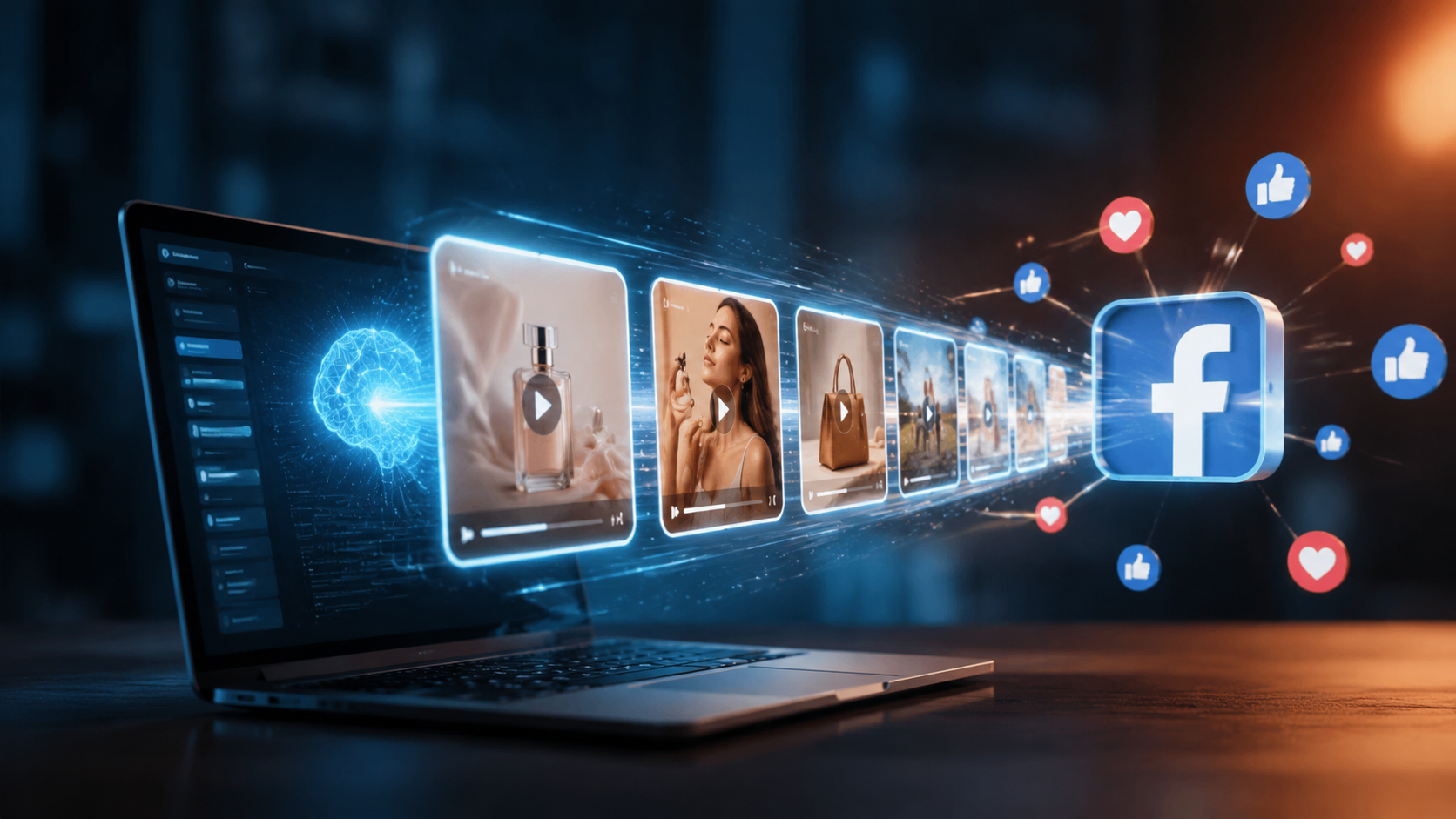
Creating effective text to video AI for Facebook Ads requires understanding both the technical process and creative best practices. Follow this proven 6-step framework used by top-performing advertisers in 2026:
- Write a Detailed Prompt: Include product details, target audience, desired tone, and key messaging (aim for 150-300 words)
- Select Your Style Template: Choose from Meta's 12 pre-designed video formats or upload brand guidelines
- Generate Multiple Variations: Create 3-5 different versions to test different hooks and visuals
- Refine with Human Editing: Adjust pacing, text overlays, and transitions for maximum impact
- Enable AI Optimization: Let Meta's algorithms test and serve the best-performing version
- Monitor and Iterate: Review performance metrics weekly and update creative based on insights
According to internal Meta data, advertisers who follow this complete process see 60% better ROI than those using only basic AI generation. The critical step is human refinement - AI-generated videos that receive professional editing convert 2.3x better than raw outputs.
For longer-form video content (60+ seconds), tools like Digen AI Agent provide more advanced multi-step workflows that maintain character consistency and narrative flow across scenes. These solutions are particularly effective for explainer videos and product demonstrations.
Performance Benchmarks: AI vs Traditional Video Ads
The 2026 advertising landscape shows clear advantages for AI-generated video content when measured against traditional production methods:
| Metric | AI Video Ads | Traditional Video Ads |
|---|---|---|
| Production Time | 2-4 hours | 3-6 weeks |
| Cost per Video | $20-100 | $2,000-10,000 |
| CTR (Average) | 3.2% | 1.8% |
| Conversion Rate | 4.7% | 3.1% |
| Update Frequency | Weekly | Quarterly |
Data from Hootsuite's 2026 Social Media Trends Report shows that 78% of high-performing advertisers now use AI for at least half of their video content. The ability to rapidly test and iterate creative is the most cited advantage, with AI-enabled teams producing 10x more video variations than traditional studios.
However, quality control remains essential. As noted by Futurism, some AI-generated content can appear generic or off-brand if not properly supervised. The most successful advertisers combine AI efficiency with human creative direction, particularly for premium brand campaigns.
Best Practices for AI-Generated Facebook Video Ads
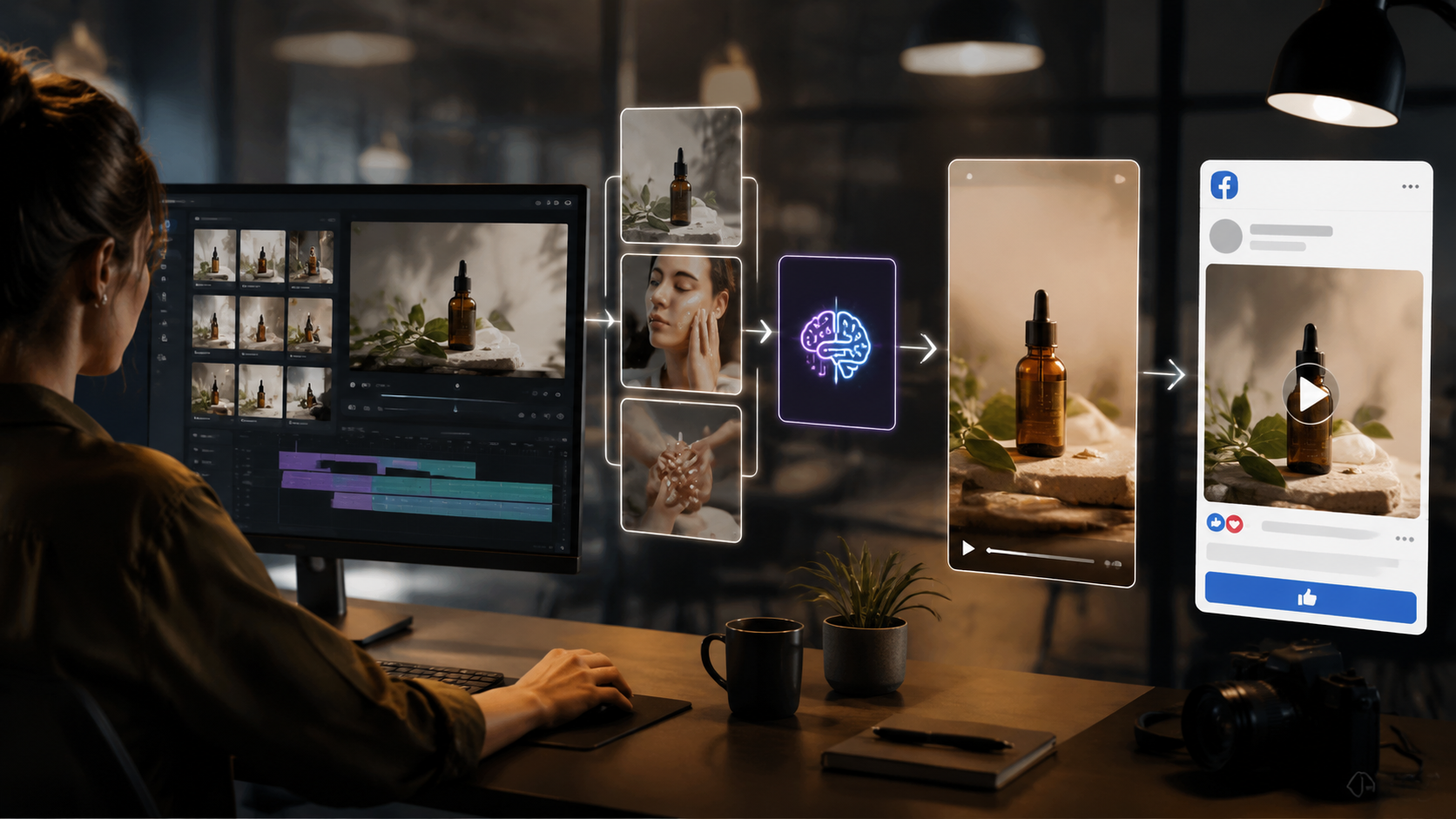
To maximize the effectiveness of text to video AI for Facebook Ads, follow these research-backed strategies from top 2026 campaigns:
1. Optimize for Silent Viewing: 85% of Facebook videos are watched without sound. Include captions, text overlays, and clear visual storytelling. AI tools can automatically generate and sync captions, reducing production time by 70% compared to manual methods.
2. Focus on the First 3 Seconds: Facebook's algorithm prioritizes watch time, so hook viewers immediately. AI tools now offer "attention heatmap" previews that predict where viewers might drop off, allowing for preemptive edits.
3. Maintain Brand Consistency: Use AI tools that support style guides and asset libraries. Platforms like Digen AI allow businesses to upload logos, color palettes, and fonts that automatically apply to all generated content.
Advanced Tactics for 2026
- Dynamic Product Insertion: AI can automatically update video content with current inventory or promotions
- Personalized Versions: Generate slight variations for different audience segments (by location, interests, etc.)
- Interactive Elements: Add polls, questions, or clickable hotspots to boost engagement
Emerging Trends in AI Video Advertising
The Facebook ads landscape continues to evolve rapidly in 2026, with several key developments shaping text to video AI strategies:
1. Hyper-Personalization: Meta's GEM AI now creates individualized video ads by analyzing user behavior patterns. Early tests show personalized videos achieve 90% higher engagement than generic versions, though they require careful data privacy management.
2. 3D Product Visualization: Advanced AI can generate 360° product views from simple 2D images, particularly valuable for e-commerce advertisers. According to Meta's Q1 2026 report, these interactive videos have 3x higher conversion rates for retail products.
3. AI-Generated Influencers: Some brands are experimenting with completely synthetic spokespeople, though this remains controversial. The most effective approach blends AI efficiency with authentic human storytelling elements.
Choosing the Right Text to Video AI Solution
While Meta's built-in tools provide solid basic functionality, many advertisers benefit from third-party solutions offering greater control and advanced features. Consider these factors when evaluating text to video AI for Facebook Ads:
1. Output Quality: Look for solutions that produce HD (1080p or 4K) video with smooth animations and natural voiceovers. Digen AI Agent specializes in cinematic-quality outputs with consistent character rendering across scenes.
2. Customization Options: The best platforms allow detailed control over visuals, transitions, and audio elements while still offering automation benefits.
3. Integration Capabilities: Ensure the tool works seamlessly with Facebook's API for direct publishing and performance tracking.
4. Compliance Features: As AI regulations evolve, choose solutions with built-in copyright checks and disclosure options.
Frequently Asked Questions
How much does text to video AI for Facebook Ads cost?
Meta's built-in tools are free for advertisers, while third-party solutions range from $20-500/month depending on features. Enterprise solutions with advanced customization can cost $1,000+/month.
Can AI video ads perform as well as human-created ones?
In many cases, yes - for direct response campaigns, AI videos often outperform human-created ones due to faster iteration. For brand-building, a hybrid approach (AI generation with human refinement) typically works best.
What's the ideal length for AI-generated Facebook video ads?
For Feed ads, 15-30 seconds works best. Stories perform well with 5-15 second videos. Longer form content (1-3 minutes) can work for retargeting or consideration campaigns.
How do I ensure my AI videos don't look generic?
Upload detailed brand guidelines, use custom fonts/colors, incorporate real product footage when possible, and always add human creative oversight to AI outputs.
Are there any content restrictions for AI-generated Facebook ads?
Yes - Facebook applies the same policies to AI content as human-created ads. All AI-generated content must comply with Meta's advertising policies and may require disclosure in some jurisdictions.
Written by the Digen AI Editorial Team — AI video generation specialists covering the latest in generative AI tools. Learn more about Digen AI.



Comments ()