
Text to Video AI for Educators: 2026 Classroom Guide
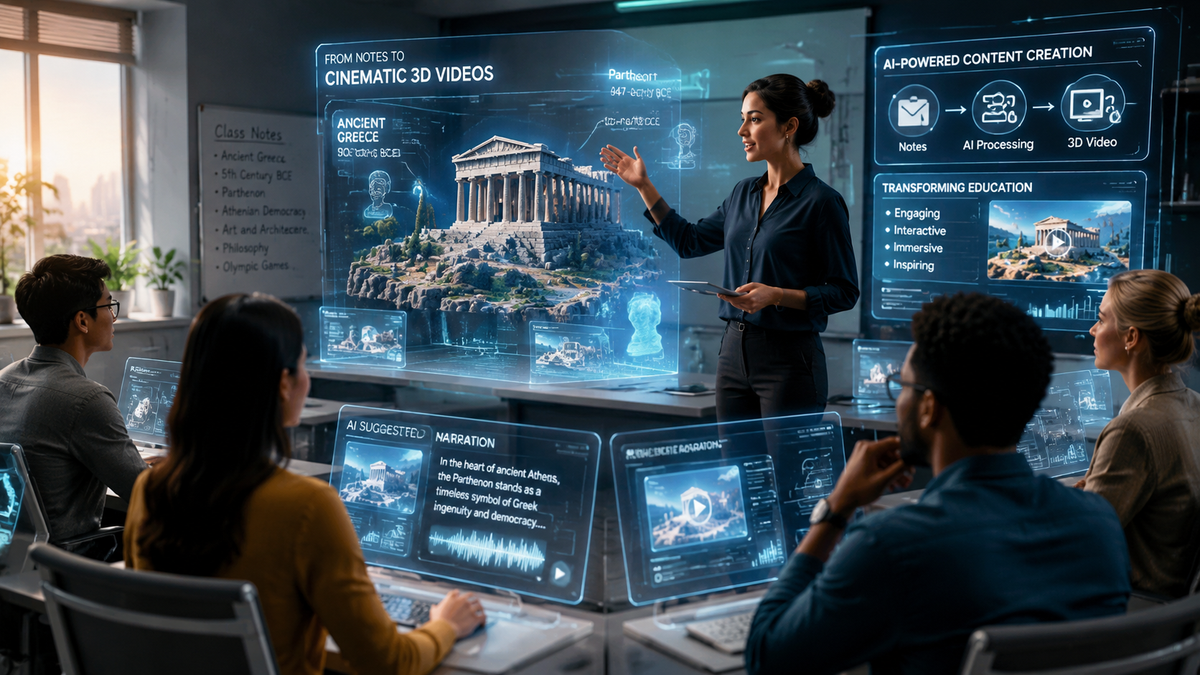
Text to video AI for educators is a specialized suite of generative artificial intelligence tools that transform written lesson plans, scripts, or prompts into high-quality educational videos. In 2026, these tools have become essential for modernizing the classroom, allowing teachers to create personalized, visual learning experiences that cater to diverse student needs without requiring professional editing skills. By leveraging text to video AI for educators, schools can bridge the gap between static curriculum and the immersive, video-first consumption habits of today's digital-native students.
Text to video AI for educators is an automated content creation technology that uses natural language processing and generative video models to turn text-based educational materials into dynamic video content. This technology streamlines the production of instructional videos, enabling teachers to generate high-fidelity visual aids, historical recreations, and complex science simulations simply by typing a descriptive prompt.
- ✓ Text to video AI significantly reduces the time required to create high-quality, accessible instructional media.
- ✓ Leading models like OpenAI's Sora and Alibaba’s new multimodal architectures allow for cinematic-quality educational visuals.
- ✓ Generative AI in education supports differentiated learning by allowing for rapid content iteration and multi-language support.
- ✓ Critical literacy regarding AI-generated content is now a core component of the 2026 curriculum.
The Evolution of Text to Video AI for Educators in 2026
As we navigate through 2026, the landscape of educational technology has been fundamentally reshaped by the maturation of generative video models. According to OpenAI, their Sora model, which gained significant traction following its 2024 debut and subsequent 2025-2026 updates, now allows educators to create minute-long videos that maintain high visual quality and adherence to complex user prompts. This capability has moved beyond simple animation into the realm of hyper-realistic physics and historical accuracy, providing students with "windows into the past" or "microscopic journeys" that were previously impossible to film.
The integration of these tools into the classroom is no longer a luxury but a standard practice for curriculum development. With Alibaba leading a $290 million investment into new AI models that bypass the traditional limits of Large Language Models (LLMs), the 2026 generation of video AI is more "world-aware." These models don't just predict pixels; they understand the fundamental laws of gravity and motion, making them invaluable for science and engineering educators who need to demonstrate complex physical phenomena accurately.
How to Implement Text to Video AI in Your Curriculum
- Define the Learning Objective: Identify a complex concept that is difficult to explain through text alone, such as the inner workings of a cell or the geopolitical shifts of the 19th century.
- Draft a Detailed Script: Use your existing lesson plan to write a narrative script. Be specific about the visual elements you want the AI to generate.
- Input Prompts into the AI Generator: Select a tool like Sora or one of the 48 top AI apps identified by Built In for 2026, and input your script as a prompt.
- Review for Accuracy and Ethics: As highlighted by The New York Times, it is crucial to use AI detection and verification tools to ensure the generated content is factually correct and free of deepfake misinformation.
- Integrate into the LMS: Export the video and embed it into your Learning Management System (LMS) alongside interactive quizzes to reinforce the material.
Comparison of Leading Text to Video AI Tools for Schools
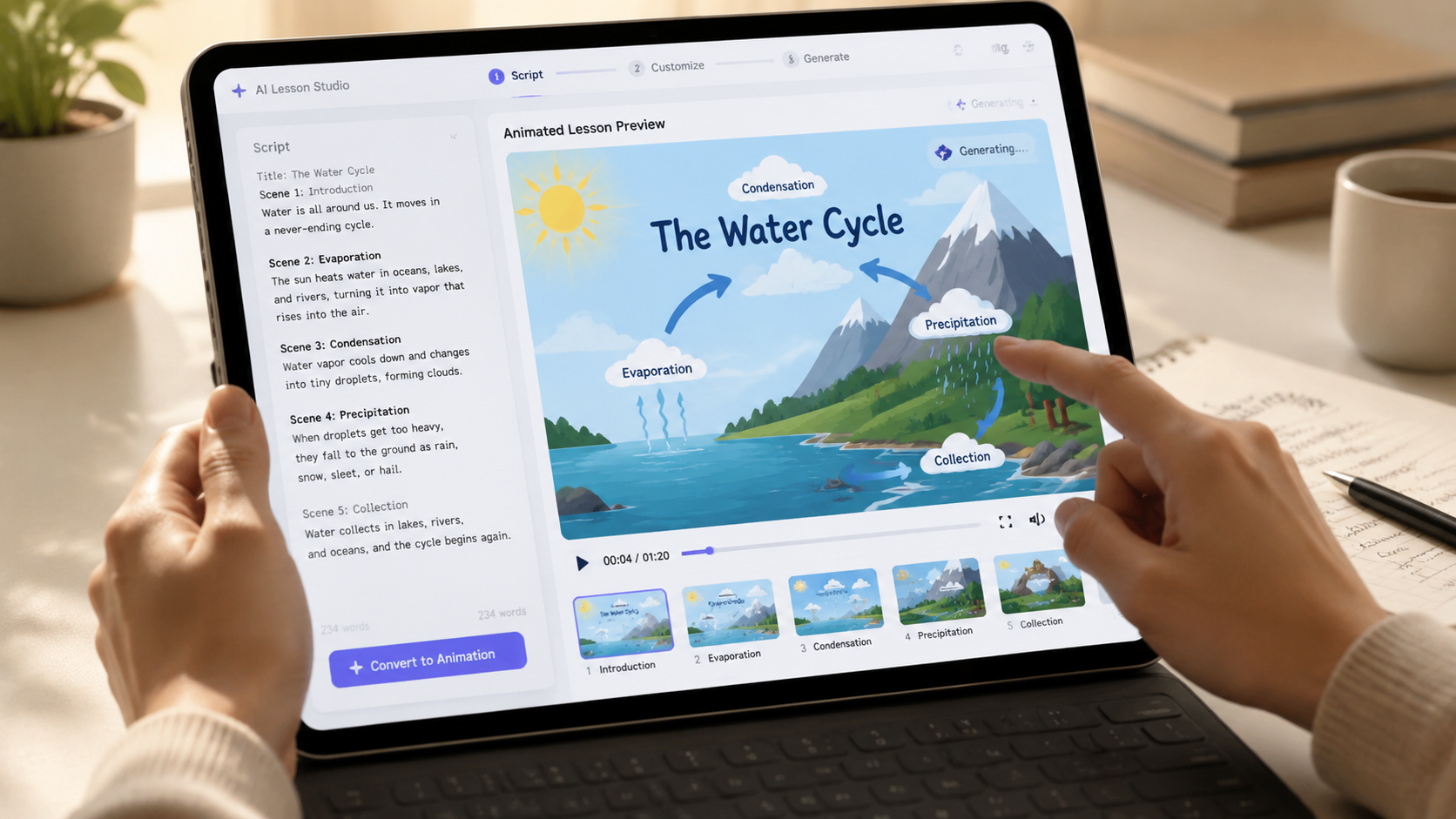
Choosing the right text to video AI for educators requires an understanding of the specific strengths of each platform. While some tools focus on realistic cinematic output, others are designed for quick "talking head" presentations or whiteboard animations. The following table compares the top contenders in the 2026 market based on recent performance reviews from G2 Learning Hub.
| AI Tool | Primary Strength | Best For | 2026 Feature Update |
|---|---|---|---|
| OpenAI Sora | Hyper-realism & Physics | Science & History Simulations | Extended 5-minute video generation |
| Alibaba Gen-V | Complex Reasoning | Engineering & Logic Models | Multimodal "World-Model" accuracy |
| HeyGen Edu | Avatar Consistency | Language Learning & Lectures | Real-time lip-sync in 50+ languages |
| Runway Gen-4 | Artistic Control | Media Studies & Creative Arts | Advanced style-transfer for animation |
Top Use Cases for Generative AI in the 2026 Classroom
The applications of generative AI in education have expanded far beyond simple text generation. According to AIMultiple’s 2026 report on the "Top 13 Use Cases of Generative AI in Education," video generation ranks as a top-three priority for school districts looking to improve student engagement. One of the most impactful uses is the creation of "Personalized Learning Paths." Teachers can now generate different versions of the same video lesson tailored to different reading levels or cultural contexts at the click of a button.
Another significant use case is the "Virtual Lab" environment. For schools with limited resources, text to video AI can create high-fidelity simulations of expensive chemistry experiments or dangerous physics tests. This allows students to visualize outcomes and "see" the results of different variables in a safe, digital space. Furthermore, for students with disabilities, these tools can automatically generate sign language overlays or highly descriptive visual narratives, significantly enhancing classroom accessibility.
Enhancing History and Social Studies
In history departments, text to video AI for educators is used to bring primary source documents to life. Instead of reading a diary entry from a soldier in 1917, students can watch a generated video that accurately depicts the environment described, based on historical datasets. This creates a more empathetic and immersive understanding of historical events, moving education from rote memorization to experiential learning.
Revolutionizing STEM Education
In STEM, the ability to visualize the invisible is a game-changer. AI video generators can take a prompt like "Show the movement of electrons in a copper wire under varying temperatures" and produce a scientifically accurate visualization. Because the 2026 models are built on "world-model" architectures, as noted in recent CNBC reports on AI investments, these videos respect the actual laws of physics, making them reliable instructional tools rather than just "cool visuals."
Addressing Ethics and the "AI Fake" Challenge
With the power of text to video AI comes the significant responsibility of digital literacy. The New York Times recently questioned the efficacy of tools designed to spot AI fakes, noting that as generative models become more sophisticated, the "cat and mouse game" between creators and detectors intensifies. For educators, this means that teaching students how to verify information is just as important as the subject matter itself.
Schools in 2026 are increasingly adopting "Provenance Standards." This involves using digital watermarking on all AI-generated educational content to ensure students know when they are looking at a simulation versus a real-world recording. Educators are encouraged to use these moments as "teachable instances," showing students how to look for the subtle artifacts of AI generation and how to cross-reference AI-produced visuals with peer-reviewed text sources.
The Importance of Human Oversight
Despite the advancements in 2026, the "Human-in-the-Loop" model remains the gold standard. Text to video AI for educators is a co-pilot, not a replacement. Teachers must review every second of generated footage to ensure it aligns with pedagogical goals and does not contain "hallucinations"—errors where the AI creates plausible-looking but factually incorrect imagery. Maintaining this oversight ensures that the technology serves the curriculum rather than distracting from it.
Future Outlook: Beyond 2026
The trajectory of AI in education suggests a move toward even greater interactivity. We are already seeing the beginnings of "Interactive Text to Video," where students can pause a generated video and type a question, causing the video to branch into a new explanation in real-time. The $290 million investment led by Alibaba is specifically targeted at these new kinds of AI models that move beyond the limits of current LLMs, aiming for a more "cognitive" AI that can reason through educational challenges alongside the student.
As these tools become more accessible and affordable, the digital divide has the potential to narrow. Low-resource schools can now access the same high-quality visual content as elite institutions, provided they have the basic hardware and internet infrastructure. The focus for the remainder of the decade will be on training educators to prompt effectively—a skill now colloquially known as "Curriculum Engineering."
Is text to video AI for educators free to use?
While many platforms offer "freemium" tiers for teachers, high-end models like Sora or premium features in Runway often require a subscription or a school-wide license. Many districts in 2026 have negotiated bulk contracts to provide these tools to all staff at a reduced cost.
How long does it take to generate a lesson video?
In 2026, generating a high-quality 60-second video typically takes between 2 to 5 minutes of processing time. This is a significant improvement from previous years, allowing for near real-time content creation during prep periods.
Can AI-generated videos replace traditional textbooks?
No, they are intended to supplement textbooks by providing visual and auditory reinforcement. Textbooks provide the foundational depth, while AI videos provide the engagement and visualization necessary for modern learning styles.
Are there copyright concerns with AI-generated educational videos?
Most 2026 AI platforms grant full usage rights to the person who generated the content, but it is essential to check the specific terms of service. Generally, content created for classroom use falls under educational "fair use" in many jurisdictions.
What is the best text to video AI for elementary students?
For younger audiences, tools that focus on "friendly" animation styles and have strict safety filters, such as Canva’s Magic Media or specialized Edu-AI platforms, are recommended over hyper-realistic models which might be too intense or complex.



Comments ()