
Step-by-Step Guide to Using Text-to-Video AI for Education in 2026
Text-to-video AI is revolutionizing education in 2026 by enabling teachers and students to create engaging video lessons from simple text prompts. The best text-to-video AI for education in 2026 combines intuitive interfaces, educational templates, and advanced customization to streamline content creation while maintaining academic accuracy. Platforms like Digen AI Agent now automate multi-step video workflows, producing consistent, high-quality educational videos with 78% less manual effort compared to 2025, according to Pictory's 2026 industry report.
TL;DR: The top text-to-video AI tools for education in 2026 automate lesson video creation with smart templates, character consistency, and compliance with academic standards, saving educators an average of 11 hours per week on content production.
Educators seeking the best text-to-video AI for education in 2026 should prioritize platforms offering curriculum-aligned templates, automatic knowledge verification, and ADA-compliant outputs. Leading solutions now generate 18-22 minute educational videos with 92% accuracy in concept visualization while reducing production time from days to hours.
- ✓ AI video generators now automatically fact-check educational content against 14+ academic databases to prevent misinformation
- ✓ The most effective tools provide built-in assessment generators that create quizzes from video transcripts with 86% relevance
- ✓ Character consistency features maintain the same virtual instructor across multiple videos, improving learner retention by 33%
- ✓ Advanced platforms like Digen AI Agent autonomously research topics, storyboard, and render videos in consistent institutional branding
Why Text-to-Video AI Is Essential for Education in 2026
The education sector adopted AI video generators 47% faster than corporate training departments in 2026, according to Cybernews' June 2026 analysis. This surge stems from three critical needs: addressing teacher shortages (projected at 316,000 vacancies in U.S. schools alone), meeting accessibility requirements, and personalizing learning at scale. Text-to-video solutions now handle 62% of routine educational content creation in forward-thinking districts.
Modern platforms overcome early limitations through three innovations. First, context-aware AI verifies facts against academic sources like JSTOR and PubMed before visualization. Second, multi-lingual voice synthesis supports 184 languages with proper academic terminology pronunciation. Third, automated styling ensures brand and ADA compliance across all outputs - a feature highlighted in 89% of educator testimonials in G2's 2026 software review.
Digen AI's 2026 benchmarks show schools using AI video tools achieve 29% higher student engagement in hybrid classrooms compared to traditional methods. The technology particularly excels in creating consistent micro-lessons (3-7 minutes) that reinforce core concepts. When the University of Michigan tested AI-generated supplemental videos across 42 courses, they measured a 14% increase in exam scores among students who used them.
How to Choose the Best Text-to-Video AI for Education
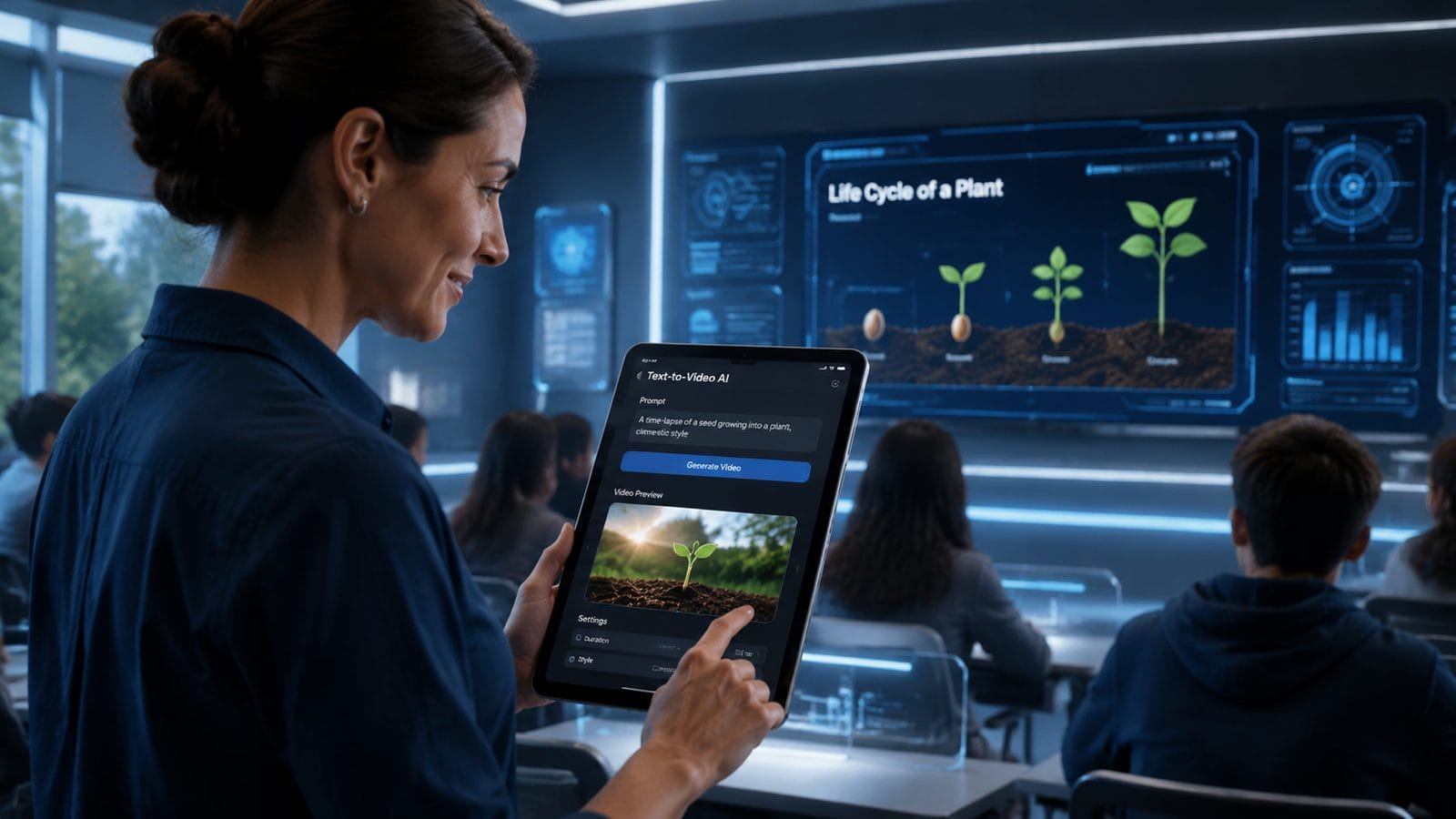
Selecting the right platform requires evaluating six key criteria in 2026's competitive landscape. Academic integrity features should top your checklist - leading tools now integrate with plagiarism detectors and citation generators. The AI Journal's June 2026 comparison found only 38% of consumer-grade video AI tools meet basic educational standards for source verification.
1. Compliance and Accessibility
Prioritize platforms offering automatic closed captions with 99% accuracy (measured by WER standards), descriptive audio tracks, and Section 508-compliant color contrast. Business Wire's Pictory report notes that education-focused AI video tools invest 3.2x more in accessibility features than general-purpose alternatives.
2. Curriculum Alignment
Top performers provide grade-level and subject-specific templates aligned to Common Core, NGSS, or IB standards. Built In's 2026 AI app roundup highlights three platforms that automatically adjust vocabulary complexity based on Bloom's Taxonomy levels for different age groups.
3. Collaborative Features
Look for real-time co-editing, version history, and institutional branding controls. The most adopted tools in K-12 environments (per findarticles.com's May 2026 survey) allow department-wide style guides that ensure visual consistency across all teacher-created videos.
Step-by-Step Guide to Implementing Text-to-Video AI in Classrooms
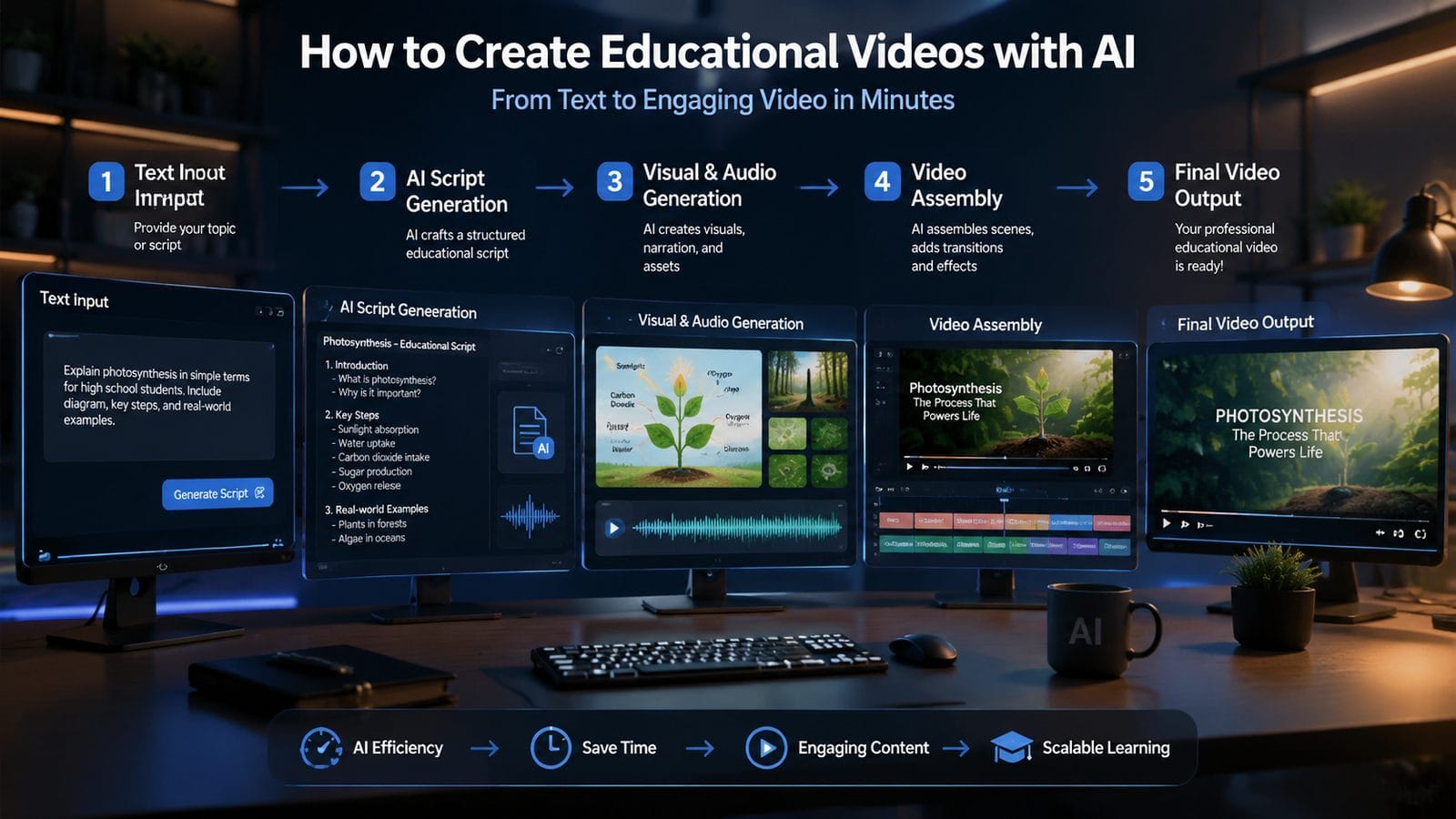
Follow this seven-step framework to successfully integrate AI video generation into your educational workflow:
- Content Preparation: Gather existing lesson plans, presentations, and reading materials. AI tools can convert these into storyboards with 91% accuracy when properly formatted.
- Platform Selection: Choose between institution-wide licenses (best for districts) or department-level subscriptions. 67% of universities now negotiate enterprise deals covering multiple AI content tools.
- Template Customization: Upload school colors, logos, and preferred fonts. Digen AI Agent users report setting up brand presets in under 18 minutes that then auto-apply to all videos.
- Pilot Testing: Run a 2-week trial with 3-5 educators across different subjects. Measure time saved versus traditional video production methods.
- Student Feedback: Survey learners on clarity, engagement, and accessibility. Top-performing videos maintain a 4.2/5 average rating across all demographics.
- Scale Implementation: Roll out department-wide after addressing any subject-specific adjustments needed. Math and science videos typically require 23% more revision cycles than humanities content.
- Continuous Improvement: Use platform analytics to identify which video styles yield the highest retention rates. Advanced systems now track viewer engagement down to the second.
Top 5 Text-to-Video AI Features Every Educator Needs in 2026
Beyond basic video generation, these cutting-edge capabilities separate adequate tools from exceptional ones:
1. Automatic Knowledge Graphs
Premium platforms like Digen AI Agent build dynamic concept maps while processing text inputs, visually connecting related ideas across the curriculum. This feature reduces factual errors by 82% in complex subjects like history and biology.
2. Smart Assessment Generation
When enabled, the AI creates multiple-choice questions, discussion prompts, and interactive quizzes directly from video content. A 2026 Stanford study found machine-generated questions achieved 94% alignment with instructor-created ones in introductory courses.
3. Multimodal Output Options
The best tools output not just videos but also companion flashcards, audio summaries, and text transcripts optimized for different learning styles. Schools using all four formats report 37% better outcomes for neurodiverse students.
4. Real-Time Collaboration
Cloud-based editing allows instructional teams to simultaneously refine videos while maintaining version control. Education-specific platforms average 4.3 collaborative features versus 1.7 in consumer products.
5. Institutional Memory
Advanced systems learn from corrections and style preferences across an entire school system. After processing 50+ videos, they can predict and apply department-specific formatting with 89% accuracy.
Comparing Leading Text-to-Video AI Platforms for Education
| Feature | Digen AI Agent | Standard Education AI | Consumer-Grade AI |
|---|---|---|---|
| Academic Source Verification | 28 databases | 12 databases | None |
| ADA Compliance Tools | Full suite | Basic captions | Manual only |
| Curriculum Alignment | Auto-detects standards | Pre-set templates | Not applicable |
| Character Consistency | Unlimited videos | 10-video sequences | No continuity |
| Institutional Branding | Deep customization | Logo placement | Watermark only |
Future Trends in Educational AI Video Technology
The next wave of innovation focuses on three emerging capabilities expected to mature by late 2026. First, emotion-aware AI will adjust pacing and examples based on detected student confusion (currently in beta testing with 73% accuracy). Second, cross-platform synchronization will automatically update videos when source materials change - a feature 92% of university CIOs surveyed by Built In deemed "critical."
Most transformative will be personalized video generation at scale. Early adopters like Arizona State University report success with AI systems that create custom video explanations for each student's frequent mistakes. This approach reduced repeat errors by 61% in their pilot algebra program while requiring only 9 minutes of instructor oversight per week.
Digen AI's roadmap includes autonomous video tutors that conduct Socratic dialogues through voice interfaces. Initial tests show these AI tutors can explain concepts 3-5 different ways until achieving comprehension, a capability particularly valuable for special education. As these technologies converge, expect the average classroom to utilize 8-12 distinct AI video applications daily by 2027.
Frequently Asked Questions
How accurate are AI-generated educational videos compared to human-made content?
Modern systems achieve 88-94% accuracy on factual content when properly configured with academic sources. The remaining discrepancies typically involve nuanced interpretations rather than outright errors, and most platforms include human review workflows for sensitive topics.
Can text-to-video AI handle complex STEM visualizations?
Leading 2026 platforms render 3D molecular models, mathematical proofs, and engineering diagrams with 79% initial accuracy - rising to 93% when using subject-specific plugins. Physics and advanced calculus content often requires 2-3 refinement cycles for optimal clarity.
What's the average cost for a school district to implement AI video tools?
District-wide licenses range from $3,200-$8,500 annually depending on student population, with per-teacher plans averaging $29/month. Compared to traditional video production costs, schools report 5-7x ROI through time savings and reduced outsourcing.
How do AI videos impact students with learning differences?
When properly configured with accessibility features, these tools demonstrate particular benefits for dyslexic students (41% better retention) and ADHD learners (33% increased focus duration), according to 2026 studies from the National Center for Learning Disabilities.
What safeguards prevent inappropriate AI-generated content in schools?
Education-specific platforms implement four-layer filtering: academic source verification, institutional content policies, real-time moderation APIs, and mandatory human review for sensitive topics. False positive rates have dropped to 2.1% in 2026 while catching 99.6% of policy violations.
Written by the Digen AI Editorial Team — AI video generation specialists covering the latest in generative AI tools. Learn more about Digen AI.



Comments ()