
Text to Video AI for E-Commerce Product Demos (2026)

Text to video AI for e-commerce product demos refers to generative artificial intelligence systems that convert written product descriptions, specifications, and marketing copy into fully produced video demonstrations without requiring traditional filming, editing, or animation skills.
Text to video AI for e-commerce product demos is a category of generative AI tools that transform product descriptions, feature lists, and brand guidelines into realistic or stylized video demonstrations. Instead of storyboarding, filming, or hiring actors, merchants simply input text prompts and the AI generates a complete demo video — often including voiceover, motion graphics, and lifestyle footage — in minutes.
- ✓ The AI-powered video generator market is growing at a compound annual growth rate (CAGR) of 23.5%, according to Market.us (June 2026).
- ✓ Text to video AI eliminates the "product demo dilemma" by drastically reducing production time and cost for e-commerce merchants, as highlighted by Intelligent Living (April 2026).
- ✓ Chinese AI firms are actively commercializing video-generation tools, accelerating global access to this technology (Let's Data Science, May 2026).
- ✓ Image to video AI is also rising in parallel, enabling static product photos to become dynamic content (Techloy, June 2026).
- ✓ Free and low-cost AI video makers now exist that cater specifically to YouTube creators and e-commerce businesses (BBN Times, June 2026).
What Is Text to Video AI for E-Commerce Product Demos?
Text to video AI for e-commerce product demos is a specialized application of generative video models that accepts textual inputs — such as product titles, feature descriptions, benefits, usage instructions, and even target audience personas — and outputs a complete video showcasing the product in action. Unlike traditional product demo production, which requires filming setups, lighting, actors, and post-production editing, text to video AI handles the entire pipeline from script to final render automatically.
According to Intelligent Living (April 2026), the "product demo dilemma" that online merchants have faced for years — the tension between producing high-quality demos and doing so at scale and low cost — is now being resolved by these AI systems. Merchants can generate hundreds of unique demo videos for different products, channels, and audience segments without expanding their production budget. The technology leverages large language models (LLMs) combined with diffusion-based video generation to interpret text and produce coherent motion, product interactions, and contextual backgrounds that mimic a real-world demonstration.
Why E-Commerce Product Demos Are Critical in 2026 — and Why AI Is the Answer
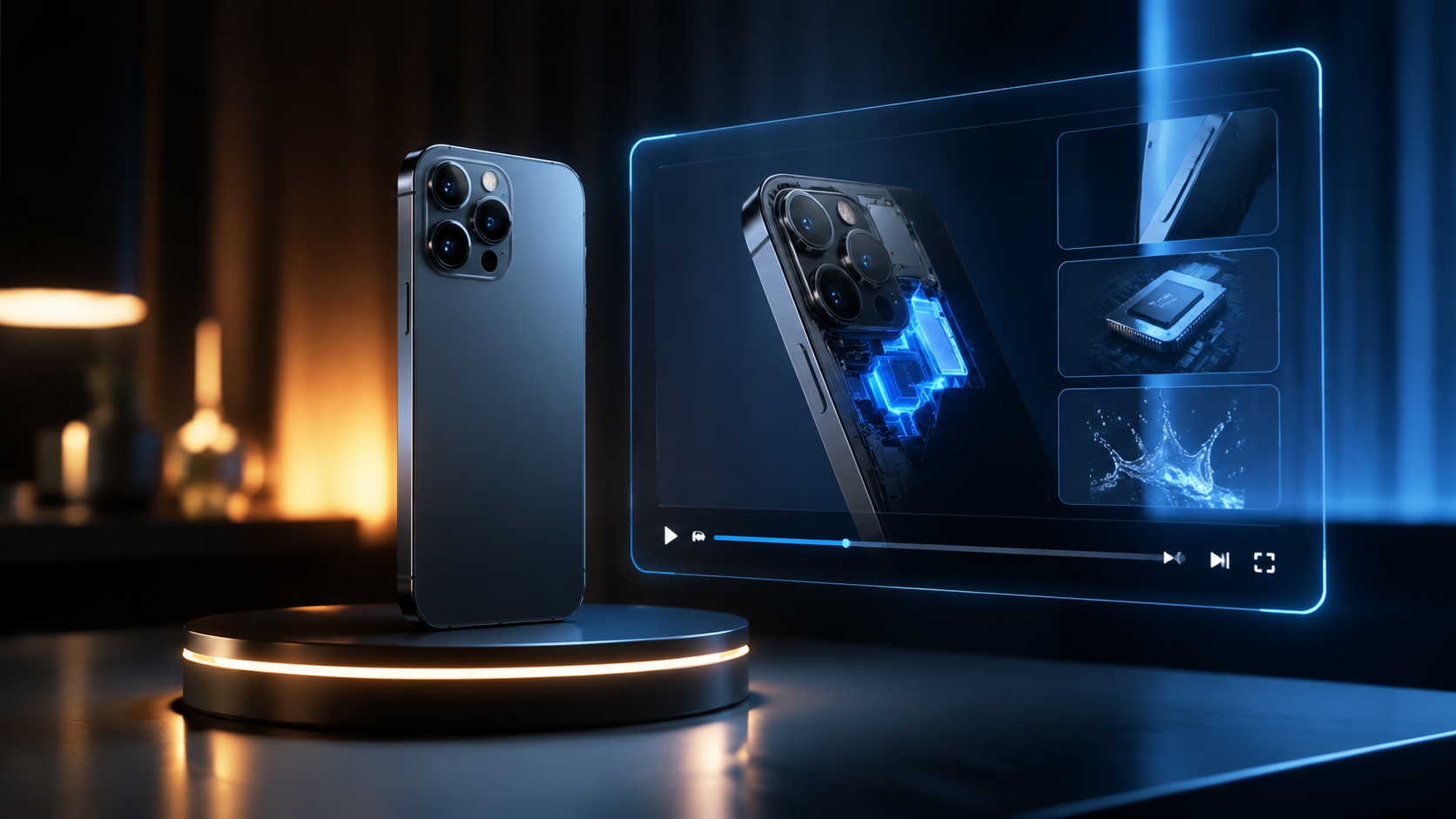
Product demos consistently convert better than static images or text-only descriptions. Shoppers want to see how a product works, how it looks from multiple angles, and how it fits into their lives. In 2026, consumers expect video content as a baseline for most online purchases. Yet traditional video production remains expensive and time-consuming, creating a bottleneck for merchants who list hundreds or thousands of SKUs.
The AI-powered Video Generator Market is projected to grow at a CAGR of 23.5%, according to Market.us (June 2026). This expansion is driven directly by e-commerce demand for faster, cheaper, and more personalized video content. As findarticles.com reported in May 2026, video AI generators are "transforming digital content creation" by removing the technical barrier to entry. Now, even a solo seller or small brand can produce polished product demos that rival those of large retailers.
Furthermore, the rise of image to video AI generators, as covered by Techloy (June 2026), means merchants can start from their existing product photo library and animate those still images into dynamic demonstrations. This hybrid approach — combining text inputs with image inputs — gives merchants maximum flexibility. Whether you start from a product description or an existing photo, the outcome is a compelling video demo that drives conversions.
How to Create Product Demos with Text to Video AI: A Step-by-Step Guide
Follow these steps to generate an e-commerce product demo using text to video AI in 2026. Most platforms follow a similar workflow, even though the specific interfaces vary.
- Write a detailed product description. Start with the product name, category, key features, dimensions, materials, and unique selling points. The more specific your text, the more accurate the AI-generated video will be. Include action verbs — "the blender crushes ice," "the folding chair collapses to 2 inches thick."
- Define the demo style and tone. Specify whether you want a lifestyle demo (product used in a real-world setting), a technical demonstration (close-ups of features), a comparison demo (product A vs product B), or an unboxing-style video. Also set the tone — professional, playful, luxurious, or educational.
- Provide visual references (optional but recommended). Many text to video AI tools now accept image inputs alongside text. Upload your product photos, packaging shots, or brand style guide to help the AI match colors, angles, and branding. According to Techloy (June 2026), this "image to video" capability is rapidly becoming standard.
- Select target platform and format. Specify whether the demo is for your website, Amazon listing, Instagram Reels, TikTok, YouTube Shorts, or a combination. The AI will optimize the aspect ratio (9:16 for vertical, 16:9 for horizontal), duration, and pacing for each platform.
- Generate the video and review. Run the generation. Most platforms produce a 15- to 60-second demo in 1-5 minutes. Review the output for accuracy, motion quality, and alignment with your brand. Many tools allow you to regenerate sections or adjust the prompt for a second pass.
- Add captions and CTAs. Use the platform's built-in editor to overlay captions, price tags, call-to-action buttons, and your logo. This step ensures the demo is optimized for sound-off viewing, which is critical for social media.
- Export and publish. Download the final video in your preferred resolution (typically 1080p or 4K) and upload it to your product pages, ads, and social channels. Some platforms offer direct publishing integrations.
Key Features to Compare in Text to Video AI Platforms for E-Commerce
Not all text to video AI tools are built alike, especially for e-commerce product demos. The table below compares the critical features you should evaluate when choosing a platform in 2026.
| Feature | Why It Matters for E-Commerce Demos | What to Look For |
|---|---|---|
| Text-to-video quality | Determines how accurately the AI renders your product from a written description. | Models trained on product imagery; support for fine-grained control (color, texture, motion). |
| Image-to-video input | Lets you start from product photos rather than text alone. | Support for multi-image input (front, back, side views); ability to animate specific regions. |
| Duration and length limits | Some demos need only 15 seconds; others require 60 seconds for detailed features. | Minimum 60-second output; ability to generate longer videos for comprehensive demos. |
| Aspect ratio presets | Different channels require different formats (square, vertical, horizontal). | Support for 16:9, 9:16, 1:1, and 4:5 with automatic subject reframing. |
| Voiceover and audio | AI-generated voiceover explains the product features while the video plays. | Multiple voice styles (professional, friendly, authoritative); multi-language support. |
| Brand customization | Maintaining brand consistency across thousands of SKU demos. | Custom color palettes, logo overlay, font selection, and intro/outro templates. |
| Cost and pricing model | Affordable for small sellers; scalable for large catalogs. | Free tier (as highlighted by BBN Times, June 2026); per-video pricing; subscription with volume discounts. |
| Export resolution | High resolution matters for product pages and ads. | Minimum 1080p; preferably 4K output for flagship product demos. |
| Integration with e-commerce platforms | Direct push to Shopify, Amazon, WooCommerce, or social media saves time. | API access; native plugins for major e-commerce systems; bulk generation for entire catalogs. |
According to BBN Times (June 2026), free AI video makers have improved dramatically in quality, making them viable for small businesses and creators. If you are just starting out, experiment with a free tier to evaluate output quality before committing to a paid plan. For larger catalogs with hundreds of SKUs, look for platforms that offer bulk text-to-video generation and batch editing features.
Real-World Use Cases and Benefits in 2026
Text to video AI for e-commerce product demos is not a futuristic concept — it is actively being deployed by brands of all sizes in 2026. Intelligent Living (April 2026) documented how mid-market e-commerce brands are scaling video production from 10 demos per month to over 1,000 per month using AI, without increasing their marketing headcount. This scaling capability directly addresses the product demo dilemma: high-quality video at high volume.
Chinese AI firms, as reported by Let's Data Science (May 2026), are commercializing video-generation tools specifically for e-commerce. These tools often excel at generating product-centric scenes — such as a handbag being carried through a city street or a kitchen appliance being used in a modern kitchen — because they are trained on massive datasets of product interactions. The global availability of these tools means that merchants anywhere can now access state-of-the-art text to video AI.
Beyond simple demos, merchants are using AI-generated video for A/B testing different demo angles, creating localized versions for international markets (by swapping text prompts and voiceover languages), and generating short social media teasers that link back to full product pages. Findarticles.com (May 2026) noted that the transformation goes beyond cost savings: AI-generated video allows merchants to test messaging, framing, and product positioning at near-zero marginal cost, leading to better-converting product pages overall.
Limitations and Considerations
While text to video AI for e-commerce product demos is powerful, it is not yet perfect in 2026. Some common limitations include occasional artifacts in complex motions (e.g., hands manipulating small objects), difficulty rendering very specific textures or materials with high fidelity, and the need for careful prompt engineering to avoid generic-looking outputs. Merchants should plan to review and occasionally regenerate videos, especially for hero products that appear on high-traffic pages.
Additionally, brand safety and copyright considerations apply. Always check the terms of service of your chosen platform regarding ownership of generated content. Most commercial platforms grant full ownership, but some free tools may place restrictions. BBN Times (June 2026) recommends reading the fine print on content rights before publishing AI-generated videos on your main product pages.
The Future of Text to Video AI for E-Commerce (2026 and Beyond)
Looking ahead, the trajectory is clear. The AI-powered Video Generator Market at a CAGR of 23.5% — as reported by Market.us (June 2026) — indicates strong continued investment and innovation. We can expect even more accurate product rendering, real-time personalization (where the demo changes based on the viewer's behavior), and seamless integration with product information management (PIM) systems. The distinction between "text to video" and "image to video" will blur as multimodal models handle all inputs interchangeably.
For e-commerce merchants, the message is clear: adopt text to video AI for product demos now, or risk being left behind as competitors deliver rich, personalized video experiences at scale. The tools are available, the quality is sufficient, and the cost is accessible — even for small sellers. Start with one or two hero products, refine your prompts, and scale from there.
Frequently Asked Questions About Text to Video AI for E-Commerce Product Demos
What is text to video AI for e-commerce product demos?
It is a generative AI technology that converts written product descriptions and specifications into fully produced video demonstrations. Instead of filming, the AI creates the video from text, including motion, background, and voiceover.
How long does it take to generate a product demo with text to video AI in 2026?
Most platforms generate a 15- to 60-second demo in 1 to 5 minutes. Some advanced tools with higher resolution or complex scenes may take up to 10 minutes. This is dramatically faster than traditional production, which can take days or weeks.
Can I use my existing product photos instead of text?
Yes. As highlighted by Techloy (June 2026), image to video AI generators are now widely available, allowing you to upload static product photos and animate them into dynamic demos. Many text to video platforms also accept image inputs for added accuracy.
Is text to video AI affordable for small e-commerce sellers?
Yes. BBN Times (June 2026) reported that free AI video makers now offer sufficient quality for small businesses. Paid plans typically start around $20–$50 per month for moderate usage, and per-video pricing can be as low as a few dollars for standard demos.
Which e-commerce platforms integrate with text to video AI tools?
Many leading tools offer direct integrations with Shopify, WooCommerce, Amazon, BigCommerce, and social media platforms. Check the specific platform's app marketplace or API documentation for integration details. Bulk generation for entire product catalogs is also supported by several enterprise-level tools.
Will AI-generated product demos replace human videographers?
Not entirely. AI handles high-volume, standardized demos extremely well, but high-end creative direction, complex storytelling, and unique brand cinematography still benefit from human expertise. Most businesses use AI for the bulk of their catalog and human-produced video for flagship campaigns.



Comments ()