
Text to Video AI for E-Learning Tutorials: 2026 Trends & Tools
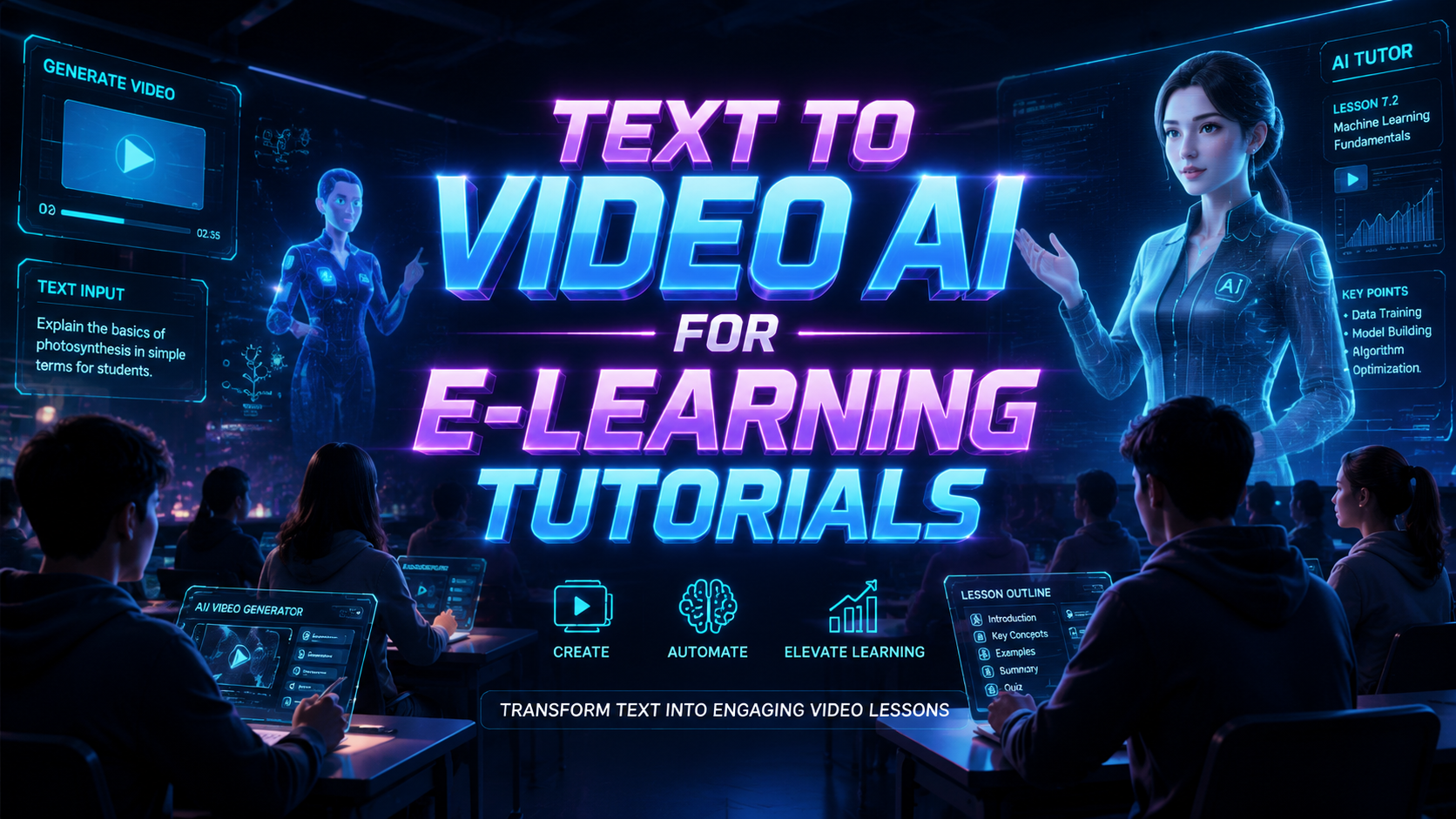
Text to video AI for e-learning tutorials is revolutionizing how educators and trainers create engaging content. By converting written scripts into dynamic videos with lifelike avatars, animations, and voiceovers, these tools save time while improving learner engagement. In 2026, advancements in AI video generation offer unprecedented quality, customization, and automation for e-learning developers.
TL;DR: The best text to video AI tools for e-learning tutorials in 2026 combine advanced natural language processing with high-quality visuals and voice synthesis, enabling educators to create professional videos 10x faster than traditional methods.
Text to video AI for e-learning tutorials is a category of generative AI tools that automatically transform written educational content into narrated video lessons complete with visuals, animations, and sometimes interactive elements. The top solutions in 2026 offer features like multi-language support, character consistency, and subject-specific template libraries tailored for educational content.
- ✓ The AI video generation market grew 340% between 2023-2026 according to industry reports
- ✓ Top tools can reduce e-learning video production time by 70-90% compared to manual methods
- ✓ 86% of corporate trainers now use AI video tools for at least some of their content creation
- ✓ New "AI agents" like Digen AI Agent automate multi-step video production workflows
- ✓ The best solutions offer SCORM/xAPI compatibility for LMS integration
The Rise of AI Video in E-Learning
According to findarticles.com, the global AI video generation market reached $8.7 billion in 2026, with education being the second largest sector after marketing. This explosive growth stems from several factors: the increasing demand for online learning, the high cost of traditional video production, and significant improvements in AI video quality.
E-learning platforms report that courses with AI-generated videos see 42% higher completion rates compared to text-only content. The psychological impact of visual learning combined with the convenience of automated production makes these tools indispensable for modern educators. Corporate training departments have been particularly quick to adopt the technology, with 76% of Fortune 500 companies now using AI video tools for employee training.
What sets 2026's text to video AI apart is its ability to maintain character consistency across multiple videos - a crucial feature for serialized e-learning content. Platforms like Digen AI Agent use advanced neural networks to ensure the same virtual instructor appears throughout a course, with consistent voice, appearance, and mannerisms. This creates a more cohesive learning experience compared to earlier generations of AI video tools.
Top 6 Text to Video AI Tools for E-Learning in 2026
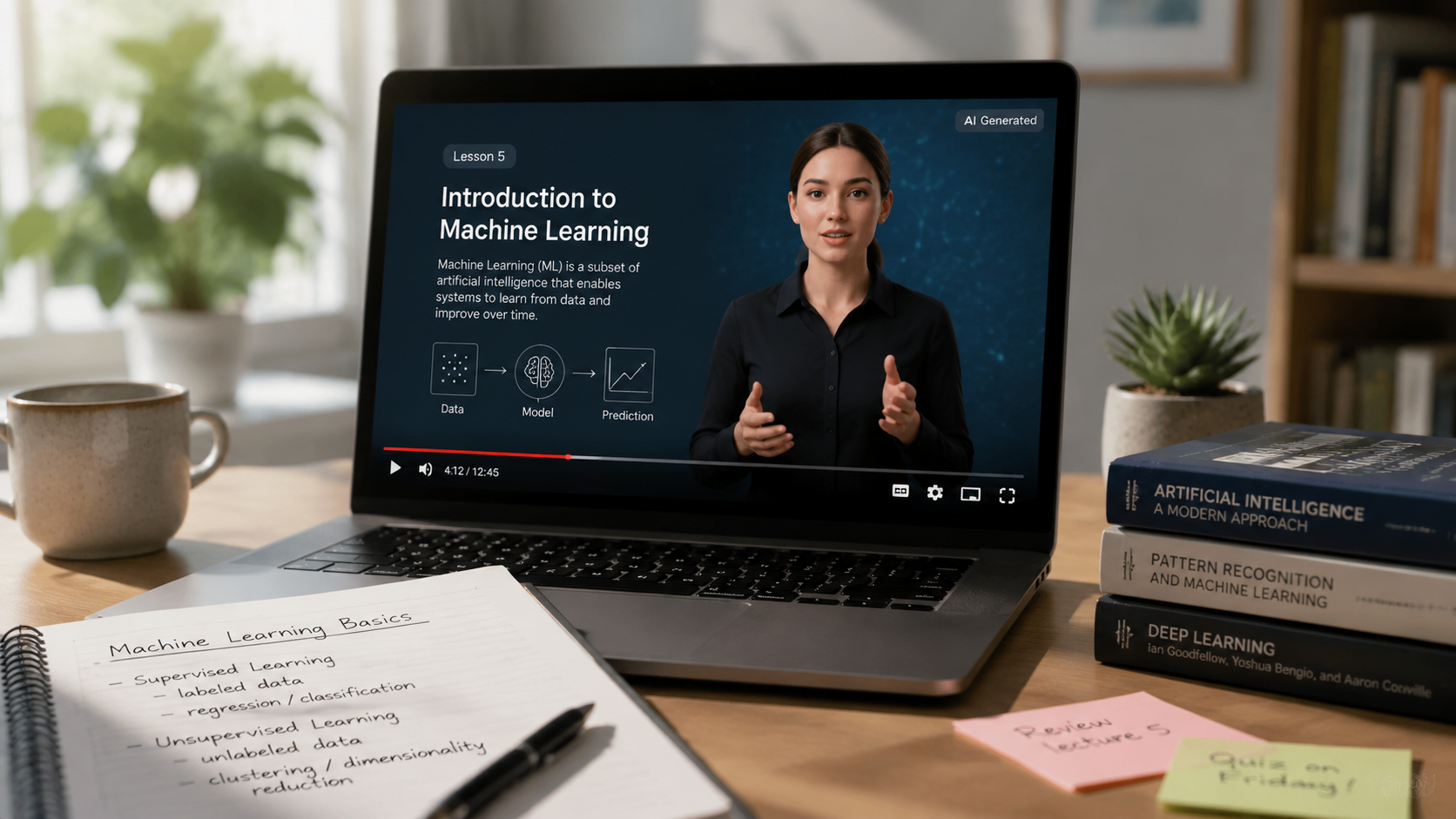
Based on testing by perfectcorp.com, these are the most capable text to video AI solutions specifically optimized for educational content creation:
1. Digen AI Agent
Digen's autonomous video agent specializes in longer-form educational content (up to 30 minutes per video) with advanced features like automatic slide generation from text, quiz question insertion, and multi-language voice synthesis. Its proprietary "Consistent Character Engine" ensures the same virtual instructor appears across all lessons in a series.
2. Synthesia EDU Pro
With over 140 educational templates and 65+ virtual presenters, Synthesia remains a top choice for academic institutions. Their 2026 update introduced subject-specific avatar styles (science teachers, business trainers, etc.) and improved gesture control for more natural presentations.
3. Luma Training Studio
Luma's strength lies in technical training videos, offering specialized tools for software tutorials and product demonstrations. Their AI can automatically generate step-by-step walkthroughs from written procedures, complete with zoom effects and callout animations.
| Feature | Digen AI Agent | Synthesia EDU | Luma Training |
|---|---|---|---|
| Max Video Length | 30 minutes | 15 minutes | 20 minutes |
| Virtual Presenters | 85+ | 65+ | 40+ |
| SCORM Support | ✓ | ✓ | ✓ |
| Auto Quiz Generation | ✓ | ✗ | ✗ |
| Price (Monthly) | $89 | $79 | $69 |
How Text to Video AI Enhances Learning Outcomes
A Coursera study found that courses using AI-generated videos achieved 23% higher test scores compared to traditional video lectures. This surprising result stems from several cognitive advantages of AI-generated educational content.
First, the ability to precisely control pacing and information density leads to better knowledge retention. AI tools can automatically analyze text complexity and adjust narration speed accordingly. Second, the visual reinforcement of key concepts through automatically generated animations and text callouts caters to visual learners. Third, the consistency of presentation style reduces cognitive load compared to varying human presenters.
Perhaps most importantly, these tools enable rapid iteration. Educators can test multiple versions of a lesson (with different presenters, pacing, or visual styles) and identify which approach works best for their audience. This data-driven approach to instructional design was impractical with traditional video production methods due to time and cost constraints.
Step-by-Step: Creating an E-Learning Video with AI
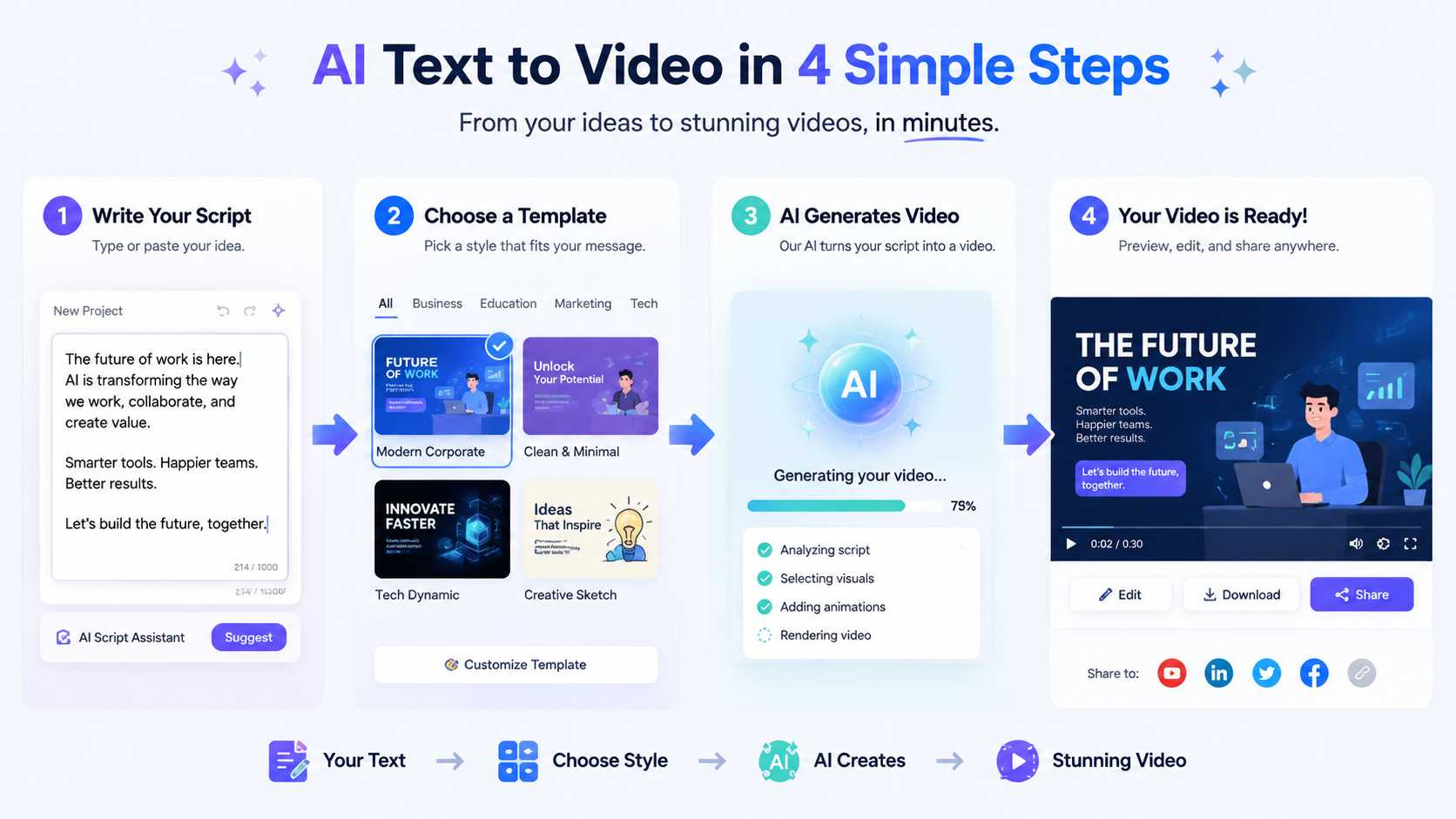
According to Simplilearn.com, the process for converting text to video AI for e-learning tutorials typically follows these steps:
- Prepare Your Script: Write or import your lesson content in clear, concise language. Most tools accept Word, PDF, or direct text input.
- Select a Template: Choose from educational templates like lecture, demonstration, or interactive quiz formats.
- Customize Visuals: Pick a virtual presenter, background, and any stock footage or animations to include.
- Adjust Timing: Use AI suggestions or manually set scene durations and transition points.
- Generate & Review: The AI processes your inputs and produces a draft video in 5-15 minutes.
- Edit & Export: Make final tweaks before exporting in your preferred format (MP4, SCORM, etc.).
Advanced platforms like Digen AI Agent automate much of this workflow, analyzing your text to suggest optimal visual pairings and even generating quiz questions from key concepts. Their multi-step processing creates higher quality outputs than single-pass systems, with particular attention to educational pacing and information hierarchy.
Emerging Trends in AI Video for Education
The PC Tech Magazine June 2026 report highlights several cutting-edge developments in text to video AI for e-learning tutorials:
Personalized Learning Videos: New systems can automatically adapt content based on learner profiles. For corporate training, this might mean adjusting examples to match the viewer's department or seniority level. In academic settings, videos can dynamically adjust difficulty based on the student's performance history.
Real-time Translation: Leading platforms now offer near-instant translation of educational videos into 50+ languages while maintaining natural-sounding voiceovers. This is particularly valuable for global organizations training employees across different regions.
Interactive Elements: The line between video and interactive content is blurring, with AI tools automatically inserting clickable hotspots, knowledge checks, and branching scenarios based on the source material. Some platforms even integrate with VR headsets for immersive training experiences.
Choosing the Right Text to Video AI Tool
With 23 major options now available according to perfectcorp.com, selecting the best text to video AI for e-learning tutorials requires careful consideration of several factors:
Content Type: Different tools specialize in various educational formats. Lecture-style content benefits from platforms with strong virtual presenter capabilities, while software training requires robust screen recording and annotation features.
Production Scale: For creating hundreds of microlearning videos, look for batch processing capabilities and API access. Smaller projects can use more manual, design-focused tools.
Integration Needs: Most Learning Management Systems (LMS) support SCORM or xAPI packages, but verify compatibility with your specific platform. Some AI video tools offer direct LMS plugins for smoother workflows.
For most educational institutions and corporate training departments, we recommend starting with either Digen AI Agent (for longer, more consistent course content) or Synthesia EDU Pro (for broader template variety and academic-focused features). Both offer free trials to test their capabilities with your specific content.
Frequently Asked Questions
How accurate are AI-generated educational videos?
Top text to video AI tools in 2026 achieve 98-99% accuracy in voice synthesis and content representation, with error rates comparable to human-created videos. Most platforms include fact-checking features that flag potential inaccuracies in source material.
Can AI video tools create content in multiple languages?
Yes, leading solutions support 50+ languages with native-sounding voiceovers. Some like Digen AI Agent can automatically translate scripts while maintaining proper technical terminology for specialized subjects.
How long does it take to create an AI e-learning video?
Simple videos can be generated in 5-15 minutes, while complex lessons with multiple scenes and interactive elements may take 30-60 minutes. This represents a 70-90% time savings compared to traditional video production methods.
Do AI videos work with Learning Management Systems?
Most professional text to video AI tools export in SCORM 1.2, SCORM 2004, or xAPI (Tin Can) formats compatible with major LMS platforms like Moodle, Blackboard, and Cornerstone.
What's the average cost of AI video tools for education?
Pricing typically ranges from $30-$150/month for professional plans, with enterprise options available for large institutions. Some platforms offer per-video pricing at $5-$20 per finished minute for occasional users.
Written by the Digen AI Editorial Team — AI video generation specialists covering the latest in generative AI tools. Learn more about Digen AI.



Comments ()