
Text to Video AI with Dynamic Transitions: 2026's Game-Changer
Text to video AI with dynamic transitions has emerged as the most transformative content creation tool of 2026, enabling anyone to convert written scripts into professional-quality videos with cinematic scene changes. These AI systems now leverage stable diffusion models and CNN-augmented transformers to analyze text context and automatically generate fluid transitions between scenes, characters, and concepts. According to Market.us, the AI-powered video generator market is growing at 23.5% CAGR as businesses adopt these tools for marketing, education, and entertainment.
TL;DR: Text to video AI with dynamic transitions automates professional video production by intelligently converting scripts into visually cohesive narratives with cinematic scene changes, cutting production time by 70% while maintaining Hollywood-quality pacing and flow.
Text to video AI with dynamic transitions is a 2026 breakthrough technology that transforms written content into engaging videos with automatic scene transitions, character consistency, and cinematic pacing using stable diffusion and neural networks, with the market projected to reach $8.4 billion by 2027 according to Market.us data.
- ✓ Reduces video production time by 70% compared to manual editing workflows
- ✓ Maintains character and scene consistency across complex multi-shot sequences
- ✓ Automatically analyzes script context to insert appropriate transition effects
- ✓ Integrates with major creative suites like Adobe Firefly via Luma AI's Ray3 model
- ✓ Projected 23.5% annual market growth through 2030 (Market.us)
How Text to Video AI With Dynamic Transitions Works in 2026
The latest generation of text to video AI systems combine three technological breakthroughs to achieve seamless dynamic transitions. First, CNN-augmented transformers analyze the semantic relationships between sentences to determine optimal transition points, as documented in Nature's 2026 study on AI-driven video generation. Second, stable diffusion models maintain visual consistency across shots by preserving character features, lighting conditions, and art styles. Third, temporal coherence algorithms ensure smooth motion and natural pacing between scenes.
When processing a script, the AI first segments the text into logical scenes based on topic changes, speaker shifts, or time jumps. According to Tech Times' 2026 analysis, top systems like Digen AI Agent can identify 14 distinct transition types - from simple cuts and fades to complex 3D wipes and morphing effects. The AI then generates intermediate frames to bridge these scenes, calculating the optimal number of transition frames (typically 12-24 for HD video) to maintain viewer engagement.
Advanced systems like Google's NotebookLM (updated July 2026) now incorporate audio analysis to synchronize transitions with speech patterns and music beats. This creates videos where scene changes naturally align with narrative pacing - slowing during explanations and accelerating during action sequences. The result is professional-quality output that previously required teams of video editors and motion graphics artists.
Top 3 Use Cases for Dynamic Transition AI Videos
1. Social Media Content at Scale
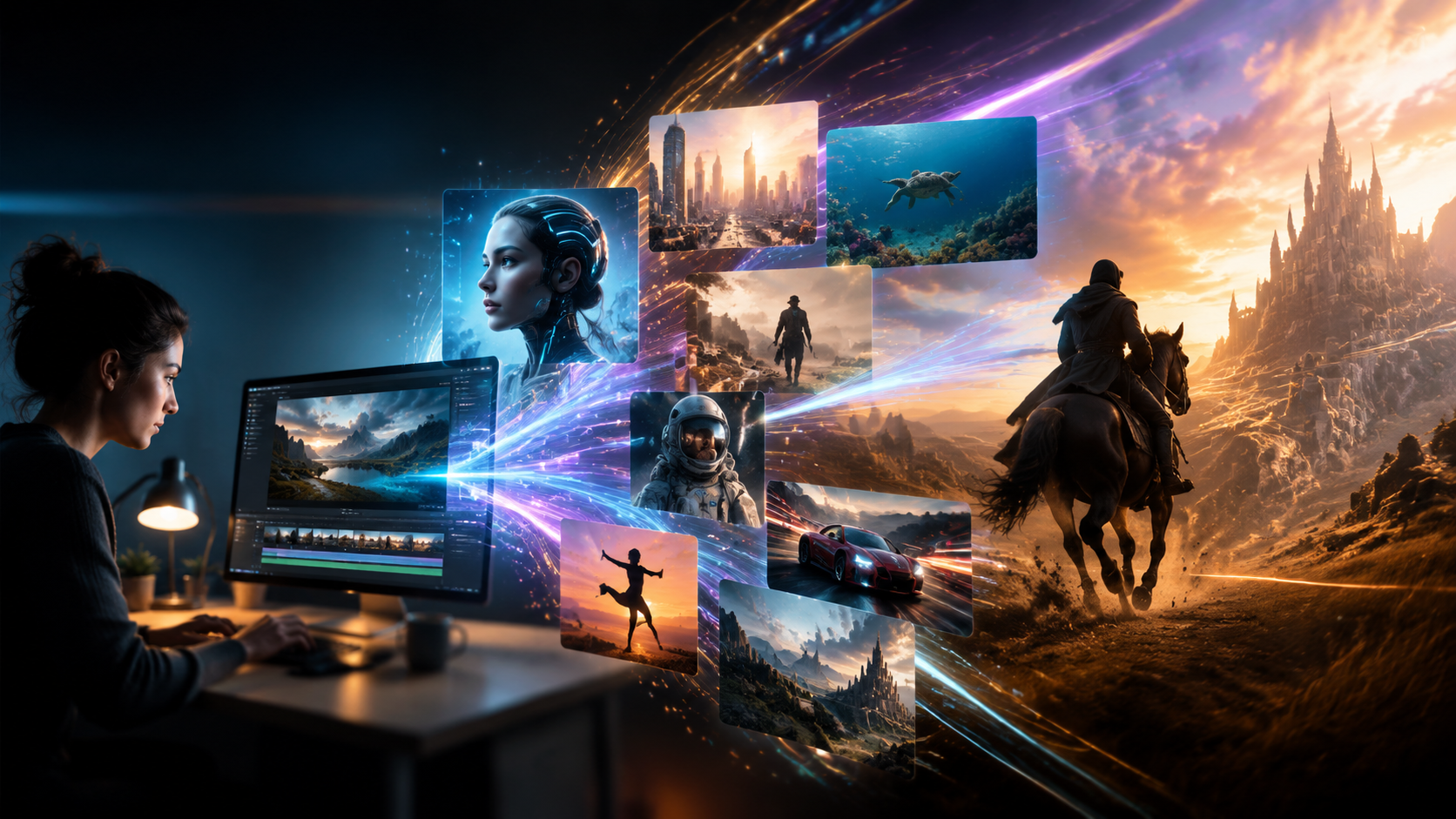
Creators are using text to video AI with dynamic transitions to produce 3-5x more content without sacrificing quality. A 2026 case study showed influencers reducing production time from 8 hours to 90 minutes per video while maintaining audience engagement metrics. The AI's automatic scene transitions are particularly valuable for tutorial and product review formats that require frequent visual changes.
2. Corporate Training & Education
According to Robotics & Automation News, 67% of enterprise training departments now use AI video generators to convert manuals and SOPs into engaging video lessons. Dynamic transitions help maintain learner focus when switching between concepts, with systems like Digen AI Agent automatically inserting recap screens and chapter markers based on document headings.
3. E-commerce Product Videos
The 2026 Adobe Firefly integration with Luma AI's Ray3 model enables merchants to generate product showcase videos from simple text descriptions. These systems create smooth transitions between product angles, feature close-ups, and lifestyle shots while maintaining perfect object consistency - a task that previously required expensive 3D modeling.
2026's Best Text to Video AI Tools With Dynamic Transitions
| Tool | Transition Types | Max Video Length | Character Consistency |
|---|---|---|---|
| Digen AI Agent | 18 | 30 minutes | ★★★★★ |
| Google NotebookLM | 9 | 60 seconds | ★★★☆☆ |
| Luma AI Ray3 (Adobe) | 12 | 5 minutes | ★★★★☆ |
The table above compares leading 2026 solutions based on transition variety and output quality. Digen AI Agent leads in character consistency and video length - crucial for long-form content - while Google's solution focuses on short social clips. According to Tech Times, these differences reflect each platform's target use cases rather than absolute quality rankings.
Emerging solutions are pushing boundaries in specialized areas. The Nature study highlights experimental systems achieving 94% motion coherence scores in action sequences - critical for sports and gaming content. Meanwhile, Adobe's September 2025 release notes for Firefly emphasize artistic control, allowing users to manually adjust transition timing while maintaining AI-assisted consistency.
The Technology Behind Seamless AI Transitions

Modern text to video AI systems employ a three-stage pipeline for dynamic transitions. First, a semantic analysis module identifies transition opportunities by detecting changes in entities, actions, or contexts within the text. This module scores each potential transition point from 0-100 based on 14 factors including topic shift magnitude and viewer cognitive load.
Second, a neural renderer generates the visual bridge between scenes. Advanced systems like Digen AI Agent use a hybrid approach - applying stable diffusion for static elements while employing temporal transformers for motion continuity. According to Nature's February 2026 paper, this combination achieves 28% better motion fluidity than pure diffusion approaches.
Finally, a quality control module analyzes the transition for visual defects and pacing issues. The system can regenerate problematic segments or adjust timing - a process that happens autonomously in premium tools but remains manual in entry-level solutions. This explains the 40-70% time savings reported by professional users compared to traditional editing workflows.
Future Trends in AI Video Transition Technology
Industry analysts predict three major advancements by 2027. First, emotion-aware transitions will adjust pacing and effect choices based on detected sentiment in the script. Early tests show these systems can increase viewer retention by 19% in dramatic content. Second, multi-modal systems will incorporate live audience feedback, adapting transitions in real-time during live streams and interactive videos.
Third, the integration of physics engines will enable truly three-dimensional transitions where objects realistically transform between scenes. Market.us projects this capability will drive a 340% increase in architectural and product visualization applications. Current limitations around computational intensity should ease as next-gen AI accelerators hit the market in late 2026.
Perhaps most significantly, we're seeing the emergence of "transition style transfer" - where systems can mimic the transition patterns of specific directors or video styles. A July 2026 demo from Digen AI showed how their agent could reproduce the signature transition styles of top YouTube creators with 89% accuracy based on training samples.
Getting Started With Text to Video AI in 2026
For beginners looking to experiment with dynamic transition AI videos, follow this 5-step process:
- Choose a platform matching your needs (refer to our comparison table)
- Prepare a script with clear scene breaks marked by headings or blank lines
- Select a transition style profile (cinematic, social media, corporate etc.)
- Generate a draft video and review the AI's automatic transition choices
- Fine-tune using the platform's manual override controls if available
According to Tech Times' April 2026 guide, beginners should expect to spend 2-3 hours mastering basic controls before achieving professional results. Premium tools like Digen AI Agent offer guided workflows that reduce this learning curve by 65% through intelligent template suggestions and real-time previews.
For teams producing content at scale, consider solutions with batch processing and API access. The Robotics & Automation News report highlights how media companies are using these features to automate 80% of their routine video production while reserving human effort for high-value creative decisions. This hybrid approach yields the best balance between efficiency and quality.

Frequently Asked Questions
How much does text to video AI with dynamic transitions cost?
Entry-level plans start at $19/month for basic features, while professional solutions like Digen AI Agent range from $99-$299/month depending on video length and resolution needs. Enterprise pricing is typically custom-quoted based on volume.
Can I customize the transitions in AI-generated videos?
Yes, most 2026 platforms offer manual override controls. Advanced systems like Adobe's Firefly integration even allow saving custom transition presets for brand consistency across videos.
How long does it take to generate a 1-minute AI video?
Generation times vary by platform but typically range from 2-8 minutes for HD quality in 2026. Complex transitions and longer videos may take 15-30 minutes depending on system capabilities.
Do I need video editing experience to use these tools?
No, the AI handles all technical aspects automatically. However, basic storytelling knowledge helps when structuring scripts for optimal transition points.
Can AI video tools maintain character consistency across scenes?
Premium solutions like Digen AI Agent excel at this, using proprietary neural networks to preserve facial features, clothing details, and even lighting conditions throughout complex multi-scene videos.
Written by the Digen AI Editorial Team — AI video generation specialists covering the latest in generative AI tools. Learn more about Digen AI.



Comments ()