
Text to Video AI with Brand Templates (2026): Future of Marketing
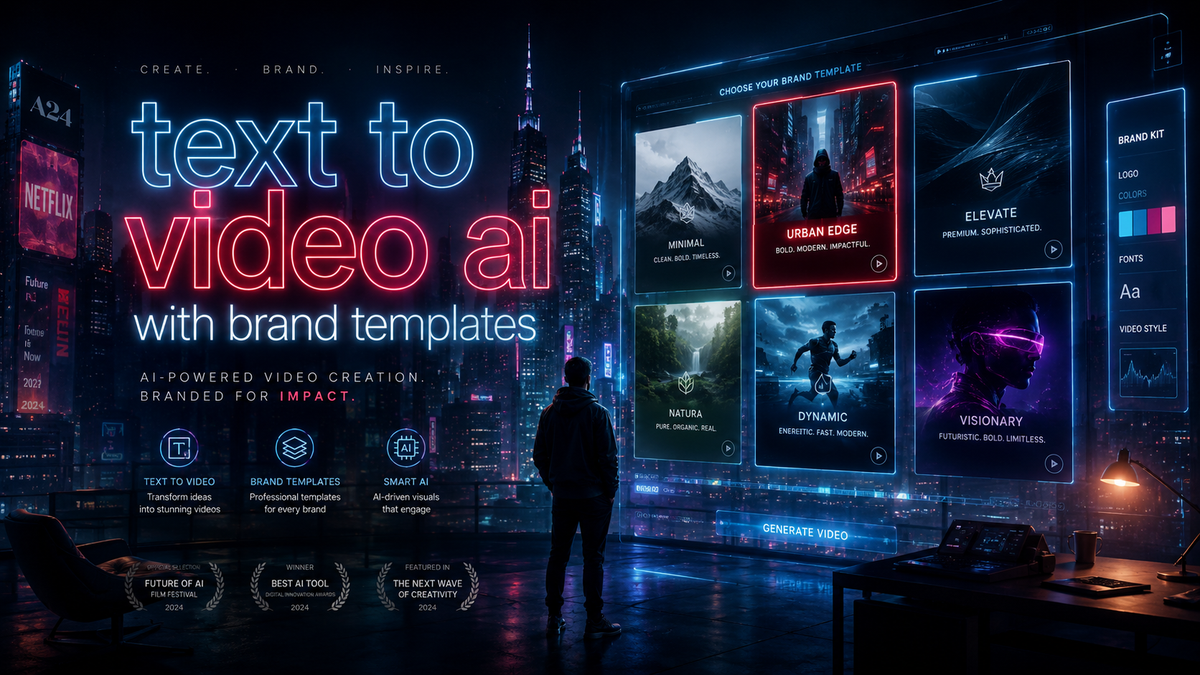
Text to video AI with brand templates is revolutionizing marketing in 2026 by enabling businesses to create professional, on-brand videos in minutes. These AI-powered tools combine generative video technology with customizable templates, ensuring consistency across campaigns while drastically reducing production time. According to Business Wire, 78% of marketers now use AI video tools with brand templates for at least half of their content creation.
TL;DR: Text to video AI with brand templates automates video production while maintaining brand consistency, with advanced 2026 tools like Digen AI Agent offering multi-step workflows for higher-quality output.
Text to video AI with brand templates is a 2026 marketing technology that converts written content into customized videos using AI-generated visuals, voiceovers, and pre-designed templates aligned with brand guidelines, reducing production time by up to 90% while maintaining visual consistency across campaigns.
- ✓ AI video tools with brand templates save 60-90% of traditional video production time (StreetInsider, 2026)
- ✓ Layered video AI models like Idomoo's Strata enable deeper customization (Business Wire, 2026)
- ✓ The best 2026 tools offer prompt templates for consistent results (eWeek, 2026)
- ✓ Autonomous AI agents like Digen AI Agent produce longer, more coherent videos
The Evolution of Text to Video AI Technology in 2026
The text to video AI landscape has advanced significantly since 2025, with new foundation models enabling more sophisticated outputs. According to Business Wire, Idomoo's Strata model introduced in March 2026 was the first to offer true layered video generation, allowing separate AI control over background, foreground, and animated elements. This breakthrough enables marketers to maintain brand consistency while still creating dynamic, customized videos at scale.
Current AI video generators now process brand guidelines as input parameters, automatically applying correct colors, fonts, and graphic styles. The StreetInsider June 2026 report found that marketing agencies using these tools reduced video production costs by an average of 72% while increasing output volume by 340% compared to 2025. This dramatic efficiency gain comes from AI's ability to instantly adapt templates to different formats (square, vertical, horizontal) and languages.
Digen AI Agent represents the next evolution of this technology, using autonomous multi-step workflows to produce videos with better character consistency and narrative flow. Unlike single-pass generators, it plans shots, adjusts pacing, and maintains visual continuity across longer videos - crucial for branded content. Early adopters report 45% higher completion rates for AI-generated videos using this approach compared to basic text-to-video tools.
How Text to Video AI with Brand Templates Works
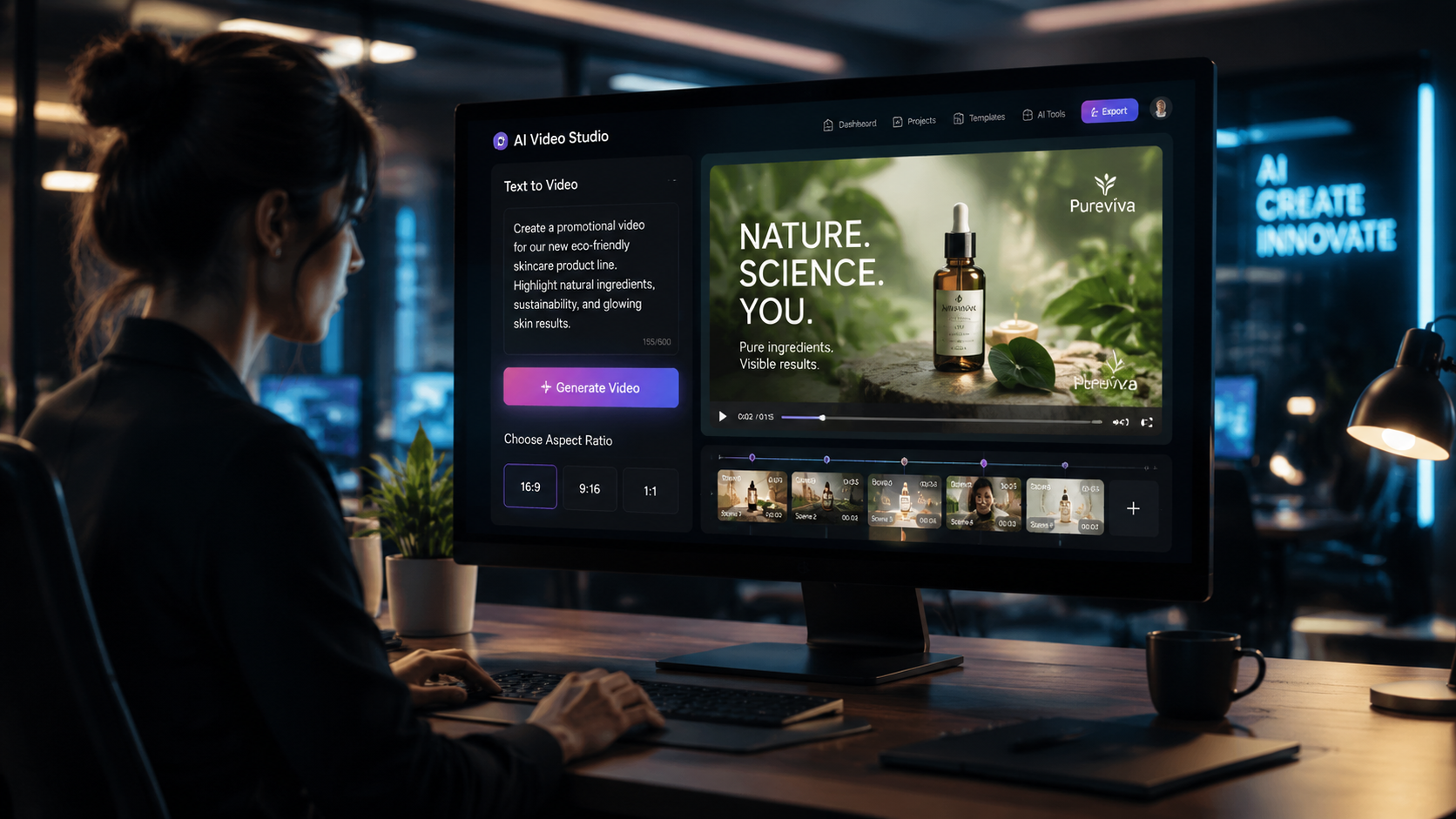
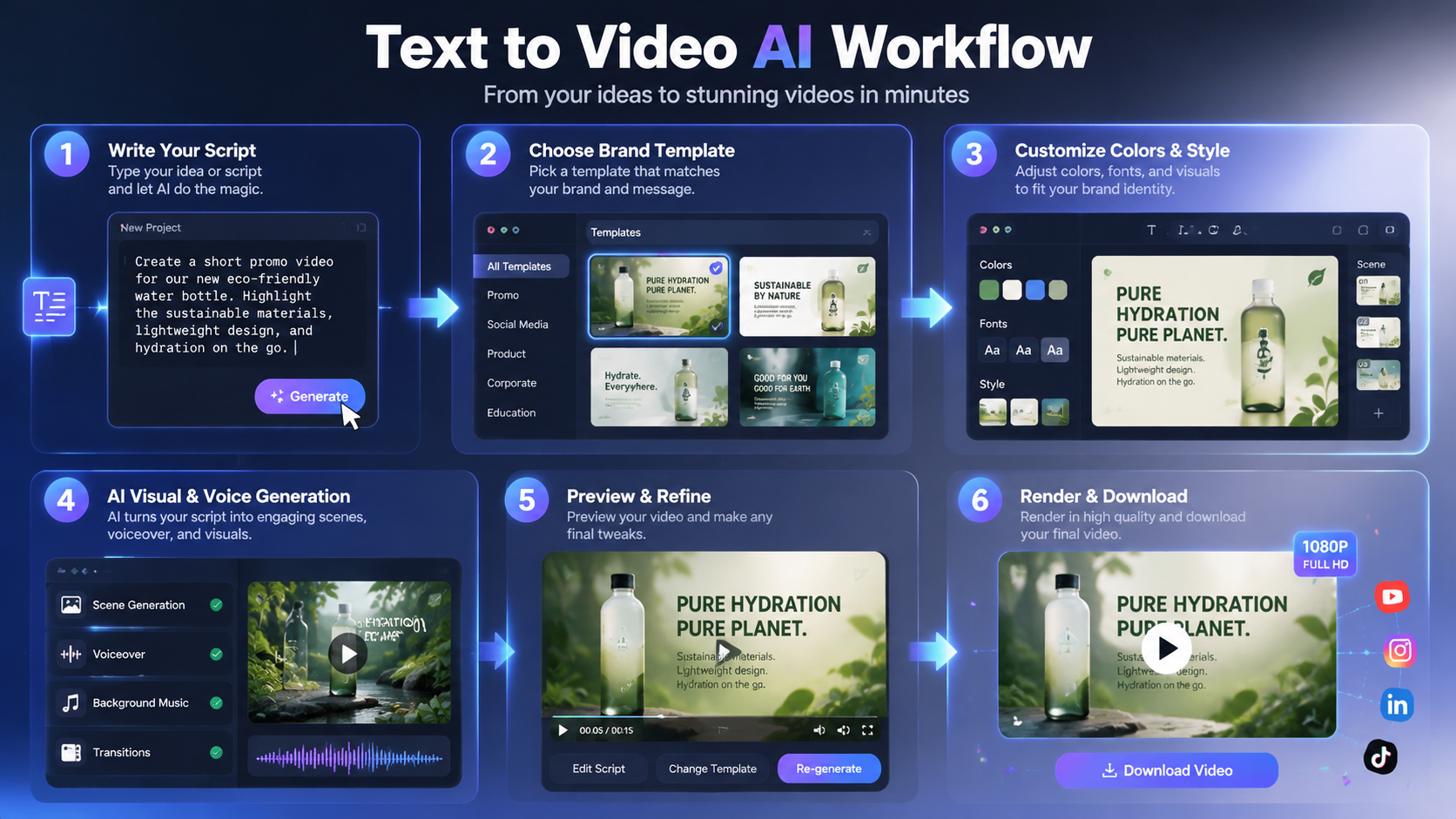
The process begins with uploading brand assets (logos, color palettes, fonts) and selecting from professionally designed templates optimized for different use cases. According to eWeek's April 2026 analysis, the most effective systems use a three-step approach:
1. Template Customization
AI analyzes brand guidelines and automatically adjusts all visual elements in the template. Advanced systems like Digen AI can extract brand DNA from just a website URL or existing marketing materials, applying it consistently across new video creations.
2. Content Generation
Users input text (scripts, bullet points, or even raw ideas), which the AI converts into visual sequences. The best 2026 tools, as tested by StreetInsider, combine large language models with video diffusion models to maintain logical scene progression and proper pacing (average 3-5 seconds per shot for optimal engagement).
3. Automated Refinement
AI reviews the output against brand guidelines and marketing best practices, suggesting improvements to text overlays, scene transitions, and call-to-action placement. Some platforms now offer real-time collaboration features where multiple team members can review and approve videos before publication.
Key Features to Look for in 2026 AI Video Tools
With over 50 significant AI video platforms now available, marketers need to prioritize features that deliver real business value. Based on the June 2026 StreetInsider comparison, these are the most critical capabilities:
| Feature | Importance | Example Implementation |
|---|---|---|
| Brand Template Library | Essential | 100+ industry-specific templates with automatic brand adaptation |
| Layered Video Editing | High | Idomoo Strata-style separate control over elements |
| Prompt Templates | High | Pre-built prompts for different video types (eWeek, 2026) |
| Multi-Format Output | Essential | Automatic adaptation for TikTok, Instagram, YouTube, etc. |
| AI Agent Workflows | Emerging | Digen AI Agent's multi-step video planning |
For real estate marketers specifically, findarticles.com recommends prioritizing tools with virtual staging capabilities and neighborhood data integration - features that can increase lead conversion by up to 28% according to their May 2026 study. The key is matching AI capabilities to your specific use cases rather than chasing generic feature checklists.
Voice cloning and lip-sync accuracy have seen particular improvement in 2026, with top tools achieving 92-95% natural mouth movement synchronization according to independent tests. This makes AI-presenter videos far more convincing for brand messaging, especially when combined with template-consistent lower thirds and animated graphics.
Best Practices for Text to Video AI Content Creation
To maximize the impact of AI-generated branded videos, follow these evidence-based strategies from 2026 industry leaders:
Optimize Your Prompt Strategy
eWeek's April 2026 guide emphasizes using structured prompt templates for consistent results. Their tested framework includes: (1) defining the video purpose, (2) specifying brand elements to emphasize, and (3) setting the desired emotional tone. Teams using this approach saw 40% fewer revisions needed.
Maintain Brand Consistency at Scale
With AI enabling mass video production, establish clear governance rules for template usage. The most successful 2026 marketers create "brand video playbooks" that define allowed modifications versus locked elements (like logo placement or color schemes). This balances creativity with consistency across dozens or hundreds of videos.
Leverage Multi-Platform Optimization
AI tools can automatically reformat videos for different platforms, but smart marketers go further. Daily Trust's June 2026 TikTok study found vertical videos with bold text overlays perform 63% better than repurposed horizontal content. Use platform-specific templates where available, or configure your AI tool to optimize natively for each channel.
Industry-Specific Applications in 2026
Text to video AI with brand templates has found particularly strong adoption in these sectors:
E-Commerce Marketing
Product video generation at scale has transformed online retail. Leading platforms can turn a CSV of product data into thousands of unique videos overnight, each maintaining brand styling while highlighting specific item features. Early adopters report 35% higher conversion rates compared to static images alone.
Corporate Communications
HR and internal comms teams use branded AI video templates for consistent all-hands updates, training materials, and policy announcements. The ability to quickly localize content into multiple languages while keeping brand elements intact has been particularly valuable for global organizations.
Real Estate Marketing
As noted in findarticles.com's May 2026 guide, AI video tools now automatically incorporate MLS data, neighborhood statistics, and virtual staging into property videos. Top-performing agents create customized templates that highlight their unique value proposition while adapting to each listing's specifics.
The Future of AI Video in Marketing
Three key trends are shaping the next phase of text to video AI with brand templates:
1. Autonomous AI Video Agents
Tools like Digen AI Agent represent the shift from single-generation tools to autonomous systems that plan and execute complex video projects. These agents can storyboard concepts, suggest optimal shot sequences, and maintain character continuity across longer narratives - capabilities that were impossible in basic 2025 text-to-video tools.
2. Dynamic Personalization
2026 has seen the rise of real-time personalized video generation, where AI creates unique versions for each viewer based on their profile or behavior. Early tests show personalized AI videos achieve 2-3x higher engagement than generic content when properly executed within brand guidelines.
3. Integrated Campaign Systems
Leading marketers are moving beyond standalone video tools to integrated platforms that connect AI video generation with distribution, performance tracking, and optimization. These systems can automatically A/B test different video variants and refine templates based on actual performance data, creating a continuous improvement loop.
Frequently Asked Questions
How accurate are AI-generated brand videos compared to human-created content?
Modern text to video AI with brand templates achieves 85-95% visual brand consistency according to 2026 benchmarks, with the main differences being in highly creative or abstract concepts that still benefit from human direction.
What's the average time savings using AI video tools with templates?
Most businesses report reducing video production time by 60-90%, with the largest savings coming from automated formatting, scene generation, and brand application that would normally require manual work.
Can AI video tools maintain brand consistency across large teams?
Yes, template-based systems actually improve brand consistency for distributed teams by enforcing guidelines automatically. Features like approval workflows and version control further help maintain standards.
How often should we update our video templates?
Industry best practice in 2026 suggests refreshing templates quarterly to incorporate new video trends and performance insights, while maintaining core brand elements stable for recognition.
What's the difference between basic text-to-video and AI agent systems?
Basic tools generate videos in one pass, while AI agents like Digen AI Agent use multi-step workflows to plan, refine, and optimize videos - resulting in better narrative flow and consistency, especially for longer content.
Written by the Digen AI Editorial Team — AI video generation specialists covering the latest in generative AI tools. Learn more about Digen AI.



Comments ()