
The Complete Text to Video AI Beginner Guide 2026
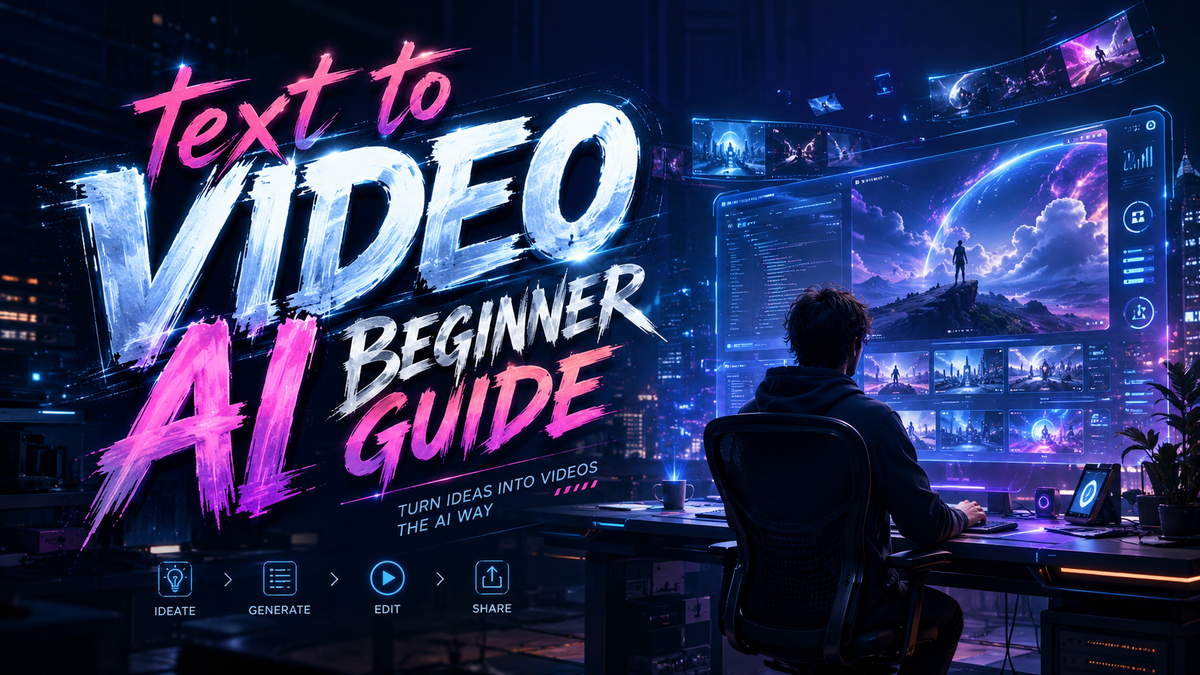
Text to video AI refers to artificial intelligence tools that generate video content directly from written text prompts. For a complete beginner in 2026, a text to video ai beginner guide is the essential starting point to understand how these tools work, which platforms to use, and how to create polished videos without any prior editing experience. Whether you're a content creator, marketer, or business owner, this guide will walk you through everything you need to know.
A text to video AI beginner guide is a step-by-step resource that teaches newcomers how to use generative AI platforms to convert text descriptions into video clips, complete with visuals, motion, and sometimes audio. In 2026, these tools have become highly accessible, offering free and low-cost plans for anyone to produce professional-looking short videos in minutes.
- ✓ Text to video AI transforms simple text prompts into fully rendered video clips, eliminating the need for traditional editing software.
- ✓ The top tools in 2026 include Pika, Grok Imagine from xAI, and several free AI video makers highlighted by BBN Times for YouTube creators.
- ✓ Beginners can achieve impressive results by following a simple step-by-step workflow: choose a tool, write a clear prompt, select style and duration, and generate.
- ✓ According to the INQUIRER.net USA guide published May 2026, anyone can create stunning videos with AI by focusing on descriptive language and using platform-specific features.
- ✓ Avoiding common mistakes—like overly complex prompts or ignoring aspect ratio—saves time and improves video quality significantly.
What Is Text to Video AI? The Complete Beginner Overview
Text to video AI is a category of generative artificial intelligence that produces video content from textual input. Unlike traditional video production, which requires cameras, actors, and complex editing software, text to video AI allows you to describe a scene or concept in words and have the AI render a moving visual. According to the Techloy "Top 10 AI Video Generators for Beginners in 2026 (Comparison Guide)" published on June 1, 2026, there are now dozens of tools catering specifically to beginners, each with varying levels of quality and ease of use.
For someone following a text to video ai beginner guide, the most important concept is that these models learn from vast datasets of videos and their descriptions. They then generate new clips that match the style, motion, and content of your prompt. In 2026, tools like Pika (covered in a guide by quasa.io on May 22, 2026) offer "instant expressive AI videos" that require only a few words, while Grok Imagine from xAI (detailed by Geek Vibes Nation on May 26, 2026) provides both image and video generation from a single interface.
How Text to Video AI Works: A Simple Breakdown for Beginners
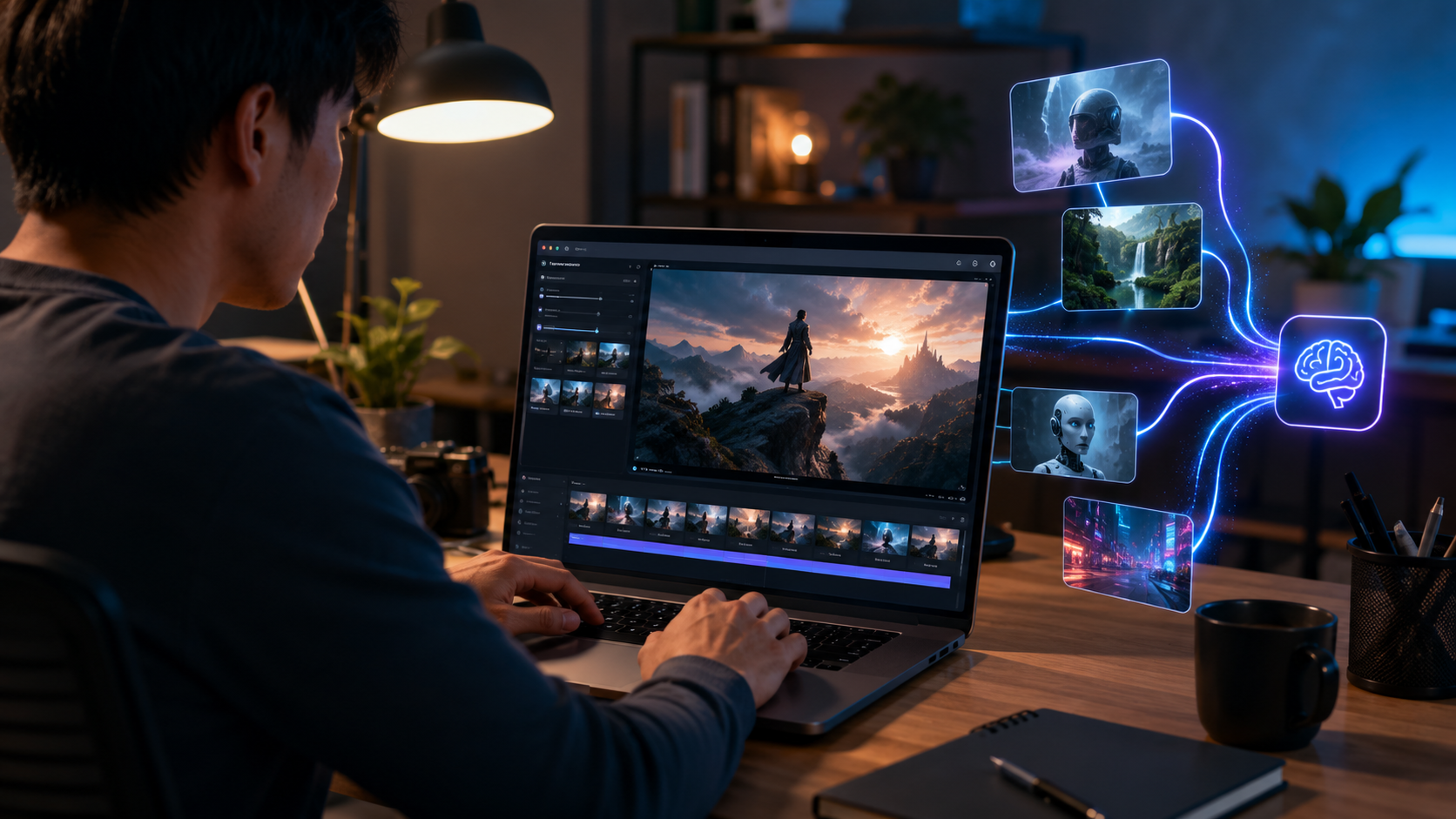
Understanding the mechanics behind text to video AI helps you write better prompts and get superior results. The process involves three main stages:
1. Prompt Interpretation
The AI reads your text and breaks it down into key elements: subject, action, background, mood, and style. For example, a prompt like "a golden retriever running through a green meadow at sunset" tells the AI to create a scene with a dog, motion, specific colors, and lighting. The Geek Vibes Nation guide on Grok Imagine emphasizes that clear, concise prompts yield the best outputs for beginners.
2. Frame Generation
Next, the AI generates a series of frames (like a flipbook) that transition smoothly to create motion. According to the quasa.io guide, Pika uses a diffusion model to build these frames iteratively, ensuring that the subject stays consistent across the video. Most beginner-friendly tools handle all of this automatically, so you only see the final video.
3. Rendering and Output
Finally, the AI stitches the frames together, applies optional enhancements, and outputs a video file (usually MP4). The BBN Times guide from June 3, 2026, notes that free AI video makers now support resolutions up to 1080p for YouTube creators, making them viable for real content production.
Top Text to Video AI Tools for Beginners in 2026 (Comparison Guide)
Choosing the right platform is a critical step in any text to video ai beginner guide. Based on the latest research gathered from Google News in June 2026, here are the standout tools, compared across key features that matter to newcomers.
| Tool | Source Guide (Date) | Key Feature for Beginners | Free Tier Available | Best For |
|---|---|---|---|---|
| Pika | quasa.io (May 22, 2026) | Instant expressive videos from short text prompts | Yes | Creators & marketers needing quick social clips |
| Grok Imagine (xAI) | Geek Vibes Nation (May 26, 2026) | Unified image + video generation, simple interface | Yes (limited) | Beginners exploring both images and videos |
| Free AI Video Makers (various) | BBN Times (June 3, 2026) | No-cost plans with YouTube-ready outputs | Yes | YouTube creators and small businesses on a budget |
| Top 10 Generators (aggregate) | Techloy (June 1, 2026) | Comparisons of user-friendliness and output quality | Mixture | New users wanting to evaluate multiple options |
Each of these tools has been reviewed in dedicated 2026 beginner guides, which is why they appear in this text to video ai beginner guide. Note that the INQUIRER.net USA guide (May 19, 2026) also provides a general "complete beginner’s guide" that covers foundational tips applicable to any platform.
Step-by-Step: How to Create Your First AI Video (Beginner Workflow)
Follow these numbered steps to produce your first video using any of the tools mentioned above. This step-by-step process is central to any text to video ai beginner guide and will save you trial-and-error time.
- Choose your tool. Start with a free tier like Pika or Grok Imagine. Create an account (most require only an email).
- Write a clear prompt. Describe what you want: "A cinematic shot of a futuristic city at night with flying cars and neon lights" is better than "cool city". Use adjectives for mood and motion.
- Select video settings. Choose duration (typically 2–10 seconds for free plans), aspect ratio (16:9 for YouTube, 9:16 for TikTok), and style (realistic, animated, etc.).
- Generate and preview. Click generate and wait 10–30 seconds. Most tools show a preview. If unsatisfied, tweak your prompt.
- Download and share. Once happy, download the video in MP4 format. According to the BBN Times guide, many free video makers allow direct upload to YouTube or social platforms.
This workflow is based on the "How to create stunning videos with AI – A complete beginner’s guide" from INQUIRER.net USA, which recommends starting with short prompts and iterating. The quasa.io guide on Pika similarly emphasizes that most beginners get a usable video within three attempts.
Expert Tips for Stunning AI Video Outputs
To elevate your videos beyond basic results, incorporate these tips gathered from the 2026 guides. The Geek Vibes Nation guide on Grok Imagine suggests using "style modifiers" like "cinematic lighting, slow motion, or 8K" in your prompts. Meanwhile, the Techloy comparison notes that the best tools allow you to adjust motion intensity—keeping it low for calm scenes and high for action.
Another pro tip: use negative prompts. For example, if you don't want people in your video, add "no people" or "empty street" at the end of your description. According to the INQUIRER.net USA guide, this feature is now standard in most 2026 AI video generators. Finally, always check your tool's community gallery for inspiration. Pika's quasa.io guide highlights that browsing others' prompts is the fastest way to learn effective phrasing.
Common Mistakes Beginners Make and How to Avoid Them
The text to video ai beginner guide wouldn't be complete without addressing pitfalls. The most frequent error, as noted by BBN Times, is writing overly long prompts. Ai models interpret the first 10–15 words best; anything extra confuses the output. Stick to one action per prompt.
Another mistake is ignoring aspect ratio. A video created for Instagram Reels (9:16) will look stretched on YouTube (16:9). Always set the correct dimensions before generating. The Geek Vibes Nation guide warns that beginners often forget to specify the output orientation, resulting in unusable footage. Lastly, don't expect perfection on the first try. As the INQUIRER.net USA guide reassures, even experienced users generate 3–5 variations before selecting the best one.
Frequently Asked Questions About Text to Video AI for Beginners
Is text to video AI free to use in 2026?
Many platforms offer free tiers with watermarks and limited duration. For example, Pika and Grok Imagine have free plans, as highlighted by the BBN Times guide on best free AI video makers for YouTube creators.
Can I use text to video AI for commercial projects?
Yes, but check the license terms of each tool. Most beginner guides from 2026 note that paid plans grant full commercial rights, while free versions may restrict usage. Always read the tool's policy.
What kind of hardware do I need to run text to video AI?
None. All tools mentioned in this guide are cloud-based. You only need a modern web browser and an internet connection. The Techloy comparison confirms that beginners can generate videos from any device, including tablets.
How long does it take to generate a video?
Typically 15–45 seconds for short clips on free plans. Paid accounts can get faster rendering. According to the quasa.io guide on Pika, some "instant" modes deliver results in under 10 seconds.
What is the best text to video AI tool for beginners in 2026?
It depends on your needs. For simplicity, Pika and Grok Imagine are excellent starting points. For a broad comparison, the Techloy "Top 10 AI Video Generators for Beginners" published June 1, 2026, provides a detailed ranking.
This text to video ai beginner guide has equipped you with the fundamentals, top tools, a practical workflow, and expert tips sourced from the most recent 2026 guides. As AI video generation continues to evolve, the best way to learn is to start creating. Choose one tool from the comparison table, write your first prompt, and generate a video today. The future of content creation is at your fingertips.



Comments ()