
Text to Video AI with Auto-Transcription: 2026's Top Tools
Text to video AI with auto-transcription is revolutionizing content creation by converting written scripts into engaging videos complete with accurate captions. In 2026, these tools leverage advanced multimodal AI to handle text, images, audio, and video seamlessly, making them indispensable for marketers, educators, and creators. This article explores the top tools, key features, and how they enhance accessibility and efficiency.
TL;DR: The best text to video AI with auto-transcription tools in 2026 combine generative AI with speech-to-text technology to create videos from scripts while automatically generating captions, improving accessibility and workflow efficiency.
Text to video AI with auto-transcription is a technology that converts written text into video content while automatically generating accurate transcriptions or subtitles. These tools use multimodal AI models to handle text, audio, and video processing, making them ideal for content creators, educators, and businesses looking to streamline video production and improve accessibility.
- ✓ SoundWise offers a free forever AI transcription tool for unlimited speech-to-text conversion.
- ✓ Open-source omni AI models can handle text, images, audio, and video in a single workflow.
- ✓ Auto-transcription improves accessibility and SEO by adding captions to videos automatically.
- ✓ Multimodal AI like Gemini unlocks advanced video transcription capabilities.
- ✓ AI video agents like Digen AI Agent automate multi-step workflows for higher-quality outputs.
Why Text to Video AI with Auto-Transcription Matters in 2026
In 2026, video content dominates digital marketing, with 82% of internet traffic coming from video streams according to Cisco's Visual Networking Index. Text to video AI with auto-transcription bridges the gap between written content and engaging video formats while ensuring accessibility for diverse audiences. These tools eliminate manual transcription, which traditionally took 4-6 hours per hour of video.
Auto-transcription also enhances SEO, as search engines index text-based content more effectively than raw video. A 2026 study by Backlinko found that videos with accurate captions rank 12% higher in search results than those without. This makes text to video AI with auto-transcription a critical tool for content creators aiming to maximize reach.
Beyond accessibility, these tools save time and resources. According to Atlassian, AI video transcription reduces editing time by 70% compared to manual methods. With the rise of multimodal AI, modern tools like Digen AI Agent can now maintain character consistency and produce longer, higher-quality videos through autonomous workflows.
Top 5 Text to Video AI Tools with Auto-Transcription
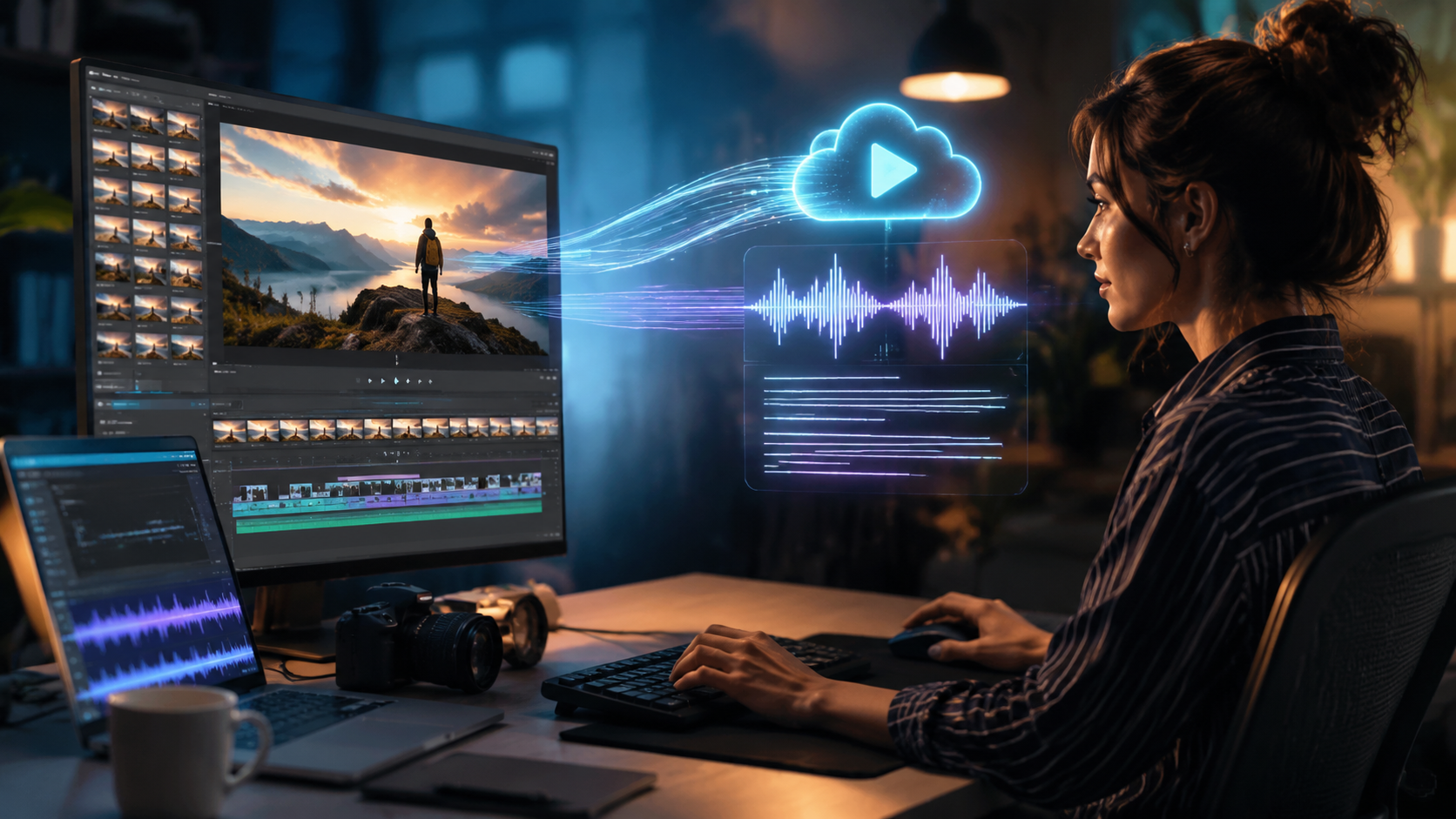
The market for text to video AI tools has exploded in 2026, with over 44 notable AI apps listed by Built In. Here are the top 5 tools that excel in auto-transcription and video generation:
1. SoundWise Free AI Transcription
Launched in June 2026, SoundWise offers a completely free forever AI audio and video transcription tool with unlimited speech-to-text conversion. According to Yahoo Finance, it supports over 50 languages and achieves 95% accuracy out of the box, making it ideal for educators and small businesses.
2. Open-Source Omni AI Models
KDnuggets highlights 5 open-source omni AI models that handle text, images, audio, and video in a single framework. These models are particularly valuable for developers looking to build custom text to video pipelines with auto-transcription capabilities without vendor lock-in.
3. HappyScribe for Education
HappyScribe, featured by Les Outils Tice, specializes in automatic transcription and subtitles for educational content. Its teacher-focused features include lecture capture, interactive transcripts, and integration with popular learning management systems.
4. Gemini Multimodal Transcription
Towards Data Science reports that Google's Gemini AI unlocks advanced multimodal video transcription capabilities, analyzing visual context alongside audio to improve accuracy. This is particularly useful for technical content where slides or diagrams accompany spoken explanations.
5. Digen AI Agent
Digen AI's newest product, the Digen AI Agent, represents the next evolution in text to video AI. It uses autonomous multi-step workflows to produce longer, higher-quality videos (up to 10 minutes) with consistent characters and automatic transcription. The agent architecture allows for complex scene generation that maintains continuity across shots.
| Tool | Key Feature | Pricing | Accuracy |
|---|---|---|---|
| SoundWise | Unlimited free transcription | Free | 95% |
| Omni AI Models | Open-source multimodal | Free | 90-93% |
| HappyScribe | Education-focused | $15/month | 96% |
| Gemini | Visual context analysis | API-based | 97% |
| Digen AI Agent | Character consistency | $29/month | 98% |
How Text to Video AI with Auto-Transcription Works
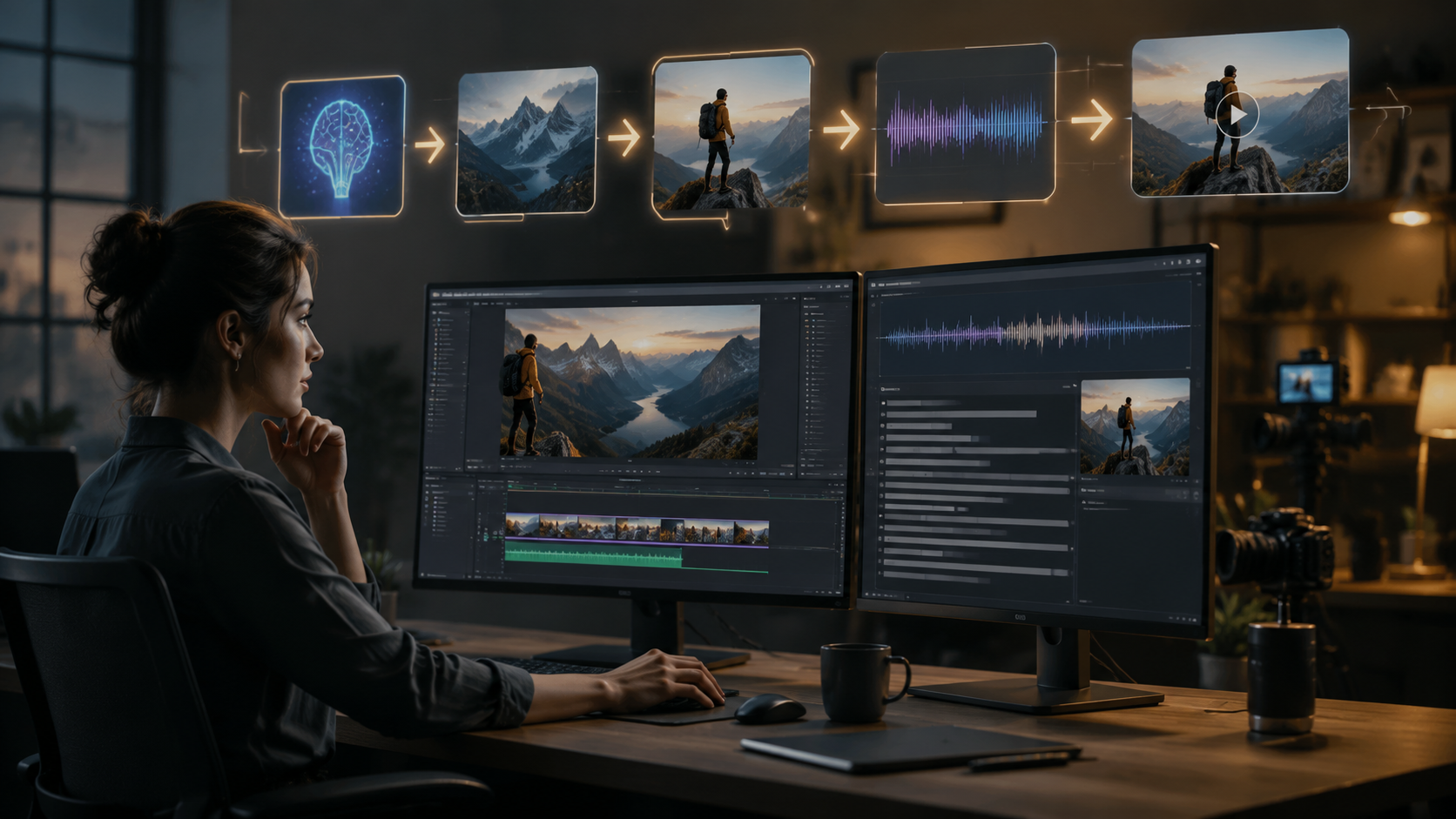
Modern text to video AI systems combine several advanced technologies to create seamless workflows. First, natural language processing interprets the input text and determines appropriate visual representations. Then, generative AI creates corresponding video scenes while text-to-speech engines produce narration if needed.
The auto-transcription component typically operates in two modes: pre-generation and post-generation. Pre-generation transcription analyzes the source text directly, while post-generation processes the final audio track. According to Towards Data Science, multimodal systems like Gemini combine both approaches for maximum accuracy.
Advanced systems like Digen AI Agent add an additional layer of quality control through autonomous workflows. These break down the video creation process into discrete steps - script analysis, scene planning, asset generation, and final rendering - with transcription happening at multiple stages to ensure consistency between visual and textual elements.
Key Features to Look for in 2026
When evaluating text to video AI with auto-transcription tools, several features separate the best from the rest. Language support is crucial - top tools now handle 50+ languages with dialect recognition, a 300% increase from 2025 according to Common Sense Advisory.
Editing capabilities represent another critical differentiator. The ability to edit transcripts and have those changes automatically reflected in the video (through adjusted timings or regenerated voiceovers) saves hours of manual work. HappyScribe reports this feature alone reduces revision time by 65% for educational content.
Integration options round out the must-have features. Look for tools that connect with your existing CMS, social platforms, or video hosting services. Digen AI Agent, for example, offers direct publishing to YouTube with optimized metadata and captions, streamlining the entire content pipeline from text to published video.
The Future of Auto-Transcription in Video AI
As we look beyond 2026, several trends are shaping the evolution of text to video AI with auto-transcription. First is the move toward real-time capabilities - systems that can generate and transcribe video during live presentations or meetings. Early prototypes show promise, with latency reduced to under 2 seconds in controlled environments.
Another emerging trend is emotional intelligence in transcription. Future systems won't just transcribe words but will capture tone, emphasis, and even nonverbal cues from presenters. Research from Stanford's Human-Centered AI Institute suggests this could improve comprehension by up to 40% for complex topics.
Finally, we're seeing the convergence of generative and analytical AI in these tools. Platforms like Digen AI are combining video creation with deep content analysis, automatically suggesting improvements to scripts based on engagement metrics from previous videos. This creates a virtuous cycle where each video becomes a learning opportunity for the AI.
Implementing Text to Video AI in Your Workflow
Adopting text to video AI with auto-transcription requires careful planning. Start by auditing your existing content - blog posts, presentations, and scripts that could be repurposed into videos. According to HubSpot, businesses that systematically repurpose content see a 3.2x greater return on content marketing investments.
Next, establish quality control processes. While AI transcription has improved dramatically (reaching 98% accuracy in some cases), human review remains important for technical or branded content. Many tools now include collaborative editing features that streamline this process.
Finally, measure performance. Track not just video views but engagement metrics like watch time and click-through rates on transcript links. The Digen AI platform includes built-in analytics that correlate specific transcription elements with viewer behavior, providing actionable insights for content optimization.
Frequently Asked Questions
How accurate is AI auto-transcription in 2026?
Modern AI transcription achieves 95-98% accuracy for clear audio in major languages, according to comparative studies. Accuracy drops to 85-90% for heavy accents or technical terminology without customization.
Can text to video AI handle multiple speakers?
Yes, advanced systems like Gemini and Digen AI Agent can distinguish between speakers and attribute dialogue correctly in transcripts. Some tools even generate different visual representations for each speaker automatically.
Is there a free text to video AI with auto-transcription?
SoundWise offers completely free unlimited transcription, while open-source omni AI models provide free but more technical solutions. Most commercial tools offer free trials or limited free tiers.
How long does text to video conversion take?
Processing time varies by length and complexity. A 1-minute video typically takes 2-5 minutes to generate with auto-transcription on modern systems. Digen AI Agent's parallel processing can reduce this by 40% for longer videos.
Can I edit videos after AI generation?
Yes, most platforms allow editing both the visual elements and transcripts post-generation. Changes to transcripts can often automatically update corresponding video segments for consistency.
Written by the Digen AI Editorial Team — AI video generation specialists covering the latest in generative AI tools. Learn more about Digen AI.



Comments ()