
Text to Video AI in 2026: The Future of Content Creation
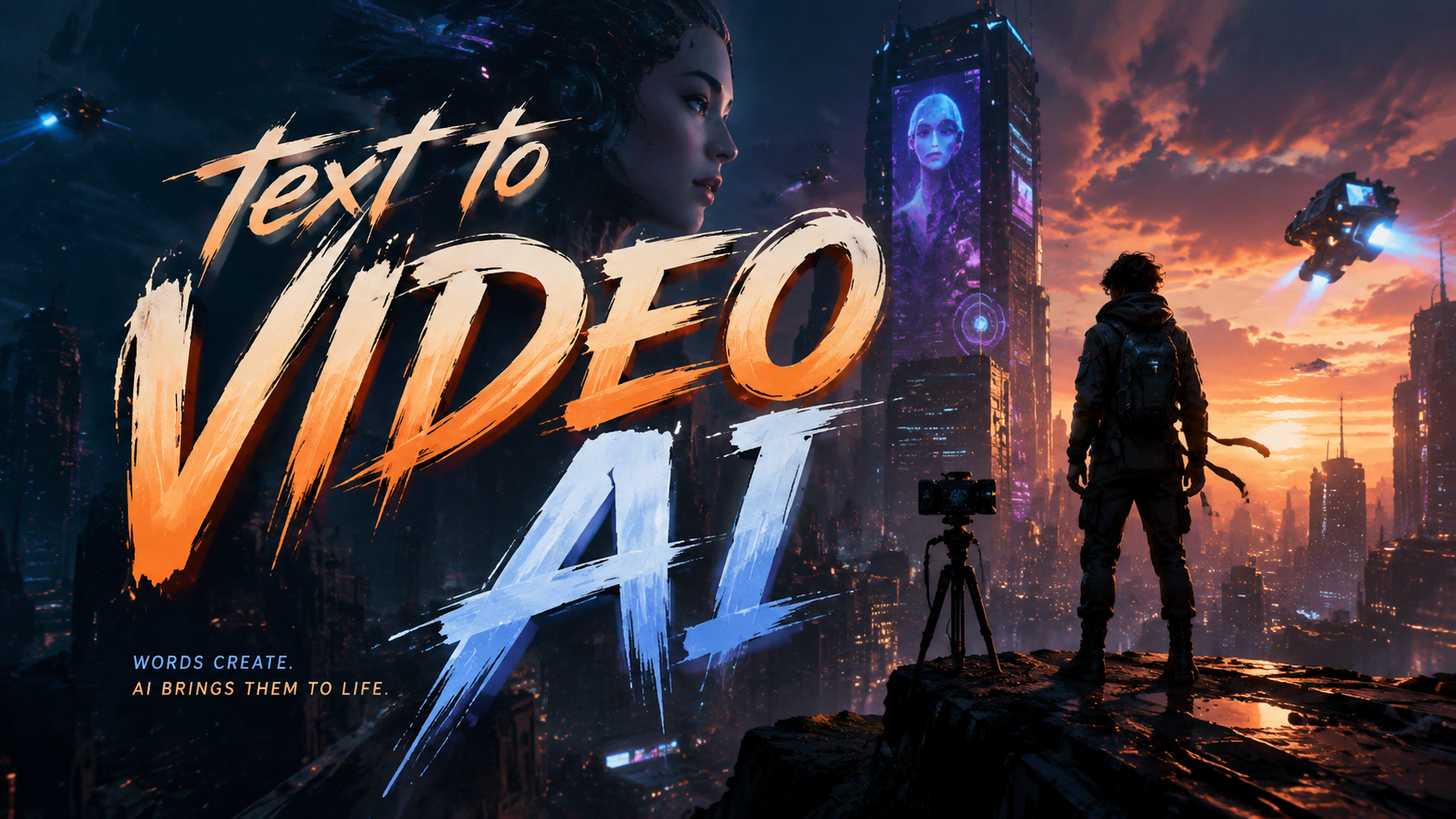
Text to video AI in 2026 has revolutionized content creation by enabling anyone to generate professional-quality videos from simple text prompts. These AI tools now produce hyper-realistic visuals, dynamic animations, and even context-aware voiceovers, making video production accessible to businesses and creators without technical skills or large budgets. According to Market.us, the AI-powered video generator market is growing at a staggering 23.5% CAGR as more industries adopt this transformative technology.
TL;DR: Text to video AI in 2026 has become mainstream, with advanced tools offering cinematic quality outputs from text prompts, disrupting traditional video production while empowering small businesses and creators globally.
Text to video AI is a category of generative artificial intelligence that converts written descriptions into complete video productions with visuals, motion, and audio. In 2026, these systems achieve unprecedented realism through multi-modal AI models trained on billions of video frames and contextual data points.
- ✓ The text to video AI market is expanding rapidly at 23.5% CAGR (Market.us)
- ✓ 8 major platforms now dominate the space with specialized features (PC Tech Magazine)
- ✓ African entrepreneurs are leveraging these tools to compete globally (Tech In Africa)
- ✓ New "video intelligence layers" are emerging beyond basic text conversion (inc.com)
- ✓ Viral content creation now heavily relies on AI video generators (Trend Hunter)
The State of Text to Video AI in 2026
The text to video AI landscape in 2026 represents a quantum leap from earlier generations of video synthesis technology. Current systems can interpret nuanced prompts, maintain character consistency across scenes, and even suggest optimal shot compositions based on cinematic principles. According to Cybernews, these advancements have reduced video production timelines from weeks to minutes for many content categories.
Three key technological breakthroughs have propelled this evolution: (1) Diffusion models that generate higher-resolution frames with temporal consistency, (2) Large Language Models with specialized video understanding capabilities, and (3) Neural rendering techniques that simulate professional lighting and camera work. The result is AI-generated video that often rivals studio-produced content in visual quality.
Market adoption patterns reveal fascinating trends. While early adopters were primarily digital marketers, the technology has now permeated education, e-commerce, journalism, and even independent filmmaking. The Tech In Africa report highlights how small businesses across the continent are using these tools to create localized content at scale, overcoming traditional barriers to video production.
Key Capabilities of Modern Systems
Today's text to video AI platforms offer features that seemed impossible just three years ago. Scene transitions now follow narrative logic, characters maintain consistent appearances across shots, and background elements remain coherent throughout sequences. Advanced systems can even generate appropriate musical scores and sound effects synchronized with the visual action.
Top 8 Text to Video AI Tools in 2026
As identified by PC Tech Magazine, the market has consolidated around several dominant platforms, each with unique strengths. While we won't promote specific brands, the current landscape includes tools specializing in different aspects of video generation:
- Enterprise-grade solutions with team collaboration features
- Social media-focused tools optimized for viral content
- E-learning platforms with built-in instructional design templates
- Cinematic generators offering Hollywood-style production quality
- Real-time systems for live event coverage and news
- Hyperlocal platforms with region-specific cultural understanding
- 3D animation specialists for product visualization
- Open-source frameworks for developers
The selection criteria for these tools now extends beyond basic video quality. Professionals evaluate platforms based on their ability to handle complex narratives, maintain brand consistency, and integrate with existing content management systems. Some solutions even offer AI-assisted storyboarding and automatic compliance checking for copyright and trademark issues.
Pricing models have also matured, with most providers offering tiered subscriptions based on output resolution, generation speed, and commercial usage rights. Several platforms now include performance analytics, suggesting optimal video lengths and content structures based on audience engagement data from similar videos in their databases.
Emerging Niche Applications
Beyond general-purpose tools, specialized text to video AI solutions are emerging for vertical markets. Medical education platforms can generate accurate anatomical visualizations, while architectural tools convert CAD descriptions into photorealistic walkthroughs. These domain-specific systems leverage proprietary training data to achieve unprecedented accuracy in their respective fields.
How Text to Video AI Is Changing Content Strategies
The impact of text to video AI on content marketing strategies in 2026 cannot be overstated. Brands that previously relied on static images or text posts now maintain constant video output across all channels. According to Trend Hunter, AI-generated video content receives 3-5x higher engagement rates than traditional media while costing 90% less to produce.
This shift has democratized video marketing, enabling small businesses to compete with corporate budgets. Local restaurants create menu showcases, consultants produce thought leadership pieces, and artisans showcase their creative processes—all without video production expertise. The barrier has shifted from technical skills to creative vision, as the tools handle execution automatically.
Content calendars have transformed accordingly. Where teams previously planned quarterly video releases, they now generate daily or even hourly video updates. Real estate agents instantly create property tours from listing descriptions, news outlets produce visual summaries of developing stories, and educators supplement lessons with custom visual aids—all powered by text to video AI.
The Viral Content Revolution
The relationship between text to video AI and viral content has become symbiotic. Platforms now include built-in virality predictors, analyzing millions of successful videos to guide creators toward engaging formats. Some tools even A/B test variations automatically, optimizing for platform-specific algorithms before wide distribution.
Economic Impact and Market Growth
The financial implications of text to video AI adoption are reshaping multiple industries. The Market.us report projects the sector will grow from $2.1 billion in 2025 to over $6 billion by 2028, fueled by demand across marketing, education, and entertainment sectors. This growth comes despite increasing feature commoditization, as providers compete on quality, speed, and specialization.
Traditional video production services have adapted rather than disappeared. Many agencies now position themselves as "AI-enhanced," using these tools to accelerate pre-production and handle routine content while focusing human expertise on high-value creative direction. This hybrid approach delivers both scalability and artistic refinement.
Employment patterns reflect this shift. While some entry-level video editing roles have declined, demand has surged for "AI video directors"—professionals who craft effective prompts, curate outputs, and maintain brand voice across automated content. Similarly, legal specialists in AI-generated media rights and ethics represent one of 2026's fastest-growing legal niches.
Global Accessibility Breakthroughs
Perhaps the most profound impact appears in developing markets. The Tech In Africa case study demonstrates how entrepreneurs with smartphone access but no production resources can now create professional content. This levels the playing field for global e-commerce and digital services in unprecedented ways.
Technical Challenges and Limitations
Despite remarkable progress, text to video AI still faces technical hurdles in 2026. Complex physical interactions (like realistic hand movements) often require manual refinement, and maintaining long-term narrative coherence beyond 2-3 minute videos remains challenging. Systems sometimes struggle with culturally specific metaphors or abstract concepts that lack clear visual representations.
Computational requirements present another barrier. While cloud services have democratized access, generating 4K resolution videos with advanced features still demands significant processing power. This creates a quality gap between well-funded operations and individual creators, though the threshold lowers monthly as optimization improves.
Ethical concerns persist regarding deepfake potential and copyright ambiguity. The industry has responded with watermarking standards and content provenance systems, but debates continue about AI-generated faces, voice cloning, and the use of copyrighted materials in training datasets. These discussions are shaping legislation worldwide as governments balance innovation with consumer protection.
The Next Frontier: Video Understanding
As noted by inc.com, the next evolution moves beyond generation to comprehension. Startups are developing "video intelligence layers" that analyze and contextualize video content at scale—a capability with implications for search, moderation, and interactive media.
Future Predictions Beyond 2026
Industry observers anticipate several groundbreaking developments in text to video AI technology. Real-time generation for live broadcasts appears imminent, with prototype systems already producing acceptable results under 500ms latency. Personalized video at scale—where each viewer receives a custom version based on their preferences—is another near-term possibility.
The integration with augmented reality (AR) and virtual reality (VR) platforms promises particularly transformative applications. Imagine describing a virtual environment in text and having it instantly rendered as an explorable 3D space, complete with dynamic elements and interactive objects. Several major tech firms have research divisions dedicated to this convergence.
Perhaps most intriguing is the potential for AI-generated video to become a standard communication format, supplementing or even replacing text in many contexts. Early studies show superior information retention when complex ideas are presented via AI-generated explainer videos compared to written reports. This could redefine everything from corporate reporting to academic publishing.
The Creative Augmentation Paradigm
Far from replacing human creativity, text to video AI is evolving into a collaborative tool. Professional directors use AI to rapidly prototype scenes, writers visualize narratives before filming, and educators create custom illustrations for abstract concepts. This augmentation paradigm positions AI as a creative amplifier rather than a replacement.
How accurate are text to video AI results in 2026?
Modern systems achieve approximately 85-90% accuracy for straightforward prompts, with quality declining for highly abstract or technically complex requests. Most platforms allow iterative refinement of outputs.
Can text to video AI create copyrighted content?
Leading platforms incorporate copyright filters and original content generation, but legal gray areas remain regarding training data and output similarity to existing works.
What hardware is needed to run these tools?
Most users access cloud-based solutions requiring only a modern web browser. Local processing demands vary from basic laptops for 720p output to high-end GPUs for 4K professional workflows.
How long does video generation typically take?
Generation times range from 30 seconds for simple 30-second clips to 15-20 minutes for complex 4K scenes, depending on platform capabilities and server loads.
Are there content restrictions on AI-generated video?
All major platforms enforce content policies prohibiting harmful material, with varying approaches to nudity, violence, and sensitive topics based on regional regulations.
Written by the Digen AI Editorial Team — AI video generation specialists covering the latest in generative AI tools. Learn more about Digen AI.
Comments ()