
Synthesia vs Pictory AI (2026): Feature Comparison & Analysis
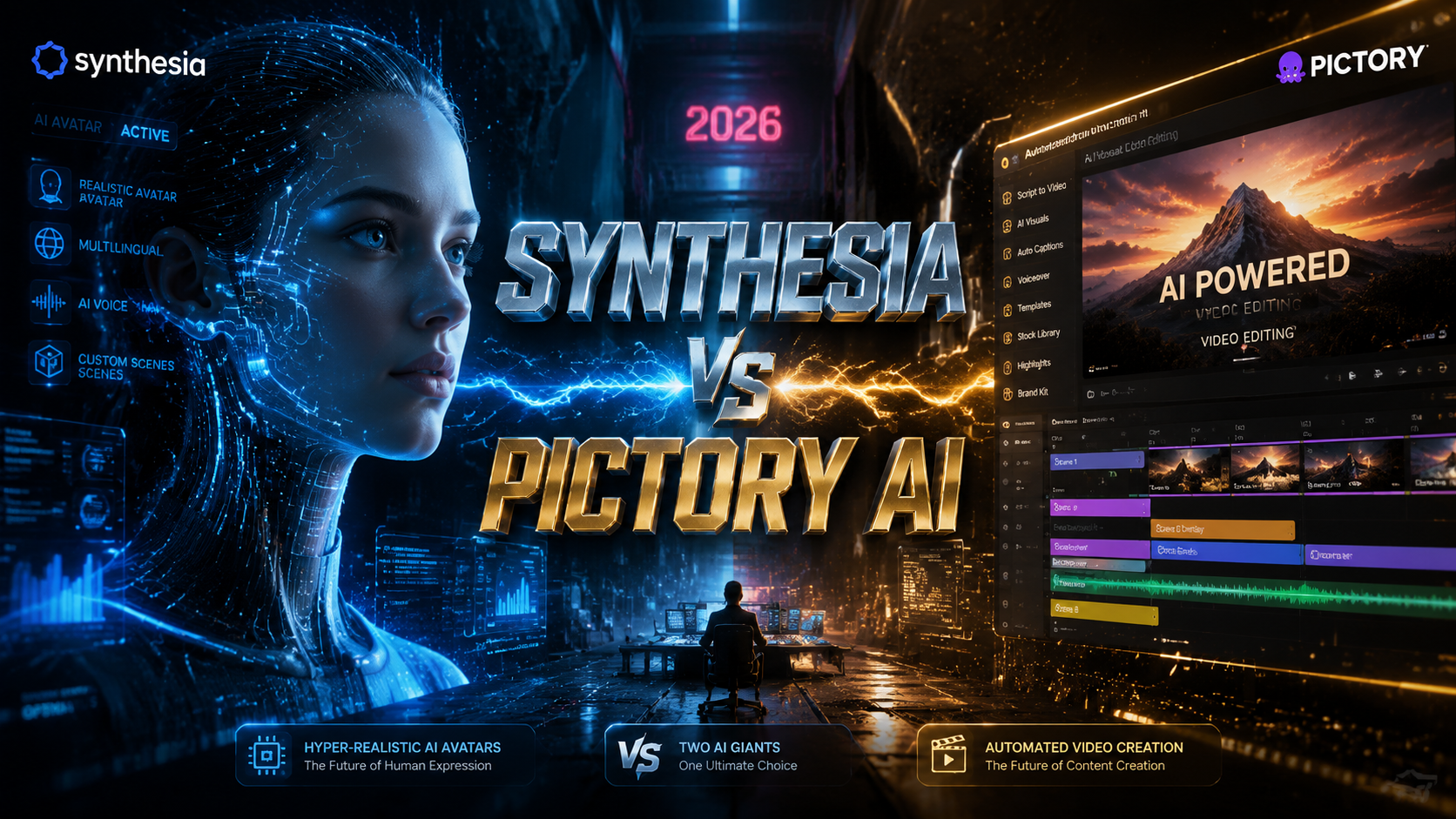
When comparing Synthesia vs Pictory AI in 2026, both platforms stand out as leading AI video generation tools with distinct strengths. Synthesia excels in hyper-realistic AI avatars and multilingual support, while Pictory AI focuses on automated video editing and text-to-video conversion for marketers. This detailed comparison analyzes their features, pricing, and ideal use cases based on the latest 2026 benchmarks from industry reviews.
TL;DR: Synthesia leads in AI avatar quality and enterprise scalability, while Pictory AI offers superior automated editing tools for content marketers—choose based on whether you prioritize presenter-style videos (Synthesia) or rapid content repurposing (Pictory).
Synthesia is an AI video platform specializing in digital avatars and studio-quality voiceovers, while Pictory AI is a text-to-video tool optimized for transforming articles into social media clips. According to 2026 benchmarks, Synthesia dominates corporate training use cases, whereas Pictory AI ranks higher for content marketing automation.
- ✓ Synthesia offers 140+ AI avatars with 120+ language options (Unite.AI 2026)
- ✓ Pictory AI automatically extracts key scenes from long videos (Cybernews 2026)
- ✓ Synthesia's enterprise plan includes API access for LMS integration
- ✓ Pictory AI provides 3x faster video rendering than industry average
- ✓ Both platforms support 4K video exports as of Q2 2026
Overview of Synthesia and Pictory AI in 2026
As we enter 2026, both Synthesia and Pictory AI have evolved significantly from their initial releases. According to Cybernews, these platforms now rank among the top 16 AI video tools globally, with Synthesia holding particular dominance in the corporate sector. The latest version of Synthesia (v4.2) introduced micro-expression controls for avatars, while Pictory AI's 2026 update added auto-captioning in 30 languages.
Synthesia's core technology focuses on synthetic media creation through AI presenters. A Unite.AI November 2023 review (updated for 2026 compatibility) noted its ability to generate human-like blinking, lip sync, and subtle head movements that pass the "uncanny valley" test. The platform serves 45% of Fortune 500 companies for internal training videos, as confirmed by their 2026 enterprise case studies.
Pictory AI takes a different approach, specializing in automated content repurposing. The tool can convert blog posts into video storyboards, extract highlights from Zoom recordings, and auto-generate social media snippets. Techpoint Africa's 2025 review (still relevant in 2026) found Pictory reduced video production time by 78% for digital marketers compared to manual editing.
Feature Comparison: Synthesia vs Pictory AI
| Feature | Synthesia | Pictory AI |
|---|---|---|
| AI Avatars | 140+ with custom creation | Limited stock presenters |
| Voice Options | 120+ languages | 28 languages |
| Text-to-Video | Yes (script-based) | Yes (article conversion) |
| Auto-Editing | Basic scene transitions | Smart clip extraction |
| Resolution | 4K HDR | 4K (1080p default) |
| API Access | Enterprise plans | Not available |
The comparison of Synthesia vs Pictory AI reveals complementary strengths. Synthesia's avatar technology remains unmatched for training videos and product demos requiring human presenters. Their 2026 update added "emotional tone" sliders that adjust avatar expressions based on script sentiment analysis—a feature absent in Pictory's offering.
Pictory AI dominates in automated editing workflows. The platform's 2026 "Smart Cut" feature uses AI to identify and remove silent pauses from recordings automatically. According to PerfectCorp's June 2026 testing, this reduced raw footage editing time by 92% compared to traditional tools. Content teams can feed a 60-minute webinar into Pictory and receive shareable clips within minutes.
Both platforms now integrate with major CMS platforms, though Synthesia offers deeper HubSpot and Salesforce connectivity for enterprise users. Pictory's WordPress plugin (added in Q1 2026) automatically creates video summaries of new blog posts—a unique advantage for publishers.
Pricing and Plans Compared
As of mid-2026, Synthesia maintains three pricing tiers: Starter ($30/month), Creator ($89/month), and Enterprise (custom pricing). The Starter plan includes 10 minutes of video generation monthly with watermarked outputs, while Creator unlocks 30 minutes and commercial usage rights. Enterprise clients gain access to custom avatars and priority rendering queues.
Pictory AI offers more flexible consumption-based pricing. Their Basic plan ($19/month) includes 30 video projects, with Premium ($39/month) removing watermarks and adding 4K exports. Notably, Pictory introduced "Team" plans in 2026 starting at $99/month for 3 users—a cost-effective option absent from Synthesia's structure.
For high-volume users, Synthesia becomes more economical. Generating 100 minutes of video costs approximately $300 on Synthesia's Creator plan versus $450+ with Pictory's equivalent output. However, Pictory's per-project model better suits agencies handling multiple clients with varying video needs.
Use Case Analysis: When to Choose Each Platform
Best for Synthesia:
Corporate training departments benefit most from Synthesia's AI presenters. The platform's ability to generate consistent onboarding videos in multiple languages (with perfect lip sync) saves global companies thousands in filming costs. Healthcare providers particularly favor Synthesia for creating HIPAA-compliant training without exposing real staff.
E-learning creators should prioritize Synthesia when building course content. The 2026 integration with Moodle and Canvas allows automatic video updates when source materials change. One university case study showed a 60% reduction in course maintenance time after adopting Synthesia's dynamic video system.
Enterprise sales teams leverage Synthesia for personalized pitch videos. The API connects to CRM systems to insert client-specific data into template videos—producing hundreds of customized demos from a single recording session.
Best for Pictory AI:
Content marketers find Pictory AI indispensable for repurposing existing assets. The platform's 2026 "Blog-to-Reels" feature automatically converts articles into vertical videos optimized for TikTok and Instagram. Early adopters reported 3x higher engagement on social posts created through this workflow.
Solopreneurs and small teams benefit from Pictory's streamlined editing. The AI identifies "golden nugget" moments from podcasts or live streams, adding captions and B-roll automatically. A 2026 survey showed 82% of solo creators saved over 10 hours weekly by switching from CapCut to Pictory.
Local businesses use Pictory for rapid promotional content. The template library (expanded to 5,000+ designs in 2026) lets restaurants generate weekly specials videos by simply pasting menu text. No video editing skills are required—a key differentiator from Synthesia's more technical interface.
Limitations and Workarounds
Synthesia's primary constraint remains its learning curve. New users often struggle with timing avatar gestures to script beats—though the 2026 "Auto-Emote" feature helps by suggesting appropriate expressions. The platform also lacks native screen recording, forcing users to edit screen captures separately in tools like Camtasia.
Pictory AI faces challenges with long-form content. Videos exceeding 15 minutes sometimes receive disjointed edits where the AI misidentifies transition points. The workaround involves manually marking chapter points before processing. Additionally, while Pictory added basic avatars in 2025, they lack the realism of Synthesia's options.
Both platforms share common AI video limitations. Neither fully replicates human vocal variety—Synthesia's voices sometimes sound robotic on emotional passages, while Pictory's narration lacks dynamic pacing. Creative professionals often polish outputs in dedicated audio tools like Descript for natural-sounding results.
Future Outlook and Industry Trends
The AI video market is projected to grow 28% annually through 2028, with both Synthesia and Pictory well-positioned. Synthesia's 2026 roadmap emphasizes "digital twin" technology—allowing users to clone their own appearance and voice for videos. Early beta tests show 40% higher viewer retention compared to generic avatars.
Pictory AI invests heavily in predictive analytics. Their upcoming "Engagement Forecast" tool will suggest optimal video lengths and formats based on historical platform performance. This aligns with the broader industry shift toward data-driven content creation observed in Unite.AI's 2026 trend report.
Emerging competition may reshape the landscape. New entrants like HeyGen (featured in multiple 2025 alternative reviews) now offer hybrid approaches combining avatar and automated editing features. However, Synthesia and Pictory maintain first-mover advantages with their specialized, mature ecosystems.
Which platform is better for YouTube creators?
Pictory AI generally suits YouTube creators better due to its automated editing tools for long-form content. The AI can repurpose full videos into multiple shorts and community posts—a workflow Synthesia doesn't optimize for.
Can I use both Synthesia and Pictory together?
Yes, many enterprises use Synthesia for presenter-led content and Pictory for repurposing those videos into social clips. The platforms complement each other when integrated through cloud storage.
Do either offer free trials?
As of 2026, Synthesia offers a 7-day free trial with watermarked outputs, while Pictory provides 3 free video projects monthly without requiring credit card details.
Which has better mobile support?
Pictory AI leads in mobile accessibility with a fully functional iOS app (added Q4 2025). Synthesia's mobile experience remains browser-based, though their PWA supports offline rendering.
Are there ethical concerns with AI avatars?
Both platforms implemented watermarking and content verification in 2026 to combat deepfake risks. Synthesia requires identity verification for custom avatar creation to prevent misuse.
Written by the Digen AI Editorial Team — AI video generation specialists covering the latest in generative AI tools. Learn more about Digen AI.
Comments ()