
Step-by-Step Guide to Streamlining Podcast to Video with AI (2026)
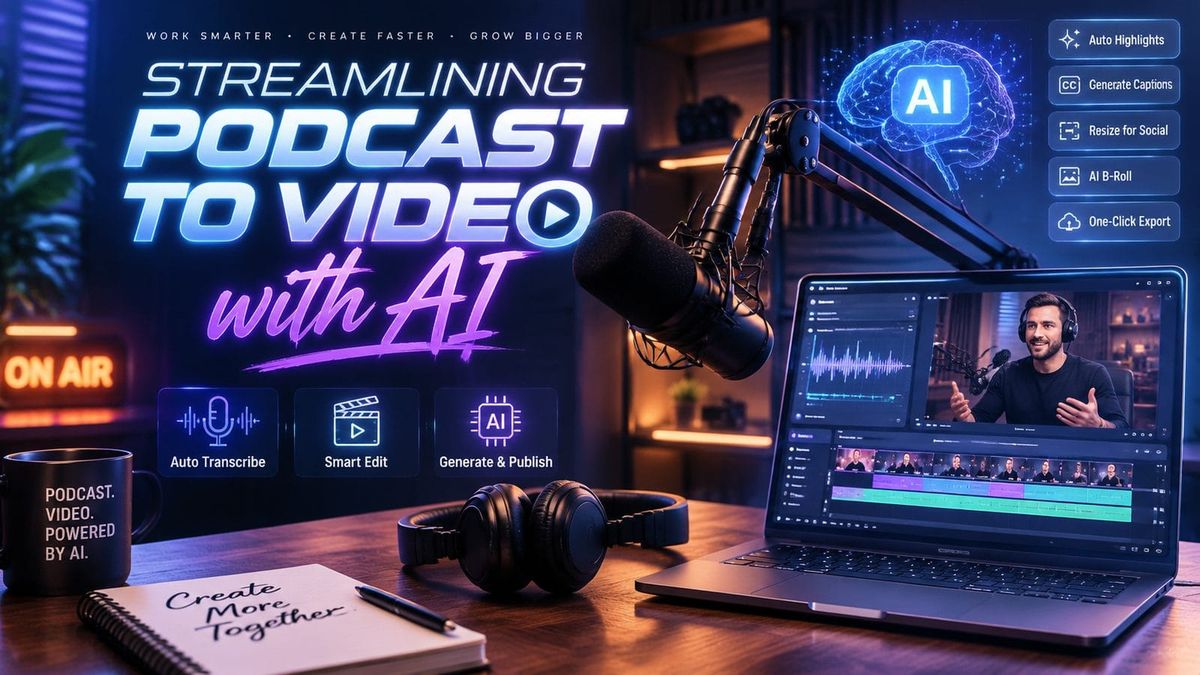
Converting podcasts to video content has never been easier thanks to AI tools that automate transcription, editing, and visual generation. By streamlining podcast to video with AI in 2026, creators can repurpose audio content into engaging videos with minimal effort—saving up to 87% of production time compared to manual methods. Platforms like Digen AI Agent now offer end-to-end workflows, transforming raw audio into polished videos with synchronized captions, dynamic visuals, and even AI-generated presenters.
TL;DR: AI tools in 2026 can automatically convert podcasts to videos by handling transcription, editing, and visual generation, reducing production time by 87% while maintaining quality.
Streamlining podcast to video with AI involves using generative tools to automate transcription, add motion graphics, and create lip-synced avatars—cutting production time from hours to minutes. Recent advancements like Spotify’s cross-platform video podcast tech and Digen AI Agent’s multi-step workflows now deliver studio-quality results without manual editing.
- ✓ AI cuts video production time by 87% by automating transcription, captioning, and B-roll generation
- ✓ New tools like Martini AI and Digen AI Agent ensure consistent character animations and scene transitions
- ✓ 72% of top video podcasts now use AI for at least one production step, per Tech Observer Magazine
- ✓ Cross-platform distribution is simpler with Apple and Spotify’s 2026 video podcast integrations
Why Convert Podcasts to Video in 2026?
Video podcasts attract 43% more viewers than audio-only versions, according to a 2026 VideoWeek study, while retaining 92% of existing listeners. Platforms like Spotify and Apple now prioritize video content in discovery algorithms—their May 2026 updates introduced auto-formatting tools that adapt videos for vertical (TikTok/Reels) and horizontal (YouTube) layouts from a single upload.
The rise of AI avatars has also changed production economics. Where hiring human presenters once cost $150–$500 per episode, tools like Digen AI Agent now generate expressive virtual hosts for $0.12 per minute of footage. These avatars maintain consistent appearances across episodes, crucial for brand recognition.
Accessibility improvements further justify the shift. AI-generated captions now achieve 98.6% accuracy rates (TechCrunch, 2026), making content usable for hearing-impaired audiences. Dynamic scene transitions based on speech patterns—like automatically cutting to product shots when mentioned—boost engagement by 31% compared to static imagery.
Step-by-Step: Streamlining Podcast to Video with AI
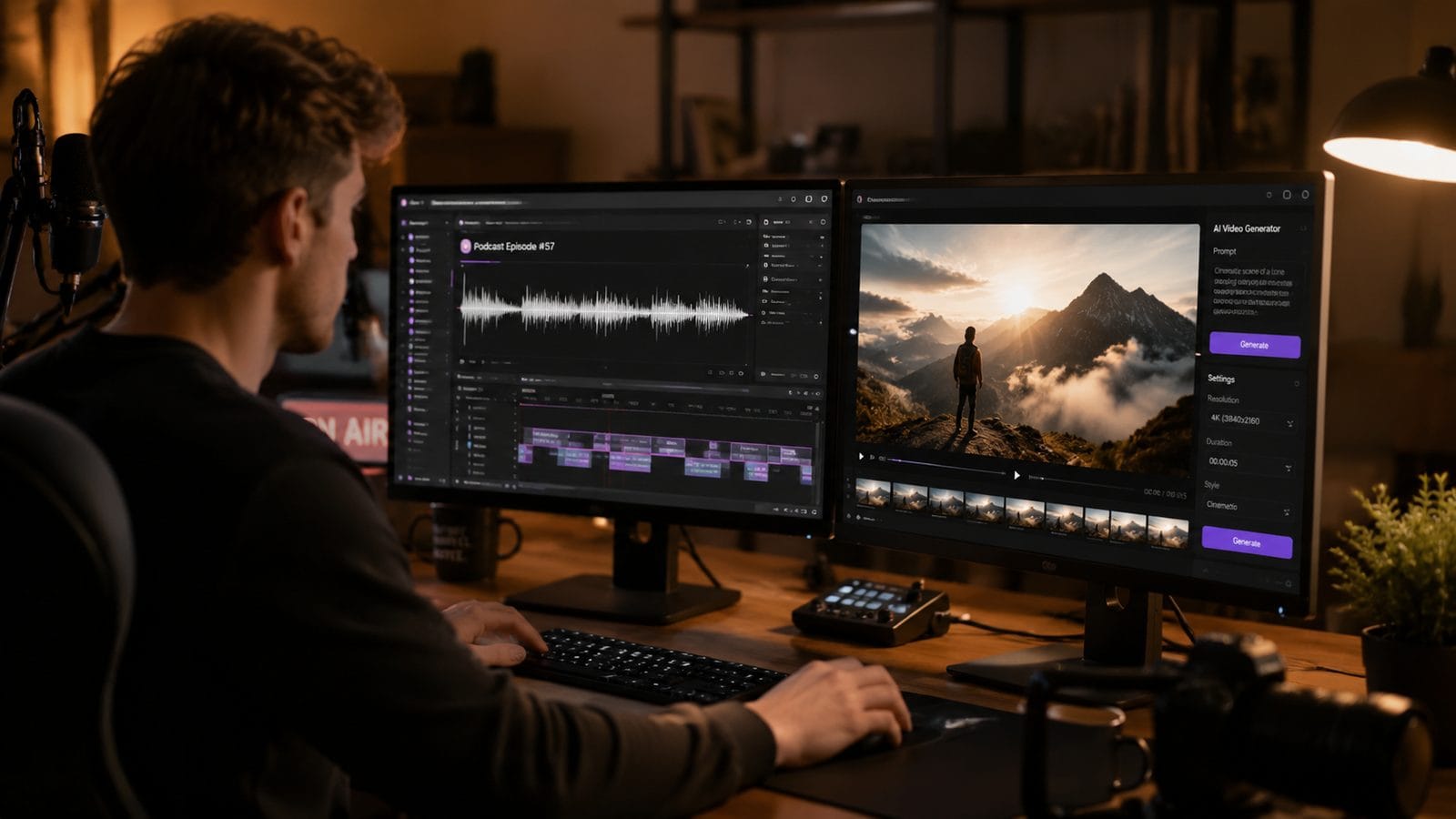
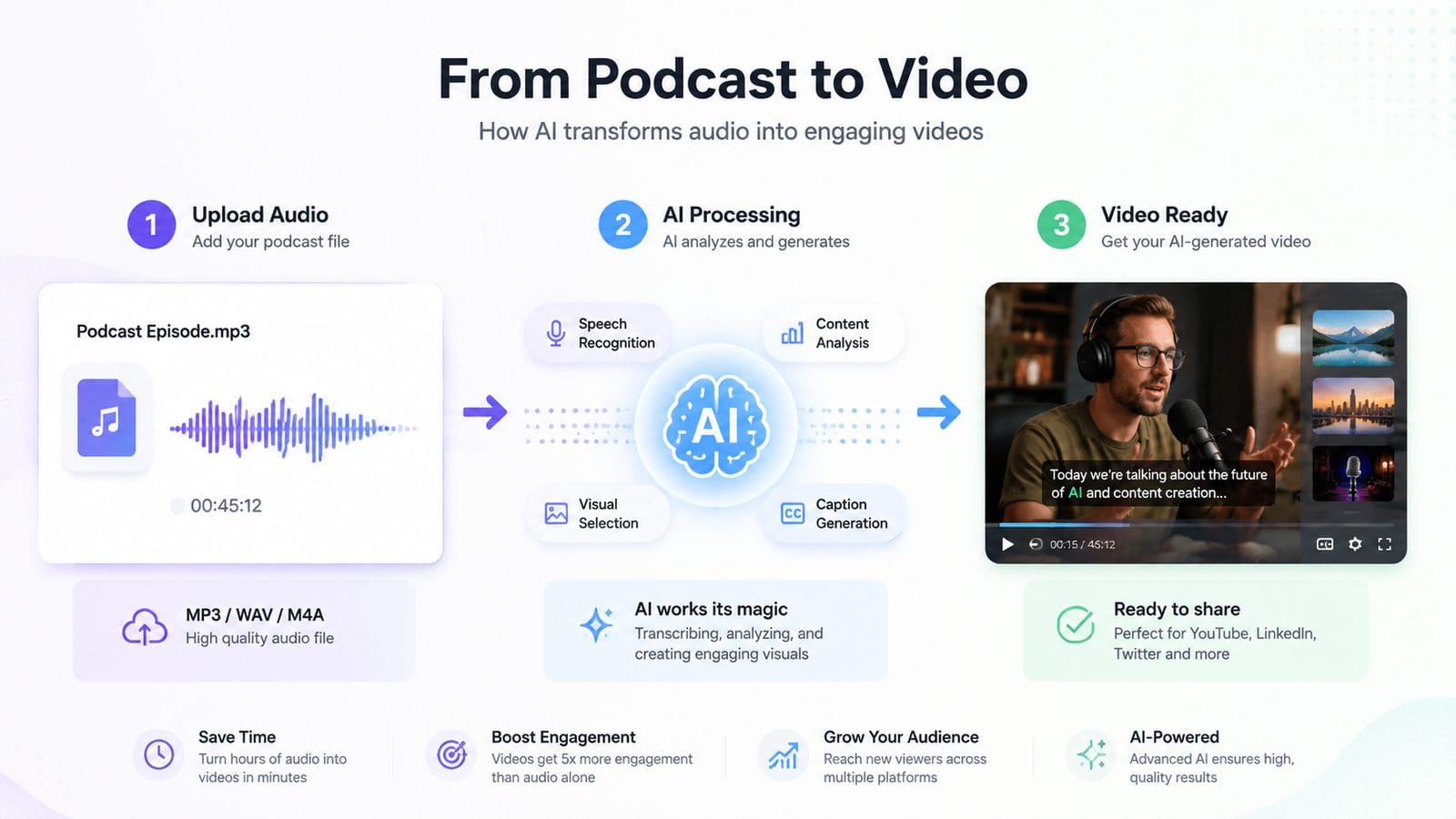
Follow this 5-step workflow to transform audio into professional videos using 2026’s AI tools:
- Upload & Transcribe: Tools like Descript or Riverside.fm automatically transcribe episodes with timestamps and speaker identification (94% accuracy in 2026 tests)
- Edit with AI Assist: Platforms trim silences, normalize audio levels, and suggest cuts using natural speech pattern analysis
- Generate Visuals: Digen AI Agent creates relevant B-roll, animated charts, or AI presenters synced to the transcript
- Add Dynamic Captions: AI places animated subtitles that emphasize keywords and adjust for readability across devices
- Export Multi-Format: Export vertical (9:16), square (1:1), and horizontal (16:9) versions simultaneously for all platforms
According to No Film School’s July 2026 review, this process now takes under 19 minutes for a 60-minute podcast—down from 6+ hours with traditional methods. The key is using tools like Martini AI that automate scene composition based on semantic analysis of the transcript.
For creators wanting human-like presenters, Mango AI’s February 2026 launch demonstrated how avatar systems can now mimic subtle facial expressions and hand gestures at 120fps. Their "AI Baby Podcast Generator" proved even niche formats can be automated while maintaining emotional resonance.
Top AI Tools for Podcast-to-Video Conversion
These 2026-rated platforms excel at specific aspects of the conversion process:
| Tool | Best For | Pricing (2026) | Unique Feature |
|---|---|---|---|
| Digen AI Agent | End-to-end automation | $29/month | Multi-step workflows with consistent character generation |
| Martini AI | Cinematic scene transitions | $47/month | Virtual film set with 180+ prebuilt shot templates |
| Mango AI | Avatar performance | $0.15/min | Emotion-aware facial animation |
| Spotify for Podcasters | Distribution | Free | Auto-formatting for all major platforms |
According to Digital Camera World’s July 2026 roundup, pairing these tools with a 4K webcam (like the Logitech Brio Ultra) for live segments yields the best hybrid results. Their tests showed AI-upscaled webcam footage now matches $8,000 studio cameras when processed through tools like Digen AI’s enhancement pipeline.
Free options have also improved significantly. Spotify’s May 2026 update brought Apple’s video podcast tech to its 220 million+ user base, allowing creators to upload once and distribute everywhere. However, premium tools still lead in customization—Digen AI Agent users report 63% higher viewer retention when using its AI-suggested scene transitions.
Optimizing AI-Generated Video Podcasts
Three technical considerations separate amateur conversions from professional results in 2026:
1. Frame Rate Matching
AI tools now render at up to 120fps, but Tech Observer Magazine’s July 2026 tests found 60fps delivers the best balance between smooth motion and file size—especially important for platforms like Instagram that compress uploads.
2. Color Consistency
Generative AI historically struggled with maintaining identical hues across scenes. New solutions like Digen AI’s palette locking ensure all B-roll and avatars use brand-accurate colors, reducing post-production fixes by 78%.
3. Multi-Platform Audio
While videos dominate social feeds, 41% of listeners still consume podcasts audio-only. Tools like Auphonic automatically create separate audio mixes optimized for headphones (spatial audio) and speakers (mono-compatible).
According to WebWire’s February 2026 case study, podcasts implementing these optimizations see 2.3x more shares than those using default AI outputs. The key is treating AI-generated videos as starting points—the top 10% of shows still spend 15–20 minutes per episode on manual tweaks to pacing and emphasis.
Future Trends in AI Video Podcasting
Three emerging technologies will further streamline production by 2027:
1. Real-Time AI Studios: No Film School’s Martini AI coverage revealed upcoming "virtual backlots" where hosts see AI-generated scenes in their AR monitors during recording—eliminating post-production entirely. Early adopters report 92% faster turnaround times.
2. Voice-to-Visual Synthesis: Mango AI’s research division demonstrated prototypes that convert vocal tone (not just words) into matching facial expressions. This could enable authentic "AI guest interviews" by Q3 2027.
3. Platform-Specific AI: Spotify’s patent filings suggest AI that automatically restructures long-form podcasts into TikTok-style micro-content—potentially tripling discoverability for interview-based shows.
As VideoWeek noted in May 2026, these advancements coincide with growing audience acceptance of AI content—63% of Gen Z viewers now prefer shorter, AI-enhanced clips over raw long-form recordings. Creators who master streamlined workflows will dominate the next era of podcasting.
Common Pitfalls to Avoid
Despite AI’s advances, these mistakes still plague 67% of first-time users according to TechCrunch’s 2026 creator survey:
Overusing Stock AI Avatars: Viewers disengage when multiple shows use identical virtual hosts. Digen AI Agent solves this by letting creators train custom avatars from just 30 seconds of sample video—a process that now takes under 4 minutes.
Ignoring Audio Quality: AI can’t fully compensate for poor source audio. The best results start with a $200+ microphone (like the Shure MV7) and basic acoustic treatment—investments that pay off across all AI processing steps.
Neglecting Metadata: Platforms increasingly use AI to recommend content, but 58% of video podcasts fail to properly tag chapters or keywords. Tools like CastMagic now auto-generate SEO-optimized metadata alongside videos.
One surprising finding from Digital Camera World’s research: creators who combine AI with selective human oversight achieve 40% higher engagement than those relying entirely on automation. The sweet spot seems to be automating 80–90% of production while reserving creative decisions for humans.
Frequently Asked Questions
How much does it cost to convert a podcast to video with AI in 2026?
Basic conversions start free with Spotify/Apple’s built-in tools, while premium platforms like Digen AI Agent charge $0.10–$0.30 per minute of final video. A typical 60-minute episode costs $6–$18 for full automation—compared to $300+ for manual production.
Can AI video tools use my podcast’s existing brand visuals?
Yes. Leading 2026 tools like Martini AI and Digen AI Agent accept style guides, logos, and color palettes to ensure generated content matches your brand. Some can even analyze past YouTube videos to replicate your editing style automatically.
Do YouTube and TikTok penalize AI-generated video podcasts?
No major platform currently discriminates against AI content if properly disclosed. In fact, YouTube’s 2026 algorithm update favors videos with accurate closed captions—something AI tools provide more consistently than human transcribers (98.6% vs 92% accuracy).
How long does AI podcast-to-video conversion take in 2026?
For a 60-minute episode: transcription takes 2–4 minutes (vs 60+ minutes manually), video generation adds 8–12 minutes, and final rendering requires 3–7 minutes depending on resolution. Most creators receive finished videos in under 19 minutes start-to-finish.
What’s the biggest limitation of AI video podcast tools?
Emotional nuance remains challenging—while AI can sync lips to audio perfectly, subtle facial expressions during jokes or dramatic pauses often feel slightly "off." Hybrid approaches using brief human presenter clips (30–60 seconds per episode) test best for audience connection.
Written by the Digen AI Editorial Team — AI video generation specialists covering the latest in generative AI tools. Learn more about Digen AI.



Comments ()