
Sora AI: Creating Video from Text in 2026 (Future of Content)
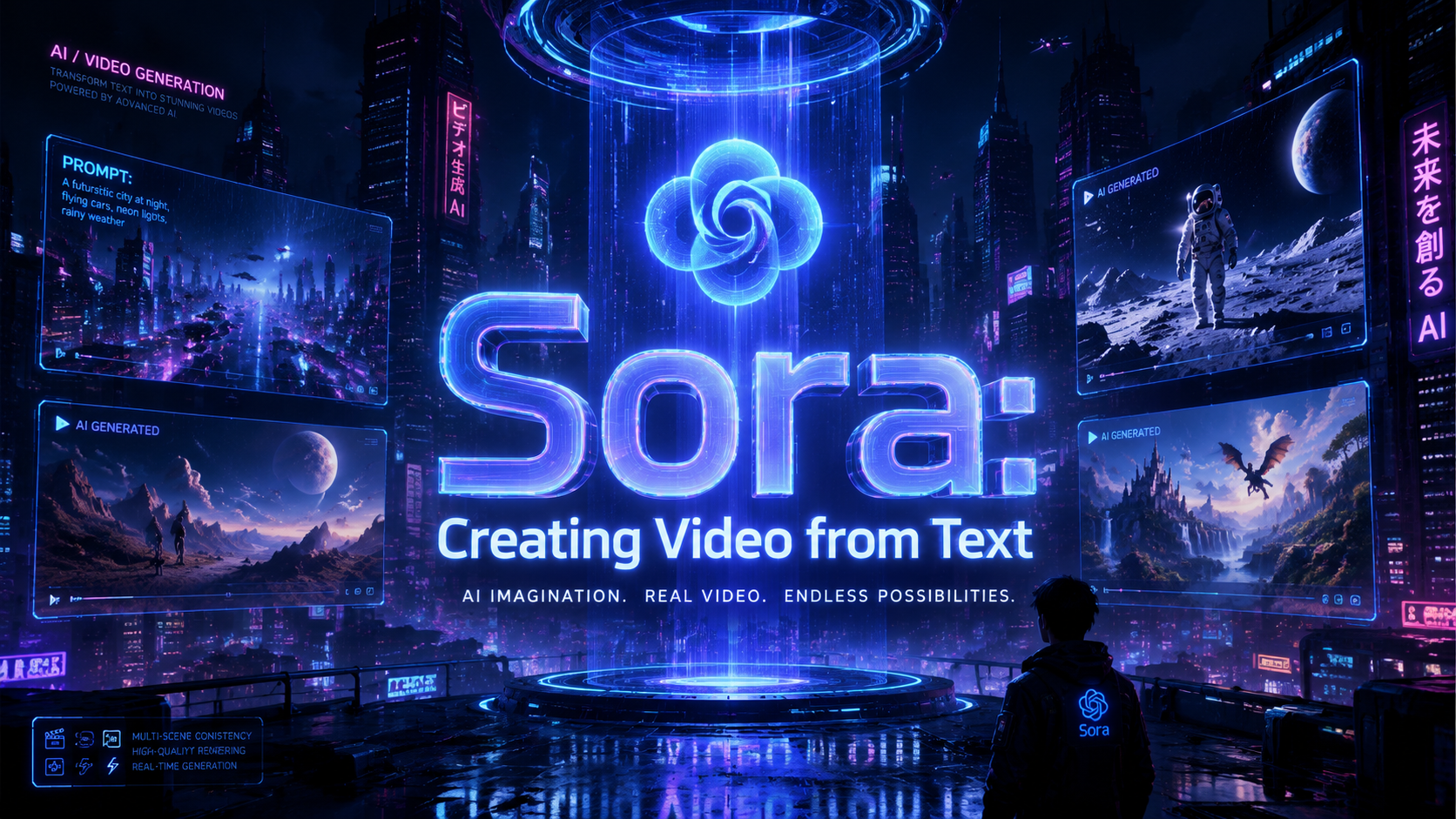
Sora AI was OpenAI's groundbreaking text-to-video generation tool that allowed users to create videos from simple text prompts, revolutionizing content creation in early 2026. Despite initial excitement, OpenAI announced the shutdown of Sora in March 2026, citing strategic shifts and broader challenges in AI's creative applications. This article explores Sora's brief but impactful journey, why it was discontinued, and what its legacy means for the future of AI-generated content.
TL;DR: OpenAI's Sora AI, which enabled video creation from text prompts, was shut down in March 2026 after just six weeks of operation, marking a pivotal moment in AI-generated media despite its short lifespan.
Sora is OpenAI's discontinued text-to-video AI model that generated short videos from written descriptions in early 2026 before being shut down due to strategic realignment and concerns about AI's creative limitations.
- ✓ Sora represented a major leap in AI video generation before its abrupt shutdown
- ✓ Disney canceled a $1 billion investment deal following Sora's discontinuation
- ✓ Experts debate whether Sora's failure signals broader issues with creative AI
- ✓ The AI video generation market continues evolving despite Sora's demise
- ✓ Content creators must now evaluate alternative approaches to AI-assisted video production
The Rise and Fall of Sora AI
When OpenAI launched Sora in February 2026, it promised to democratize video creation by transforming text prompts into dynamic visual content. According to OpenAI, the system could generate 30-second video clips with reasonable coherence from descriptive text inputs, representing a significant advancement in generative AI capabilities. Early demonstrations showed impressive results, particularly for abstract concepts and stylized visuals.
The technology's potential attracted major media partners, including a tentative $1 billion investment deal with Disney that would have integrated Sora into their content pipeline. According to Variety, this partnership collapsed when OpenAI announced Sora's shutdown just six weeks after launch. The sudden reversal shocked industry observers and raised questions about the readiness of text-to-video AI for professional applications.
OpenAI's official statement cited "strategic realignment" as the primary reason for discontinuing Sora, but analysts noted deeper challenges. The The Conversation reported that Sora struggled with maintaining narrative consistency in longer sequences and often produced visually impressive but conceptually flawed outputs that required significant human editing to be usable.
Why Sora Failed to Transform Content Creation
Sora's ambitious promise of creating video from text ultimately fell short of practical implementation for several key reasons. First, the system excelled at generating individual shots but struggled with scene transitions and maintaining character consistency across sequences. This limitation made it unsuitable for most professional video production needs beyond experimental or placeholder content.
Technical Limitations
The AI frequently misinterpreted spatial relationships in complex prompts, leading to physically impossible scenes or distorted perspectives. While these artifacts sometimes created interesting surreal effects, they undermined the tool's reliability for serious content creation.
Creative Constraints
According to IndieWire, Sora's outputs lacked the nuanced storytelling and emotional depth that human creators achieve, resulting in technically impressive but emotionally flat content. This "uncanny valley" of creativity became increasingly apparent as users attempted more sophisticated projects.
Business Model Challenges
The computational resources required for high-quality video generation made Sora prohibitively expensive to operate at scale. OpenAI reportedly spent $0.42 per second of generated video, making commercial viability difficult without massive price reductions or efficiency improvements.
The Aftermath: Industry Impact and Reactions
Sora's abrupt shutdown sent shockwaves through the media and technology sectors, particularly affecting companies that had begun integrating the technology into their workflows. Disney's canceled $1 billion investment represented one of the largest financial casualties, but smaller production houses also reported wasted resources on abandoned Sora-based projects.
The entertainment industry's response was mixed. Some executives expressed relief at avoiding what they saw as premature adoption of unproven technology, while others lamented the lost potential for rapid prototyping and experimental content creation. According to Los Angeles Times, the incident cooled but didn't eliminate Hollywood's interest in AI tools, with many studios now taking more cautious approaches to implementation.
Technology analysts noted that Sora's failure didn't signal the end of text-to-video AI, but rather highlighted the need for more incremental development. Competing systems from other developers immediately sought to position themselves as more reliable alternatives, though none yet match Sora's brief moment of technical achievement before its shutdown.
Broader Implications for AI Content Creation
Sora's story reflects larger challenges facing generative AI applications in creative fields. The system's inability to consistently produce commercially viable content despite its technical sophistication suggests fundamental limitations in current approaches to artificial creativity.
The Human Element in AI Content
Creative professionals noted that Sora excelled at visual mimicry but struggled with conceptual originality. The AI could replicate styles and compose coherent frames, but often failed to deliver the subtle emotional cues and narrative sophistication that human audiences expect from quality content.
Economic Realities of AI Video
The high computational costs of video generation created an unsustainable business model. Unlike text or image generation where costs scale reasonably, video's temporal dimension multiplied resource requirements exponentially, making profitability elusive at current technology levels.
Ethical and Legal Considerations
Sora's brief existence intensified debates about copyright, attribution, and the ethical use of training data. Several content creators raised concerns about the system potentially incorporating protected visual styles without proper compensation or acknowledgment.
What Sora's Legacy Means for Content Creators
For professionals in media and marketing, Sora's rise and fall offers valuable lessons about adopting emerging technologies. The experience demonstrates both the potential and pitfalls of cutting-edge AI tools in creative workflows.
First, it highlights the importance of maintaining human oversight in AI-assisted creation. While Sora could generate impressive individual elements, the most successful implementations came from teams using it as a brainstorming tool rather than a production solution. This suggests a hybrid approach will likely dominate future AI content strategies.
Second, the episode underscores the need for realistic expectations about AI capabilities. Many early adopters reported frustration when Sora failed to deliver on its most ambitious promises, suggesting that incremental improvements rather than revolutionary breakthroughs may characterize the near future of creative AI.
Finally, Sora's story reminds creators that technological tools should serve creative vision rather than dictate it. The most compelling content will likely continue coming from human creators who skillfully leverage AI as one tool among many, rather than relying on it as a complete solution.
Alternative Approaches to AI Video Generation
With Sora no longer available, content creators are exploring other methods for incorporating AI into video production. These alternatives typically involve more specialized tools that address specific parts of the creation process rather than attempting end-to-end generation.
Modular AI Video Workflows
Many studios now combine separate AI tools for storyboarding, asset generation, and editing rather than relying on unified text-to-video systems. This approach allows for greater control and quality assurance at each production stage.
Hybrid Human-AI Collaboration
Forward-thinking creators are developing workflows where AI handles repetitive tasks like background generation or basic animation while humans focus on creative direction and emotional storytelling. This division plays to both parties' strengths.
Specialized Niche Tools
Instead of general-purpose video AI, many developers are now creating focused solutions for specific needs like product visualization, educational content, or social media clips. These targeted applications show more promise than broad solutions like Sora attempted.
The Future of Text-to-Video Technology
While Sora's shutdown represents a setback for AI video generation, most experts agree the field will continue evolving. The technology's potential applications in education, marketing, entertainment, and communication remain too significant to abandon.
Industry observers predict the next generation of text-to-video tools will likely emerge from more specialized developers rather than general AI research labs. These systems may focus on particular genres or use cases where the technology can deliver reliable quality without attempting to be all things to all creators.
Long-term, the dream of effortless video creation from text persists, but Sora's example suggests the path forward requires more nuanced approaches. Future systems will need to better understand narrative structure, emotional resonance, and the collaborative nature of creative work to succeed where Sora ultimately fell short.
Why did OpenAI shut down Sora?
OpenAI cited strategic realignment as the official reason, but analysts point to technical limitations, high operational costs, and challenges in producing commercially viable content as key factors in the decision.
How long was Sora available before being discontinued?
Sora launched in February 2026 and was shut down in March 2026, making it publicly available for approximately six weeks.
Did any major companies invest in Sora before its shutdown?
Disney had planned a $1 billion investment in Sora integration, but canceled these plans when OpenAI announced the shutdown according to Variety.
Can I still access Sora today?
No, OpenAI completely discontinued Sora's services in March 2026, and there is currently no official way to access the technology.
Are there any alternatives to Sora for text-to-video generation?
While no direct equivalent exists, some creators use combinations of specialized AI tools for different aspects of video production as an alternative approach.
Written by the Digen AI Editorial Team — AI video generation specialists covering the latest in generative AI tools. Learn more about Digen AI.



Comments ()