
Runway vs Pika Labs Review (2026): The Ultimate AI Video War
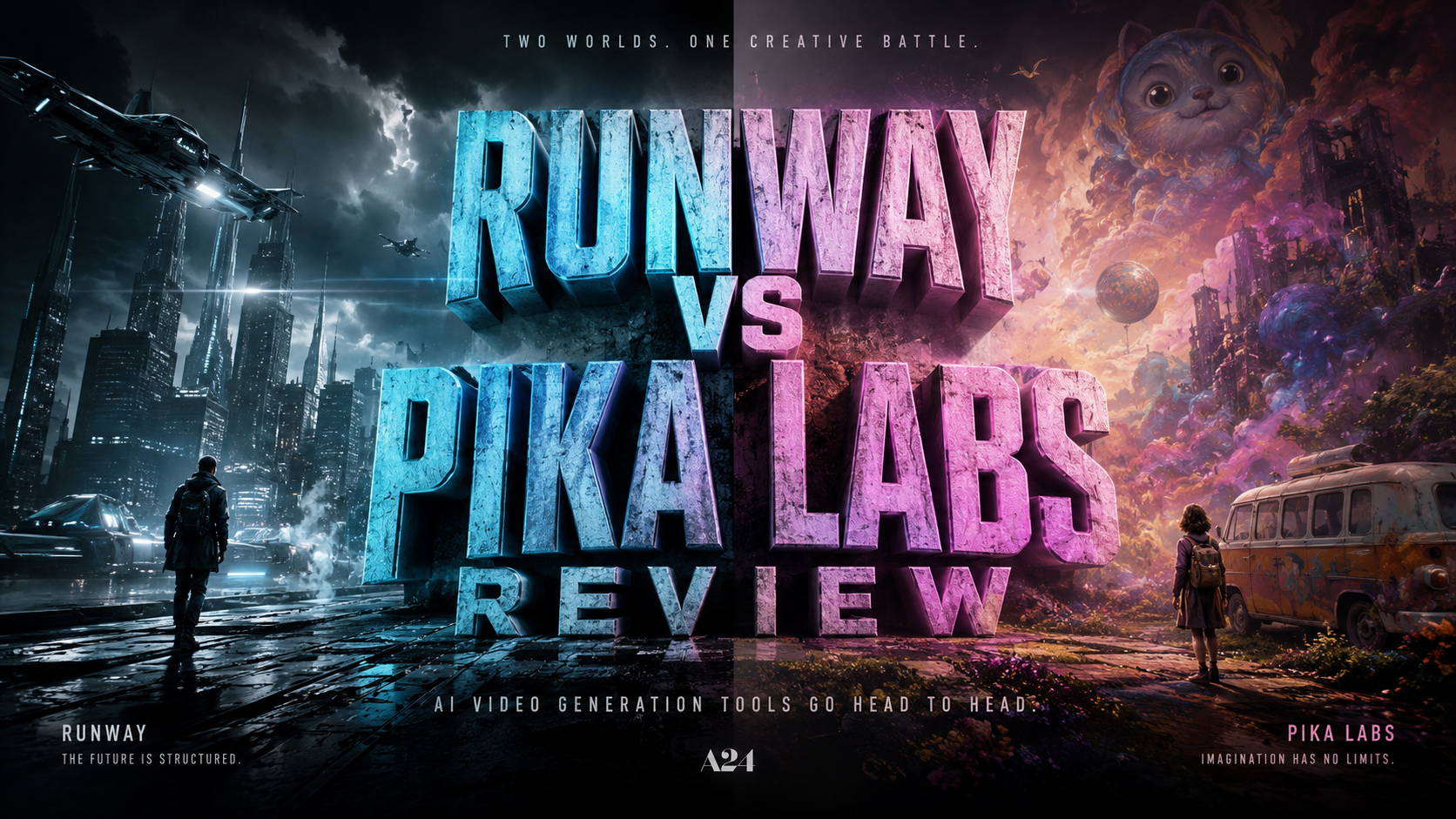
When comparing the two titans of the industry in our runway vs pika labs review, the choice depends on your specific creative workflow: Runway Gen-3 Alpha remains the powerhouse for professional cinematic control and high-fidelity physics, while Pika 2.0 excels in stylized animation, ease of use, and innovative features like Lip Sync and Sound Effects. As of 2026, both platforms have evolved into comprehensive creative suites that have redefined the boundaries of digital cinematography.
Runway vs Pika Labs is a comparison of two leading AI video platforms where Runway provides enterprise-grade tools for high-end film production and precise motion control, while Pika Labs focuses on a user-friendly, community-driven interface optimized for social media creators and rapid, stylized video generation with integrated audio capabilities.
- ✓ Runway offers superior cinematic realism and granular "Director Mode" camera controls for professional workflows.
- ✓ Pika Labs leads in integrated audio features, including automated sound effects and highly accurate lip-syncing.
- ✓ According to Tom's Guide, testing over 200 hours of video generators confirms these two remain the top industry picks in 2026.
- ✓ Runway’s multi-motion brush allows for complex physics-based movement that Pika currently struggles to replicate.
- ✓ Pika provides a more seamless mobile-first experience, making it the preferred choice for 2026 UGC content trends.
The Evolution of AI Video in 2026
The landscape of artificial intelligence has shifted dramatically since the early days of jittery, distorted clips. In 2026, the "Ultimate AI Video War" has reached a fever pitch, with Runway and Pika Labs emerging as the clear frontrunners. While newer entrants like Higgsfield AI have entered the cinematic space, the established dominance of Runway and Pika is built on years of iterative model training and a deep understanding of what creators actually need. This runway vs pika labs review explores how these platforms have transitioned from simple text-to-video tools into full-fledged generative engines capable of producing 4K high-definition content that is nearly indistinguishable from traditional film.
According to recent analysis by MensXP on 2026 content trends, AI video tools are no longer experimental; they are foundational to the creator economy. Runway has doubled down on its "Gen-3" architecture, focusing on temporal consistency and complex light interactions. Meanwhile, Pika Labs has leaned into the "Pika 2.0" ecosystem, emphasizing "emotional intelligence" in its character animations and a more playful, accessible interface. The competition has driven both companies to offer features that were once considered impossible, such as real-time video editing and instant style transfer.
How to Use AI Video Generators: A Step-by-Step Guide
- Define Your Prompt: Start with a clear description of the subject, action, and environment. For example, "A cinematic wide shot of a futuristic neon city in the rain, 4K, hyper-realistic."
- Select Your Model: Choose between Runway for realistic physics or Pika for stylized, expressive character movements.
- Adjust Motion Parameters: Use the Motion Brush in Runway or the Motion Slider in Pika to dictate how much movement occurs in the frame.
- Generate and Refine: Run the initial generation, then use "Inpainting" or "Modify Region" tools to fix specific details without re-rolling the entire video.
- Add Audio and Export: Utilize Pika’s built-in Sound FX or Runway’s audio syncing tools to finalize your project for 2026 social media standards.
Runway vs Pika Labs Review: Feature Comparison
To understand which tool fits your project, we must look at the technical specifications and specialized features. Runway has long been the "Adobe Premiere" of AI, offering a suite of over 30 "Magic Tools" that include background removal, motion tracking, and green screen capabilities. Their focus in 2026 is on the professional filmmaker who requires absolute control over every pixel. The introduction of the "Global Lighting Control" allows users to change the time of day in a generated clip after it has been rendered, a feat that remains a significant advantage for Runway.
Pika Labs, on the other hand, has captured the hearts of the social media and UGC (User Generated Content) community. As noted by Nokiamob in their 2026 review of UGC generators, Pika’s ability to "animate anything" makes it incredibly versatile. Their "Sound Effects" feature automatically analyzes the visual content of a video and generates a matching audio track—clashing swords, roaring engines, or whispering wind—saving creators hours in post-production. While Runway focuses on the visual "wow" factor, Pika focuses on the holistic "experience" of the video.
| Feature | Runway (Gen-3) | Pika Labs (2.0) |
|---|---|---|
| Primary Use Case | Cinematic Film & Professional VFX | Social Media, Animation & UGC |
| Max Resolution | 4K Ultra HD | 2K (Upscaled to 4K) |
| Audio Integration | Advanced Syncing Tools | Auto Sound FX & Lip Sync |
| Motion Control | Multi-Motion Brush & Director Mode | Motion Slider & Region Modify |
| Physics Engine | High Fidelity / Realistic | Stylized / Fluid |
| Platform | Web & Desktop App | Web, Discord & Mobile App |
Deep Dive: Runway’s Cinematic Superiority
Runway’s Gen-3 Alpha model is widely considered the gold standard for realism in 2026. In our runway vs pika labs review, we found that Runway’s handling of complex textures—such as human skin, flowing water, and fabric—is significantly more sophisticated than its competitors. This is largely due to their massive dataset and proprietary training methods that prioritize temporal stability. When you generate a 10-second clip in Runway, the characters don't "morph" or lose their identity halfway through, a common issue in lesser models.
The Power of Director Mode
One of Runway’s standout features is "Director Mode." This allows users to control the camera’s movement with precision. You can simulate pans, tilts, zooms, and dollies with specific speed settings. For a filmmaker, this means the AI isn't just "guessing" what looks good; it is following a storyboard. According to Cybernews, this level of control is why Runway remains the top choice for cinematic AI video generation in 2026, even with new competitors like Higgsfield AI entering the market.
Multi-Motion Brush Technology
The Multi-Motion Brush is perhaps the most innovative tool in the Runway arsenal. It allows users to paint over specific areas of a static image and assign different directional movements to each. For example, you can make the clouds move left, the trees sway right, and a person walk forward, all within the same frame. This granular control is essential for high-end commercial work where the "AI look" must be avoided at all costs.
Pika Labs: The King of Character and Audio
While Runway wins on technical realism, Pika Labs wins on personality. The Pika 2.0 engine has a distinct "vibe" that is perfect for storytelling and character-driven content. If you are looking to create a music video, Techloy’s 2026 hands-on review suggests that Pika is the superior choice because of its integrated audio-visual workflow. The "Lip Sync" tool in Pika is remarkably accurate, allowing creators to upload a voice note and have an AI-generated character speak those words with realistic mouth movements and facial expressions.
Integrated Sound Effects (SFX)
Pika’s "Sound Effects" feature is a game-changer for solo creators. In 2026, the ability to generate a video and its corresponding audio in one click is a massive time-saver. When Pika generates a video of a car racing down a highway, it automatically layers in the sound of a high-revving engine and the whoosh of wind. This creates a much more immersive result immediately, whereas Runway users often have to export their clips to a third-party editor to add sound.
The "Modify Region" Advantage
Pika’s "Modify Region" tool is exceptionally intuitive. If you have a video of a person wearing a red shirt but want it to be a blue tuxedo, you simply draw over the shirt and type the change. While Runway has similar "Inpainting" tools, Pika’s implementation is faster and often more creative in how it blends the new elements into the existing scene. This makes Pika the ultimate tool for iterative design and rapid prototyping of visual ideas.
Runway vs Pika Labs Review: Pricing and Accessibility
In 2026, the pricing models for both services have stabilized to accommodate different tiers of users. Runway operates on a credit-based system with several subscription levels: Basic (Free), Standard, Pro, and Unlimited. The "Unlimited" tier is particularly popular among professional studios as it allows for endless generations on their slower "relaxed" mode, ensuring that costs don't spiral during the creative exploration phase. Runway also offers enterprise solutions with custom model training for large brands.
Pika Labs maintains a slightly more accessible price point, catering to the "prosumer" and social media influencer. Their "Pro" plan offers unlimited generations and high-priority processing. Pika also remains more "social" by nature, with a vibrant Discord community where users can share prompts and learn from one another. For a creator just starting their journey in AI video, Pika’s lower barrier to entry and more forgiving learning curve make it a highly attractive option.
Final Verdict: Which Should You Choose?
The conclusion of our runway vs pika labs review is that there is no single "winner," but rather a "best tool for the job." If your goal is to produce a high-fidelity short film, a commercial, or a project requiring realistic visual effects, Runway is the undisputed champion. Its depth of control and superior physics engine provide a professional-grade output that Pika cannot currently match in terms of raw realism.
However, if you are a content creator, a social media manager, or someone looking to bring characters to life with voice and sound, Pika Labs is the better investment. Its suite of audio tools and "Modify Region" features make it a more versatile and fun platform for creative experimentation. As we move further into 2026, the gap between these two will likely continue to blur, but for now, they serve two distinct ends of the creative spectrum.
Is Runway better than Pika Labs for realistic videos?
Yes, Runway Gen-3 is generally considered superior for realistic, cinematic video. It handles complex physics and lighting more accurately than Pika Labs, making it the preferred choice for professional VFX and film production.
Can Pika Labs generate sound for its videos?
Yes, Pika Labs 2.0 includes a built-in Sound FX generator that automatically creates audio tracks based on the visual content of the video. It also features a highly accurate Lip Sync tool for character dialogue.
Which AI video tool is better for beginners?
Pika Labs is often cited as being more beginner-friendly due to its intuitive interface and "Modify Region" tools. Runway offers more features, but it has a steeper learning curve for those unfamiliar with professional video editing concepts.
Are these AI video tools free to use in 2026?
Both platforms offer limited free trials or "Basic" plans with a set amount of credits. However, for high-resolution 4K exports and unlimited generations, a paid subscription is required for both Runway and Pika Labs.
Can I use Runway and Pika Labs on my phone?
Pika Labs has a very strong mobile presence with a dedicated app and a web-responsive interface. Runway offers a mobile app for iOS, but many of its advanced "Director Mode" features are best utilized on a desktop browser.



Comments ()