
Runway Gen-3 vs Luma Dream Machine: 2026 AI Video Comparison
The primary difference between runway gen 3 vs luma dream machine in 2026 lies in their architectural focus: Runway Gen-3 Alpha excels in hyper-realistic cinematic control and precise temporal consistency, while Luma Dream Machine is the industry leader for fluid, physics-defying motion and rapid prototyping. Choosing between them depends on whether your project requires the granular art direction of Runway or the spontaneous, high-energy dynamics of Luma.
Runway Gen-3 vs Luma Dream Machine represents the pinnacle of AI video in 2026. Runway Gen-3 is a high-fidelity video generation model optimized for professional filmmakers requiring specific camera movements, while Luma Dream Machine is a versatile, high-speed generator known for its ability to interpret complex prompts with exceptional physical accuracy and creative flair.
- ✓ Runway Gen-3 offers superior "General World Models" for consistent character and environment rendering.
- ✓ Luma Dream Machine leads in processing speed and the ability to handle extreme motion without artifacts.
- ✓ Both platforms now support advanced audio-visual synchronization for 2026 music visualizer workflows.
- ✓ Runway provides more robust "Director Tools" for precise control over lighting and camera angles.
Understanding the 2026 AI Video Landscape
As we navigate through 2026, the landscape of artificial intelligence has shifted from experimental novelties to essential production tools. The competition between runway gen 3 vs luma dream machine has defined this era, pushing the boundaries of what is possible in digital storytelling. According to a recent 2026 report by Technology Org, the integration of AI audio-visualizers has become a standard requirement for creators, a trend that both Runway and Luma have embraced with their latest firmware updates.
The evolution of these models is no longer just about resolution. While 4K output is now the baseline, the real battleground is "temporal consistency"—the ability of an AI to keep a character’s face or a background's architecture the same from the first second to the last. For professionals, this consistency is the difference between a usable shot and a "hallucination" that breaks immersion. Runway Gen-3 Alpha was built on the foundation of being a "Hyper-Realistic" competitor to Sora, focusing on these specific physics-based interactions.
Furthermore, the market has seen the entry of major players like Midjourney and Sora, but Runway and Luma remain the most accessible for independent creators. As noted by VentureBeat in mid-2025, even as legal challenges from entities like Disney and Universal persist, the technological leaps in model training have allowed these tools to generate content that is indistinguishable from traditional cinematography in many use cases.
How to Choose Between Runway Gen-3 vs Luma Dream Machine
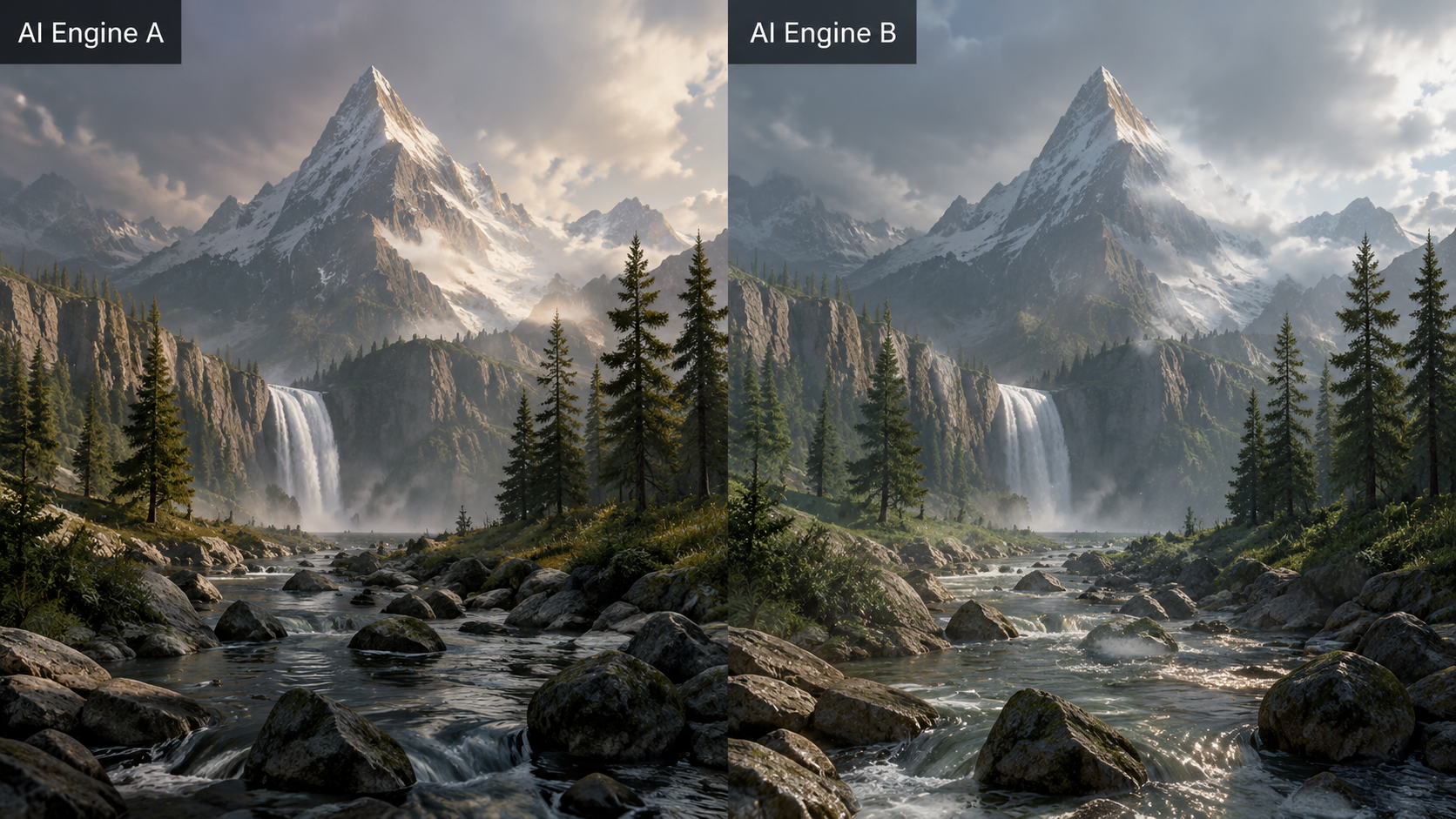
- Identify your primary goal: If you need a specific camera move (like a slow pan or a rack focus), start with Runway Gen-3's Advanced Camera Controls.
- Assess the motion complexity: For scenes involving splashing water, dancing, or high-speed chases, Luma Dream Machine often handles the fluid dynamics with fewer glitches.
- Check for reference materials: If you have a starting image, use Runway’s "Image-to-Video" tool, which has been cited by Tom’s Guide as a top pick for maintaining visual fidelity.
- Review the duration requirements: Luma is often preferred for longer continuous shots, while Runway excels in high-quality 10-second "hero" clips.
- Finalize with Audio: Use the 2026 audio-sync features found in both to ensure your visuals match your soundtrack's rhythm.
Comparison of Features: Runway Gen-3 vs Luma Dream Machine
| Feature | Runway Gen-3 Alpha | Luma Dream Machine |
|---|---|---|
| Primary Strength | Cinematic Realism & Control | Fluid Motion & Physics |
| Max Resolution | 4K Ultra HD (Upscaled) | 4K Cinematic |
| Motion Dynamics | Predictable & Smooth | Explosive & Naturalistic |
| Key Toolset | Director Mode, Brush Motion | Prompt-to-Video, Loop Mode |
| Generation Speed | Moderate (High Quality) | Very Fast (Turbo Mode) |
| Best For | Commercials & Films | Social Media & Concept Art |
The Technical Edge of Runway Gen-3 Alpha
Runway Gen-3 Alpha represents a significant leap from its predecessors. It is marketed as a "General World Model," meaning it doesn't just predict pixels; it understands the 3D space it is creating. This allows for what No Film School describes as "hyper-realistic" outputs that rival high-end CGI. The model is particularly adept at human anatomy and skin textures, which were historically difficult for AI to render without the "uncanny valley" effect.
Advanced Director Controls
One of the standout features of Runway in 2026 is its suite of granular controls. Unlike earlier versions where prompting was a "black box," Gen-3 allows users to specify lighting conditions (e.g., "Golden Hour," "Cinematic Noir") and specific lens types. This level of control is why it remains a favorite for advertising agencies who need to match AI footage with existing brand assets.
Consistency and Character Persistence
According to testing data from Tom’s Guide, Runway Gen-3 has spent over 200 hours being benchmarked against other models, consistently scoring highest in character persistence. This means if you generate a character in one scene, you can reliably bring that same character into another scene with different lighting or angles, a feat that was nearly impossible two years ago.
Luma Dream Machine: The Speed and Motion Specialist
While Runway focuses on the "Director's" experience, Luma Dream Machine focuses on the "Creator's" spontaneity. Since its emergence as a top-tier competitor, Luma has prioritized the "Dream" aspect—allowing for surreal, high-motion transitions that feel organic. It is widely regarded as the fastest high-quality generator on the market in 2026, making it ideal for rapid iteration.
Handling Complex Physics
Luma Dream Machine shines in scenarios where physics usually break down in AI. Whether it’s the way hair blows in the wind or the reflection of light on a moving car, Luma’s architecture handles these variables with a level of grace that often surpasses Gen-3. Marketing4eCommerce recently highlighted Luma as a top choice for e-commerce videos due to its ability to make products look tactile and real in motion.
Accessibility and User Experience
Luma’s interface is designed for simplicity. While Runway offers a deep dashboard of sliders and nodes, Luma relies on a highly sophisticated natural language processor. You can describe a complex scene in plain English, and the model interprets the "vibe" and "energy" of the request with surprising accuracy. This has made it the go-to tool for social media influencers and quick-turnaround content creators.
Runway Gen-3 vs Luma Dream Machine for Professional Workflows
In a professional setting, the choice between runway gen 3 vs luma dream machine is rarely "either/or." Many studios in 2026 utilize both. A typical workflow might involve using Luma to brainstorm visual concepts and motion paths due to its speed, then moving the final "look" into Runway Gen-3 to execute the high-resolution, controlled final render.
Integration with Audio and Post-Production
Both platforms have integrated with major NLEs (Non-Linear Editors) and audio visualizers. As Technology Org reported in April 2026, the ability to create music visuals has been revolutionized. You can now feed a MIDI file or an MP3 directly into these models to drive the "pulse" of the video, ensuring that every frame is synced to the beat. This is a massive leap forward for music video directors working on tight budgets.
Cost and Subscription Models
Pricing remains a competitive factor. Runway typically operates on a credit-based system geared toward enterprise and professional users, offering higher-tier plans that include "unlimited" slow generations. Luma Dream Machine has disrupted this with aggressive "Prosumer" pricing, offering high-speed "Turbo" tiers that appeal to individual creators who need to generate dozens of clips a day.
Future Outlook: Beyond 2026
The trajectory of runway gen 3 vs luma dream machine suggests that we are heading toward a future of "Real-Time" video generation. While we aren't quite at the point of generating 4K video at 60fps instantaneously, the gap is closing. Research from Runway's June 2024 launch hinted at these "Next-Generation" capabilities, and by 2026, those promises have largely been fulfilled.
The impact on the film industry is profound. We are seeing a democratization of high-fidelity visual effects. A single creator can now produce a trailer that would have required a VFX house and a million-dollar budget just a few years ago. As Midjourney and other competitors continue to release their own models, the pressure on Runway and Luma to innovate remains high, ensuring that users will continue to see rapid improvements in quality and control.
Which is better for realistic human faces, Runway or Luma?
In 2026, Runway Gen-3 Alpha is generally considered superior for realistic human faces and skin textures. Its "General World Model" architecture is specifically tuned to avoid the uncanny valley, making it the preferred choice for close-up shots.
Can I use Luma Dream Machine for commercial projects?
Yes, Luma Dream Machine offers commercial licensing on its paid tiers. It is widely used in 2026 for social media advertising and product showcases due to its excellent handling of motion and physics.
Is Runway Gen-3 Alpha faster than Luma Dream Machine?
Generally, no. Luma Dream Machine is optimized for speed and rapid prototyping, often delivering clips faster than Runway. Runway Gen-3 prioritizes rendering depth and cinematic control, which can take slightly longer per generation.
Do these tools support 4K video generation?
Both Runway Gen-3 and Luma Dream Machine support high-resolution output. While the base generation may be 1080p or 2K, both platforms include integrated AI upscalers that provide crisp 4K results suitable for professional use.
How does the keyword runway gen 3 vs luma dream machine affect my choice?
When searching for "runway gen 3 vs luma dream machine," you are looking for the trade-off between control and spontaneity. Choose Runway for "directed" content and Luma for "creative exploration" and high-motion sequences.



Comments ()