
Runway Gen 3 vs Gen 2 (2026): Which AI Video Model Wins?
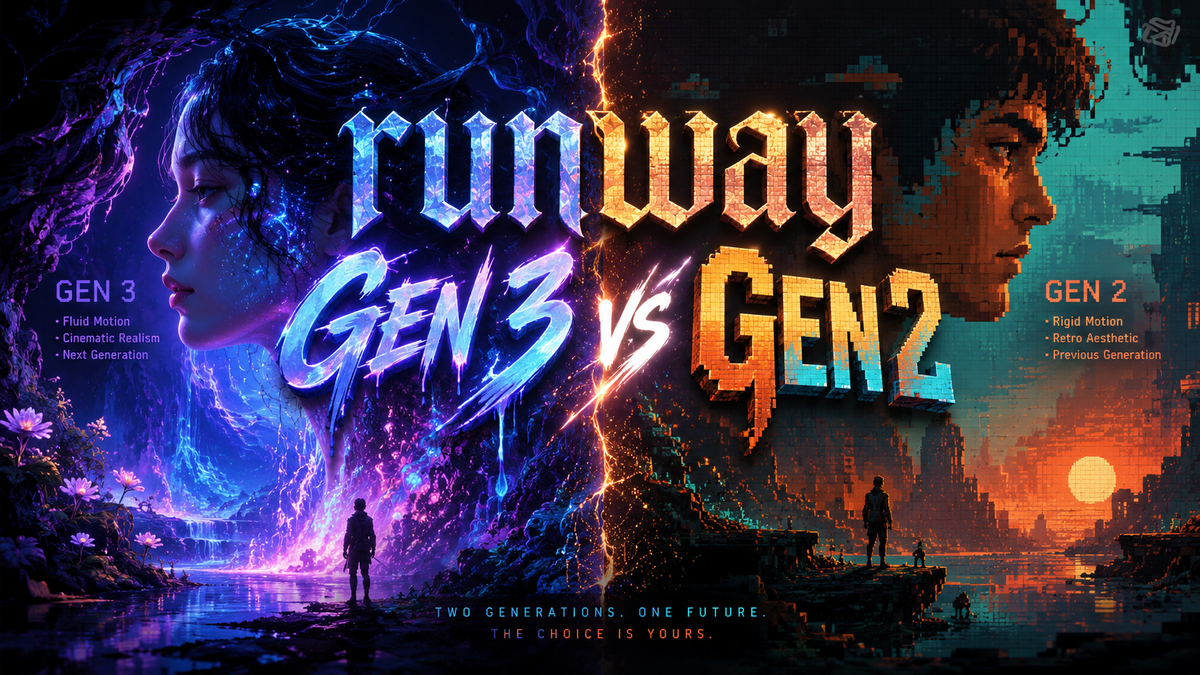
When comparing Runway Gen 3 vs Gen 2, the newer Gen-3 Alpha model is the clear winner for professional and semi-professional AI video generation, offering dramatically better motion coherence, higher resolution output, and robust camera controls. While Gen-2 was a groundbreaking tool that put AI video creation into the hands of millions, Gen-3 elevates the technology from experimental novelty to a genuinely useful filmmaking instrument. For anyone creating content in 2026, Gen-3 is the recommended choice unless you are working with legacy workflows or need the absolute lowest computational overhead.
Runway Gen 3 Alpha is a next-generation AI video generation model launched in June 2024 and significantly updated through late 2025. It outperforms the older Gen-2 model in resolution (1080p vs 720p), video duration (up to 10 seconds vs 4 seconds), motion realism, and text adherence. Gen-3 also introduced camera controls like pan, tilt, and zoom, which Gen-2 lacks entirely. As of 2026, Gen-3 remains the standard bearer for creative AI video work, even as Runway's Gen-4 begins to emerge for developer APIs.
- ✓ Resolution Leap: Gen-3 Alpha supports up to 1080p native output with 4K upscaling, compared to Gen-2's 720p maximum.
- ✓ Duration & Coherence: Gen-3 generates clips up to 10 seconds with far superior temporal consistency and motion physics.
- ✓ Camera Control: Gen-3 introduces dedicated camera movement presets (pan, tilt, zoom, orbit) — a feature Gen-2 does not offer.
- ✓ Benchmark Dominance: According to CNBC (December 2025), Runway's Gen-3 update beat Google and OpenAI in key video generation benchmarks.
- ✓ Filmmaker Adoption: Analytics India Magazine reported in December 2025 that Gen-3's updates were a "game changer" for professional filmmakers.
The Leap from Gen-2 to Gen-3: Understanding the Evolution
Runway's Gen-2 model, released in early 2023, was one of the first widely accessible AI video generators. It allowed users to turn text prompts and images into short, often surreal video clips. For its time, Gen-2 was revolutionary — it democratized video creation and sparked a wave of creative experimentation. However, it had significant limitations: clips were capped at around 4 seconds, resolution topped out at 720p, and the model frequently struggled with motion artifacts, object persistence, and prompt adherence. Characters would morph unpredictably, backgrounds would flicker, and coherent storytelling was nearly impossible.
Gen-3 Alpha, first detailed by Runway Research on June 17, 2024, was designed from the ground up to address these shortcomings. According to Runway's official research page, Gen-3 was "trained on a massive dataset of high-quality video and text pairs" and represented a "next-generation" architecture for video synthesis. The improvements were immediate and measurable: higher temporal stability, better text-to-video alignment, and the ability to generate clips up to 10 seconds in length at 1080p resolution. A hands-on review published on Medium in July 2024 noted that Gen-3 "feels like the first model where AI video looks intentional rather than accidental."
By December 2025, Runway rolled out a significant update to the Gen-3 architecture that, as reported by CNBC, "beat Google and OpenAI in a key benchmark for video generation quality." This update solidified Gen-3's position as the leading AI video model for creative professionals, even as competitors like Seedance and Sora pushed forward with their own offerings.
Runway Gen 3 vs Gen 2: A Feature-by-Feature Breakdown
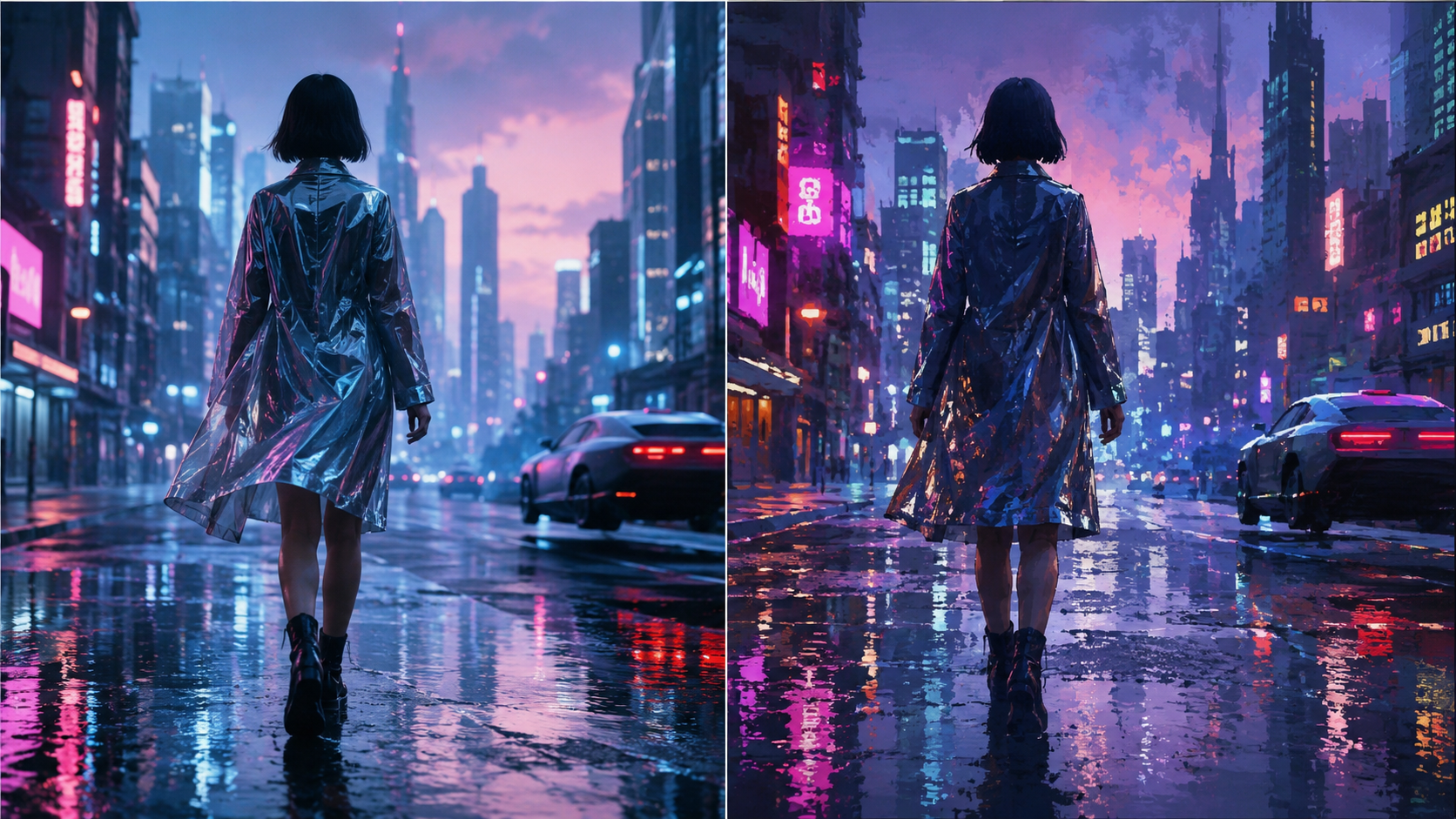
To understand exactly what you are getting with each model, it helps to lay the specifications side by side. The table below compares the key attributes of both models as they stand in 2026, based on Runway's official documentation and independent testing.
| Feature | Gen-2 (2023) | Gen-3 Alpha (2024-2025) |
|---|---|---|
| Maximum Output Resolution | 720p | 1080p (up to 4K with upscaling) |
| Maximum Clip Duration | 4 seconds | 10 seconds |
| Text-to-Video Quality | Moderate — frequent drift | High — strong prompt adherence |
| Image-to-Video | Supported, basic | Enhanced with style consistency |
| Motion Coherence | Low — objects warp/flicker | High — smooth, realistic motion |
| Camera Controls | Not available | Pan, tilt, zoom, orbit, dolly |
| Video-to-Video | Limited | Robust with style transfer |
| Render Speed | Fast (lower complexity) | Moderate (higher quality trade-off) |
| API Availability | Discontinued (as of 2025) | Available via RunwayML platform |
| Best For | Lo-fi experiments, quick drafts | Professional edits, short-form content |
The most striking differences are in resolution, duration, and camera control. Gen-3's ability to output at 1080p native resolution means the footage can actually be used in broadcast-quality projects without immediate upscaling. The camera controls — a feature completely absent from Gen-2 — allow filmmakers to simulate real camera movements, giving AI-generated clips a much more natural, cinematic feel. This single feature has been cited by Analytics India Magazine as a key reason why Gen-3 has been adopted by independent filmmakers and small studios.
Benchmark Performance and Real-World Results
Numbers on a spec sheet only tell part of the story. The real test of any AI video model is how it performs under practical conditions. In December 2025, Runway rolled out a major update to Gen-3 that pushed its capabilities even further. According to CNBC, this new model "beat Google's Veo and OpenAI's Sora in key benchmarks for video generation quality, including motion realism, prompt alignment, and temporal consistency." This was a significant milestone, as Google and OpenAI had invested heavily in their own video generation efforts throughout 2025.
Analytics India Magazine reported later that same month that the update was "a game changer for filmmakers," noting that the improved Gen-3 model reduced common artifacts like ghosting, object duplication, and background warping by a wide margin. The article highlighted that professional editors were now able to use Gen-3 output as B-roll footage with minimal post-processing — something that was simply not possible with Gen-2. The hands-on review from Medium in July 2024 had already hinted at this potential, stating that Gen-3 "produces clips that hold together visually in ways that Gen-2 never could."
It is also worth noting that by March 2026, Runway had already moved on to Gen-4 for its developer API offerings. SitePoint published a comparison of Seedance 2.0, Sora, and Runway Gen-4 on March 9, 2026, suggesting that the API landscape is shifting rapidly. However, for end-users working directly in the RunwayML interface, Gen-3 Alpha remains the primary creative tool, with Gen-4 currently targeting developers and enterprise integrations.
Practical Use Cases for Each Model
Choosing between Gen-2 and Gen-3 depends heavily on what you are trying to achieve. Gen-2 still has a place in specific workflows, particularly when speed and simplicity are more important than quality. For example, if you need to quickly generate a rough visual draft for a storyboard or a low-fidelity social media loop, Gen-2's faster render times and lower system requirements can be an advantage. Some users also prefer the distinct, slightly surreal aesthetic of Gen-2 for specific artistic projects — its imperfections can be stylistically appealing.
Gen-3, on the other hand, is the tool of choice for any scenario where quality matters. Filmmakers use Gen-3 to generate background plates, atmospheric establishing shots, and even short narrative sequences. The camera controls allow directors to plan virtual moves that match their live-action footage. Advertising agencies and content studios rely on Gen-3 for rapid prototyping of commercial concepts. The model's improved text-to-video alignment means you can reliably generate specific visual compositions — "a low-angle shot of a red car speeding through a neon-lit city at night" actually looks like the prompt describes, rather than being a rough approximation.
For developers, the calculus is slightly different. As of early 2026, Runway's API offering has shifted toward Gen-4, which SitePoint compared alongside Seedance 2.0 and Sora in March 2026. Developers building video generation into their applications may want to evaluate Gen-4 for its API performance, while creators using the RunwayML web interface will continue to rely on Gen-3 for the foreseeable future.
Pricing and Accessibility in 2026
Pricing is an important factor in the Runway Gen 3 vs Gen 2 decision. Gen-2 was originally available through Runway's subscription tiers, but as of 2025, Runway has deprecated Gen-2 for new users. Existing projects may still be accessible, but the model is no longer actively offered. Gen-3 Alpha is the entry point for all new users on the RunwayML platform.
For context, the broader AI video landscape in 2026 includes competitors like Google's Veo 3, which as of February 2026 had detailed pricing plans with multiple subscription tiers. According to Breaking AC News (February 12, 2026), Veo 3's pricing includes "hidden costs and budget tips" that users need to consider. Runway's own pricing for Gen-3 access remains competitive, with a free tier offering limited credits and paid plans that scale with usage. The exact pricing can vary based on resolution, render speed, and whether you are using the web interface or the API.
One practical consideration is that Gen-3 requires more computational resources than Gen-2, which can affect render times on lower-tier plans. Users on the free or basic plans may experience longer queue times for Gen-3 renders compared to what Gen-2 offered. However, the quality difference is substantial enough that most creators consider the wait worthwhile.
Verdict: Runway Gen 3 vs Gen 2 — Which Wins?
In the comparison of Runway Gen 3 vs Gen 2, Gen-3 is the definitive winner for virtually every use case in 2026. It offers higher resolution, longer clips, better motion coherence, dedicated camera controls, and superior text alignment. Gen-2 was an important stepping stone that proved AI video generation was viable, but Gen-3 turned that promise into a practical tool for creators and professionals.
That said, Gen-2 is not without its nostalgic and practical value. If you are working on a project that specifically calls for the lo-fi, unpredictable aesthetic of early AI video, or if you need to render extremely quickly on limited hardware, Gen-2 can still serve a purpose. But for anyone serious about producing quality AI-generated video content — whether for social media, advertising, filmmaking, or prototyping — Gen-3 is the clear choice. With Gen-4 now entering the developer ecosystem, the technology continues to evolve, but Gen-3 remains the most balanced and accessible model for creative work today.
Frequently Asked Questions
Is Gen-3 Alpha significantly better than Gen-2 for video quality?
Yes, Gen-3 Alpha produces substantially higher quality video output than Gen-2. It supports 1080p native resolution (compared to 720p), delivers smoother motion with fewer artifacts, and maintains better object consistency across frames. The difference is immediately noticeable even to untrained eyes.
Can I still use Runway Gen-2 in 2026?
Runway deprecated Gen-2 for new users in 2025, so it is no longer available as an option on the platform. If you have existing Gen-2 projects, you may still be able to access them, but Gen-3 Alpha is now the standard model for all new video generation on RunwayML.
Does Gen-3 support camera controls that Gen-2 lacked?
Yes, Gen-3 Alpha introduced dedicated camera controls including pan, tilt, zoom, orbit, and dolly movements. Gen-2 had no camera control capabilities whatsoever — you could only generate a static view. This is one of the most significant feature upgrades between the two models.
How does Runway Gen-3 compare to Google Veo 3 in 2026?
According to a CNBC report from December 2025, Runway's Gen-3 update beat Google and OpenAI in key video generation benchmarks. However, Google's Veo 3 has since launched with its own pricing tiers and capabilities. Both models are highly competitive, and the best choice depends on your specific workflow and budget.
Is Runway Gen-4 available now, and how does it compare to Gen-3?
Yes, Runway Gen-4 is available as of early 2026, primarily through the developer API. SitePoint published a comparison of Seedance 2.0, Sora, and Runway Gen-4 on March 9, 2026. Gen-4 represents the next step in performance and API integration, while Gen-3 Alpha remains the primary model for direct creative use through the RunwayML interface.
What are the system requirements for running Gen-3 vs Gen-2?
Gen-3 requires more computational resources than Gen-2 due to its higher resolution output and more complex model architecture. On Runway's platform, Gen-3 renders may take longer on free or basic subscription tiers. Gen-2 was lighter and faster but at the cost of significantly lower quality. Local system requirements depend on whether you use the cloud platform or the API.
Which model is better for professional filmmaking in 2026?
Gen-3 is the clear choice for professional filmmaking. Its higher resolution, camera controls, and improved motion coherence make it suitable for generating B-roll, background plates, and conceptual previews. Analytics India Magazine reported in December 2025 that Gen-3's updates were a "game changer for filmmakers," whereas Gen-2 was primarily used for experimental and lo-fi projects.



Comments ()