
Runway Agent AI Video Editing: The 2026 Creative Revolution
Runway agent AI video editing is a transformative approach to cinematic creation that leverages autonomous AI agents to handle complex visual effects, sequencing, and generative tasks through natural language commands. By the mid-point of 2026, this technology has evolved from simple text-to-video generation into a comprehensive ecosystem where Runway MCP (Model Control Protocol) allows these agents to interface directly with professional editing suites and chat interfaces like ChatGPT and Claude.
Runway agent AI video editing is an advanced creative workflow where specialized AI models act as autonomous producers to generate, edit, and refine video content. In 2026, it is defined by the integration of Runway MCP, allowing users to execute high-end visual effects and full-song music video synchronization through conversational interfaces and cross-platform chat applications.
- ✓ Runway MCP now enables seamless integration between AI video agents and external chat platforms like Claude and ChatGPT.
- ✓ Real-time music video tools have crossed the threshold of "understanding" musicality, offering perfect synchronization with generated visuals.
- ✓ The 2026 update allows for reference images and complex ideas to be translated into professional VFX via natural language.
- ✓ High-level generative AI is no longer a standalone tool but a collaborative "powerhouse" redefining professional visual effects.
How to Use Runway Agent AI Video Editing in 2026
The workflow for professional video production has shifted significantly with the release of the latest Runway updates in May 2026. No longer restricted to a proprietary dashboard, creators can now summon the power of Runway agents within their preferred communication and brainstorming tools. This democratization of high-end VFX means that a single creator can perform the work that previously required an entire post-production house.
According to recent reports from GIGAZINE, the integration of Runway into ChatGPT and Claude chats has become the primary entry point for creators. By inputting reference images and descriptive prompts directly into a chat, the Runway agent interprets the creative intent and generates a draft that can be iterated upon in real-time. This "conversational editing" reduces the technical barrier to entry while maintaining the high fidelity required for professional broadcast and cinema.
- Initialize the Runway Agent: Access Runway through the official web portal or via integrated chat platforms like ChatGPT or Claude using the Runway MCP plugin.
- Upload Reference Assets: Provide the agent with reference images, style guides, or a script. The AI uses these to maintain visual consistency across clips.
- Define the Sequence: Use natural language to describe the scene. For example, "Create a 10-second tracking shot of a futuristic cityscape in the style of the uploaded reference."
- Apply Runway MCP Controls: Utilize the Model Control Protocol to fine-tune camera angles, lighting, and motion physics without manual keyframing.
- Synchronize Audio: If creating a music video, use the "Real Tracks" tool to align visual transitions with the rhythmic and emotional beats of the music.
- Export and Iterate: Generate the final render in up to 8K resolution or request the agent to make specific adjustments, such as "change the lighting to sunset."
The Evolution of Runway MCP and Generative Visual Effects
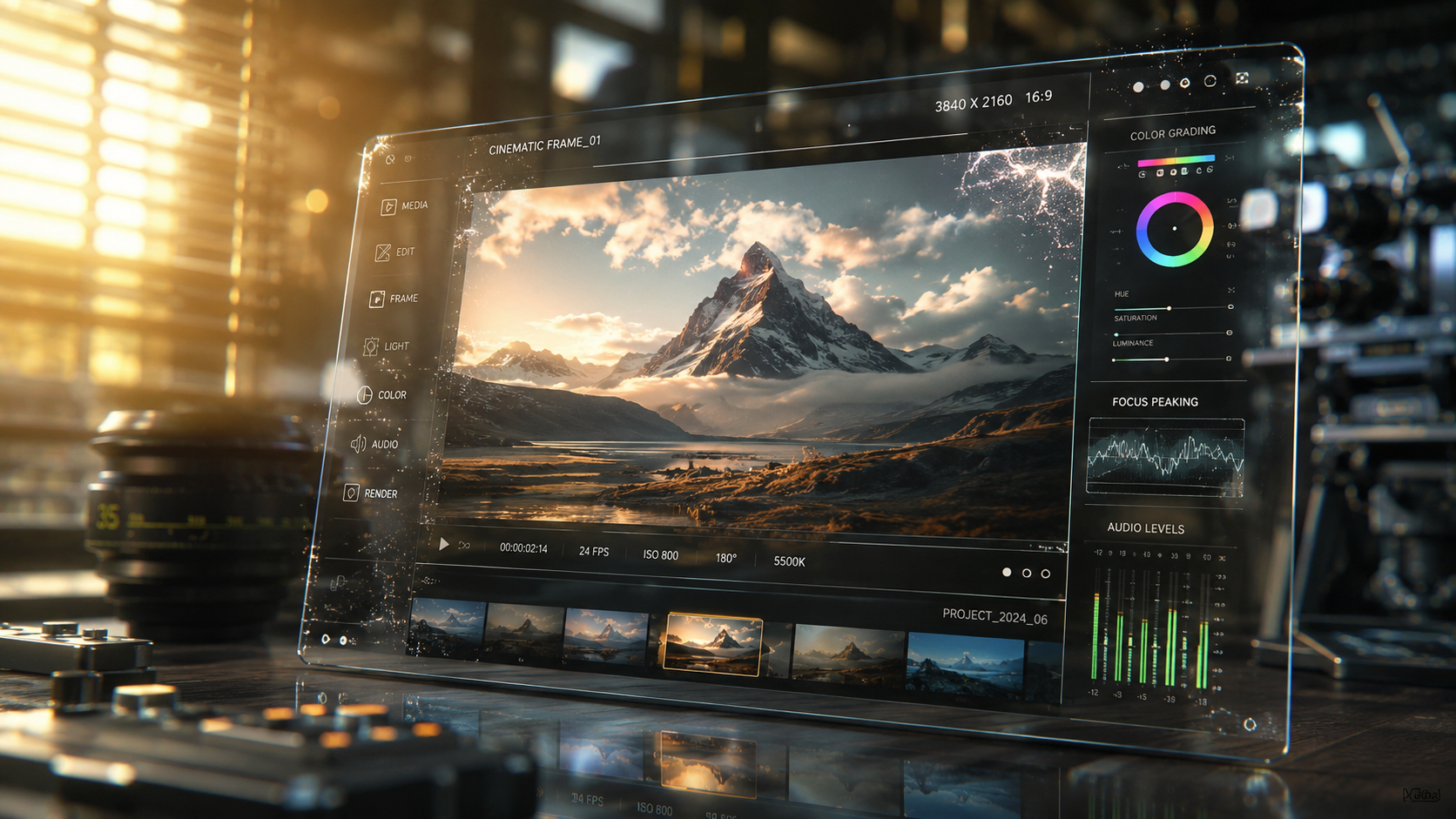
The introduction of Runway MCP (Model Control Protocol) in late May 2026 marked a pivotal moment for the industry. This protocol allows the runway agent ai video editing system to communicate with other software environments, creating a unified pipeline for visual effects. As noted by quasa.io, Runway has solidified its position as a generative AI powerhouse by redefining how professional visual effects (VFX) are rendered and manipulated.
Before the 2026 revolution, AI video was often criticized for its lack of temporal consistency—the tendency for objects to shift or morph between frames. The current agent-based system solves this by using "memory buffers" within the MCP. These buffers allow the agent to remember the geometry of a character or environment, ensuring that every frame produced adheres to the established physical rules of the scene. This level of control is what separates 2026-era Runway from the experimental tools of the past.
The Impact of Cross-Platform Integration
The ability to use Runway within ChatGPT and Claude is more than a convenience; it is a fundamental shift in creative logic. Creators can now brainstorm a script with an LLM and have the Runway agent generate the storyboard and initial footage simultaneously. This synergy ensures that the creative vision remains intact from the first word of the script to the final render. According to GIGAZINE, this workflow allows users to input ideas via chat and receive high-quality video outputs almost instantaneously, bridging the gap between thought and visual representation.
| Feature | 2024 Capabilities | 2026 Runway Agent Capabilities |
|---|---|---|
| Interface | Web Dashboard Only | Multi-platform (Chat, MCP, API, Web) |
| Consistency | High Frame Jitter | Temporal Consistency via MCP Memory |
| Audio Sync | Manual Alignment | Automated "Real Tracks" Rhythmic Sync |
| Resolution | Maximum 4K (Upscaled) | Native 8K Generative Output |
| Collaboration | Single User | Multi-Agent Autonomous Production Teams |
Music Video Innovation: Real Tracks and Full-Song Generation
One of the most exciting developments in runway agent ai video editing is the specialized focus on music video production. By June 2026, tools like "Real Tracks" have revolutionized how visual content interacts with audio. As reported by FinancialContent, these tools have finally "understood the music," meaning they can detect subtle nuances in melody, timbre, and rhythm to generate visuals that feel emotionally resonant with the track.
This coincides with a massive surge in AI-generated musical content. The Manila Times recently reported that the platform Freebeat has crossed over 1 billion seconds of AI music video content. This volume of data has trained Runway agents to better understand the relationship between sound and sight. When a musician uploads a track to a Runway agent, the AI doesn't just "pulse" the image to the beat; it creates a narrative arc that follows the song's structure, from the intro to the crescendo.
The Rise of Independent AI Musicians
Independent musicians are the primary beneficiaries of this 2026 creative revolution. Previously, a high-quality music video cost thousands of dollars and weeks of production. Today, a Runway agent can produce a full-length, professional-grade music video in a matter of hours. The "Full-Song Generation" feature allows the AI to maintain a consistent protagonist and setting throughout a four-minute track, a feat that was nearly impossible just two years ago. This has leveled the playing field, allowing indie artists to compete with major labels in visual storytelling.
Professional VFX and the Generative Powerhouse
In the professional sphere, Runway is no longer viewed as a "toy" for hobbyists but as a "Generative AI Powerhouse," a sentiment echoed by quasa.io. The 2026 version of Runway agents can handle complex tasks such as rotoscoping, in-painting, and motion tracking with a single sentence of instruction. For instance, an editor can tell the agent to "remove the background pedestrians and replace them with 1920s-era NPCs," and the agent will execute the task with pixel-perfect accuracy.
Studies show that the use of AI agents in professional post-production has reduced turnaround times by up to 70% for visual effects heavy sequences. According to industry analysis from the AI Week in Review (February 2026), the shift toward agentic workflows has allowed studios to focus more on "creative direction" and less on "technical execution." The Runway agent acts as a highly skilled junior editor, handling the labor-intensive tasks while the lead editor makes the final creative decisions.
Runway MCP: The Technical Backbone
The Model Control Protocol (MCP) released in May 2026 is the technical foundation that makes this possible. MCP allows different AI models—one for physics, one for lighting, and one for character animation—to work in concert under the direction of a single "Master Agent." This orchestration ensures that when a character moves through a scene, the shadows they cast are physically accurate and the lighting on their skin changes according to the environment. This level of integrated intelligence is what defines the 2026 creative revolution.
The Future of Storytelling with Runway Agents
As we move further into 2026, the concept of "video editing" is being replaced by "video orchestration." The runway agent ai video editing experience is becoming increasingly immersive. With the ability to input reference images and complex ideas via chat, the barrier between imagination and reality is thinner than ever. We are entering an era where the speed of content creation matches the speed of thought.
The social implications are vast. We are seeing a surge in personalized content, where viewers can request an agent to "remix" a video to suit their personal preferences. Whether it is changing the art style of an animation or altering the ending of a short film, Runway agents are making the audience part of the creative process. The 2026 revolution is not just about making videos faster; it is about making them more intelligent, more accessible, and more integrated into our daily digital interactions.
What is Runway MCP?
Runway MCP (Model Control Protocol) is a new standard introduced in May 2026 that allows Runway's AI video agents to communicate seamlessly with other software and chat platforms. It enables more precise control over generative video elements like lighting, motion, and consistency.
Can I use Runway AI in ChatGPT?
Yes, as of May 2026, Runway's video generation capabilities are available directly within ChatGPT and Claude. This allows users to generate professional-grade video by simply chatting with the AI and providing reference images or text prompts.
How does Runway agent AI video editing handle music?
Runway uses a tool called "Real Tracks," which was highlighted in June 2026 for its ability to "understand" music. The AI agent analyzes the rhythm and emotion of a song to generate visuals that are perfectly synchronized with the audio track.
Is Runway suitable for professional visual effects?
Absolutely. In 2026, Runway is recognized as a professional powerhouse for VFX. It can perform complex tasks like rotoscoping and object replacement through simple natural language commands, significantly reducing production time for studios.
What is the "Full-Song Generation" feature?
Full-Song Generation is a feature that allows Runway agents to create a continuous, narratively consistent music video for an entire song. This technology has been used to generate over a billion seconds of content as of mid-2026.



Comments ()