
Realistic AI Text to Video: Top Tools & Tech for 2026
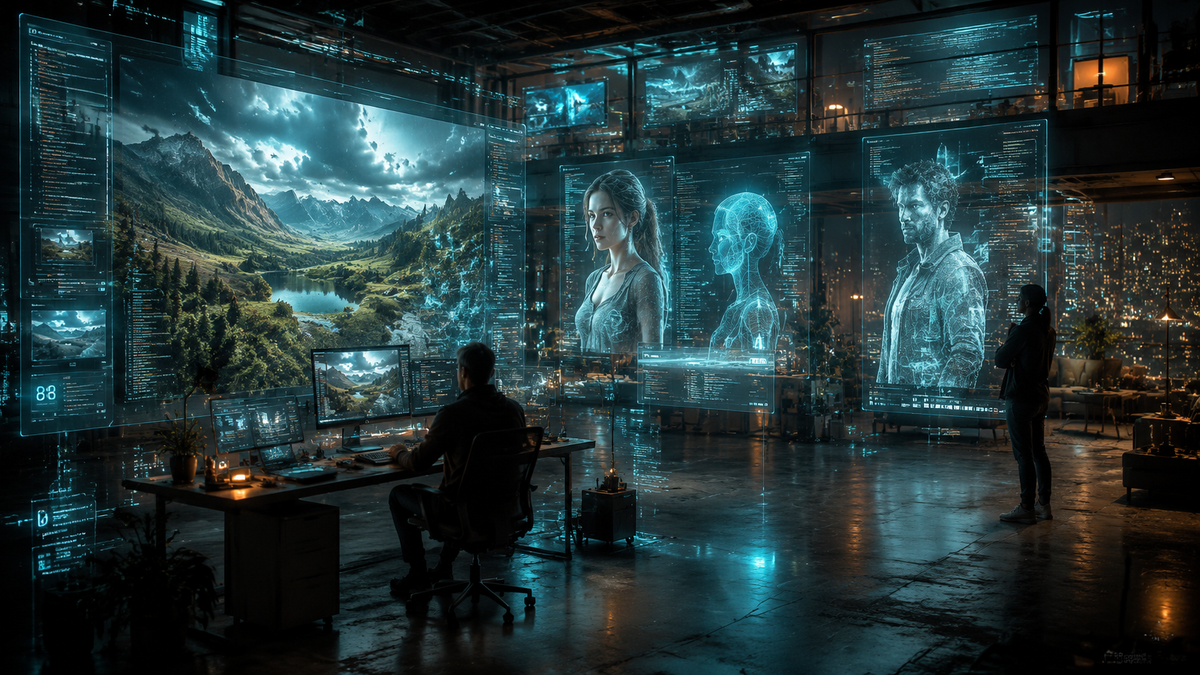
Realistic AI text to video refers to the use of advanced generative artificial intelligence models to transform written prompts into high-fidelity, cinematic-quality video content. In 2026, this technology has reached a tipping point where "realistic ai text to video" tools can now generate full-length scenes with consistent lighting, physics, and character anatomy that are nearly indistinguishable from traditional cinematography.
Realistic AI text to video is a generative technology that uses deep learning architectures, such as diffusion transformers, to synthesize video from natural language descriptions. In 2026, leading tools like OpenAI’s Sora and Seedance allow users to create ultra-realistic visual content by simply describing a scene, effectively bypassing the need for physical cameras or traditional rendering engines.
- ✓ OpenAI’s Sora and Seedance have set new benchmarks for Hollywood-grade visual fidelity in early 2026.
- ✓ Modern AI video generators now support full-length content creation with temporal consistency across scenes.
- ✓ The industry has shifted toward "physics-aware" models that accurately simulate gravity, fluid dynamics, and light refraction.
- ✓ Integration with professional studio workflows is becoming standard as AI tools complement traditional VFX.
The Evolution of Realistic AI Text to Video in 2026
As of early 2026, the landscape of digital content creation has undergone a radical transformation. The pursuit of realistic ai text to video has moved beyond the "uncanny valley" of previous years, where movements were often jittery or distorted. According to a report by G2 Learn Hub in April 2026, the current generation of video models utilizes massive datasets and improved transformer architectures to ensure that every frame maintains spatial and temporal logic.
The primary driver behind this realism is the shift toward multi-modal training. Instead of just learning what objects look like, the latest 2026 models understand how objects interact. For example, when a prompt describes a glass of water shattering, the AI no longer just "draws" the shards; it simulates the physics of the impact and the caustic reflections of light through the flying glass. This level of detail is why Futurism recently reported that the newest AI video generators are "scaring Hollywood" due to their ability to replicate expensive practical effects for a fraction of the cost.
Furthermore, the accessibility of these tools has democratized high-end production. What once required a crew of fifty and a million-dollar budget can now be prototyped in minutes. This has led to a surge in independent filmmaking and personalized marketing content, where "realistic ai text to video" serves as the backbone for narrative storytelling that was previously impossible for solo creators.
How to Generate Realistic AI Video from Text
- Define Your Scene: Write a descriptive prompt that includes the subject, setting, lighting conditions (e.g., "golden hour"), and camera movement (e.g., "slow tracking shot").
- Select Your Model: Choose a high-fidelity generator such as Sora or Seedance, depending on whether you need cinematic realism or stylistic flexibility.
- Configure Parameters: Set the aspect ratio (16:9 for film, 9:16 for social media) and the duration of the clip. Many 2026 tools now allow for 60-second continuous shots.
- Generate and Iterate: Run the initial generation. Use "seed" numbers or "edit prompts" to refine specific details like clothing color or background elements without changing the entire scene.
- Upscale and Export: Utilize built-in AI upscalers to bring the resolution to 4K or 8K before exporting in high-bitrate formats for professional use.
Top Realistic AI Text to Video Tools of 2026
The market in 2026 is dominated by a few key players that have successfully bridged the gap between experimental tech and professional-grade utility. OpenAI’s Sora remains a frontrunner, having released significant updates in February 2026 that allow for better character consistency across multiple shots. Sora’s ability to understand complex prompts and translate them into 60-second high-definition clips has made it a staple for creators worldwide.
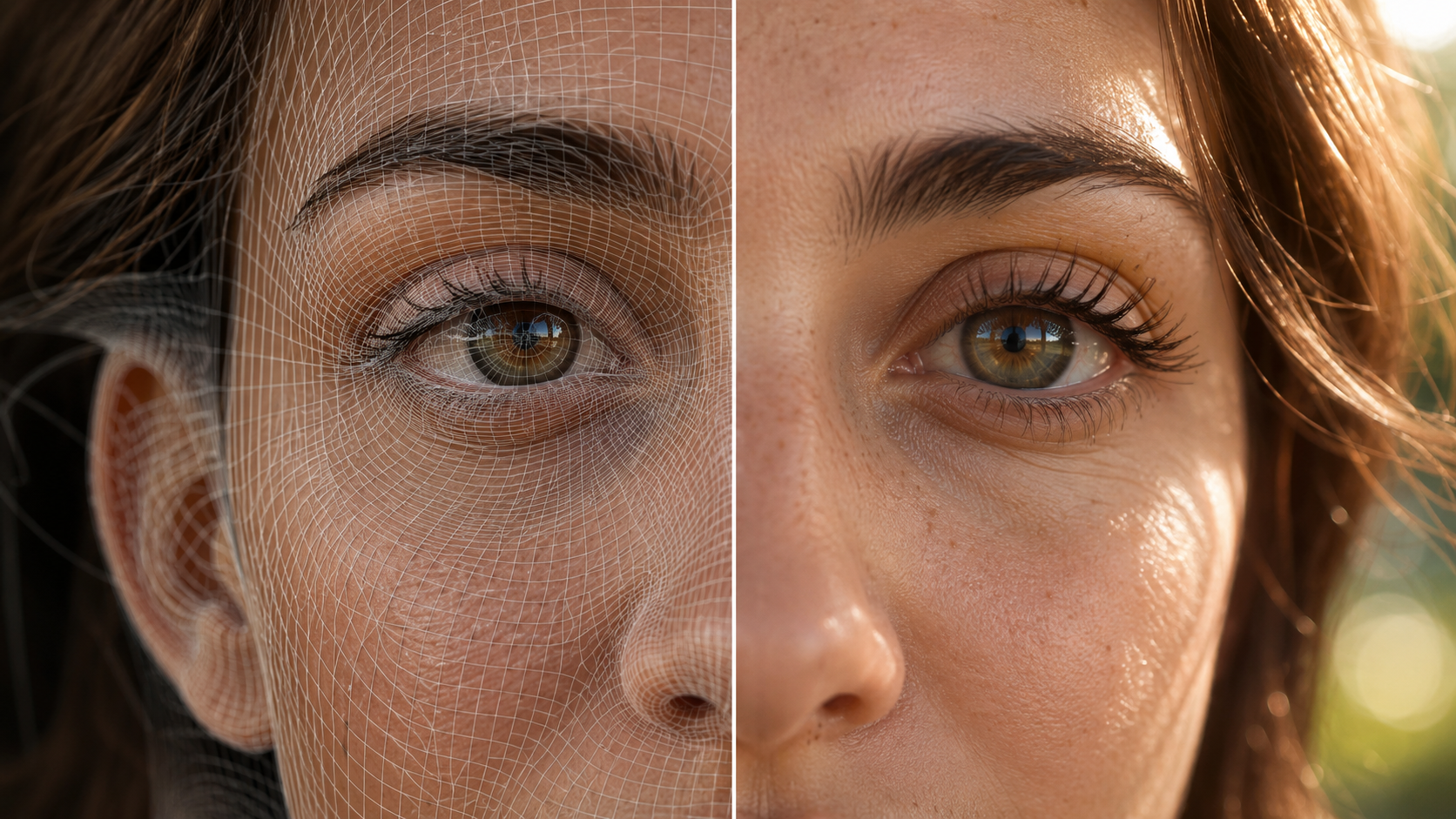
However, a new challenger has emerged in Seedance. As reported by the BBC in February 2026, Hollywood studios are specifically taking aim at Seedance because of its "ultra-realistic" output that rivals traditional CGI. Seedance specializes in human anatomy and skin textures, solving the "waxy" look that plagued earlier AI models. It is currently being integrated into major studio pipelines for pre-visualization and even final-frame background generation.
Other notable mentions include the tools featured in Exploding Topics' April 2026 list, which highlights generators capable of producing full-length content. These platforms have moved away from short, 5-second loops to sophisticated systems capable of maintaining a narrative arc. According to OCNJ Daily, these tools are now essential for creating marketing campaigns that require high-volume, high-quality video assets in real-time.
| Tool Name | Key Feature | Max Clip Length | Best For |
|---|---|---|---|
| OpenAI Sora | Physics Simulation | 60+ Seconds | Cinematic Storytelling |
| Seedance | Ultra-Realistic Humans | 30 Seconds | Hollywood VFX & Portraits |
| Gen-X (2026) | Directorial Control | 45 Seconds | Commercials & Ads |
| Luma Dream Machine 3 | Rapid Rendering | 20 Seconds | Social Media Content |
The Technology Behind Realistic AI Text to Video
The secret sauce of 2026’s video realism lies in the "Diffusion Transformer" (DiT) architecture. Unlike earlier GANs (Generative Adversarial Networks), DiT models treat video as a sequence of three-dimensional patches. This allows the model to maintain a "memory" of what happened in previous frames, ensuring that a character’s face doesn't change halfway through a scene. This breakthrough is what finally enabled the "realistic ai text to video" keyword to move from a futuristic concept to a daily reality for editors.
Another critical advancement is the integration of 3D geometry awareness. Instead of just predicting pixels, modern models like those from Seedance incorporate a latent understanding of depth and volume. This means that if a camera pans around an object, the "back" of the object is rendered consistently with its "front." According to researchers cited by Futurism, this 3D-aware approach has reduced visual artifacts by over 80% compared to models from two years ago.
The Role of Prompt Engineering in Realism
While the models have improved, the quality of realistic ai text to video still depends heavily on user input. In 2026, "prompting" has evolved into "cinematic scripting." Users no longer just type "a cat"; they specify lens types (e.g., "35mm anamorphic"), lighting styles (e.g., "Rembrandt lighting"), and film stock emulations (e.g., "Kodak Vision3 500T"). This technical language helps the AI narrow down its vast library of possibilities to produce a specific, high-fidelity result.
Impact on the Film and Media Industry
The rise of ultra-realistic video generation has sent shockwaves through the entertainment industry. The BBC reported on February 13, 2026, that major studios are both terrified and exhilarated. On one hand, the cost of producing "B-roll" and background atmosphere has plummeted. On the other hand, the legal and ethical implications of "ultra-realistic" AI humans are sparking new debates regarding digital likeness and actor rights.
In the world of marketing, the impact is even more pronounced. OCNJ Daily notes that brands are now using realistic ai text to video to create hyper-localized advertisements. A single prompt can generate a thousand variations of an ad, each featuring a different city's landmarks in the background, all while maintaining a consistent "realistic" look that consumers trust. This level of personalization was physically and financially impossible before the 2026 AI boom.
Despite the "scare" factor mentioned by Futurism, many professionals view these tools as a "force multiplier." Instead of replacing cinematographers, AI is becoming a new type of camera—one that exists entirely in the digital realm but obeys the laws of the physical one. The focus has shifted from "how do we make this look real?" to "now that it looks real, what story should we tell?"
Ethical Considerations and Watermarking
With great realism comes great responsibility. By March 2026, most leading AI video companies have implemented "C2PA" metadata and invisible watermarking. These technologies ensure that any "realistic ai text to video" content can be traced back to its source, helping to distinguish between AI-generated footage and captured reality. This has become a legal requirement in many jurisdictions to prevent the spread of misinformation via "deepfake" style realistic videos.
Future Outlook: Beyond 2026
Looking ahead, the trajectory of realistic ai text to video suggests a move toward real-time interactivity. While current 2026 models require a short "rendering" or "generation" period, researchers are already demoing "zero-latency" video generation. This would allow for dynamic video environments in gaming and virtual reality that react instantly to user input, maintaining the same photorealistic standards we see in static video today.
We are also seeing the beginning of "Long-Form Narrative AI." While OCNJ Daily highlighted the current ability to create full-length content, the next step is the AI's ability to maintain a consistent plot and character arc over a 90-minute feature film. With the rapid pace of development seen between February and April of 2026, many industry experts predict that the first fully AI-generated blockbuster to win a major technical award is only a year or two away.
What is the most realistic AI video generator in 2026?
As of early 2026, OpenAI’s Sora and Seedance are considered the industry leaders. Sora is praised for its physics and complex scene handling, while Seedance is noted for its ultra-realistic human textures and cinematic lighting.
Can AI generate full-length movies from text?
Yes, by 2026, tools have evolved to support full-length content creation. While generating a 90-minute film in one click is still experimental, creators use these tools to generate consistent scenes that are then stitched together into professional feature-length productions.
Is realistic AI text to video expensive to use?
Pricing varies, but most professional tools offer subscription tiers. According to 2026 market data, hobbyist plans start around $30/month, while "Pro" studio tiers with 4K output and commercial rights can range from $150 to $500 per month.
How do I ensure my AI video looks realistic?
Realism is achieved through detailed prompting. Include specific technical details like focal length (e.g., 85mm), lighting types (e.g., volumetric fog), and high-resolution keywords (e.g., 8K, RAW, photorealistic) to guide the model effectively.
Are there legal issues with using realistic AI video?
Usage is generally legal if you have a commercial license from the tool provider. However, in 2026, strict regulations require AI-generated content to include metadata or watermarks (like C2PA) to identify it as synthetic media.



Comments ()