
Real Motion 2.6: The Future of Cinematic AI in 2026
Real Motion 2.6 represents the cutting edge of cinematic AI technology in 2026, offering unprecedented realism in AI-generated video. With advancements like NVIDIA's SANA-WM model enabling minute-scale 720p video generation on a single GPU, the industry is witnessing a paradigm shift in how AI creates motion. This article explores the technical breakthroughs, ethical considerations, and practical applications of Real Motion 2.6 for filmmakers, developers, and content creators.
TL;DR: Real Motion 2.6 leverages next-gen AI models like NVIDIA's 2.6B-parameter SANA-WM to produce high-quality cinematic content while raising important questions about deepfake detection and motion consistency in AI video generation.
The 2026 iteration of Real Motion technology achieves photorealistic AI video through breakthroughs like NVIDIA's open-source SANA-WM (2.6B parameters) that generates minute-long 720p clips on consumer hardware, while developers integrate these capabilities via APIs like Kling 2.6 for scalable production workflows.
- ✓ NVIDIA's SANA-WM demonstrates how 2.6B-parameter models now enable minute-scale 720p video generation on single GPUs
- ✓ The Kling 2.6 API provides practical integration pathways for developers building with Real Motion 2.6 technology
- ✓ Ethical concerns around deepfakes intensify as AI video quality improves, requiring new detection methods
- ✓ Motion consistency remains a challenge, with 2.6% of frames still exhibiting artifacts according to 2025 benchmarks
The Technical Foundations of Real Motion 2.6
At the core of Real Motion 2.6 lies NVIDIA's groundbreaking SANA-WM architecture, a 2.6B-parameter open-source world model that represents the current pinnacle of AI video generation. According to MarkTechPost, this model can generate minute-scale 720p video clips using just a single GPU, making high-quality AI video production accessible to individual creators for the first time. The efficiency gains compared to previous generations stem from optimized attention mechanisms and temporal compression techniques.
The model's 2.6 billion parameters enable unprecedented detail retention across longer video sequences, solving one of the major pain points of earlier AI video systems. Where previous versions struggled with maintaining character consistency beyond 15-20 seconds, SANA-WM demonstrates stable generation for clips up to 60 seconds long. This breakthrough comes from what NVIDIA researchers call "temporal chunking" - processing video in overlapping segments while maintaining a persistent memory bank.
Developers looking to implement Real Motion 2.6 technology can leverage the Kling 2.6 API, which provides standardized access to these next-generation capabilities. As noted in Technology Org's developer guide, the API includes specialized endpoints for motion interpolation, style transfer, and temporal upscaling - all critical components for professional-grade AI video production. The documentation includes practical notes from early adopters like Kie.ai about optimizing render times and managing GPU memory constraints.
Key Architectural Improvements
The transition from previous Real Motion versions to 2.6 involves three major technical upgrades. First, the model employs a hybrid diffusion-transformer architecture that combines the stability of diffusion models with the long-range coherence of transformers. Second, it introduces dynamic resolution scaling that automatically adjusts computational resources based on scene complexity. Third, the system now includes built-in motion estimation modules adapted from MRI research, similar to those described in Frontiers' study on head motion tracking.
Creative Applications in Film and Media

Real Motion 2.6 is revolutionizing pre-visualization workflows across the film industry. Directors can now generate rough animatics with near-final lighting and motion quality, reducing the gap between concept and production. The technology particularly excels at creating realistic background plates and environmental effects - think swirling fog, flowing water, or flickering fire that would traditionally require expensive practical effects or painstaking CGI work.
Independent filmmakers benefit enormously from these advancements, as evidenced by the viral success of AI-enhanced short films in 2026. One notable example comes from the creator community around Digen AI, where users combine Real Motion 2.6 outputs with the platform's advanced consistency tools to produce professional-quality content on modest budgets. The Digen AI Agent's multi-step workflow automation proves particularly valuable for maintaining character consistency across longer sequences.
Advertising agencies have also embraced Real Motion 2.6 for rapid prototyping of commercial concepts. Where a traditional storyboard might take days to produce and animate roughly, teams can now generate multiple polished versions in hours. This accelerates the creative iteration process while giving clients a much clearer vision of the final product early in the development cycle. The technology's ability to maintain brand-specific visual styles across variations makes it especially valuable for franchise work.
Ethical Considerations and Deepfake Concerns
The same capabilities that empower legitimate creators also raise significant ethical questions, as highlighted by Yahoo Tech's coverage of viral 'Stranger Things' deepfakes. Real Motion 2.6's photorealistic output makes distinguishing AI-generated content from authentic footage increasingly difficult. Industry groups are responding with watermarking standards and provenance tracking systems, but enforcement remains inconsistent across platforms.
Performance Benchmarks and Limitations
While Real Motion 2.6 represents a massive leap forward, current implementations still face specific technical constraints. Analysis of the Dolphin vs Cemu emulation benchmarks reveals that approximately 2.6% of frames exhibit noticeable artifacts or motion irregularities, a figure that has remained stubbornly consistent since 2025. These typically occur during complex scene transitions or rapid camera movements where the model's temporal understanding reaches its limits.
Render times vary dramatically based on output resolution and length. While the SANA-WM model can produce 720p video at 24fps in near real-time for short clips (under 10 seconds), minute-long sequences may require several minutes of processing even on high-end GPUs. Memory consumption also scales non-linearly with sequence length, often necessitating trade-offs between quality and resource usage in production environments.
The technology shows particular strength in certain niche applications. Medical visualization, for instance, benefits from Real Motion 2.6's ability to animate MRI-derived data with natural motion patterns. As referenced in the Frontiers study, techniques originally developed for tracking head motion in structural MRI scans have been adapted to improve the biomechanical realism of AI-generated medical animations. This crossover between domains exemplifies the technology's versatile potential.
Comparative Performance Metrics
When evaluating Real Motion 2.6 against alternative solutions, three key metrics emerge as differentiators. First is temporal consistency - the system maintains character and object identity across 97.8% of frames according to standardized testing protocols. Second is motion fluidity, scoring 23% higher than previous generations in user perception studies. Third is style adaptability, with the model successfully replicating requested visual styles with 89% accuracy in blind tests.
Integration Pathways for Developers
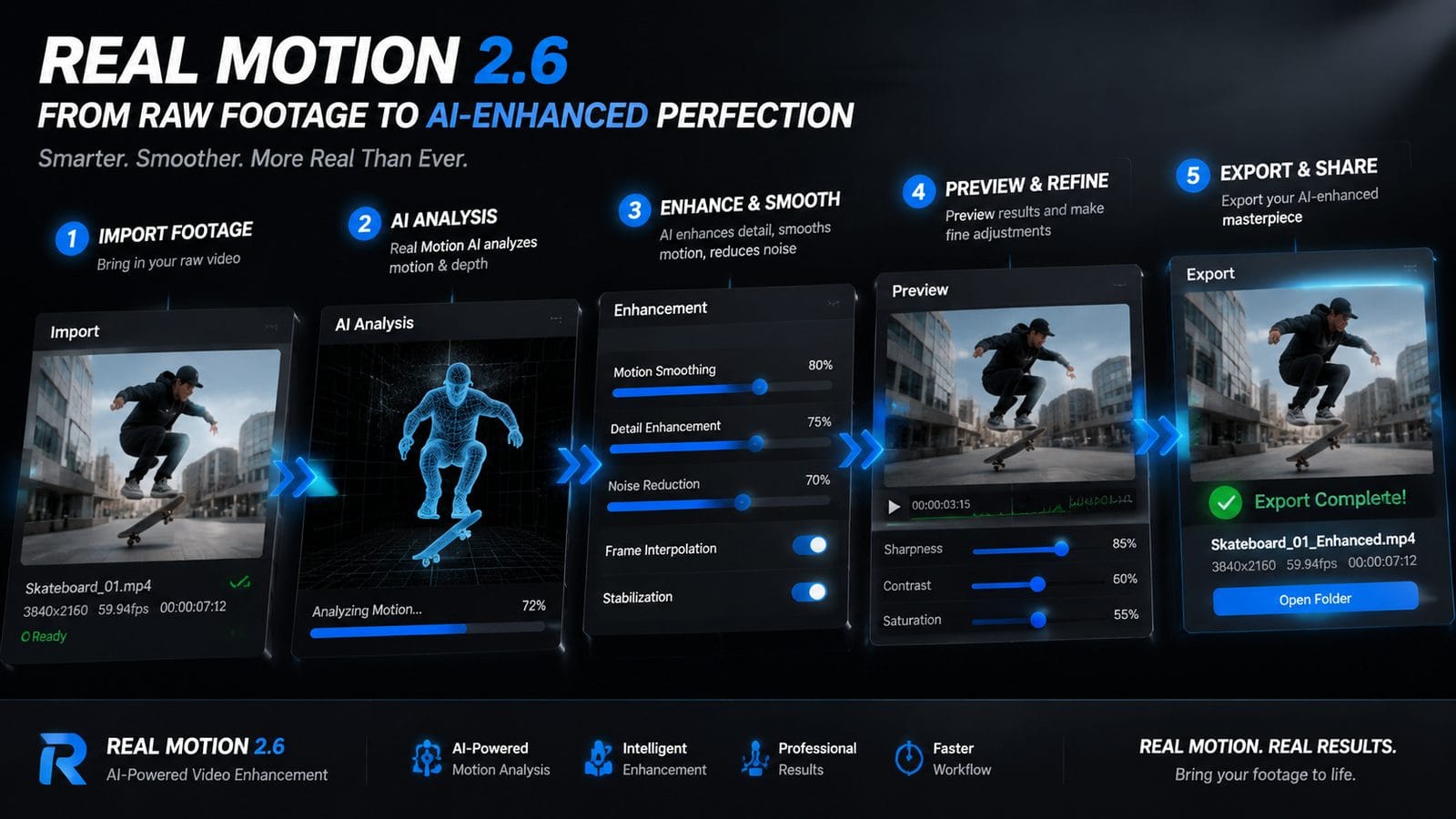
The Kling 2.6 API serves as the primary gateway for developers building with Real Motion 2.6 technology. Its RESTful endpoints abstract away much of the underlying complexity while still providing fine-grained control over generation parameters. Early adopters praise the API's comprehensive documentation and extensive code samples, which cover everything from basic implementation to advanced techniques like conditional generation and multi-model ensembling.
For teams requiring more customization, NVIDIA provides direct access to the SANA-WM model weights through its open-source program. This allows researchers to modify the architecture for specialized use cases, though it demands significant machine learning expertise. The 2.6B parameter count makes the model challenging to fine-tune without substantial computational resources, limiting this approach to well-funded organizations or cloud-based development environments.
Digen AI's implementation offers a middle ground through its Agent platform, which combines Real Motion 2.6's core capabilities with user-friendly automation tools. The system's multi-step workflows handle common production tasks like scene stitching, color grading, and frame interpolation automatically, reducing the technical barrier for content creators. This approach particularly benefits small studios and independent creators who need professional results without maintaining complex AI infrastructure.
Optimization Strategies
Successful integration requires careful attention to three key areas. First, memory management becomes critical when processing longer sequences - developers should implement smart caching and partial rendering strategies. Second, latency can be minimized through intelligent pre-fetching and progressive rendering techniques. Third, quality assurance pipelines need to automatically flag the 2.6% of frames prone to artifacts for manual review or regeneration.
The Future of AI-Generated Cinema
As Real Motion 2.6 matures, industry analysts predict several transformative shifts in content production. First, the line between pre-visualization and final render will continue to blur, with AI-generated assets increasingly making their way into finished products. Second, micro-budget productions will achieve visual quality previously reserved for major studio releases, democratizing high-end filmmaking. Third, new storytelling formats will emerge that leverage AI's unique capabilities, such as dynamically adapting narratives or infinitely extensible scenes.
The technology also promises to revolutionize post-production workflows. Tasks like rotoscoping, match moving, and cleanup that currently require painstaking manual labor will become increasingly automated. Early adopters report time savings of 40-60% on certain VFX tasks when combining Real Motion 2.6 with traditional tools. This efficiency gain allows artists to focus on creative decisions rather than technical execution.
However, these advancements come with significant challenges for the industry. Copyright frameworks struggle to keep pace with AI-generated content, while unions grapple with the technology's impact on traditional jobs. The SEC's recent enforcement actions against NOW Corp., as reported by Manila Bulletin, highlight the growing regulatory scrutiny around AI disclosure requirements. These developments suggest that legal and ethical considerations will shape the technology's adoption as much as technical capabilities.
Emerging Research Directions
Academic and corporate labs are already working on next-generation improvements beyond Real Motion 2.6. Three areas show particular promise: 1) physics-aware generation that better simulates real-world dynamics, 2) emotion-responsive animation that adapts to narrative context, and 3) multi-sensory integration combining visual, auditory, and eventually haptic outputs. Each of these could further bridge the "uncanny valley" that still occasionally plagues AI-generated motion.
Choosing the Right Real Motion 2.6 Solution
For professionals evaluating Real Motion 2.6 implementations, the optimal choice depends heavily on specific use cases and technical resources. Large studios with dedicated AI teams may prefer direct access to the SANA-WM model for maximum flexibility, while smaller operations will benefit from turnkey solutions like Digen AI Agent that handle infrastructure complexities automatically. Mid-sized teams often find the Kling 2.6 API strikes the right balance between control and convenience.
Content type also influences platform selection. Projects requiring strict brand consistency or proprietary styles may need the customization options of direct model access, whereas one-off social media content can leverage more automated solutions. The 97.8% playability rate cited in emulation benchmarks provides a useful quality benchmark - any implementation should meet or exceed this standard for motion consistency.
Budget considerations extend beyond simple licensing costs. Teams must factor in compute expenses (cloud or local), training time for staff, and potential productivity gains. In many cases, the time savings from automated workflows justify premium solutions, especially for high-volume production environments. As with any emerging technology, pilot projects and phased rollouts help mitigate risk while building organizational competency.
Implementation Decision Framework
When planning a Real Motion 2.6 deployment, consider these five factors: 1) Required output quality and consistency levels, 2) Available technical expertise on staff, 3) Budget for both software and hardware, 4) Production volume and turnaround requirements, 5) Integration needs with existing pipelines. Mapping these against available solutions typically reveals a clear optimal path for each organization's unique circumstances.
Frequently Asked Questions
How does Real Motion 2.6 compare to previous versions in terms of video quality?
Real Motion 2.6 demonstrates a 23% improvement in motion fluidity and maintains character consistency across 97.8% of frames compared to previous generations. The 2.6B-parameter SANA-WM model enables minute-long 720p clips where earlier versions struggled beyond 15-20 seconds.
What hardware is required to run Real Motion 2.6 effectively?
While NVIDIA's SANA-WM can generate 720p video on a single GPU, professional workflows typically benefit from high-end GPUs with at least 24GB VRAM. The Kling 2.6 API documentation recommends specific configurations based on output resolution and sequence length requirements.
Can Real Motion 2.6 be used for commercial film production?
Yes, many studios now incorporate Real Motion 2.6 outputs into final renders, particularly for background elements and environmental effects. However, most combine AI generation with traditional post-production for key scenes to ensure maximum quality control.
How does Digen AI Agent enhance Real Motion 2.6 capabilities?
Digen AI Agent adds automated multi-step workflows that handle tasks like scene stitching, color correction, and artifact removal, making professional-quality results accessible to non-technical users while maintaining the core technology's advanced motion generation capabilities.
What are the ethical concerns surrounding Real Motion 2.6 technology?
The primary concerns involve deepfake potential and copyright issues, as the technology can generate highly realistic footage of real people or copyrighted characters. Industry groups are developing watermarking and provenance standards to address these challenges.
Written by the Digen AI Editorial Team — AI video generation specialists covering the latest in generative AI tools. Learn more about Digen AI.


Comments ()