
Professional AI Video Production Workflow: 2026 Guide
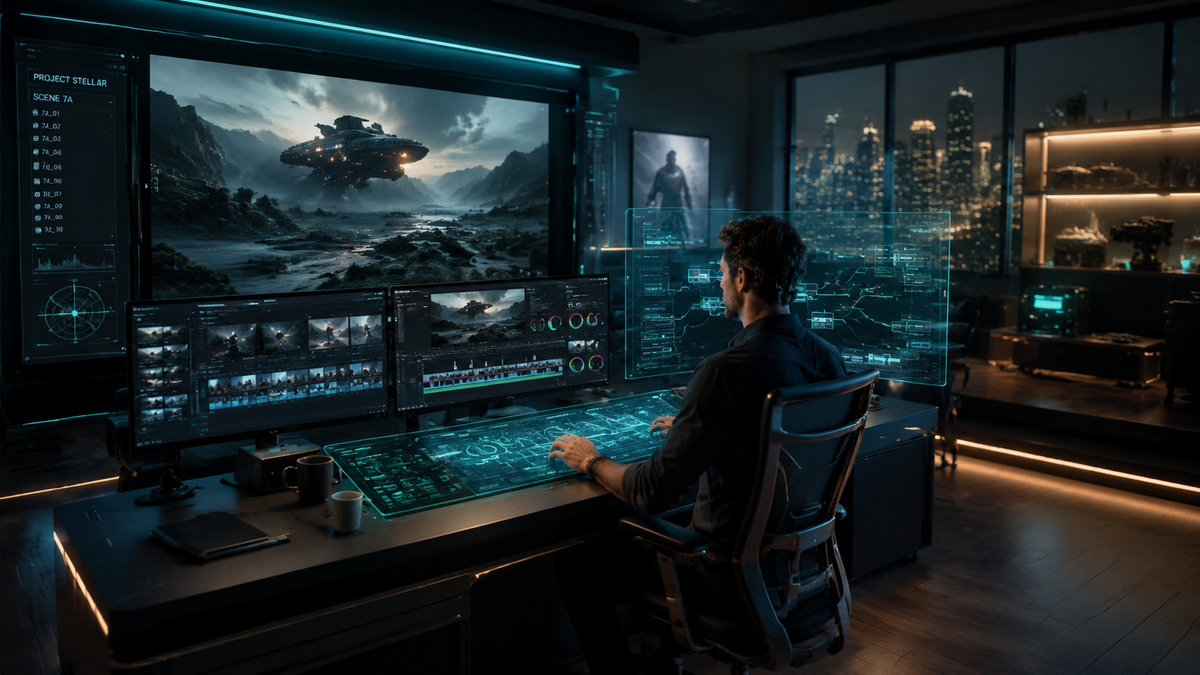
A professional AI video production workflow is a modernized, end-to-end framework that integrates generative artificial intelligence into the pre-production, production, and post-production phases to maximize efficiency and creative output. By 2026, this workflow has transitioned from experimental use to an industry standard, allowing creators to leverage sophisticated algorithms for scriptwriting, visual generation, and automated editing. Implementing a professional AI video production workflow ensures that high-quality cinematic content can be produced at a fraction of the traditional time and cost.
A professional AI video production workflow is a systematic approach to filmmaking that utilizes AI-powered tools for every stage of development, including generative visual effects, AI music composition, and automated color grading. It is characterized by the seamless integration of human creativity with machine efficiency to produce studio-grade video content rapidly.
- ✓ Integration of AI music platforms like Artlist ensures professional-grade, copyright-compliant scoring.
- ✓ Adobe’s 2026 AI-powered production platform streamlines collaborative editing and cloud-based rendering.
- ✓ Hybrid workflows combine traditional cinematography with generative AI to maintain high visual fidelity.
- ✓ Automated post-production tools reduce the "concept to final cut" timeline by up to 70%.
The Evolution of the Professional AI Video Production Workflow
As we navigate through 2026, the landscape of digital media has undergone a fundamental shift. The days of siloed AI experimentation are over; today’s professional AI video production workflow is a cohesive ecosystem where different software solutions communicate through unified cloud platforms. According to The AI Journal, AI tools are now revolutionizing video production from the initial concept to the final cut, allowing for a "hyper-efficient" pipeline that supports both independent creators and large-scale studios.
The primary driver of this evolution is the move toward "Hybrid Video Production." As noted by CineD in late 2025, the most successful workflows are those that do not replace human operators but rather augment them. By making AI a part of your workflow, you can automate repetitive tasks—such as rotoscoping, transcription, and basic assembly—while focusing human ingenuity on narrative structure and emotional resonance. This hybridity is the hallmark of the 2026 production standard.
Furthermore, the democratization of high-end tools has leveled the playing field. With the rise of the "5 Best AI Video Makers for Professional Visual Creation" highlighted by FinancialContent in May 2026, even small teams can now produce visuals that were previously only possible for major Hollywood VFX houses. This shift is supported by massive infrastructure updates from industry leaders like Adobe, who have elevated video workflows with dedicated AI-powered production platforms.
Step-by-Step Guide to Implementing an AI Video Workflow
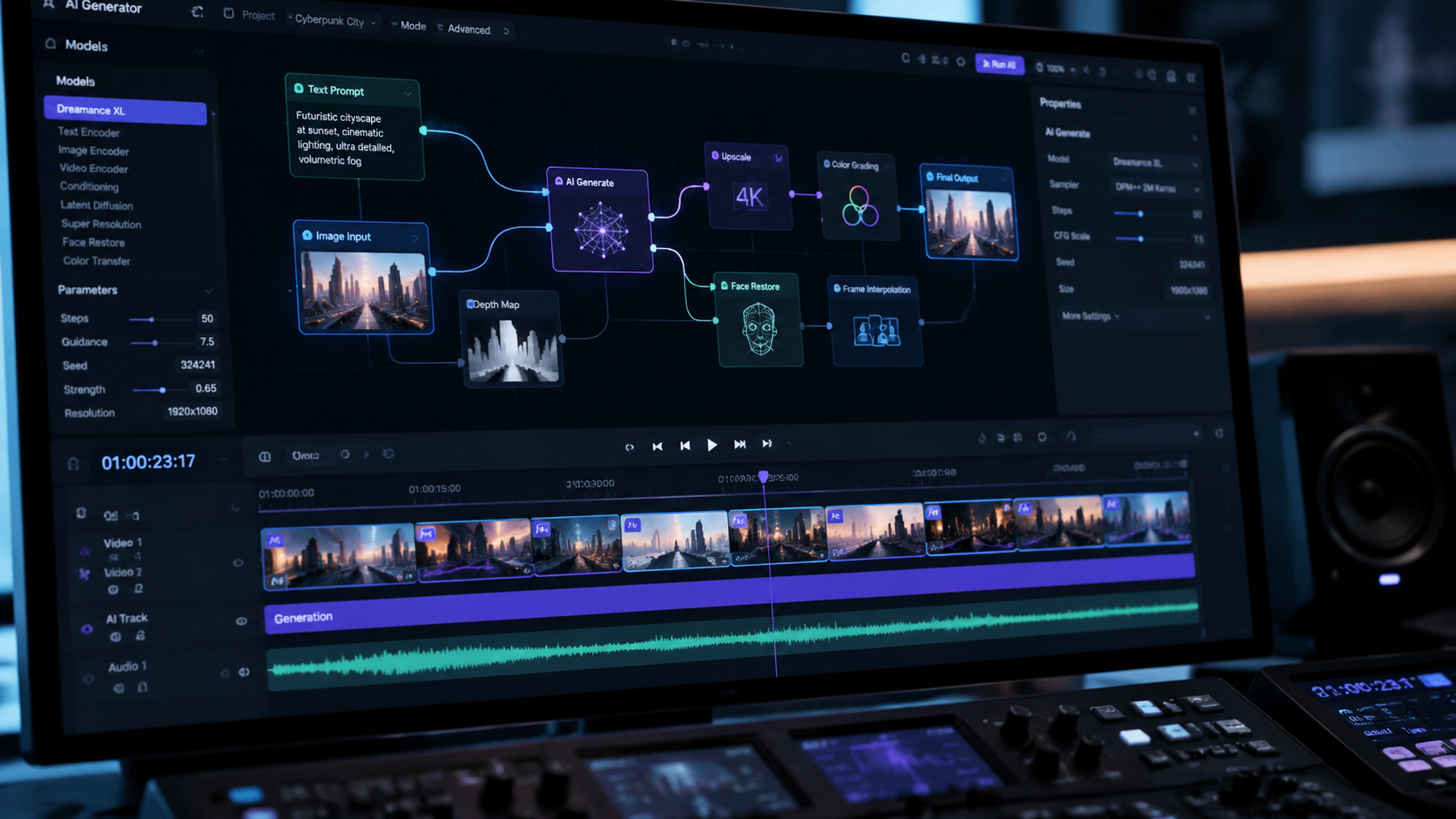
- Conceptualization and Scripting: Use generative LLMs to brainstorm themes and generate structured scripts with integrated scene descriptions.
- Storyboarding and Pre-Visualization: Deploy AI image generators to create consistent character sheets and environments, providing a visual blueprint for the shoot.
- Asset Generation: Utilize professional AI video makers to generate B-roll, background elements, or even digital doubles to supplement live-action footage.
- Audio Integration: Incorporate professional-grade AI music and voiceovers from platforms like Artlist to ensure a high-quality auditory experience.
- Automated Assembly: Use AI-powered NLE (Non-Linear Editor) features to automatically sync clips based on script analysis and sound cues.
- Advanced Post-Processing: Apply AI-driven color grading, noise reduction, and upscaling to achieve a cinematic finish.
- Final Export and Distribution: Optimize video metadata and formats using AI to suit various social media and broadcast platforms.
Core Technologies Powering the 2026 Workflow
Adobe’s Integrated AI Ecosystem
Adobe remains a cornerstone of the professional AI video production workflow. Following their major platform elevation in late 2025, Adobe for Business has introduced a suite of tools that allow for real-time collaboration between AI and human editors. Their platform uses "Sensei GenAI" to predict editing patterns and suggest cuts, which has significantly reduced the time spent on the "rough cut" phase of production.
According to Adobe UK, their AI-powered production platform is designed to handle high-resolution 8K workflows without the need for massive local hardware, relying instead on cloud-based AI processing. This allows production teams to work remotely while the AI handles heavy-duty tasks like background removal and object tracking in the background.
Professional-Grade Audio with Artlist
A critical component of any video is the soundscape. In March 2026, PR Newswire reported that Artlist expanded its AI platform to include professional-grade AI music specifically designed for video production. This technology allows creators to generate custom scores that adapt to the pacing and emotional arc of their video in real-time. Unlike generic stock music, these AI-generated tracks are unique to the project and fully licensed for commercial use.
| Feature | Traditional Workflow | AI-Enhanced Workflow (2026) |
|---|---|---|
| Scripting Time | Days/Weeks | Hours (AI-Assisted) |
| B-Roll Acquisition | Expensive Shoots/Stock | Generative AI Video Makers |
| Music Scoring | Licensing Fees/Composers | Adaptive AI Music Platforms |
| Color Grading | Manual Selection | AI Scene Analysis & Matching |
| VFX/Rotoscoping | Frame-by-Frame Manual | Automated AI Masking |
Optimizing the Professional AI Video Production Workflow for Efficiency
Efficiency in 2026 is measured by the "concept-to-publish" ratio. Wausau Daily Herald identified the top 5 AI tools for content creators as being those that prioritize speed without sacrificing resolution or stylistic consistency. In a professional AI video production workflow, efficiency is gained by using AI to handle the "heavy lifting" of metadata tagging and file organization, which historically consumed up to 30% of a post-production budget.
By utilizing AI-driven asset management, editors can instantly find specific takes based on emotional cues or dialogue snippets. This granular level of searchability is powered by multimodal AI that "watches" the footage during the ingest phase. As a result, the creative team can focus on the narrative flow rather than digging through folders of unorganized media.
Moreover, the integration of "Generative Fill" for video has changed how we view reshoots. If a small detail in a scene is incorrect, professional AI video makers can now alter specific elements within a frame—such as changing a product on a table or adjusting the weather in the background—saving thousands of dollars in production costs and keeping the project on schedule.
Advanced Visual Creation and AI Video Makers
The Rise of Cinematic Generative Tools
The "5 Best AI Video Makers" of 2026 have moved beyond simple text-to-video prompts. These tools now offer "Director Mode," giving creators control over camera angles, focal length, and lighting within a generative environment. This level of control is essential for a professional AI video production workflow, as it allows for the consistency required in long-form storytelling.
The FinancialContent report emphasizes that these tools are now being used for high-end commercial work. The ability to generate photorealistic environments means that location scouting is often replaced by "Virtual Production" inside an AI-generated space. This reduces the carbon footprint of production while expanding the creative possibilities for directors who are no longer limited by physical geography.
Hybridization: The Best of Both Worlds
As CineD points out, the hybrid approach is where the most professional results are found. This involves filming "hero" talent in a studio or on location and then using AI to build the world around them. This method preserves the nuance of human performance—something AI still struggles to replicate perfectly in 2026—while leveraging the infinite scale of AI-generated visuals. A professional AI video production workflow must balance these two elements to maintain audience immersion.
In this hybrid model, the AI acts as a digital art department. It can generate costumes, adjust lighting in post-production to match a new environment, and even age or de-age actors with high precision. This has led to a surge in "micro-studios" that produce content with the visual fidelity of major motion picture companies.
Future-Proofing Your Video Production Strategy
To stay competitive in 2026, production houses must adopt a "platform-agnostic" mindset. While tools like Adobe and Artlist provide robust foundations, the ability to swap in new AI models as they emerge is vital. The professional AI video production workflow is not a static set of software but a fluid process that adapts to technological breakthroughs.
Education and ethical considerations also play a significant role. Studies show that transparency in AI usage—often referred to as "Content Credentials"—is becoming a requirement for distribution on major platforms. A professional workflow must include steps for verifying the provenance of AI-generated assets and ensuring that all training data used by the tools is ethically sourced and legally compliant.
Finally, the role of the "AI Prompt Engineer" has evolved into the "AI Creative Director." This professional understands the technical limitations of various models and knows how to "steer" the AI to produce specific aesthetic outcomes. Investing in this talent is just as important as investing in the software itself, as the human element remains the ultimate curator of the final product.
What is the most important tool in a professional AI video production workflow?
In 2026, the most important tool is an integrated AI-powered production platform, such as Adobe’s latest offering, which acts as a central hub for managing AI-generated assets, collaborative editing, and cloud-based rendering.
How does AI music impact video production costs?
AI music platforms like Artlist significantly lower costs by providing high-quality, professional-grade scores that are customizable and pre-cleared for commercial use, eliminating the need for expensive custom compositions or complex licensing deals.
Can AI replace human video editors in 2026?
No, AI does not replace editors but rather shifts their role. Editors now act as creative directors who manage AI tools to handle repetitive tasks, allowing them to focus on the emotional and narrative aspects of the video.
Is AI-generated video high enough quality for professional use?
Yes, the "5 Best AI Video Makers" of 2026 are capable of producing photorealistic, cinematic visuals that are used in high-end commercials and film production, especially when used in a hybrid workflow with live-action footage.
How has the timeline for video production changed with AI?
According to industry reports from The AI Journal, the timeline from concept to final cut has been reduced by up to 70% due to the automation of labor-intensive tasks like rotoscoping, asset tagging, and rough-cut assembly.



Comments ()