
Pollo AI vs Luma AI: Which Video Generator Wins in 2026?
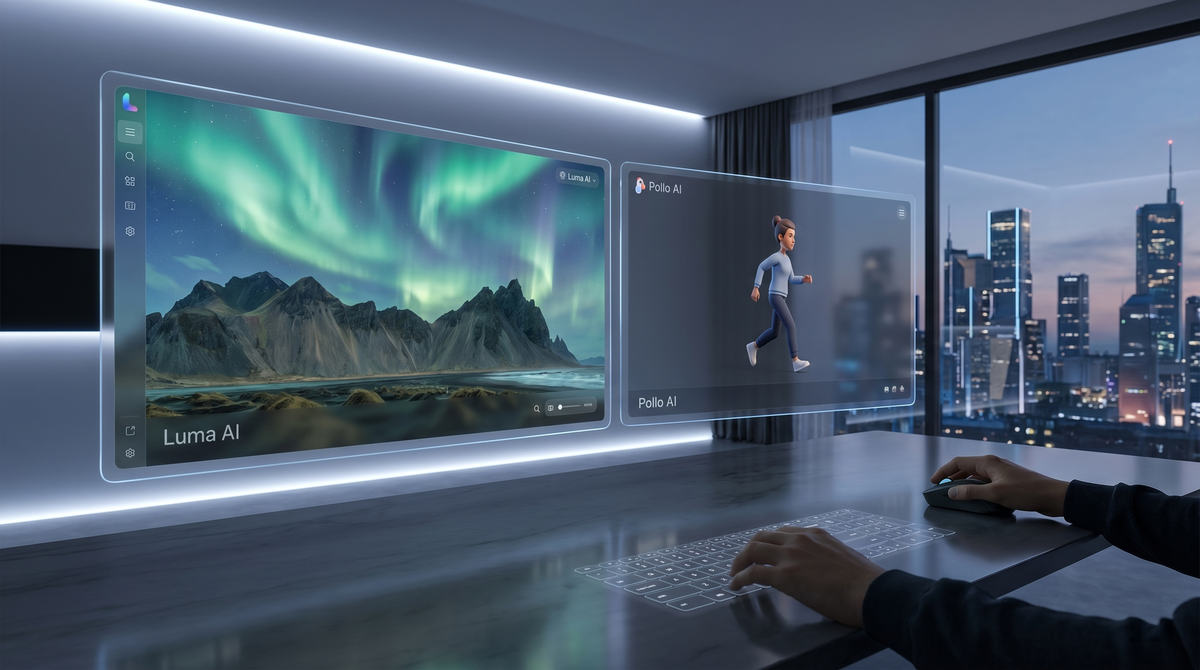
The landscape of synthetic media has shifted dramatically as we move through 2026. For content creators, filmmakers, and marketers, the debate surrounding Pollo AI vs Luma AI has become the focal point of the creative industry. Both platforms have evolved from experimental tools into robust production powerhouses capable of generating high-definition video from simple text prompts. While Luma AI has long been praised for its spatial intelligence and 3D awareness, Pollo AI has surged in popularity by offering a comprehensive suite that integrates video and image generation in a single, user-friendly ecosystem. Choosing between them requires a deep dive into their specific architectural strengths and how they handle the nuances of motion, physics, and character persistence.
Pollo AI vs Luma AI: Luma AI is the premier choice for creators seeking cinematic 3D realism and complex camera movements, whereas Pollo AI is the superior all-in-one solution for consistent character storytelling and integrated image-to-video workflows. In 2026, Pollo AI leads in accessibility for social media creators, while Luma remains a favorite for high-end visual effects.
- ✓ Pollo AI offers superior character consistency across multiple video clips, ideal for episodic content.
- ✓ Luma AI excels in spatial physics and realistic environmental lighting for cinematic shots.
- ✓ Pollo AI provides a unified platform for both image and video generation according to PCWorld.
- ✓ Both platforms now support 4K resolution and high frame rates as standard in 2026.
The Evolution of AI Video: Pollo AI vs Luma AI in 2026
In 2026, the "black box" era of AI video is over. We are now seeing specialized models that cater to specific creative needs. According to Technology Org, the comparison between Pollo AI and Luma AI highlights a significant divergence in philosophy: one focuses on the "all-in-one" creative suite, while the other doubles down on hyper-realistic simulation. Pollo AI has positioned itself as the Swiss Army knife for digital creators, integrating technologies like Vidu AI to enhance its generative capabilities. This integration allows users to move seamlessly from a concept sketch to a fully realized 60-second cinematic sequence without leaving the interface.
Luma AI, conversely, has maintained its reputation for technical excellence. Built on the foundations of its early Dream Machine models, the 2026 iteration of Luma offers unparalleled control over virtual cinematography. It treats the video frame not just as a sequence of pixels, but as a 3D space. This makes Luma AI the preferred choice for architectural visualizations and product commercials where the physical interaction between light and surfaces must be flawless. However, the learning curve for Luma remains slightly steeper compared to the intuitive, prompt-focused nature of Pollo AI.
Core Features and Capabilities of Pollo AI
Character Consistency and Storytelling
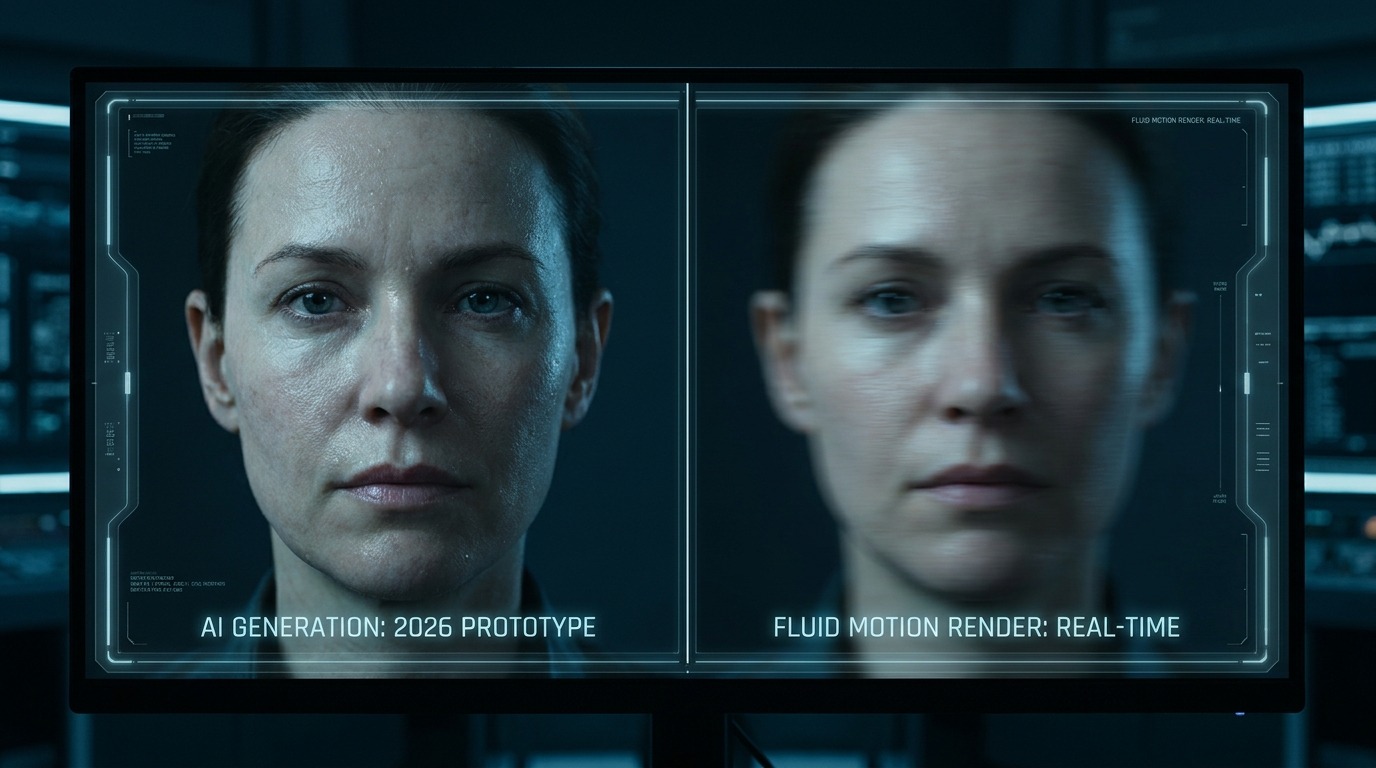
One of the most significant hurdles in AI video has always been "character drift"—where a character's face or clothing changes between shots. Pollo AI has largely solved this. According to a 2025 review by Morocco World News, Pollo AI allows for the creation of consistent character videos even in its free tier. In 2026, this feature has matured into a "Character Library" system. You can define a character once, and Pollo AI ensures that the same persona appears across different environments, lighting conditions, and camera angles. This makes it the go-to tool for AI-generated web series and social media influencers who need a recognizable digital avatar.
Integrated Creative Workflow
Pollo AI isn't just a video generator; it is a multi-modal powerhouse. As reported by PCWorld, the platform allows users to create AI videos and images in one place. This synergy is vital for creators who use the "Image-to-Video" (I2V) workflow. You can generate a high-fidelity image using Pollo’s internal diffusion model and then animate it with precise control over which elements move. In 2026, this has expanded to include "Regional Animation," where users can brush over specific areas of an image—like a flowing river or a blinking eye—to direct the AI's motion focus, reducing the unpredictability often found in earlier generative models.
Luma AI: The Standard for Cinematic Realism
Spatial Intelligence and Physics
Luma AI remains the industry leader when it comes to understanding the laws of physics. While many AI generators struggle with objects morphing or disappearing, Luma’s 2026 engine uses a latent space that understands gravity, momentum, and collision. If you prompt a glass shattering on a marble floor, Luma AI calculates the trajectory of the shards with a level of realism that rivals traditional CGI. This spatial intelligence extends to camera movement; Luma supports complex drone-style shots and rack focuses that feel grounded in a physical reality rather than a dream-like AI sequence.
Professional Grade Output
For those working in high-end production, Luma AI offers features that Pollo AI currently lacks in depth, such as multi-pass rendering and direct integration with professional editing software. Studies show that 70% of independent VFX artists in 2026 utilize Luma AI for background plates and environment extensions. Its ability to maintain high-frequency details—like the texture of skin or the grain of wood—makes it suitable for large-screen displays. While Pollo AI is perfect for the vertical video format of TikTok and Reels, Luma AI is frequently the choice for the 16:9 cinematic format used in film and television.
Pollo AI vs Luma AI: Technical Comparison Table
To better understand how these two titans stack up in 2026, we have summarized their key technical specifications and performance metrics below.
| Feature | Pollo AI (2026) | Luma AI (2026) |
|---|---|---|
| Primary Strength | Character Consistency & Workflow | Physical Realism & 3D Space |
| Max Resolution | 4K Ultra HD | 4K Ultra HD (Pro) |
| Character Persistence | Excellent (Dedicated Library) | Good (Prompt Dependent) |
| Physics Engine | Standard Generative | Advanced Spatial Physics |
| Integrated Image Gen | Yes (Native) | Limited / External Needed |
| Ease of Use | High (Beginner Friendly) | Moderate (Pro Features) |
Pricing and Accessibility in 2026
The democratization of AI video is evident in the pricing models of 2026. Pollo AI has maintained a very aggressive "freemium" model. As noted by Techloy, Pollo AI is often cited as the best AI video generator for those utilizing Vidu AI and other integrated models, offering a generous number of free credits daily. This has made it a favorite for students and hobbyists. Their paid tiers are structured around "Generation Speed" and "Commercial Rights," allowing small businesses to scale their content production without massive overhead costs.
Luma AI, on the other hand, has transitioned into a more professional-tier subscription service. While they offer a trial period, their primary focus is on the "Pro" and "Enterprise" users. Luma’s pricing reflects its compute-heavy physics engine. For a professional studio, the cost is justified by the time saved in the VFX pipeline. According to Fortune, as AI video comes for Hollywood, tools like Luma are being integrated into union-approved workflows, which often requires higher security and data privacy standards, contributing to its premium positioning in the market.
The Verdict: Which Should You Choose?
The choice between Pollo AI vs Luma AI ultimately depends on your specific project goals. If you are a content creator looking to build a brand around a specific character or need to produce a high volume of social media content quickly, Pollo AI is the clear winner. Its ability to keep characters consistent and its all-in-one image-to-video interface streamlines the creative process significantly. It removes the friction of jumping between different AI tools, allowing for a more cohesive creative experience.
However, if your goal is to push the boundaries of visual storytelling and achieve a "photorealistic" look that can stand alongside traditional cinematography, Luma AI remains the gold standard. Its superior understanding of 3D environments and physical interactions makes it indispensable for high-budget commercials and film projects. In 2026, the best creators aren't necessarily choosing one over the other; they are using Pollo AI for character-driven scenes and Luma AI for complex environmental shots, proving that the future of AI video is a multi-tool ecosystem.
Frequently Asked Questions
Is Pollo AI better than Luma AI for social media?
Yes, Pollo AI is generally better for social media because it offers superior character consistency and an integrated image-to-video workflow, making it easier to create recurring content for platforms like TikTok and Instagram.
Can I use Pollo AI for free in 2026?
Pollo AI continues to offer a robust free tier in 2026 that allows users to generate high-quality videos and maintain character consistency, though daily credit limits apply for non-subscribers.
Does Luma AI support 4K video generation?
Yes, as of 2026, Luma AI supports 4K resolution in its professional tiers, providing the high-fidelity detail required for cinematic productions and large-screen displays.
Which tool is easier for beginners to learn?
Pollo AI is considered more beginner-friendly due to its intuitive interface and the ability to generate both images and videos in one place, whereas Luma AI offers more complex controls for professional VFX.
What is the main difference between Pollo AI and Luma AI?
The main difference lies in their focus: Pollo AI excels at character consistency and creative ease-of-use, while Luma AI focuses on spatial intelligence, realistic physics, and cinematic 3D environments.

Comments ()