
Pika Labs vs Runway Gen-2: 2026 AI Video Comparison Guide
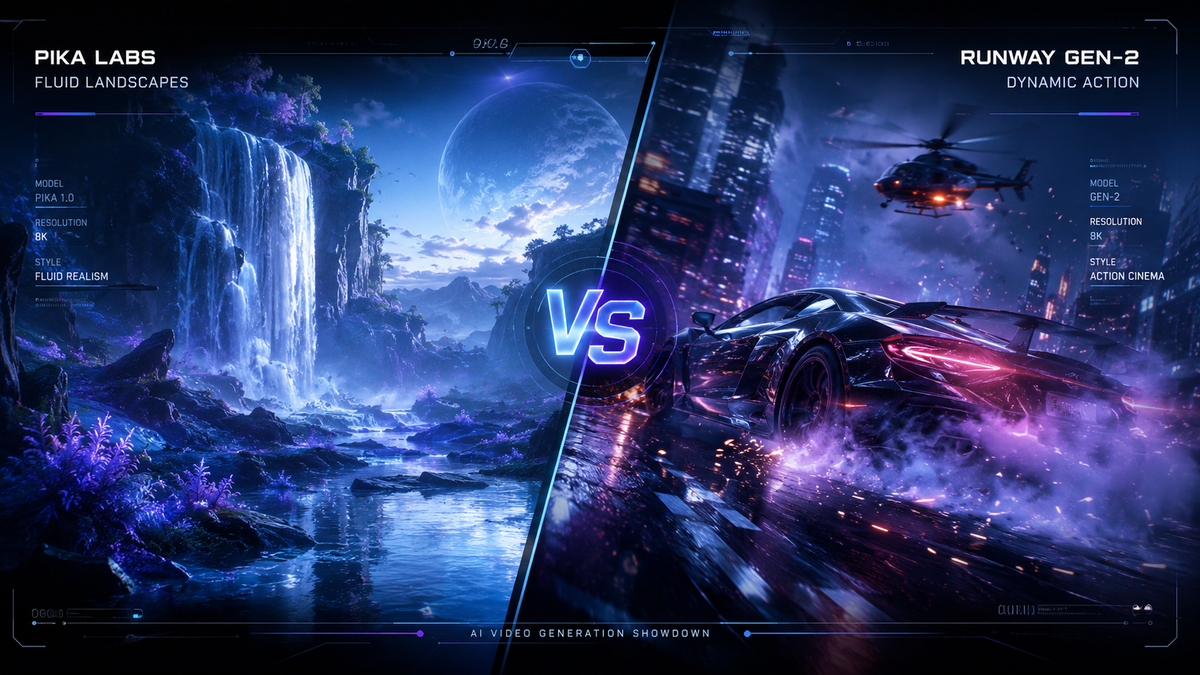
Choosing between Pika Labs vs Runway Gen-2 in 2026 depends entirely on your specific creative workflow and the level of cinematic control you require for your video projects. While Runway has evolved into a comprehensive professional suite with the release of Gen-3 Alpha and beyond, Pika Labs remains the industry leader for high-stylization, animation, and intuitive physics-based motion control. Both platforms have defined the 2026 landscape of generative AI, offering unprecedented text-to-video capabilities that have bridged the gap between amateur content creation and professional filmmaking.
Pika Labs is the premier choice for creators focusing on stylized animation and precise local motion control, while Runway Gen-2 (and its successor Gen-3) is a robust professional ecosystem designed for high-fidelity cinematic realism and integrated post-production tools. In 2026, the choice hinges on whether you prioritize artistic "vibe" and physics (Pika) or photorealistic consistency and enterprise-grade editing (Runway).
- ✓ Pika Labs leads in "Sound Effects" (SFX) integration and localized physics-based animation.
- ✓ Runway Gen-2/Gen-3 offers superior temporal consistency and professional-grade camera controls.
- ✓ According to Tom's Guide (2025), testing over 200 hours of AI video tools confirms Runway remains the most versatile for traditional filmmakers.
- ✓ Cybernews (2026) highlights Pika as the top animation generator for social media creators due to its ease of use.
- ✓ Both platforms now support high-definition 4K upscaling and extended video durations of up to 10-15 seconds per clip.
The Evolution of AI Video: Pika Labs vs Runway Gen-2 in 2026
As we navigate the creative landscape of 2026, the rivalry between Pika Labs and Runway has matured from a race for basic movement to a sophisticated battle over nuance and utility. In the early days, these tools were judged solely on their ability to generate five seconds of coherent footage. Today, the "Pika Labs vs Runway Gen-2" debate focuses on how these models handle complex lighting, human anatomy, and environmental physics. Runway has positioned itself as the "Adobe of AI," providing a massive suite of tools including Inpainting, Motion Brush, and Director Mode, which allows for granular control over focal length and camera movement.
Pika Labs, conversely, has leaned into the "magic" of creation. By focusing on features like Lip Sync, Sound Effects generation, and "Pika Effects" (which allow users to melt, crush, or inflate objects within a video), Pika has captured the hearts of the creator economy. While Runway targets the Hollywood pipeline, Pika dominates the world of viral social media content and independent animation. As noted by Cybernews in their February 2026 review, Pika’s latest animation models have set a new benchmark for character consistency in non-photorealistic styles.
How to Generate High-Quality AI Video in 2026
- Define Your Style: Choose Pika Labs for stylized animation or Runway for photorealistic cinematic shots.
- Craft Your Prompt: Use descriptive language focusing on lighting (e.g., "golden hour"), camera movement (e.g., "dolly zoom"), and subject action.
- Utilize Image-to-Video: For maximum consistency, upload a reference image created in Midjourney or DALL-E 3 before generating motion.
- Apply Motion Brushes: In either tool, use the brush feature to highlight specific areas of the frame you want to move, leaving the background static.
- Iterate and Upscale: Generate multiple versions, select the best clip, and use the built-in 4K upscaler to finalize the resolution.
Core Feature Comparison: Technology and Control
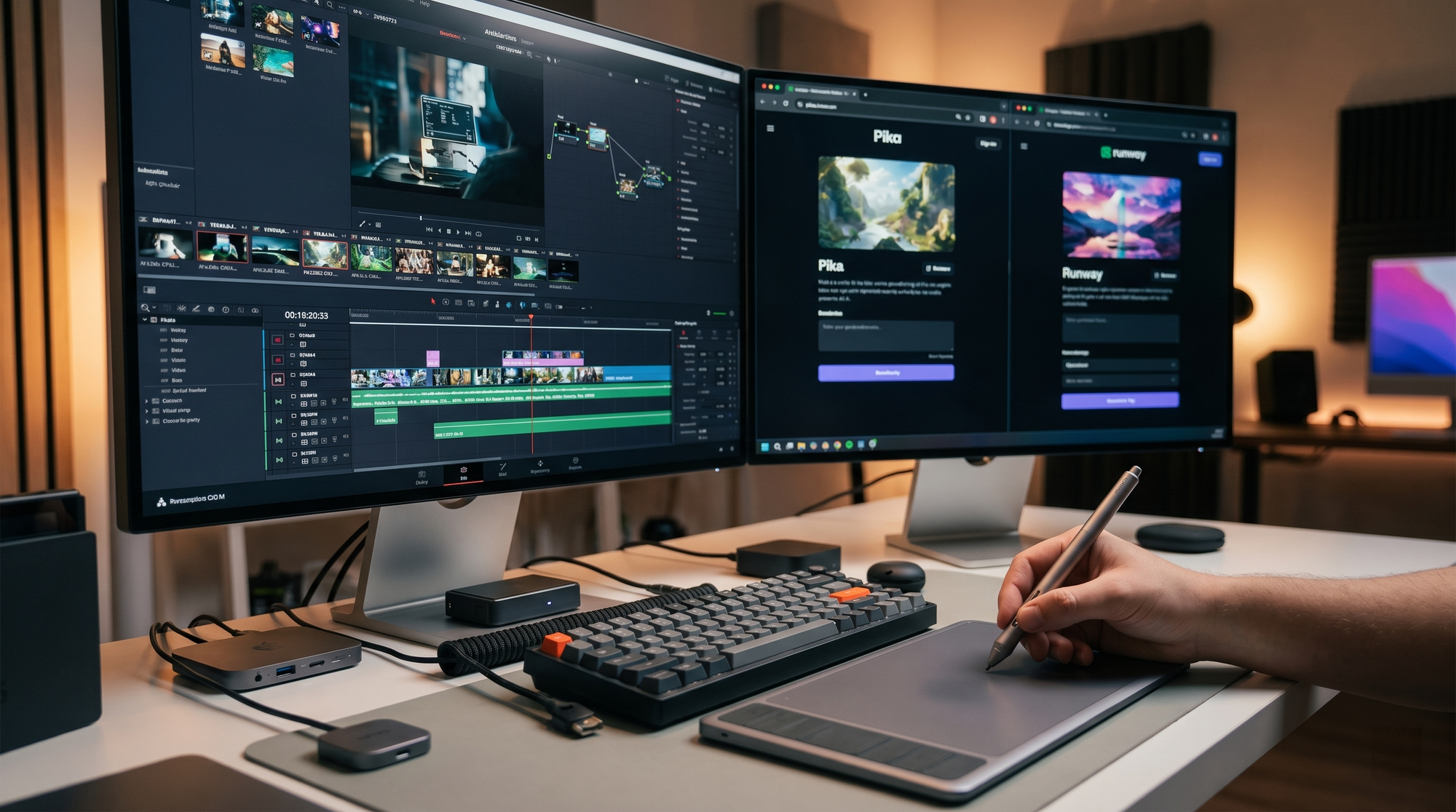
When comparing Pika Labs vs Runway Gen-2, the technological divergence is clear. Runway’s Gen-3 update, which gained significant traction in late 2025, introduced a "General World Model" that understands human interaction more deeply than previous iterations. According to Analytics India Magazine, this update was a "game changer for filmmakers" because it reduced the "morphing" artifacts that previously plagued AI-generated humans. Runway’s interface is built for those who understand cinematography, offering sliders for pan, tilt, zoom, and roll.
Pika Labs has taken a different route by perfecting the "physics" of AI. If you want an object to explode, dissolve, or interact with gravity in a specific way, Pika’s specialized "Effects" commands are unrivaled. Furthermore, Pika’s integrated audio engine automatically generates sound effects that match the visual action—a feature that Runway users still largely have to handle via third-party integrations or separate workflows. This makes Pika a more "all-in-one" solution for quick-turnaround content where sound design is critical.
| Feature | Pika Labs (2026) | Runway Gen-2 / Gen-3 |
|---|---|---|
| Primary Strength | Animation & Physics Effects | Cinematic Realism & Control |
| Max Resolution | 4K Upscaled | 4K Native (Gen-3) |
| Audio Tools | Integrated SFX & Lip Sync | Advanced Audio Editing Suite |
| Camera Control | Basic Directional | Advanced Multi-Axis Director Mode |
| Best For | Social Media, Anime, Fun FX | Short Films, Ads, VFX |
Pricing and Accessibility: Subscription Models in 2026
The cost of AI video generation remains a significant factor for studios and independent creators alike. As of 2026, both companies have moved toward tiered subscription models that balance cloud computing costs with user accessibility. Runway operates on a credit-based system where higher-tier "Pro" and "Unlimited" plans allow for faster rendering times and the ability to train custom models on your own likeness or art style. This enterprise-focused approach makes it the standard for creative agencies that require predictable monthly overhead.
Pika Labs has maintained a slightly more accessible entry point, often offering a robust "Free-to-Play" tier that refreshes credits daily, though these videos carry a watermark. For professional use, Pika’s "Pro" tier removes watermarks and grants access to the latest experimental models. Interestingly, the market has seen a shift in pricing transparency. As reported by Breaking AC News in early 2026 regarding the broader market (including competitors like Veo 3), users are now demanding "hidden cost" protection, leading both Pika and Runway to offer more "Unlimited" generation tiers to stay competitive.
The Role of Custom Training
One of the major separators in the Pika Labs vs Runway Gen-2 debate is the ability to train the AI. Runway allows users to upload a series of images to create a "Custom Model." This is essential for brand consistency—for example, ensuring a specific product or character looks exactly the same across twenty different video clips. Pika Labs has focused more on "Style Transfer," allowing users to apply the aesthetic of one image to a video, which is powerful but offers slightly less structural control than Runway’s deep model training.
Creative Workflows: Which Tool Fits Your Project?
In 2026, the "best" tool is often determined by the specific genre of the project. For creators working in the realm of surrealism, music videos, or high-concept animation, Pika Labs is often the first choice. Its ability to handle "impossible" physics—like a character turning into liquid—is handled with a creative flair that Runway’s more "grounded" model sometimes struggles to replicate. Pika’s Lip Sync tool is also notably user-friendly, allowing for the creation of talking head content with minimal effort.
For commercial directors and architectural visualizers, Runway Gen-2 and Gen-3 are the gold standard. The stability of the frame is paramount in these industries; a flickering background can ruin a professional render. Runway’s "Motion Brush" allows for the isolation of movement—such as making only the clouds move while a building remains perfectly still. According to the 200-hour testing report by Tom's Guide in 2025, Runway’s ability to maintain "temporal consistency" (the lack of flickering between frames) remains the highest in the industry.
Integration with the 2026 Tech Stack
Modern creators rarely use these tools in a vacuum. The 2026 workflow often involves generating a base layer in Runway, adding specific physics effects in Pika, and then using a third-party tool for final color grading. Runway has built an "End-to-End" platform that attempts to keep users within their ecosystem, offering a timeline-based editor. Pika Labs, however, excels as a "plugin-style" tool that creators jump into to solve a specific creative problem, such as adding a specific sound effect or a unique "Pika Effect" animation.
Future Outlook: The Road to 2027
As we look toward the end of 2026, the gap between Pika Labs vs Runway Gen-2 is closing in terms of raw quality, but widening in terms of philosophy. Runway is clearly aiming to become the operating system for the next generation of film studios. Their focus on Gen-3 and future Gen-4 iterations is on "World Models" that understand the nuances of 3D space, lighting, and human emotion. They are building a tool for the "AI Cinematographer."
Pika Labs is building a tool for the "AI Artist." Their roadmap focuses on the democratization of complex animation. By making high-end VFX accessible through simple text prompts or "drag-and-drop" physics, Pika is ensuring that the barrier to entry for creative storytelling remains as low as possible. As MensXP noted in their "10 Best AI Video Tools for 2026" list, the trend is moving toward "multimodal" tools that don't just generate video, but understand the context of the story being told.
Frequently Asked Questions
Is Pika Labs better than Runway for beginners?
Yes, Pika Labs is generally considered more beginner-friendly due to its intuitive interface and fun "Effects" presets. It allows users to create impressive animations with very little technical knowledge of camera settings.
Can I use Runway Gen-2 for professional filmmaking?
Absolutely. Runway Gen-2 and Gen-3 are designed with professional workflows in mind, offering advanced camera controls, high temporal consistency, and 4K upscaling that meet the standards of commercial production.
Which tool has better lip-syncing capabilities in 2026?
As of 2026, Pika Labs is widely regarded as having the more integrated and user-friendly lip-sync tool, though Runway offers professional-grade audio-to-video alignment within its more complex editing suite.
Are Pika and Runway videos copyright-free?
Generally, both platforms grant commercial rights to users on paid subscription tiers. However, copyright laws regarding AI-generated content vary by jurisdiction in 2026, so it is important to check the specific terms of service for each tool.
Does Pika Labs vs Runway Gen-2 require a powerful computer?
No, both services are cloud-based. All the heavy processing is done on their servers, meaning you can generate high-quality 4K video on a standard laptop or even a mobile device as long as you have a stable internet connection.



Comments ()