
Pika Labs vs Runway Comparison: Best AI Video Tool in 2026
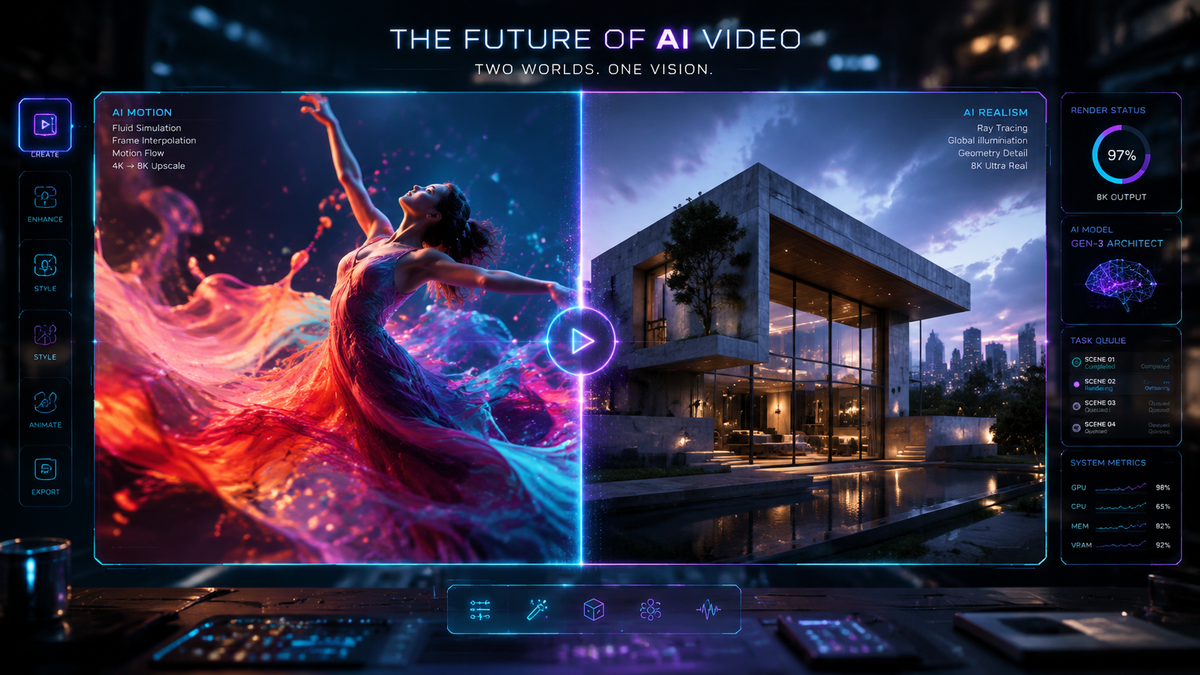
The pika labs vs runway comparison in 2026 reveals a landscape where generative AI has evolved from simple motion effects to full-scale cinematic production. While Runway remains the powerhouse for professional studios requiring granular control and multi-modal integration, Pika Labs has dominated the creative animation and social media markets with its superior physics engine and intuitive interface. Choosing between them depends on whether you prioritize Hollywood-grade editing tools or stylized, fluid motion graphics.
Runway is the best AI video tool for professional editors seeking comprehensive control, featuring Gen-4 multimodal capabilities and advanced in-painting. Pika Labs is the superior choice for creators focusing on high-fidelity animation, expressive character physics, and seamless "Lip Sync" integration, offering a more streamlined, artistic workflow for rapid content generation.
- ✓ Runway offers a complete creative suite including Gen-4 video-to-video and advanced 3D scene tracking.
- ✓ Pika Labs leads in "Sound-to-Video" and hyper-realistic physics-based animations.
- ✓ According to Cybernews, Pika Labs has become the industry standard for AI animation generators in 2026.
- ✓ Runway’s integration with professional workflows makes it the preferred choice for enterprise-level film production.
The Evolution of AI Video: Pika Labs vs Runway Comparison
As we navigate through 2026, the gap between traditional cinematography and AI-generated content has virtually disappeared. The pika labs vs runway comparison is no longer about which tool can create a grainy four-second clip, but rather which ecosystem provides the most reliable "Director Mode." Runway has expanded its platform into a holistic creative suite that rivals traditional NLEs (Non-Linear Editors), while Pika Labs has doubled down on being the most "creative" engine, focusing on the soul of the movement rather than just the technical precision of the pixels.
Recent testing by industry experts highlights how these platforms have diverged. According to Tom's Guide, after over 200 hours of testing the latest 2026 models, the distinction lies in the output's "intent." Runway excels when you have a specific, rigid vision that requires frame-by-frame manipulation. Conversely, Pika Labs excels when you want the AI to act as a creative partner, suggesting fluid motions and artistic flourishes that a human editor might not have initially conceived.
How to Choose and Use Your AI Video Tool
- Define your project scope: Use Runway for commercial work requiring specific brand assets, and Pika for creative storytelling or social media.
- Select your base: Upload a high-quality image (Midjourney v7 or DALL-E 4) to serve as the keyframe.
- Apply Motion Brushes: In Runway, use the Multi-Motion Brush to isolate specific background elements; in Pika, use the "Area Control" feature for localized physics.
- Refine with Prompting: Use technical camera terms (e.g., "70mm anamorphic, slow dolly zoom") to guide the AI's virtual lens.
- Upscale and Export: Utilize the built-in 4K upscalers present in both tools to ensure broadcast-quality resolution.
Core Feature Comparison: Technical Specifications
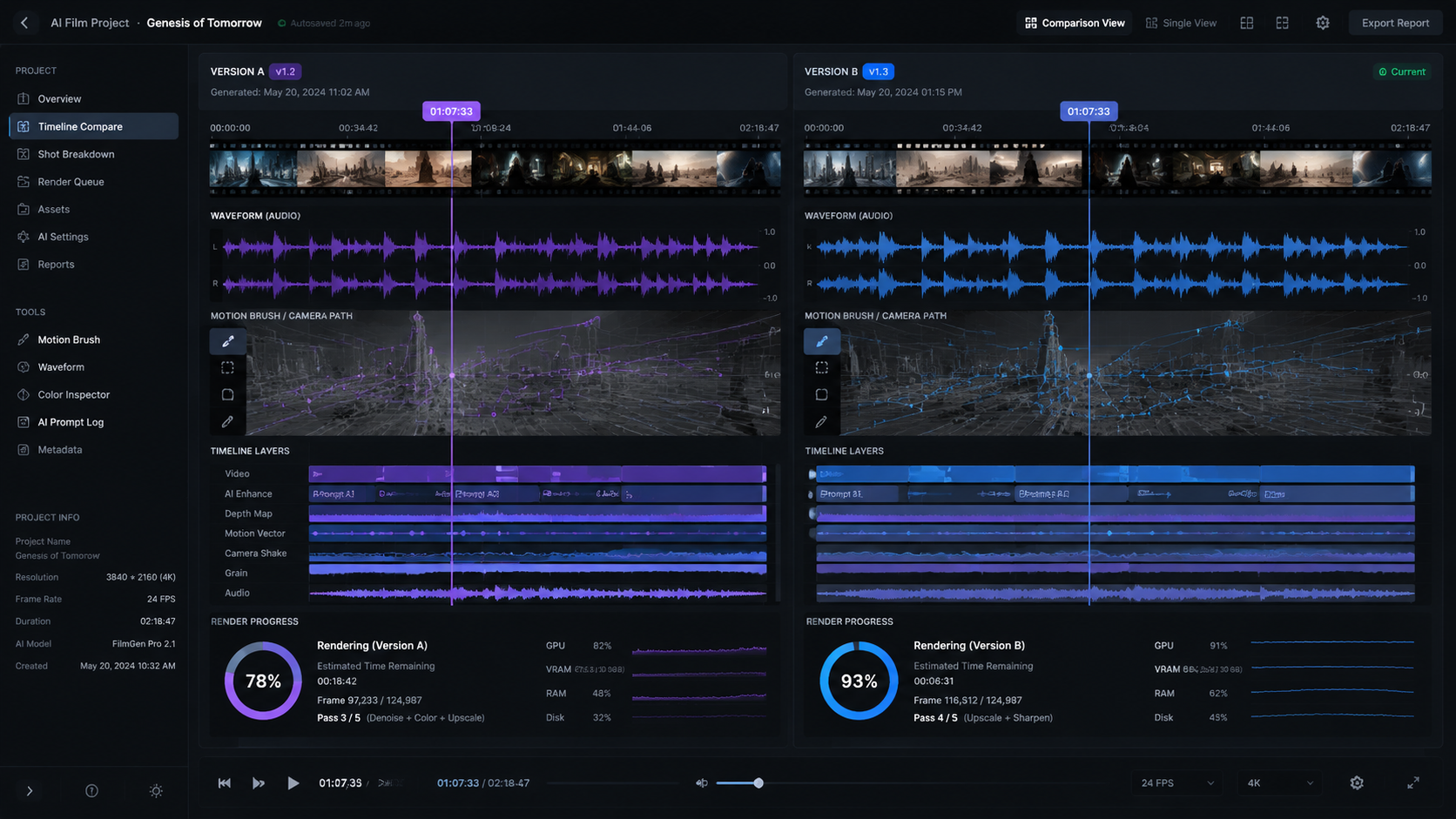
To understand the pika labs vs runway comparison, one must look at the underlying architecture. Runway’s Gen-4 model utilizes a "World Model" approach, which understands the three-dimensional geometry of a scene. This allows for perfect parallax and consistent lighting across long-form generations. Pika Labs, however, utilizes a proprietary "Neural Motion" engine that prioritizes the aesthetics of movement, making it the favorite for music videos and avant-garde short films.
According to Techloy's 2026 hands-on review, the integration of AI music generation within these tools has become a major differentiator. Pika Labs now offers a "Sync-to-Beat" feature that automatically times visual transitions to audio transients, a feature that has made it the top-rated AI music video generator of the year. Runway counters this with its "Audio-to-Scene" generation, which creates environments based on the mood and frequency of a soundtrack.
| Feature | Runway (Gen-4) | Pika Labs (Pro v3) |
|---|---|---|
| Primary Strength | Professional Control & Editing | Animation & Physics Realism |
| Maximum Resolution | 8K Upscaled | 4K Native |
| Motion Control | Multi-Motion Brush (Advanced) | Direct Physics Manipulation |
| Lip Sync Quality | High (Professional) | Industry-Leading (Expressive) |
| Workflow Style | Web-based Studio / API | Discord & Web Interface |
Professional Workflow Integration and Control
One of the most significant factors in the pika labs vs runway comparison is how these tools fit into a professional pipeline. Runway has positioned itself as the "Adobe of AI," offering a suite of tools that include "In-Painting," "Remove Background," and "Infinite Image Expansion." For a digital agency in 2026, Runway is often the default choice because it allows for non-destructive editing. You can generate a scene and then "mask out" a specific character to change their clothing or expression without regenerating the entire frame.
Pika Labs, while slightly less "modular," offers unparalleled ease of use. Its "Modify Region" tool is incredibly intuitive, allowing users to simply type "add sunglasses" or "change to a rainy day" over a specific part of the video. While Runway offers more technical knobs to turn, Pika’s semantic understanding of prompts often leads to a faster "first-time right" result. This makes Pika the go-to for rapid prototyping and conceptualization phases where speed is more valuable than pixel-perfect masking.
The Impact of Gemini 3 Integration
A major shift in 2026 has been the influence of third-party LLMs on these video tools. As reported by Red Shark News, the integration of Google's Gemini 3 (Nano Banana Pro) into creative ecosystems has pushed both Runway and Pika to improve their prompt comprehension. Runway now uses a similar logic-based reasoning engine to interpret complex directorial instructions, such as "simulate a 1970s film stock with a slight mechanical shutter flicker," with startling accuracy.
Creative Versatility: Animation and Style Transfer
When it comes to the "artistic" side of the pika labs vs runway comparison, Pika Labs often takes the lead. Cybernews recently noted in their 2026 In-Depth Review that Pika’s style transfer capabilities—the ability to take a video of a person walking and turn it into a claymation or watercolor masterpiece—is currently unmatched. The fluidity of the "morphing" effect in Pika is devoid of the jitter that plagued earlier AI models, creating a professional "hand-drawn" look that is highly sought after by animation studios.
Runway’s approach to style is more grounded in cinematic realism. Their "Style Reference" tool allows users to upload a single frame from a classic movie, and the AI will replicate the exact color grading, lighting setup, and grain structure of that film. For filmmakers looking to achieve a "Hollywood look" on an indie budget, Runway provides the most sophisticated color science and lighting simulation available in the generative space today.
Physics and Environmental Interaction
A breakthrough in 2026 for Pika Labs was the introduction of "Dynamic Environment Physics." If you generate a video of a character walking through a forest in Pika, the leaves react to the character's movement, and the wind displacement is calculated in real-time. Runway handles physics through its "Director Mode," where the user manually sets the intensity of the motion. While Runway gives you more control over the *amount* of movement, Pika’s AI has a better "instinct" for how objects should naturally interact with their surroundings.
Pricing, Accessibility, and Community
The final pillar of the pika labs vs runway comparison is accessibility. Runway operates on a credit-based system with various tiers ranging from "Standard" to "Enterprise." For heavy users, the Enterprise tier offers unlimited generations and priority GPU access, which is essential for high-stakes production environments. Runway also offers a robust API, allowing developers to build custom applications on top of their Gen-4 models.
Pika Labs maintains a slightly more accessible entry point, with a popular "Pro" tier that offers unlimited relaxed generations. Pika’s community-centric approach, rooted in its Discord origins, means there is a massive library of "community prompts" and shared styles that beginners can use to jumpstart their creativity. While Runway feels like a professional workstation, Pika feels like a creative laboratory where experimentation is encouraged and rewarded with unexpected, beautiful results.
Frequently Asked Questions
Which tool is better for beginners in 2026?
Pika Labs is generally better for beginners due to its intuitive interface and superior "auto-physics" which requires less manual tweaking. Its Discord-based community also provides a wealth of inspiration and ready-to-use prompts for new creators.
Can Runway Gen-4 create full-length movies?
While Runway can generate high-quality scenes up to 16 seconds long, creating a full-length movie requires stitching these clips together in a traditional editor. However, its "Story Engine" feature helps maintain character consistency across multiple clips, making long-form production much easier.
Does Pika Labs support 4K resolution?
Yes, as of 2026, Pika Labs supports native 4K output for Pro subscribers. It also includes an integrated AI upscaler that can enhance lower-resolution generations to broadcast quality without losing texture detail.
Is there a free version of these AI video tools?
Both Runway and Pika Labs offer limited free trials with a set amount of non-renewable credits. To use features like "Lip Sync," "Pro Upscaling," or "Commercial Rights," a paid subscription is required for both platforms.
Which tool has better Lip Sync for 2026?
Pika Labs currently holds a slight edge in Lip Sync realism, specifically in how it handles facial muscle movements and micro-expressions. Runway’s Lip Sync is highly accurate for dialogue but can sometimes appear slightly more "static" compared to Pika’s expressive animations.



Comments ()