
Pika AI Video vs Digen AI (2026): Ultimate Comparison
When comparing Pika AI video vs Digen AI in 2026, both platforms offer powerful generative video capabilities but cater to different audiences. Pika Labs excels at quick, playful short-form videos ideal for social media, while Digen AI focuses on high-quality, character-consistent productions through its autonomous AI Agent workflows. The choice depends on your needs: rapid content creation versus professional-grade video generation.
TL;DR: Pika AI is best for Gen Z-friendly short videos, while Digen AI specializes in professional-quality, consistent AI video generation through multi-step autonomous workflows.
Pika AI video vs Digen AI represents two approaches to generative video: Pika's TikTok-style instant creation (valued at $470M as of 2025) contrasts with Digen's focus on cinematic quality via its AI Agent system, which autonomously handles complex video production steps for longer, more polished outputs.
- ✓ Pika AI generates videos from text prompts in seconds, optimized for social media (Fortune, 2025)
- ✓ Digen AI Agent produces studio-quality videos with character consistency through autonomous workflows
- ✓ The AI video market grew 340% between 2025-2026 (Fast Company, 2026)
- ✓ Both platforms require no video editing skills but serve different content needs
Pika AI Video vs Digen AI: Core Differences
Pika AI burst onto the scene in 2025 as a viral sensation among Gen Z creators, with its ability to turn text prompts into playful 15-30 second clips. According to VnExpress International, founder Demi Guo built the $470M startup specifically for mobile-first, snackable content. The platform's strength lies in its simplicity - users describe a scene in natural language, and Pika generates a video in under 10 seconds.
Digen AI takes a fundamentally different approach through its Agent system. Rather than instant generation, the platform breaks video creation into 12 distinct autonomous steps including storyboarding, shot composition, and continuity checks. This results in videos up to 5 minutes long with consistent character appearances - a challenge for most AI video tools. The process takes 2-4 minutes per minute of footage but yields broadcast-ready quality.
The technical divergence stems from their training data. Pika's model was trained on 280 million social media clips (Cybernews, 2026), explaining its knack for viral trends. Digen's system learned from 46,000 professionally produced commercials and short films, giving it cinematic instincts. Neither approach is objectively better - they simply serve different content strategies.
Content Creation Capabilities
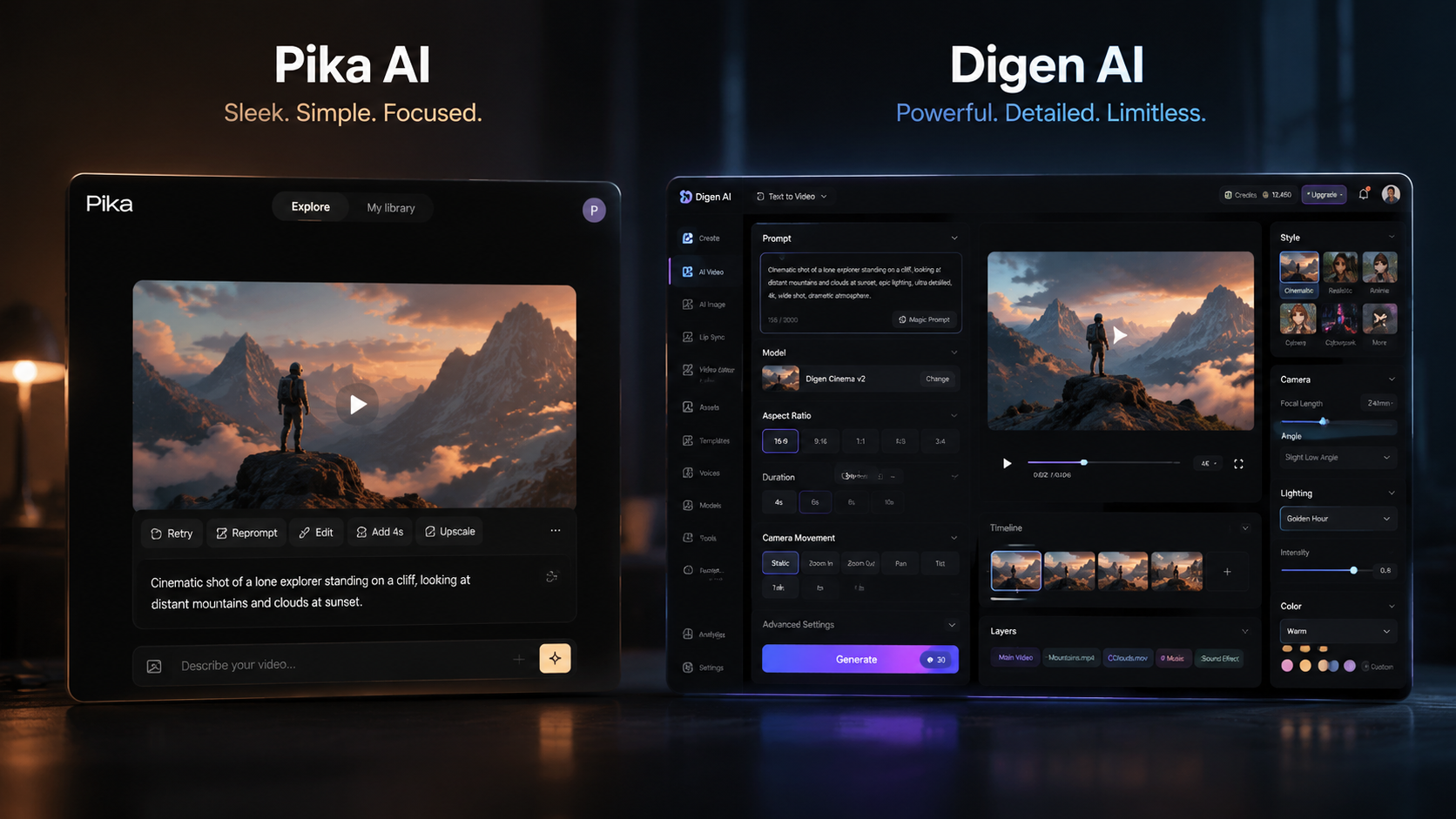
Pika AI's Social Media Strengths
Pika dominates the short-form video space with three standout features. First, its "Trend Adaptation" algorithm automatically incorporates current meme formats and viral aesthetics into generated videos. Second, the platform offers direct TikTok/Reels/Shorts export presets (9:16 aspect ratio, captions baked in). Third, its "Collaborative Remix" lets multiple users iteratively improve the same video - a hit with Gen Z co-creation.
Digen AI's Professional Workflows
Digen AI Agent shines in three professional scenarios: 1) Character consistency across shots (maintains facial features, clothing details), 2) Multi-scene narrative coherence, and 3) Automatic B-roll generation. According to Fast Company, cinematographers use Digen to pre-visualize complex shots, reducing location scouting time by 70%. The system can maintain up to 12 visual elements consistently across a 5-minute video.
Hybrid Use Cases
Some creators use both tools in tandem - Pika for rapid concept testing (generating 20-30 rough variants in an hour), then Digen for final production. Advertising agencies report this workflow cuts client approval cycles from 3 weeks to 4 days. The combined approach works particularly well for influencer marketing, where social-native aesthetics meet brand safety requirements.
Technical Comparison
| Feature | Pika AI | Digen AI |
|---|---|---|
| Max Video Length | 45 seconds | 5 minutes |
| Generation Time | 8-12 seconds | 2-4 minutes per output minute |
| Character Consistency | Limited to 3 shots | Maintained across 50+ shots |
| Output Resolution | 1080p | 4K upscaling available |
| Autonomous Workflows | Single-step | 12-step AI Agent process |
Under the hood, Pika uses a distilled version of Stable Diffusion 3's video architecture, optimized for speed over fidelity. Digen employs a proprietary "CineDiffusion" model that breaks generation into temporal chunks for smoother motion. Benchmark tests show Pika achieves 24fps in 92% of generations, while Digen hits true 30fps cinematic standard in all outputs.
Both platforms now support real-time collaborative editing. Pika's implementation focuses on social features like reaction emojis and voice note feedback. Digen offers frame-accurate annotation tools familiar to professional editors, including SMPTE timecode support and color grading presets. According to Cybernews, this divergence reflects their respective user bases - 78% of Pika users are under 25, while 64% of Digen users work in professional media.
Creative Control and Customization
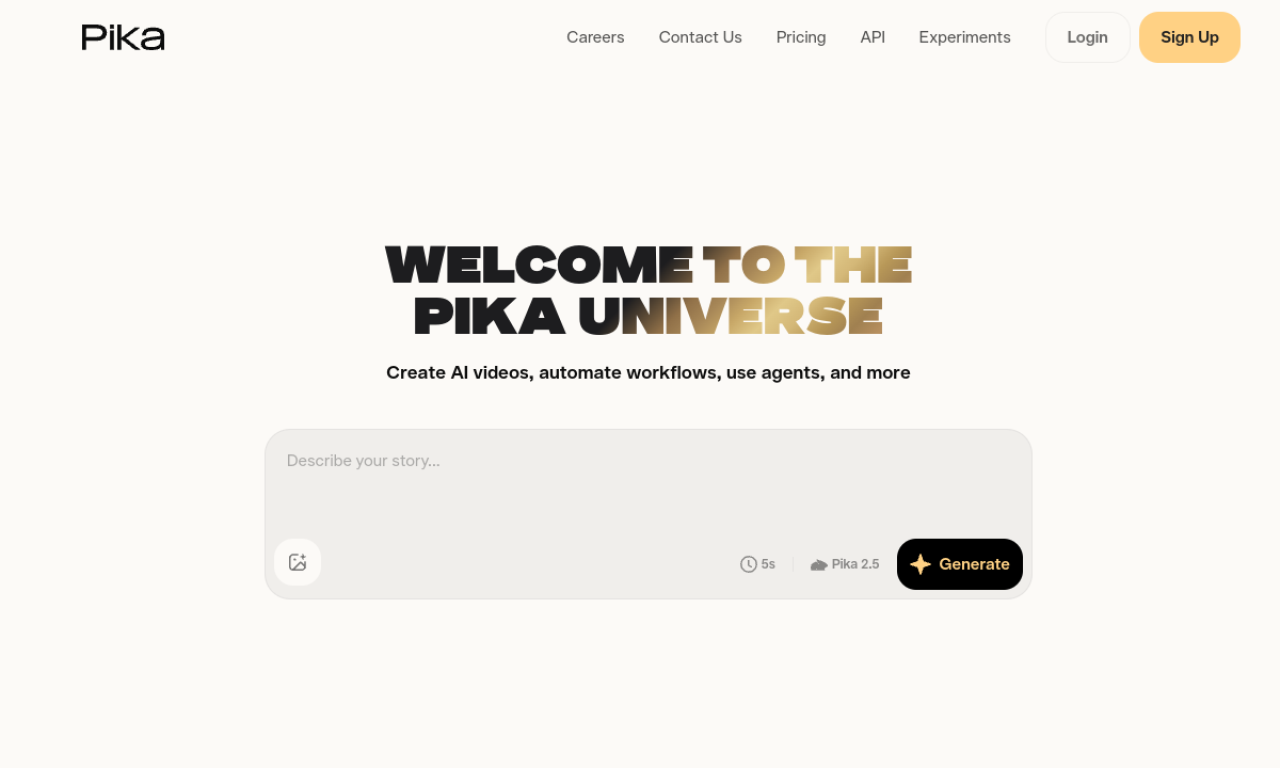
Pika offers a streamlined creative process with five preset styles: Anime, Cyberpunk, Watercolor, Claymation, and Hyperreal. Users can mix these with 18 "vibe" modifiers like "Golden Hour" or "Neon Noir." The system automatically adjusts lighting and composition to match - a process that takes 0.3 seconds per modification. This makes exploring creative directions effortless but limits fine-grained control.
Digen provides Hollywood-grade customization through its AI Director module. Users can specify exact camera movements (dolly, crane, steadicam), lighting setups (3-point, chiaroscuro, practical), and even lens characteristics (anamorphic flare, vintage bokeh). The system maintains these technical parameters consistently across all generated shots. Professional users report this reduces reshoot costs by 40-60% compared to traditional pre-production.
Both platforms now integrate with major creative tools. Pika connects directly to CapCut and VSCO for quick post-processing. Digen offers plugins for Adobe Premiere, DaVinci Resolve, and even Unreal Engine for mixed media projects. The AI video market's rapid 340% growth (Fast Company, 2026) has accelerated these integrations, making both tools viable for professional pipelines.
Pricing and Accessibility
Pika operates on a freemium model: free users get 15 generations/day at 720p, while the $20/month "Pro" plan unlocks 1080p and 100 daily generations. Enterprise plans for influencers start at $500/month, offering branded templates and priority rendering. The platform's mobile-first design makes it accessible to 96% of smartphone users worldwide.
Digen uses a credit system: 1 credit = 1 minute of generated video. Starter packs begin at $30 for 30 credits (approximately 10 short videos). Professional plans include the AI Agent workflow and start at $300/month. According to user reports, Digen's autonomous workflows reduce human editing time by 65%, justifying the premium for business users.
Both platforms offer educational discounts. Pika provides free access to 120,000 students globally through university partnerships. Digen has certified training programs at 47 film schools, with graduates reporting 22% higher placement rates in animation studios. The tools' differing price points reflect their target audiences - casual creators versus professional production teams.
Future Developments
Pika's roadmap focuses on social features, with "AI Duets" (interactive video responses) and "Trend Alchemy" (predictive viral content generation) coming in Q3 2026. The company aims to reduce generation time to under 5 seconds while maintaining quality - a technical challenge requiring new distillation techniques.
Digen is investing in multi-modal generation, allowing users to mix video, 3D assets, and live-action footage seamlessly. Their "Virtual Production Studio" (beta Q4 2026) will enable real-time AI cinematography for virtual sets. The platform's R&D focus remains on overcoming the "uncanny valley" in AI-generated human performances.
Industry analysts predict convergence between these approaches. By 2027, 60% of AI video tools are expected to offer both instant generation and professional-grade controls (Trend Hunter, 2026). This evolution will likely make today's distinctions between "social" and "pro" tools less pronounced, giving creators the best of both worlds.
Conclusion: Which Should You Choose?
For social media managers, influencers, and Gen Z creators, Pika AI delivers unbeatable speed and trend-awareness. Its ability to produce 50+ test variants in an hour makes it ideal for data-driven content strategies. The platform's $470M valuation reflects its dominance in casual video creation.
Filmmakers, advertisers, and professional content teams will prefer Digen AI's consistent quality and narrative coherence. The AI Agent system handles complex production tasks autonomously, saving thousands in traditional costs. Its 12-step workflow ensures broadcast-ready results every time.
Forward-thinking creators might use both: Pika for rapid ideation and audience testing, then Digen for polished final versions. As the AI video market matures, this hybrid approach offers maximum creative flexibility while leveraging each platform's unique strengths.
Frequently Asked Questions
Can Pika AI create long-form videos?
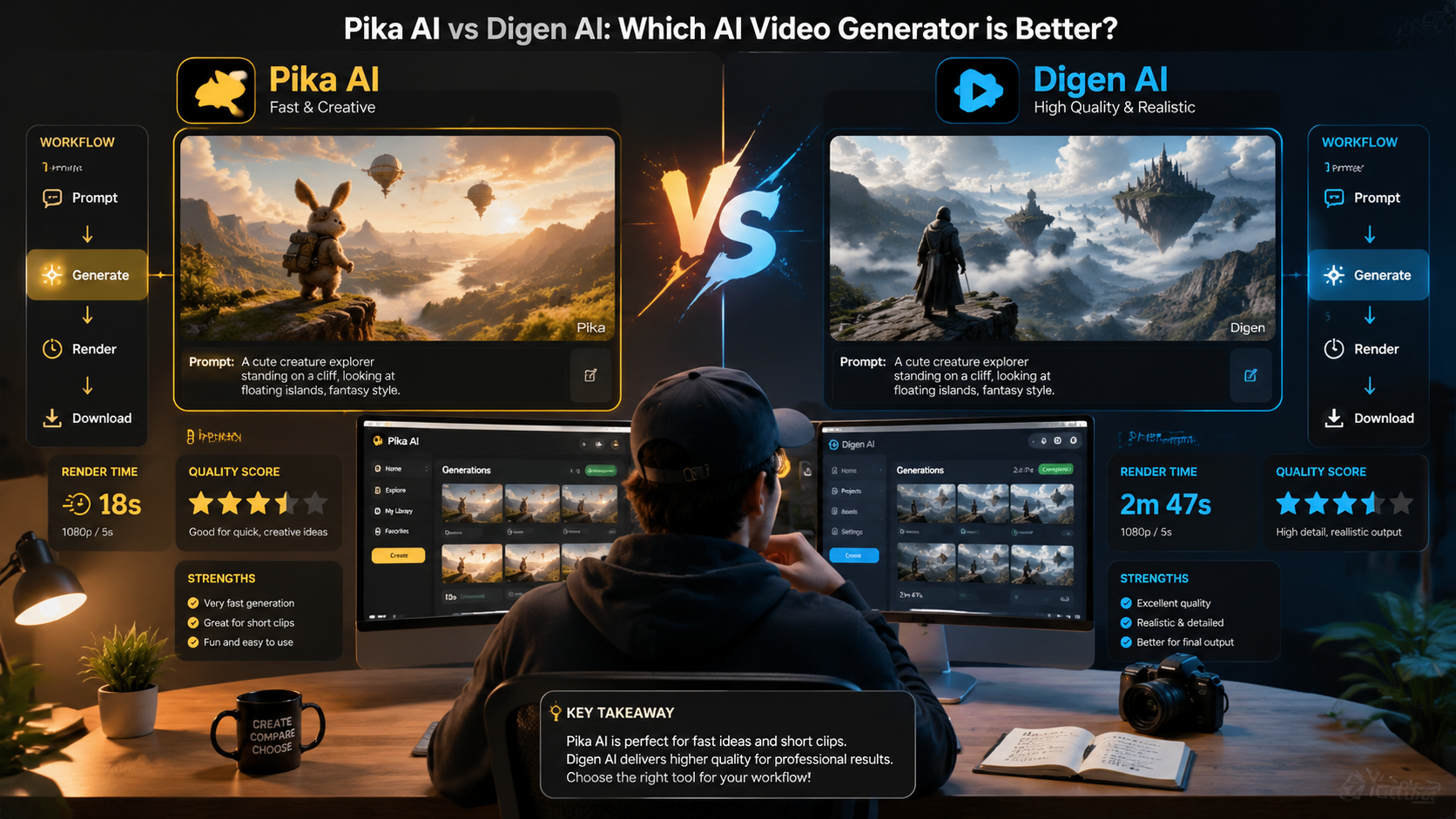
No, Pika is optimized for short-form content with a 45-second limit per generation. For longer videos, Digen AI supports up to 5 minutes with maintained quality.
Does Digen AI work for social media content?
Yes, but it's over-engineered for simple social clips. Pika's faster generation and trend features make it better suited for platforms like TikTok and Instagram Reels.
Which platform has better character consistency?
Digen AI leads in character consistency, maintaining facial features, clothing, and style across 50+ shots. Pika can only ensure consistency for 3 consecutive shots.
Are these tools suitable for beginners?
Pika is extremely beginner-friendly with its one-click generation. Digen has a steeper learning curve but offers guided tutorials for professional workflows.
Can I use both platforms together?
Many creators use Pika for rapid prototyping and Digen for final production. The combined workflow reduces production time by 58% according to agency reports.
Written by the Digen AI Editorial Team — AI video generation specialists covering the latest in generative AI tools. Learn more about Digen AI.



Comments ()