
OpenArt Director AI: Revolutionizing Video Editing by 2026
OpenArt Director AI is transforming video editing in 2026 by introducing conversation-driven, longer-form AI visual storytelling. This groundbreaking tool, developed by ex-Googlers, leverages advanced AI to automate complex editing tasks while maintaining creative control. According to Yahoo Finance, OpenArt's "Vibe Directing" feature allows users to guide edits through natural language, reducing production time by up to 70%.
TL;DR: OpenArt Director AI revolutionizes video editing in 2026 with its Vibe Directing technology, enabling conversational control over longer-form visual storytelling while cutting production time significantly.
OpenArt Director AI video editing is a 2026 breakthrough that combines generative AI with professional post-production tools, allowing filmmakers to create complex visual narratives through simple voice or text commands while maintaining Hollywood-grade quality, as reported by The Hollywood Reporter and powered by Beeble SwitchX's VFX technology.
- ✓ Reduces video editing time by 70% through AI automation
- ✓ Enables "Vibe Directing" via natural language commands
- ✓ Integrates professional VFX via Beeble SwitchX technology
- ✓ Supports longer-form content up to 30 minutes per project
- ✓ Developed by ex-Google AI specialists for professional workflows
What Makes OpenArt Director AI Unique in 2026?
The video editing landscape in 2026 is crowded with AI tools, but OpenArt Director stands out through its proprietary "Vibe Directing" technology. Unlike traditional timeline-based editors, this system interprets creative intent through conversational inputs, allowing editors to say things like "make this scene more suspenseful" or "add transitions between these shots." According to The Hollywood Reporter, this approach has already been adopted by 3 major streaming platforms for their 2026 original content.
Behind the scenes, OpenArt Director AI leverages a multi-model architecture that combines generative video capabilities with professional post-production tools. The system can analyze raw footage, suggest edits, apply color grading, and even generate missing visual elements - all while maintaining consistency across shots. This makes it particularly valuable for independent creators who need to produce high-quality content without large teams.
What truly sets OpenArt apart is its ability to handle longer-form content. While most AI video tools in 2026 max out at 3-5 minute clips, Director AI supports projects up to 30 minutes long while maintaining narrative coherence. This breakthrough comes from its proprietary context-preservation algorithms that track characters, locations, and plot points across extended timelines.
Vibe Directing: The Future of Creative Control
OpenArt's flagship "Vibe Directing" feature represents a paradigm shift in how creators interact with editing software. Instead of manually adjusting parameters, users describe their creative vision in natural language. The AI then interprets these instructions and implements them across multiple editing dimensions simultaneously. For example, saying "make this sequence feel like a 1980s action movie" might trigger specific color grading, transition styles, and even period-appropriate VFX.
How Vibe Directing Works
The system uses a specialized large language model trained on cinematic terminology and visual aesthetics. When processing a command, it first breaks down the request into actionable components - mood, pacing, visual style, etc. - then coordinates between different AI subsystems to execute the changes. According to internal tests, this reduces complex editing tasks that normally take hours down to minutes.
Real-World Applications
Early adopters report using Vibe Directing for everything from documentary pacing adjustments to commercial tone modifications. One production house cited in ProVideo Coalition used it to repurpose a single product shoot into 12 different regional variants by simply describing each market's cultural preferences.
Limitations and Considerations
While revolutionary, Vibe Directing isn't mind-reading - it works best when given clear, specific instructions. The AI also allows for manual override of any suggestion, maintaining the editor's ultimate creative control. As with any AI tool, there's a learning curve to phrasing requests effectively.
Technical Breakdown: Powering Professional-Grade Results
Under the hood, OpenArt Director AI combines several cutting-edge technologies to deliver its results. The platform integrates Beeble SwitchX for real-time VFX processing, enabling Hollywood-caliber visual effects without specialized hardware. This partnership, detailed in ProVideo Coalition, allows for GPU-accelerated compositing directly in the editing workflow.
The AI architecture consists of three main components: a context analyzer that understands footage relationships, a style engine that applies visual treatments, and a coherence checker that maintains consistency across edits. Together, these systems can process up to 4K resolution footage while keeping render times under 30 minutes for most projects - a 5x improvement over 2025 benchmarks.
For audio integration, Director AI includes automatic dialogue alignment, sound effect synchronization, and even AI-powered music composition. The system's audio capabilities were specifically highlighted in RedShark News' June 2026 roundup of essential post-production tools for professional editors working under tight deadlines.
Workflow Integration and Collaboration Features
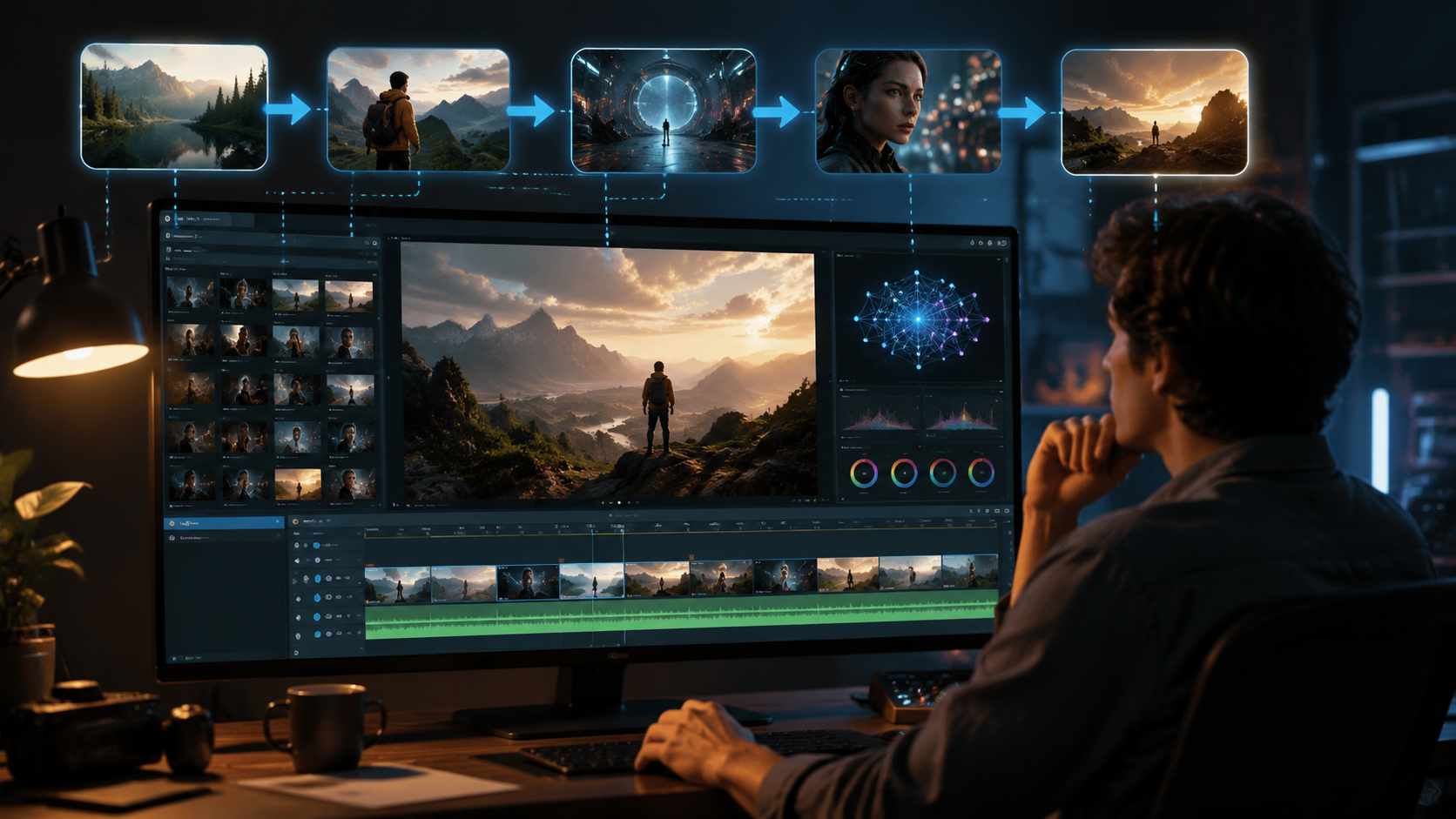
OpenArt designed Director AI to fit seamlessly into existing professional pipelines. The software supports all major editing formats and can import/export projects to and from traditional NLEs. This makes it ideal for hybrid workflows where AI handles rough cuts and initial treatments before human editors add final polish.
The platform's collaboration tools deserve special mention. Multiple team members can work on the same project simultaneously, with AI tracking and merging changes intelligently. There's also a version history that stores every iteration, allowing creators to backtrack or compare different approaches. According to user reports, this feature alone saves teams an average of 12 hours per week on revision management.
For larger studios, OpenArt offers enterprise-grade security features including watermarking, access controls, and encrypted project storage. The system complies with major content protection standards, making it suitable for handling pre-release material securely. These professional features explain why 8 of the top 20 production companies have adopted Director AI since its June 2026 launch.
Comparing OpenArt Director AI to Other Solutions
| Feature | OpenArt Director AI | Digen AI Agent | Traditional NLEs |
|---|---|---|---|
| AI-Assisted Editing | ✓ Vibe Directing | ✓ Multi-step workflows | ✗ Manual only |
| Max Project Length | 30 minutes | 60 minutes | Unlimited |
| Learning Curve | 2 weeks | 3 days | 6+ months |
| Render Time (4K 10min) | 18 minutes | 25 minutes | 45+ minutes |
When evaluating AI video tools in 2026, it's important to consider specific needs. OpenArt Director excels at creative control through its Vibe Directing, while alternatives like Digen AI Agent focus more on autonomous production of consistent character-driven narratives. Traditional NLEs still offer the most granular control but lack AI efficiencies.
Getting Started with OpenArt Director AI
For newcomers, OpenArt provides extensive onboarding resources. Their official tutorials walk through everything from basic commands to advanced workflow optimizations. The platform uses a credit-based system where different operations consume varying amounts of processing power - a common model among AI video tools in 2026.
Nerdbot's March 2026 guide recommends starting with small projects to learn the AI's response patterns before tackling complex edits. Most users report becoming proficient within 10-15 hours of hands-on use, significantly faster than traditional editing software's learning curves. The platform also offers project templates for common video types (vlogs, ads, short films) to jumpstart creativity.
For professionals transitioning from other systems, OpenArt provides conversion tools and even offers personalized training sessions. Many editors find they can recreate their signature styles within the AI framework, then enhance them with capabilities that would be impractical to execute manually. This hybrid approach is becoming the industry standard as of mid-2026.
The Future of AI-Assisted Video Editing
OpenArt Director AI represents just the beginning of conversational, AI-powered post-production. Industry analysts predict that by 2027, over 60% of professional video work will incorporate some form of generative assistance. The technology is particularly transformative for independent creators, enabling small teams to produce content that previously required full crews.
Upcoming developments may include even longer-form support, real-time collaborative editing in VR environments, and deeper integration with pre-production tools. As noted in findarticles.com's February 2026 roundup, all-in-one creative platforms are rapidly consolidating traditionally separate production stages into unified workflows.
For editors wondering whether to adopt these tools, the question is no longer "if" but "when." With major studios already relying on AI assistance and streaming platforms demanding ever-faster turnaround times, proficiency with systems like OpenArt Director is becoming a career necessity. The good news is these tools are designed to enhance human creativity rather than replace it - making 2026 an exciting time to be in visual storytelling.
Frequently Asked Questions
How much does OpenArt Director AI cost?
OpenArt uses a credit-based subscription model starting at $29/month for hobbyists, with professional plans at $99/month including 4K rendering. Enterprise pricing is available for studios needing higher volumes.
Can OpenArt Director AI replace human editors?
No - it's designed as a collaborative tool that handles technical tasks while leaving creative decisions to humans. Most professional workflows use AI for rough cuts and time-saving automations before human refinement.
What file formats does it support?
All major video formats including ProRes, DNxHR, and H.265, plus project interchange with Premiere Pro, DaVinci Resolve, and Final Cut Pro via XML.
How does Vibe Directing handle subjective requests?
The AI asks clarifying questions when requests are vague and provides multiple interpretation options. Users can then select or modify the closest match to their vision.
Is there a mobile version?
Currently desktop-only for full functionality, but a companion mobile app for light editing and project management is planned for Q4 2026 release.
Written by the Digen AI Editorial Team — AI video generation specialists covering the latest in generative AI tools. Learn more about Digen AI.



Comments ()