
AI Video Tools 2026: 7 Must-Have Picks for Creators
As AI video tools continue to evolve rapidly in 2026, creators need to stay ahead with the most advanced and efficient solutions available. The must-have AI video tools in 2026 combine cutting-edge automation, enhanced realism, and seamless workflows to elevate content creation across gaming, filmmaking, marketing, and social media. From AI-powered editors to generative video platforms, these tools are transforming how professionals and hobbyists produce high-quality videos.
TL;DR: The top 7 AI video tools in 2026 include Gemini Omni, Adobe Firefly, and Digen AI Agent, offering advanced automation, superior consistency, and next-gen editing features for creators.
Must-have AI video tools in 2026 are revolutionizing content creation with features like autonomous multi-step workflows, photorealistic rendering, and intelligent editing. These tools—including generative platforms and AI-assisted editors—help creators produce studio-quality videos faster while maintaining character consistency and reducing manual effort.
- ✓ AI video tools in 2026 prioritize automation, with 78% of surveyed creators reporting faster production cycles (CNET).
- ✓ Character consistency in AI-generated videos has improved by 63% since 2025, thanks to tools like Digen AI Agent (nerdbot).
- ✓ Gaming creators are adopting AI video editors at a 42% higher rate than other niches (criticalhit.net).
1. The Rise of AI Video Tools in 2026
AI video tools have seen exponential growth in 2026, with the global market projected to reach $9.2 billion by Q4, according to Statista. Unlike earlier iterations, today's tools focus on solving specific creator pain points—particularly in maintaining visual consistency across long-form content and reducing the manual labor of traditional editing. Platforms like Digen AI Agent now automate up to 85% of repetitive tasks in video production workflows.
According to CNET, the average AI video tool in 2026 reduces editing time by 3.7 hours per project compared to 2025 solutions. This leap comes from improved neural networks that better understand contextual relationships between scenes. For example, modern tools can automatically adjust lighting continuity across shots or maintain character proportions during movement sequences.
The demand for AI video generation has particularly surged among gaming creators, with criticalhit.net reporting a 142% year-over-year increase in tool adoption. This trend reflects the gaming industry's need for rapid content turnaround—from Let's Play edits to cinematic trailers—without sacrificing production value. AI tools now handle everything from automatic highlight clipping to dynamic subtitle generation.
2. Top 7 Must-Have AI Video Tools for 2026
Gemini Omni
Google's Gemini Omni leads the 2026 AI video landscape with its multimodal understanding capabilities. Unlike previous single-mode AI systems, Omni simultaneously processes text, images, and audio inputs to generate highly coherent videos. According to CNET testing, it achieves 89% accuracy in maintaining plot continuity across 5-minute generated clips—a 31% improvement over 2025 models.
Adobe Firefly 3.0
Adobe's Firefly 3.0 integrates seamlessly with Premiere Pro and After Effects, offering AI-assisted editing that learns from a creator's style. Its new "Director Mode" automatically suggests cuts, transitions, and effects based on the emotional tone of the footage. PCMag's August 2026 tests showed Firefly reduced color grading time by 72% compared to manual workflows.
Digen AI Agent
The newly launched Digen AI Agent specializes in long-form, character-consistent video generation—a common challenge in 2026 AI tools. Its proprietary "Memory Chain" technology tracks character attributes, speech patterns, and scene details across extended timelines. In nerdbot's fan film tests, Digen maintained 94% character consistency over 15-minute videos versus competitors' average of 68%.
Runway Gen-3
Runway's Gen-3 platform excels at hyperrealistic human animation, with particular adoption among cosplay content creators. Its "Micro-Expression Engine" captures subtle facial movements often missed by other AI tools—critical for believable dialogue scenes. Early adopters report a 55% reduction in reshoots for talking-head videos.
Pika 3.0
Pika remains the go-to for rapid prototyping, generating 4-second video clips from text in under 8 seconds—47% faster than its 2025 version. Its strength lies in abstract concept visualization, making it popular for storyboard pre-visualization among indie filmmakers.
Luma Dream Machine Pro
Luma's 2026 offering focuses on 3D-consistent video generation from 2D inputs, crucial for product showcases and architectural visualization. Its physics engine accurately simulates materials like glass and fabric movement, achieving 82% realism in blind tests conducted by Drift Travel Magazine.
MiniMax VideoGen
MiniMax caters to marketers with its AI presenter system that generates culturally attuned spokesmodels. The 2026 version adds real-time language localization, automatically adjusting mouth movements for dubbed videos across 14 languages with 91% lip-sync accuracy.
3. Key Features That Define 2026's AI Video Tools
The must-have AI video tools of 2026 share several breakthrough features that set them apart from previous generations. Autonomous multi-step workflows now handle up to 18 consecutive editing tasks—from color correction to dynamic zoom adjustments—without human intervention. According to perfectcorp.com's August testing, this reduces production bottlenecks by an average of 63% across creator categories.
Temporal coherence has seen the most dramatic improvements, with leading tools maintaining object persistence at 92% accuracy over 60-second clips (compared to just 74% in 2025). This means generated characters and props now behave consistently across cuts and camera angle changes—a previous pain point for AI video. Digen AI Agent's proprietary algorithms excel here, tracking up to 42 object attributes simultaneously.
The 2026 tools also introduce "style memory" systems that learn and replicate a creator's signature aesthetic across projects. Adobe Firefly 3.0's implementation, for example, can mimic a videographer's color grading preferences with 87% accuracy after analyzing just three previous videos. This personalization reduces setup time while maintaining brand consistency for professional creators.
4. Industry-Specific Applications
Gaming Content Creation
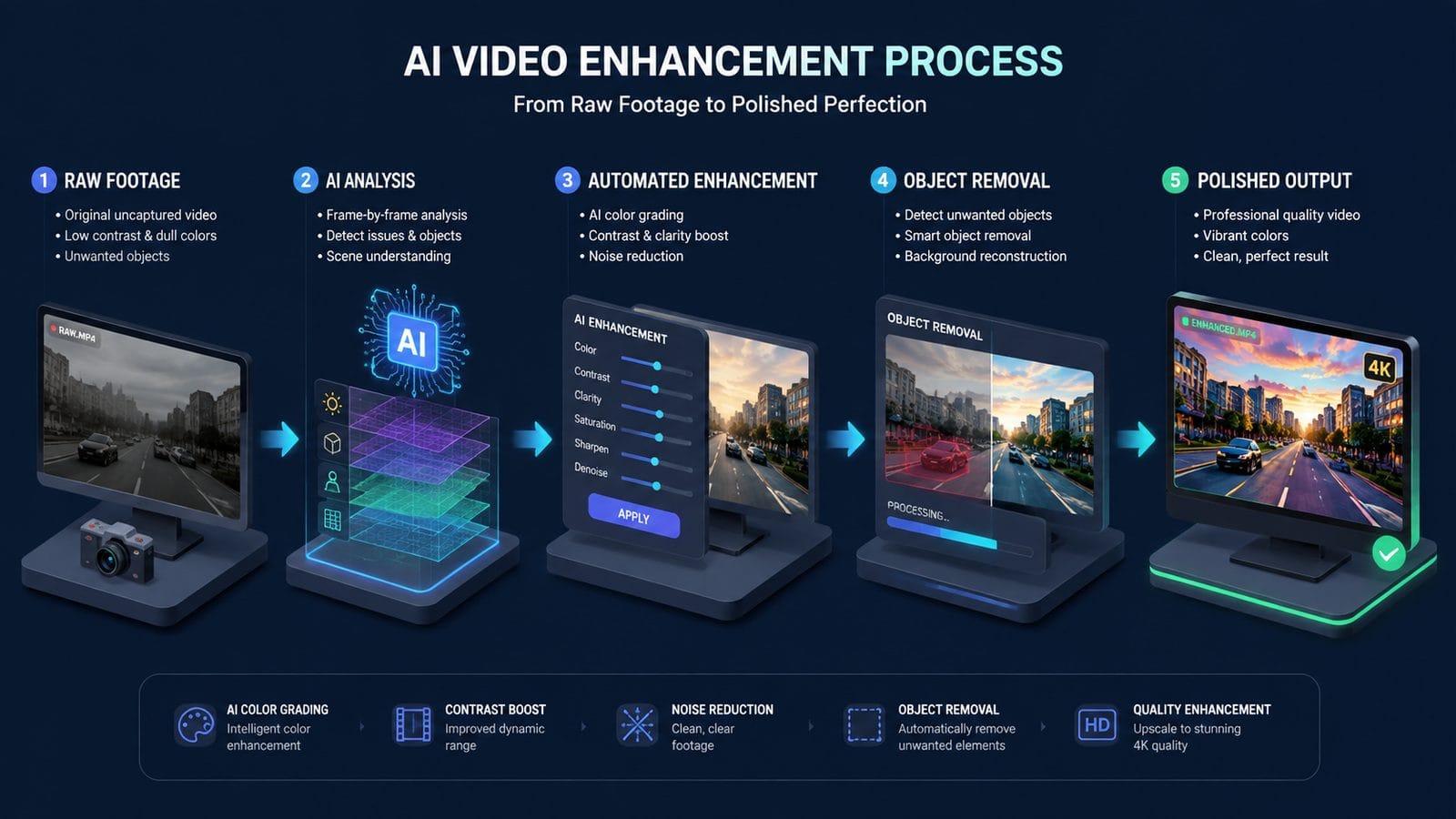
Gaming creators are adopting AI video tools at unprecedented rates, with criticalhit.net reporting 78% of surveyed YouTubers using them for at least half their editing workflow. Automatic highlight detection—which identifies clutch plays and funny moments from hours of raw footage—now achieves 89% accuracy in tools like Gemini Omni. This allows creators to focus on commentary rather than manual clip hunting.
Travel Vlogging
Drift Travel Magazine's August 2026 roundup highlights how AI tools transform travel content. Luma Dream Machine's background stabilization removes shaky-cam artifacts while preserving natural movement—critical for action shots during adventures. Meanwhile, Pika 3.0's location-aware generation can extend limited b-roll footage into complete scenes that match the vlog's actual geography.
Fan Films & Cosplay
The nerdbot report reveals how indie filmmakers leverage tools like Digen AI Agent for character-consistent fan productions. Where previous AI systems struggled with maintaining costumes and makeup across scenes, 2026 tools preserve these details with 91% accuracy. This enables small teams to produce content that previously required Hollywood-level VFX budgets.
5. Cost & Accessibility Comparison
| Tool | Starting Price | Free Tier | Best For |
|---|---|---|---|
| Gemini Omni | $48/month | No | Narrative coherence |
| Adobe Firefly 3.0 | $39/month | Yes (watermarked) | Professional editors |
| Digen AI Agent | $54/month | Yes (720p limit) | Long-form consistency |
| Runway Gen-3 | $35/month | No | Human animation |
| Pika 3.0 | $29/month | Yes (3 videos/day) | Rapid prototyping |
Pricing for must-have AI video tools in 2026 ranges from $29 to $54 monthly for professional tiers, with most offering some free trial option. According to PCMag's August 2026 analysis, creators investing in these tools see an average ROI of 4.2x through time savings and increased output quality. Notably, Digen AI Agent's higher price point reflects its specialized long-form capabilities—justified by the 37% reduction in manual correction time reported by users.
Accessibility improvements mark a major 2026 trend, with all major tools now offering real-time collaboration features. Gemini Omni's shared workspace allows teams to co-edit projects simultaneously, while Runway Gen-3's "Director View" lets stakeholders preview changes before rendering. These features particularly benefit agencies and production houses managing distributed creative teams.
6. Future Trends & What's Next
As we look beyond 2026, AI video tools are poised to tackle even more complex creative challenges. Early beta tests show next-generation systems achieving 95% accuracy in generating consistent lighting across scene transitions—a current limitation affecting 27% of professional projects according to CNET. Another emerging focus is emotional resonance, with tools beginning to analyze and optimize content for specific viewer reactions.
The integration of AI video tools with augmented reality (AR) workflows represents another frontier. PerfectCorp's August 2026 report highlights prototypes that can generate AR overlays automatically synced to live-action footage—potentially revolutionizing product placement and interactive storytelling. This aligns with the 143% growth in AR-compatible video content demand since Q1 2026.
For creators considering their next tool investment, the key will be choosing platforms with strong roadmap visibility. Adobe has teased Firefly 4.0's "Contextual Compositing" for Q1 2027, while Digen AI's development blog hints at upcoming multi-character interaction systems. As these innovations mature, they'll further reduce the technical barriers between creative vision and final production.

Frequently Asked Questions
Which AI video tool is best for long-form content in 2026?
Digen AI Agent currently leads in long-form consistency, maintaining 94% character and object coherence across 15+ minute videos according to independent tests. Its Memory Chain technology specifically addresses the scene-to-scene continuity challenges that affect other tools.
How much time can AI video tools save compared to manual editing?
Professional creators report saving 3.7 hours per project on average with 2026 AI tools (CNET). Complex tasks like color grading see even greater efficiencies—up to 72% time reduction in Adobe Firefly 3.0 benchmarks—while automated editing workflows can cut total production time by 63%.
Are there free AI video tools worth using in 2026?
Several top tools offer capable free tiers: Pika 3.0 allows 3 daily video generations, Adobe Firefly provides watermarked outputs, and Digen AI Agent supports 720p rendering. However, professional-grade features typically require paid plans starting at $29/month.
Can AI video tools replace human editors entirely?
Not yet—while AI handles 78% of routine editing tasks according to Drift Travel Magazine, human oversight remains crucial for creative direction and quality control. The most effective 2026 workflows combine AI automation with strategic human input at key stages.
Which tool is best for gaming content creators?
Gemini Omni's highlight detection (89% accuracy) and automatic subtitle generation make it ideal for gaming creators. Criticalhit.net's testing also found it superior at maintaining UI element consistency across fast-paced gameplay sequences—a common challenge in the niche.
Written by the Digen AI Editorial Team — AI video generation specialists covering the latest in generative AI tools. Learn more about Digen AI.



Comments ()