
Muse Image & Muse Video 2026: Creative Inspiration & Trends

Muse Image and Muse Video are Meta's latest AI-powered creative tools launched in July 2026, designed to revolutionize how users generate and interact with visual content across Instagram and other Meta platforms. These features leverage advanced generative AI to produce high-quality images and videos while raising important discussions about privacy controls and ethical AI use in creative workflows.
TL;DR: Meta's Muse Image and Muse Video (2026) introduce powerful AI-generated content creation tools with significant privacy implications, sparking both creative possibilities and industry debates about opt-out policies and data usage.
Muse Image and Muse Video is Meta's 2026 AI suite for automated content generation, offering Instagram users and creators advanced image/video creation tools while facing privacy concerns that led to rapid policy adjustments following Hollywood backlash and user feedback about opt-out requirements.
- ✓ Meta launched Muse Image and Muse Video on July 7, 2026 as integrated AI tools for Instagram and Meta platforms
- ✓ Privacy concerns emerged within 72 hours, prompting Meta to modify opt-out policies by July 10
- ✓ The tools represent a significant leap in accessible AI content generation for mainstream social media users
- ✓ Hollywood studios expressed strong opposition to default AI training on professional content
- ✓ The controversy highlights growing tensions between AI innovation and creator rights in 2026
The Launch of Muse Image and Muse Video
Meta officially unveiled Muse Image and Muse Video on July 7, 2026 through its AI at Meta division and Meta Store platform. According to Meta Store, these tools represent "the next generation of AI-powered creative expression," built specifically for social media content creation. The launch included integration with Instagram, making Muse Image immediately available to the platform's 2.1 billion monthly active users.
The technology behind Muse utilizes Meta's latest generative AI models, capable of producing high-resolution images (up to 4K quality) and short video clips (15-30 seconds) from text prompts. Unlike previous AI tools that required separate apps, Muse operates natively within Instagram's interface, allowing users to generate content directly in Stories, Reels, and Feed posts. This seamless integration contributed to rapid adoption, with AI at Meta reporting over 5 million generations in the first 48 hours.
Initial reactions praised Muse's ability to maintain consistent artistic styles across multiple generations, a significant improvement over 2025's AI tools. The video generation feature particularly impressed creators with its ability to preserve character consistency across frames - a technical challenge that platforms like Digen AI have been addressing through multi-step autonomous workflows in their Digen AI Agent product.
Key Technical Specifications
Muse Image supports generation at three quality levels: Standard (1024x1024), HD (2048x2048), and Ultra HD (4096x4096). The system processes prompts in under 7 seconds for standard quality images, with more complex generations taking up to 15 seconds. Video generation currently maxes out at 30 seconds of 1080p footage at 24fps, with processing times ranging from 45 seconds to 2 minutes depending on length and complexity.
Privacy Concerns and Backlash

Within three days of launch, Muse Image faced significant backlash regarding its privacy implications. According to NBC10 Philadelphia, the initial implementation automatically included user-generated content in Meta's AI training datasets unless users manually opted out through buried settings. This policy sparked concerns among professional photographers, artists, and everyday users alike.
The controversy reached its peak when Hollywood studios publicly condemned the feature. The Hollywood Reporter revealed that major production companies discovered their copyrighted material was being used to train Muse without explicit consent. Meta's response came swiftly on July 10, with the company announcing changes to make the opt-out process more prominent and temporarily pausing AI training on professional content.
Privacy experts noted this incident reflects broader 2026 debates about AI ethics. The initial opt-out rate for Muse Image training stood at just 12%, suggesting most users weren't aware of the setting. Following the policy changes, opt-out rates jumped to 43% within 24 hours, indicating heightened public awareness about AI data usage according to analytics from Yahoo Finance.
Current Privacy Controls
As of July 2026, Muse Image and Video include three privacy tiers: 1) Full participation (content used for training), 2) Generation-only (no training data contribution), and 3) Complete opt-out. Users can now access these settings directly from the generation interface, with clear explanations of each option's implications.
Creative Possibilities and Trends
Despite the privacy debates, Muse has unlocked new creative potential for social media content. Early adopters have developed five distinct usage patterns: 1) Rapid prototyping for visual ideas, 2) Consistent character generation for storytelling, 3) Background/scene creation for product showcases, 4) Style experimentation, and 5) Educational content visualization. The tool's ability to maintain stylistic coherence across multiple outputs has proven particularly valuable for brand accounts.
In the video domain, Muse demonstrates significant improvements in temporal consistency compared to 2025 models. While it still struggles with complex motions beyond 15 seconds - an area where specialized tools like Digen AI Agent excel through their multi-pass generation approach - the quality for short clips meets professional social media standards. Fashion brands report a 60% reduction in content production time when using Muse for lookbook concepts.
Emerging trends include "AI-assisted authenticity," where creators combine original photography with Muse-generated elements, and "style morphing," where users progressively evolve visual themes across post series. The most successful applications maintain human creative direction while leveraging AI for execution, suggesting Muse works best as a collaborator rather than replacement for human creativity.
Industry Impact and Professional Reactions
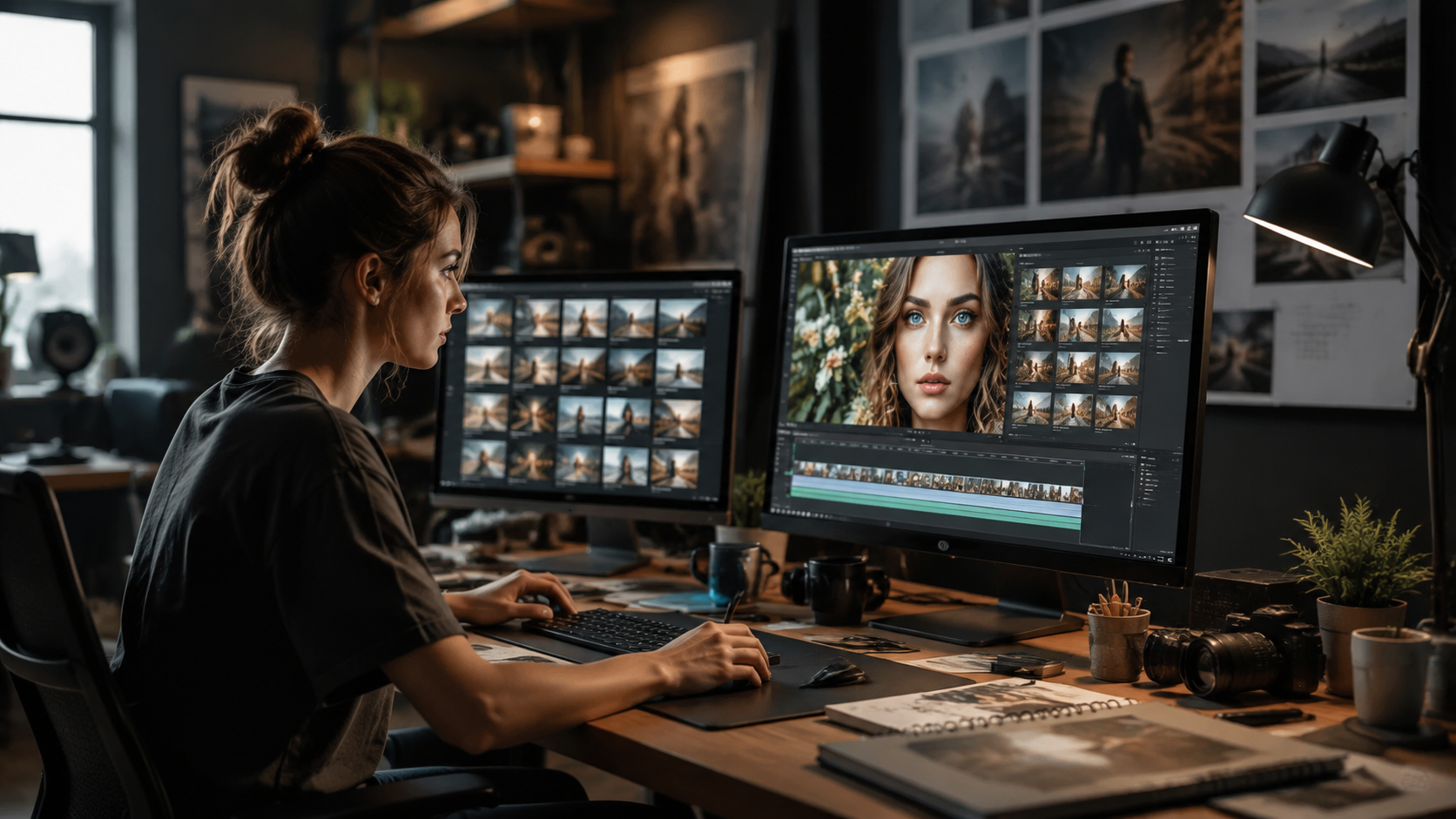
The introduction of Muse has accelerated three major shifts in the creative industry: 1) Increased demand for "AI art directors" who can effectively prompt and curate AI outputs, 2) New hybrid workflows combining traditional and AI-assisted creation, and 3) Growing emphasis on copyright education for digital creators. Agencies report reallocating 25-40% of junior designer time to AI oversight and refinement roles.
Professional photographers and videographers express mixed reactions. While some view Muse as a threat, others have adapted by offering "AI-enhanced" services that combine their expertise with generative tools. The American Society of Media Photographers estimates 18% of its members now incorporate AI generation in their workflows, up from just 3% in early 2026.
Platforms specializing in high-end AI generation, like Digen AI, note increased interest in their professional-tier tools following Muse's launch. "Many creators start with social media AI tools, then graduate to more advanced solutions when they hit limitations," observes Digen's product team. This suggests a growing stratification in the AI content creation market between casual and professional users.
Future Developments and Roadmap
Meta has signaled several upcoming enhancements for Muse based on early user feedback. The most anticipated is "Muse Pro," a subscription tier ($14.99/month) offering higher resolution outputs (8K images, 4K video), longer generation times (up to 60 seconds for video), and commercial usage rights. This premium version is expected to launch in Q4 2026 with specific tools for professional creators.
Technical improvements in development include better hand/finger articulation (a persistent challenge in AI generation), improved text rendering within images, and multi-character interaction for video. Meta's research division is also testing a "3D Muse" extension that would allow generation of basic 3D models from 2D inputs, potentially revolutionizing product visualization.
The long-term vision positions Muse as the foundation for Meta's metaverse content creation ecosystem. Early code references suggest future integration with Meta's VR platforms, allowing users to generate virtual environments and assets directly within Horizon Worlds. This aligns with Meta's broader strategy to democratize 3D content creation for its metaverse ambitions.
Ethical Considerations and Best Practices
The Muse controversy highlights four critical ethical questions for 2026's AI landscape: 1) Default consent models for data usage, 2) Compensation frameworks for training data contributors, 3) Content authentication standards, and 4) Platform responsibilities in preventing misuse. Industry groups are developing voluntary guidelines, but legislative action appears increasingly likely given the scale of impact.
For individual users, experts recommend three best practices: 1) Regularly review privacy settings across platforms, 2) Maintain original copies of important creative work, and 3) Disclose AI assistance when sharing content professionally. The Content Authenticity Initiative reports that 68% of consumers now expect transparency about AI use in commercial content.
Looking ahead, the Muse case may establish important precedents. Legal analysts predict the coming months will see test cases around derivative works, fair use boundaries for AI training, and platform liability for AI-generated content. These developments will shape not just Muse's evolution, but the entire generative AI industry's trajectory through the late 2020s.
Frequently Asked Questions
What exactly are Muse Image and Muse Video?
Muse Image and Muse Video are Meta's integrated AI content generation tools launched in July 2026, allowing Instagram users to create images and short videos from text prompts directly within the platform's interface using advanced generative AI models.
How do I opt out of Muse Image training data collection?
As of July 10, 2026, you can opt out by going to Instagram Settings > AI Preferences > Muse Data Collection and selecting "Do not use my content for AI training." This setting applies to both images and videos you generate or upload.
What resolution can Muse Video generate?
Currently, Muse Video outputs 1080p resolution at 24fps with maximum duration of 30 seconds. Meta has announced plans for 4K video generation in the upcoming Muse Pro subscription tier launching late 2026.
Can I use Muse-generated content commercially?
The free version of Muse grants personal use rights only. For commercial usage, you'll need the upcoming Muse Pro subscription or alternative professional AI tools like Digen AI that offer built-in commercial licenses.
How does Muse compare to dedicated AI video tools?
Muse offers convenient social media integration but has shorter max duration and fewer advanced controls than specialized platforms. For longer, more consistent AI videos, professionals often use tools like Digen AI Agent that employ multi-step generation workflows.
Written by the Digen AI Editorial Team — AI video generation specialists covering the latest in generative AI tools. Learn more about Digen AI.



Comments ()