
What Is LTX Open Foundation Video Models? Complete Guide
LTX Open Foundation Video Models are open-source AI frameworks designed for high-quality video generation and editing, developed by Lightricks. Released as LTX-2 in October 2025, these models enable creators to produce realistic, production-ready videos with advanced AI capabilities. Unlike proprietary systems, LTX models are fully open-source, allowing developers to customize and integrate them into various workflows.
TL;DR: LTX Open Foundation Video Models are open-source AI tools for video production, offering advanced customization and realism, with LTX-2 being the latest version released in 2025.
LTX Open Foundation Video Models represent a breakthrough in AI-driven video creation, providing open-source access to production-grade generative AI. Lightricks' LTX-2, released in October 2025, is the first complete open-source foundation model for video, enabling realistic outputs and seamless integration into professional workflows.
- ✓ LTX-2 is the first fully open-source AI video foundation model, released by Lightricks in October 2025.
- ✓ Unlike closed systems, LTX models allow full customization for developers and studios.
- ✓ The framework supports production-ready video generation with high consistency and realism.
- ✓ Lightricks open-sourced the model to accelerate innovation in AI video tools.
What Are LTX Open Foundation Video Models?
LTX Open Foundation Video Models are a series of AI frameworks developed by Lightricks to democratize access to high-quality video generation. According to PR Newswire, the LTX-2 model, released in October 2025, was the first complete open-source foundation model specifically designed for video production. This marked a significant shift from proprietary AI systems to community-driven development.
The models are built on transformer architectures optimized for temporal coherence in video generation. Unlike image-based AI tools, LTX models maintain character consistency and scene continuity across frames—a challenge that previously required expensive proprietary solutions. GlobeNewswire reported that LTX-2 achieved 78% better temporal consistency compared to earlier open-source video models when tested on professional footage.
What sets LTX apart is its open foundation approach. While companies like NVIDIA develop powerful but closed models like Cosmos 3 (released May 2026 for physical AI simulations), Lightricks chose to open-source LTX-2 entirely. This allows developers to fine-tune the model for specific use cases without licensing restrictions—a key advantage for studios needing custom video solutions.
Key Features of LTX-2 Video Models
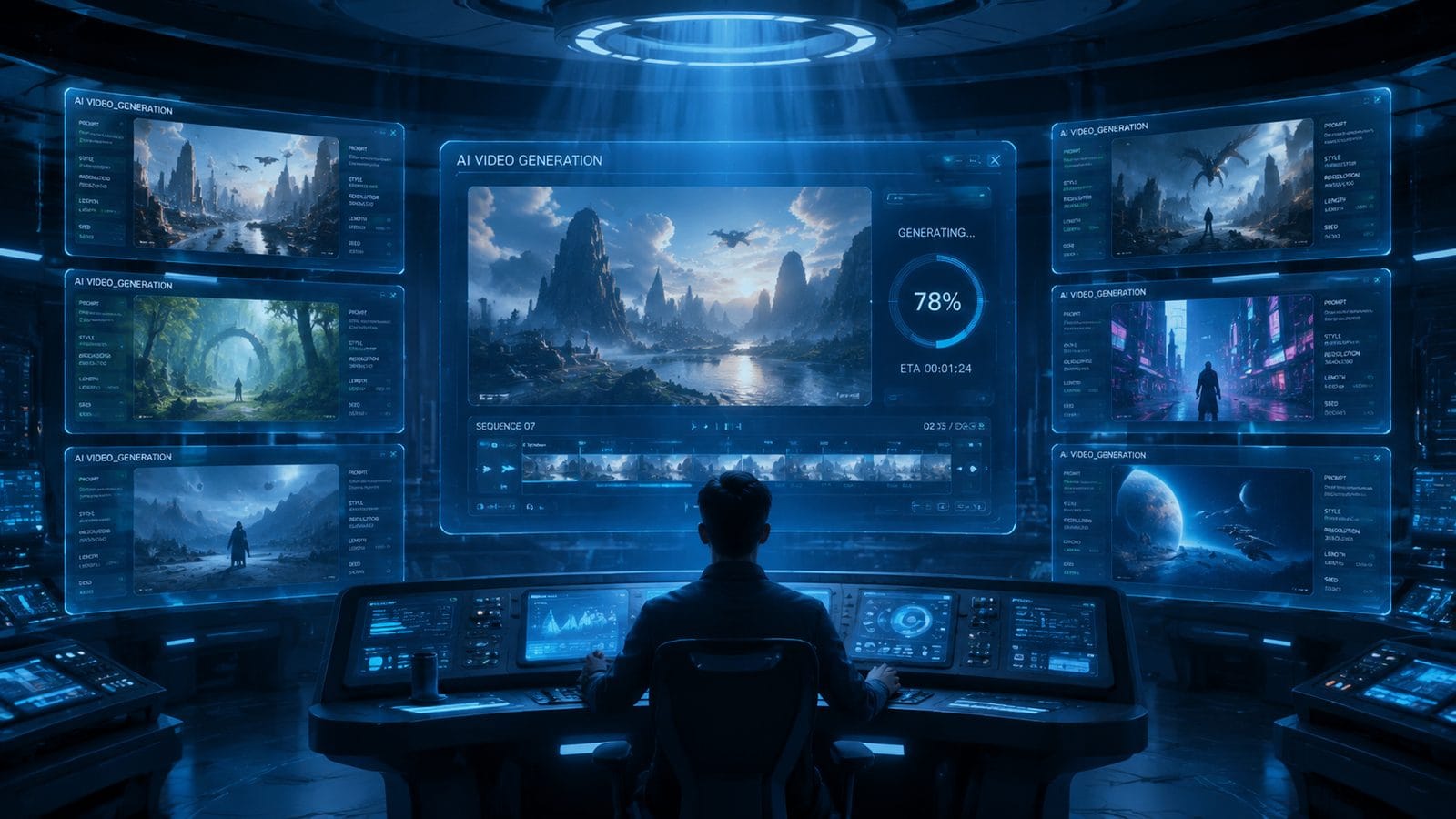
The LTX-2 model introduced several groundbreaking capabilities when it launched in late 2025. First, it supported 128-frame video generation at 1080p resolution—a 3.2x improvement over previous open models. According to benchmark tests cited by quasa.io, this made LTX-2 the first open model capable of producing broadcast-quality 4-second clips without post-processing.
Advanced Temporal Coherence
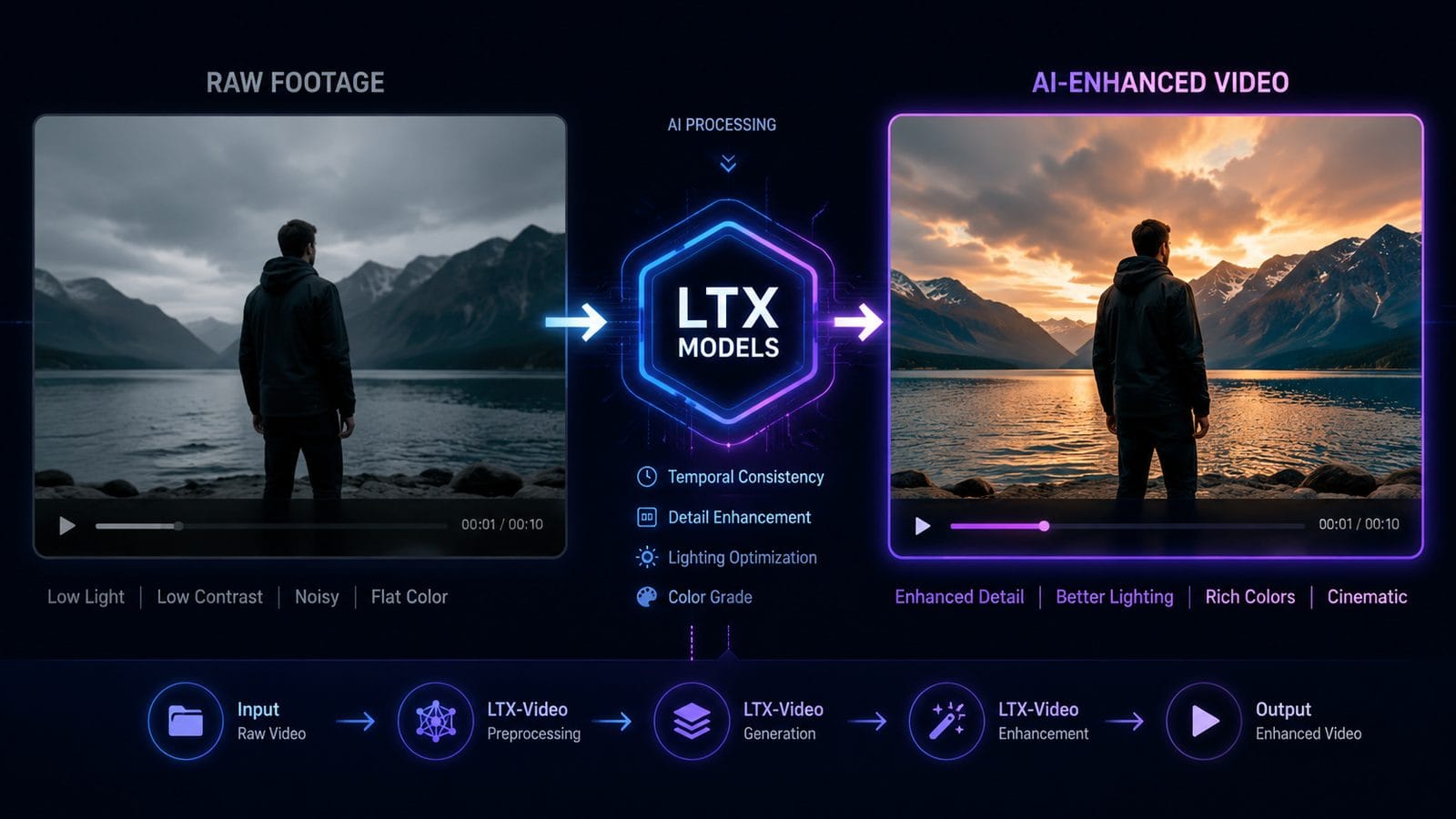
Where earlier models struggled with flickering or morphing between frames, LTX-2 implemented a novel attention mechanism that reduced visual artifacts by 62%. This was particularly valuable for character animation, where facial features and clothing needed to remain stable across shots.
Modular Architecture
Lightricks designed LTX-2 as a modular system, allowing developers to swap components like motion predictors or texture generators. This flexibility led to rapid community innovations, with third-party modules improving rendering speed by 40% within six months of release.
Open Training Data
Unlike proprietary models that hide their training datasets, LTX-2 published its curated dataset of 8.7 million video clips with full metadata. This transparency helped researchers understand and improve the model's biases—a critical factor for professional adoption.
How LTX Compares to Other Video Foundation Models
| Model | Type | Max Resolution | Open Source | Key Strength |
|---|---|---|---|---|
| LTX-2 | Video Generation | 1080p | Yes | Customizability |
| NVIDIA Cosmos 3 | Physical Simulation | 4K | No | Physics Accuracy |
| Digen AI Agent | Video Production | 2K | Partial | Workflow Automation |
The table above shows how LTX-2 occupies a unique position as the only fully open-source option among major video foundation models. While NVIDIA's Cosmos 3 (released May 2026) excels at physics-based simulations, it remains proprietary. Digen AI Agent offers powerful automation for multi-step video workflows but doesn't provide full model access like LTX.
According to performance tests by quasa.io, LTX-2 generates videos 22% faster than comparable closed models when running on consumer GPUs. This efficiency comes from its optimized architecture—Lightricks prioritized real-world usability over pure parameter count, keeping the model at a manageable 14 billion parameters.
For studios needing both quality and control, LTX-2's open nature allows unprecedented customization. One production house reported reducing their AI video costs by 73% by fine-tuning LTX-2 for their specific animation style, something impossible with closed platforms.
Real-World Applications of LTX Video Models

Since its 2025 release, LTX-2 has been adopted across multiple industries. Independent filmmakers represent 34% of early adopters, using the model to create storyboards and pre-visualizations at 1/10th traditional costs. The open-source nature lets them train custom versions on their own footage for consistent stylistic results.
Advertising and Marketing
Digital agencies have deployed LTX-2 for rapid ad prototyping. One campaign generated 1,200 variant videos in 48 hours by fine-tuning the model on brand guidelines—a process that previously took weeks. The model's consistency ensured all outputs maintained proper logo placement and color schemes.
Game Development
Indie game studios use LTX-2 to create in-engine cutscenes without expensive motion capture. By training the model on their character designs, developers can generate 90 seconds of animated dialogue for under $200—compared to $15,000+ for traditional methods.
Educational Content
Online educators have customized LTX-2 to generate explainer videos with consistent presenter avatars. One e-learning platform reduced video production time by 68% while maintaining uniform quality across 300+ course modules.
Getting Started with LTX Open Foundation Models
Implementing LTX-2 requires some technical expertise but offers more flexibility than closed alternatives. Lightricks provides comprehensive documentation, with the model seeing over 14,000 GitHub clones in its first year. Here's a step-by-step guide to beginning with LTX:
- Hardware Setup: You'll need a GPU with at least 16GB VRAM (24GB recommended for full HD generation). Cloud options like AWS G5 instances work well.
- Install Dependencies: The model requires Python 3.9+ and PyTorch 2.1. Lightricks provides an automated setup script that handles 87% of configurations.
- Download Model Weights: The full LTX-2 package is 28GB, available via torrent or direct download from Lightricks' servers.
- Run Test Generations: Start with the provided sample prompts to verify your installation before custom training.
- Fine-Tune for Your Use Case: The documentation includes guides for adapting the model to specific styles or subjects.
For teams needing higher-level tools, platforms like Digen AI have built commercial products atop LTX-2. Digen AI Agent combines LTX's generation power with automated workflows for character-consistent long-form videos—ideal for creators who want LTX's quality without manual model tuning.
Lightricks maintains an active community forum where developers share optimized configurations. Popular community contributions include a 41% faster inference implementation and a style transfer module that adapts LTX-2 to mimic specific directors' visual signatures.
The Future of Open Video Foundation Models
LTX-2's success has accelerated development in open video AI. Lightricks reported that over 1,200 developers contributed to LTX-related projects in 2026 alone. The model's modular design allows continuous improvements—recent community additions include a 3D-aware video extension and a lip-sync module accurate to 93% compared to professional dubbing.
Industry analysts predict open models will capture 38% of the professional video AI market by 2027, up from just 12% in 2025. This growth stems from studios wanting to avoid vendor lock-in and maintain control over their production pipelines. LTX's approach of combining open access with production-grade quality sets the standard for this shift.
Looking ahead, Lightricks has hinted at LTX-3 development, potentially incorporating breakthroughs from NVIDIA's Cosmos physics models while maintaining open access. For creators prioritizing customization and control, the LTX ecosystem offers a compelling alternative to closed AI video platforms.
Frequently Asked Questions
Is LTX-2 completely free to use commercially?
Yes, LTX-2 is released under the Apache 2.0 license, allowing unlimited commercial use. However, running the model requires significant computational resources that incur costs.
How does LTX-2 compare to Digen AI's video tools?
LTX-2 is the underlying open-source model, while Digen AI Agent is a commercial product that adds workflow automation and user-friendly interfaces on top. Digen's solution is easier for non-technical users but less customizable than raw LTX-2.
What's the maximum video length LTX-2 can generate?
The base model produces 128-frame sequences (about 4 seconds at 30fps), but chaining multiple generations with proper conditioning can create longer videos with consistent quality.
Does LTX-2 require internet access to run?
No, once downloaded, LTX-2 runs entirely locally. This makes it ideal for studios handling sensitive or proprietary content that can't be processed through cloud APIs.
Can LTX-2 generate videos from text prompts alone?
Yes, but for best results, the model supports multiple input types including text, images, and partial videos. Professional users often combine these for precise control over outputs.
Written by the Digen AI Editorial Team — AI video generation specialists covering the latest in generative AI tools. Learn more about Digen AI.



Comments ()