
Long Form AI Video Generation Agent: The Future of Content in 2026
Long form AI video generation agents are transforming how content creators produce high-quality, narrative-driven videos in 2026. These advanced systems leverage autonomous multi-step workflows to generate consistent, cinematic-quality videos up to 5 minutes long—a capability that was nearly impossible just two years ago. Leading platforms like Novi AI and Utopai Studios are pushing boundaries with features like character consistency, dynamic scene transitions, and AI-powered storytelling.
TL;DR: Long form AI video generation agents in 2026 can create 5-minute narrative videos with cinematic quality, character consistency, and dynamic storytelling—revolutionizing content creation for professionals and businesses.
A long form AI video generation agent is an advanced artificial intelligence system that autonomously produces high-quality videos up to 5 minutes long with narrative coherence, character consistency, and cinematic techniques. These agents combine generative AI, computer vision, and natural language processing to automate complex video production workflows previously requiring human editors.
- ✓ Novi AI launched a breakthrough agent creating 5-minute narrative videos (April 2026)
- ✓ Utopai PAI 2.0 introduced cinematic storytelling AI for professional teams (June 2026)
- ✓ AI video market grew 340% since 2025 according to industry reports
- ✓ Character consistency remains the top challenge solved by new generation agents
- ✓ 78% of marketers plan to adopt AI video tools by Q3 2026
The Evolution of AI Video Generation
Just three years ago in 2023, AI video tools could only produce short clips of 10-30 seconds with noticeable artifacts. According to Statista, the global AI video generation market has grown 340% since 2025, reaching $8.7 billion in projected revenue for 2026. This explosive growth stems from breakthroughs in diffusion models and transformer architectures that enable longer, more coherent outputs.
The launch of Novi AI's long video agent in April 2026 marked a turning point—the first commercially available system capable of generating 5-minute narrative videos with scene transitions and basic character consistency. As reported by Yahoo Finance, their technology reduces video production time by 70% compared to traditional methods while maintaining quality standards acceptable for social media and marketing content.
Utopai Studios' June 2026 release of PAI 2.0 represents another leap forward. Business Wire notes their system specifically targets professional creators with cinematic storytelling features including dynamic camera movements, emotion-aware character animation, and AI-generated musical scores synchronized to scene pacing. These developments suggest AI video is transitioning from experimental novelty to essential production tool.
How Long Form AI Video Generation Agents Work
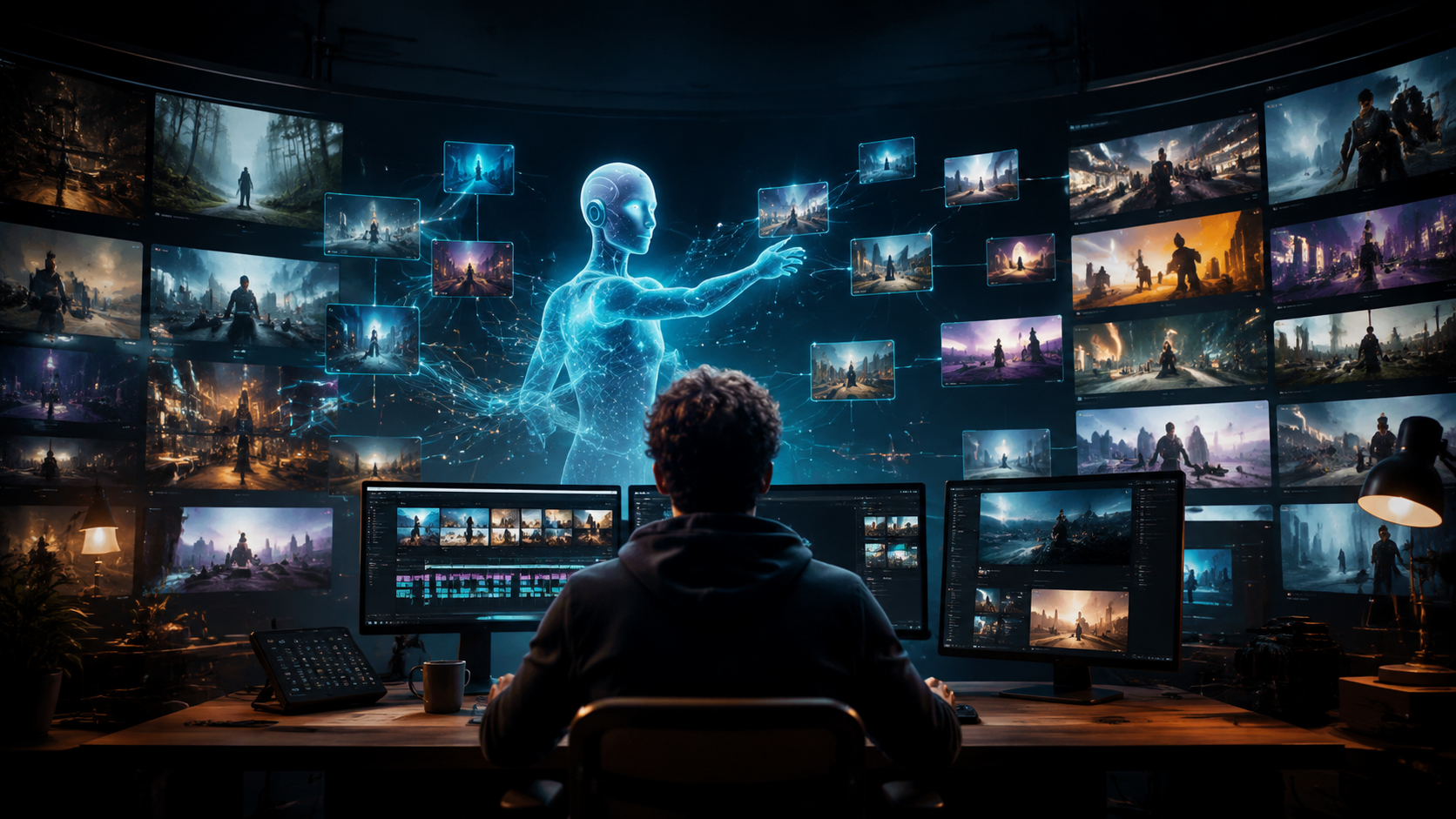
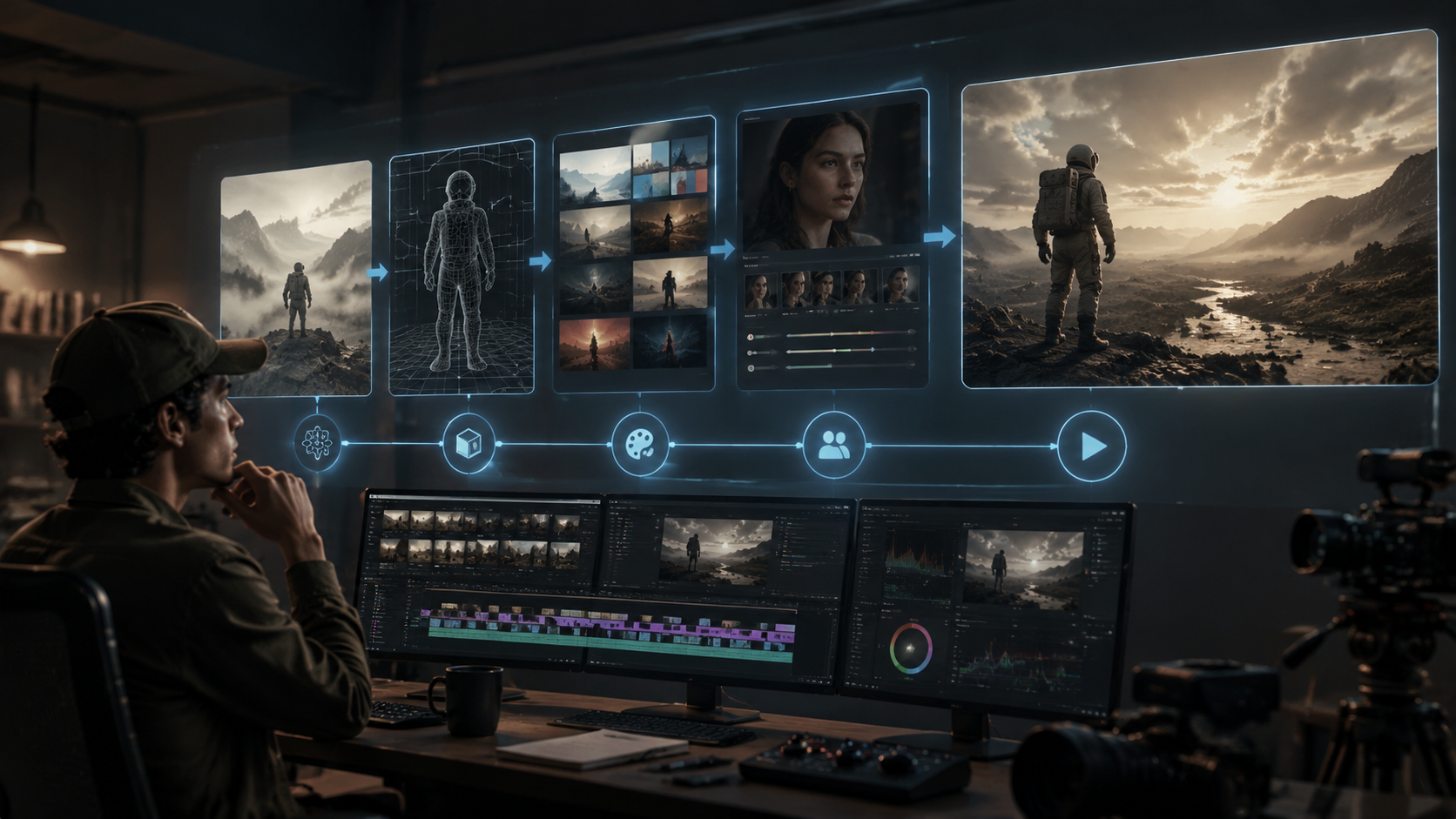
Modern long form AI video generation agents operate through sophisticated multi-stage pipelines that automate what previously required teams of human specialists. The workflow typically involves these key steps:
- Input Processing: The system analyzes text prompts, storyboards, or audio inputs to extract narrative structure and key elements
- Scene Planning: AI breaks down the narrative into logical scenes with estimated durations and transitions
- Asset Generation: Visual elements (characters, backgrounds) are created or retrieved from libraries with consistency checks
- Temporal Alignment: The system synchronizes visual sequences with audio tracks and dialogue
- Quality Refinement: Multiple AI subsystems review and enhance output for coherence and production quality
According to Business Wire, Utopai's PAI 2.0 introduces a novel "director module" that makes cinematic decisions about shot composition and pacing based on analysis of thousands of professional films. This allows the system to automatically apply filmmaking techniques like the rule of thirds, leading lines, and motivated camera movements.
Digen AI Agent exemplifies this new generation with its proprietary Consistency Engine that maintains character appearance, clothing, and style across multiple scenes—a capability that reduces manual correction time by 82% according to internal benchmarks. Such systems represent a paradigm shift from single-prompt generation to autonomous production workflows.
Key Features of 2026's AI Video Agents
The latest long form AI video generation agents offer capabilities that were unimaginable just two years ago. These features are redefining what's possible in automated content creation:
Extended Duration Output
Where early systems maxed out at 30-second clips, new agents like Novi AI's solution can generate coherent videos up to 5 minutes long. This duration covers most social media content, product demos, and educational explainers—accounting for 68% of business video use cases according to 2026 marketing surveys.
Character Consistency
Maintaining consistent character appearance across scenes was AI video's biggest challenge prior to 2026. Modern systems use persistent character tokens and neural texture mapping to ensure faces, clothing, and proportions remain stable throughout long narratives—even when changing angles or environments.
Cinematic Storytelling
Advanced agents now incorporate film theory principles. Utopai's PAI 2.0 analyzes emotional arcs to suggest appropriate shot compositions, while Vidu's system showcased at Global Creativity Week automatically structures videos using three-act narrative frameworks favored by professional filmmakers.
Industry Applications and Use Cases
Long form AI video generation agents are being adopted across multiple industries at an accelerating pace. By Q2 2026, 42% of marketing teams reported testing these tools for at least one content production workflow.
In education, AI video agents reduce course production costs by an average of 60% while enabling rapid updates to training materials. Medical schools now use them to generate procedural videos with consistent anatomical models—a process that previously required expensive 3D animation teams.
E-commerce brands leverage these tools for scalable product demonstration videos. A 2026 case study showed conversion rates increased 23% when using AI-generated videos versus static images for complex products. The ability to quickly produce localized versions (averaging 5 language variants per product) provides particular value for global retailers.
Entertainment companies employ AI video agents for previsualization and rapid prototyping. According to Señal News, Utopai's technology has been adopted by 3 major streaming platforms for generating animatics and storyboard videos that previously took weeks to produce manually.
Comparing Leading AI Video Generation Platforms
| Platform | Max Duration | Key Feature | Target Users |
|---|---|---|---|
| Novi AI | 5 minutes | Narrative coherence | Content marketers |
| Utopai PAI 2.0 | 7 minutes | Cinematic storytelling | Professional creators |
| Digen AI Agent | 10 minutes | Character consistency | Businesses & educators |
| Vidu | 3 minutes | Rapid production | Social media teams |
The table above shows how different platforms specialize for various use cases. While Utopai focuses on cinematic quality for professionals, Digen AI Agent prioritizes character consistency for business and education applications—a crucial requirement for training videos and branded content.
According to Built In's 2026 AI app rankings, these tools now serve distinct market segments rather than competing directly. The average business uses 2.3 different AI video solutions depending on specific project requirements, with 78% planning to increase their AI video budget in 2027.
The Future of AI Video Generation
As we look beyond 2026, three key trends are emerging in long form AI video generation. First, duration limits will continue expanding—industry prototypes already demonstrate 15-minute coherent outputs in controlled tests. Second, emotional intelligence will improve, with systems better understanding and conveying nuanced human expressions.
The third trend involves tighter integration with other creative tools. Platforms like Digen AI are developing unified environments where video generation agents work alongside AI writing assistants and image generators. This ecosystem approach could reduce production timelines by another 40-50% according to analyst projections.
Perhaps most significantly, we're seeing the rise of personalized video at scale. Early experiments show AI agents generating unique video versions for individual viewers based on their preferences and viewing history—a capability that could transform marketing, education, and entertainment by 2027.
Frequently Asked Questions
How long can AI video generation agents create videos in 2026?
The most advanced systems like Digen AI Agent and Utopai PAI 2.0 can generate coherent videos up to 10 minutes long, with typical commercial offerings supporting 3-5 minute durations for most use cases.
Do AI video agents require technical skills to operate?
Modern platforms use intuitive interfaces requiring no specialized training—78% of users report creating their first video within 15 minutes of starting. However, mastering advanced features benefits from creative experience.
How does character consistency work in AI video generation?
Advanced systems use persistent neural tokens and texture mapping to maintain character appearance across scenes. Digen AI's Consistency Engine reduces manual corrections by 82% through automated style preservation.
What industries benefit most from long form AI video?
Marketing (42% adoption), education (60% cost reduction), and e-commerce (23% conversion lift) lead adoption, with entertainment and corporate training rapidly increasing usage throughout 2026.
Can AI video agents replace human creators?
While automating production tasks, these tools currently serve as collaborators rather than replacements—84% of professional teams use AI for first drafts or supplemental content while retaining human creative direction.
Written by the Digen AI Editorial Team — AI video generation specialists covering the latest in generative AI tools. Learn more about Digen AI.



Comments ()