
Invideo vs HeyGen for Creators: 2026 AI Video Comparison
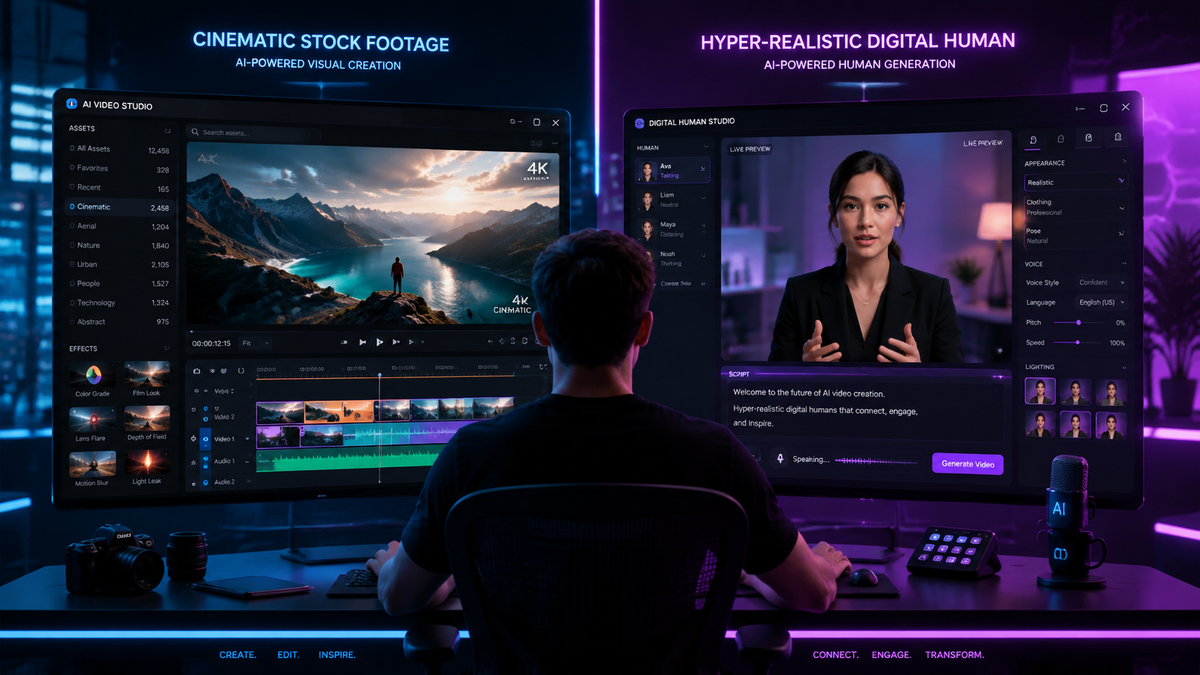
Choosing between Invideo vs HeyGen for creators in 2026 depends entirely on whether your workflow prioritizes automated video editing from text prompts or hyper-realistic AI avatar generation. While Invideo AI has evolved into a comprehensive co-pilot that handles scriptwriting, stock footage assembly, and voiceovers, HeyGen remains the industry leader for high-fidelity digital twins and seamless lip-syncing technology. Both platforms have redefined content creation, but they serve distinct niches in the digital ecosystem.
Invideo is an end-to-end AI video editor designed for turning ideas into fully edited social media content using stock media and automated scripts. HeyGen is a specialized AI video generator focused on creating photorealistic talking avatars and video translations. For creators, Invideo is best for YouTube automation, while HeyGen is the gold standard for personalized messaging and brand spokesperson videos.
- ✓ Invideo AI excels at generating complete videos from simple text prompts, leveraging a massive library of 2026-spec stock assets.
- ✓ HeyGen leads the market in "Talking Head" realism, offering 4K digital twins with emotional nuance.
- ✓ According to Exploding Topics, both platforms are ranked among the 7 Best AI Video Generators of 2026 due to their distinct generative capabilities.
- ✓ Creators should choose Invideo for rapid content scaling and HeyGen for high-authority, face-to-camera presentations.
Understanding the 2026 Landscape: Invideo vs HeyGen for Creators
As we navigate through 2026, the distinction between "video editing" and "video generation" has blurred significantly. Creators no longer spend hours trimming clips manually; instead, they use generative engines to build the foundation of their content. The choice between Invideo vs HeyGen for creators often comes down to the source material. If you have a script and need a visual story built around it, Invideo’s generative engine is your primary tool. If you need a person—whether yourself or a synthetic human—to deliver that script directly to the audience, HeyGen is the superior choice.
Recent data from Techloy indicates that the 12 Best AI Video Generator Tools of 2026 are split between "assembly-based" AI and "pixel-generative" AI. Invideo falls into the former, intelligently curated category, while HeyGen dominates the latter. This distinction is vital for creators who are looking to maintain a specific brand voice. While Invideo offers a broader range of templates and stock integrations, HeyGen focuses on the "human" element, making it indispensable for educators, corporate trainers, and influencers who want to scale their physical presence without being in front of a camera 24/7.
Step-by-Step: How to Choose Your AI Workflow
- Define Your Content Type: Determine if you need a faceless "explainer" video (Invideo) or a spokesperson-led presentation (HeyGen).
- Input Your Prompt: Use Invideo's intuitive chat interface to describe your video theme, or upload your likeness to HeyGen to create a Digital Twin.
- Select Your Aesthetic: Choose from Invideo's 2026 cinematic filters or HeyGen's updated "Instant Avatar" 3.0 presets for maximum realism.
- Refine with AI Commands: Edit your video in real-time by typing commands like "make the music more upbeat" in Invideo or "change the avatar's outfit" in HeyGen.
- Export and Distribute: Render in 4K resolution optimized for platforms like YouTube, TikTok, or LinkedIn.
Core Features Comparison: Invideo AI vs HeyGen
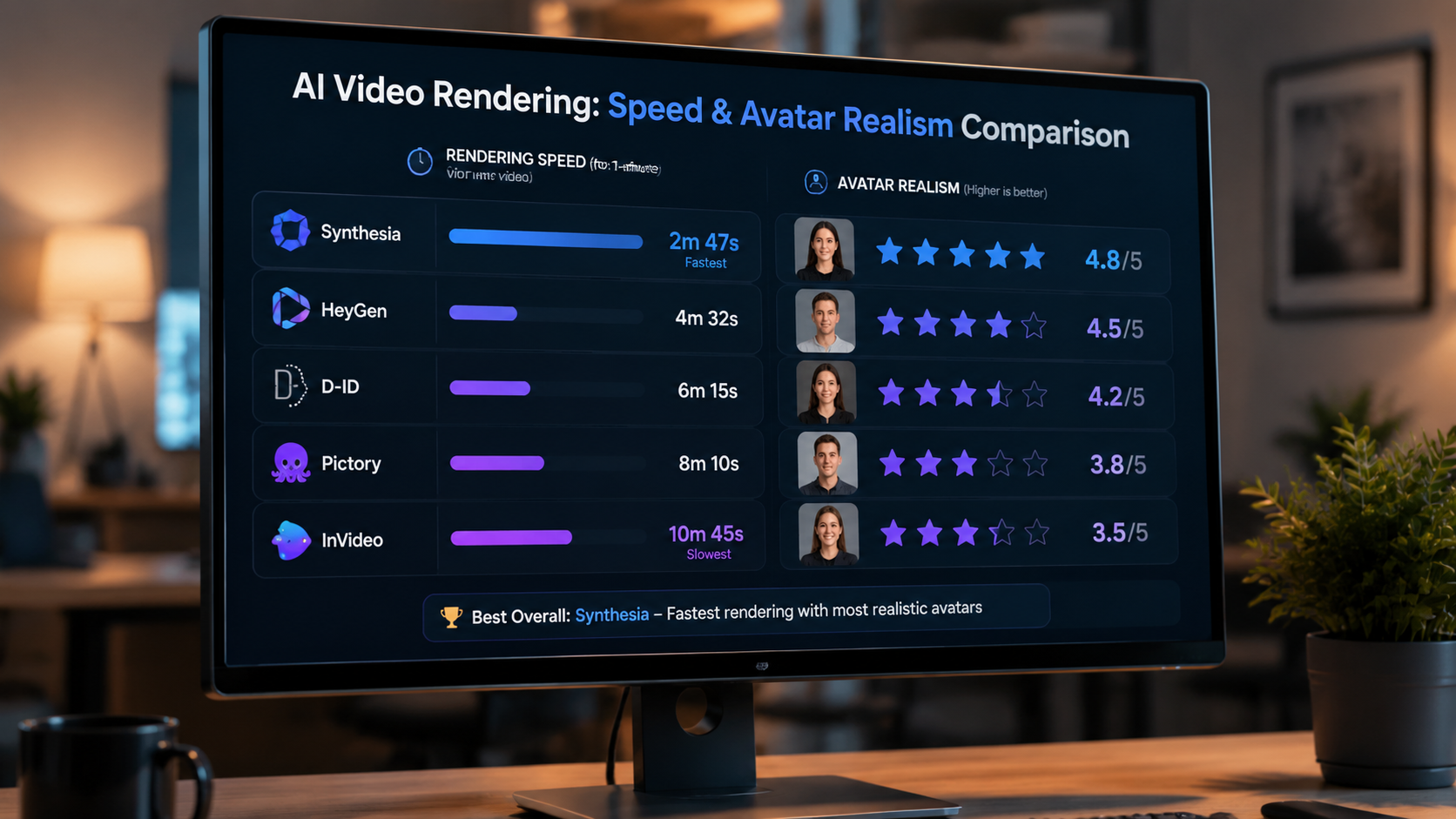
In 2026, Invideo has integrated its "Invideo AI 3.0" model, which allows creators to generate a 10-minute video from a single sentence. This tool is particularly powerful for YouTube creators who need to produce high volumes of content. The AI doesn't just find clips; it understands the context of the script, applies transitions, and even generates a human-like voiceover that matches the tone of the visuals. According to G2 Learning Hub, Invideo remains a top contender for those who require a "one-stop-shop" for video production.
HeyGen, on the other hand, has doubled down on its proprietary generative technology. Their "Photo Avatar" and "Instant Avatar" features have reached a point of "uncanny valley" transcendence where it is nearly impossible to distinguish between a recorded human and an AI avatar. Perfectcorp.com notes that HeyGen is currently one of the 5 Best AI Talking Avatar Generators for AI Talking Heads in 2026, citing its superior lip-syncing accuracy and natural eye movement. For creators, this means the ability to produce "personalized" content at a scale previously thought impossible.
| Feature | Invideo AI (2026) | HeyGen (2026) |
|---|---|---|
| Primary Use Case | Text-to-Video / Faceless Channels | AI Avatars / Talking Heads |
| Stock Media Access | Over 10M+ Premium Assets | Limited / Focus on Backgrounds |
| Avatar Realism | Standard Animated Avatars | Hyper-Realistic Digital Twins |
| Editing Interface | Chat-based AI + Timeline Editor | Canvas-based Avatar Editor |
| Language Support | 50+ Languages | 100+ Languages with Voice Cloning |
| Pricing Model | Subscription (High Value/Volume) | Credit-based (Premium/Professional) |
The Creative Edge: Why "Invideo vs HeyGen for Creators" Matters
When we look at the specific needs of modern creators, the debate of Invideo vs HeyGen for creators centers on the "Creator Economy's" shift toward automation. Invideo’s biggest strength is its ability to eliminate "blank page syndrome." By providing a prompt, the AI generates the script, the media, and the voiceover in seconds. This is a game-changer for creators managing multiple "faceless" YouTube channels or those who need to turn blog posts into social media snippets quickly. The integration of 2026 real-time web search within Invideo allows it to create news-style videos with up-to-the-minute accuracy.
HeyGen’s creative edge lies in its "Video Translate" feature, which has become a staple for global creators in 2026. Imagine recording a video in English and having HeyGen automatically translate it into Spanish, Mandarin, and French, while perfectly adjusting your lip movements and maintaining your original voice. As reported by Techpoint Africa, these types of generative features are what differentiate market leaders from simple editing tools. For creators aiming for global reach, HeyGen provides a level of localization that Invideo’s current stock-based model cannot match.
Invideo’s Strengths for Social Media Managers
For social media managers, Invideo acts as a force multiplier. The 2026 version includes "Brand Kits" that automatically apply your brand's colors, logos, and fonts to every AI-generated clip. This ensures consistency across TikTok, Reels, and Shorts. Furthermore, the ability to edit via text—literally telling the AI to "replace the clip at 0:15 with a shot of a mountain"—makes it accessible to those without formal video editing training.
HeyGen’s Strengths for Educators and Influencers
Educators benefit from HeyGen's ability to create "evergreen" content. Once an avatar is created, a creator can update an entire course by simply changing the text script. There is no need to set up lights, cameras, or microphones again. This "set it and forget it" approach to personal branding is why HeyGen has seen a massive surge in adoption among the professional influencer community in 2026.
Pricing and Accessibility in 2026
Accessibility remains a key factor in the Invideo vs HeyGen for creators discussion. According to The New Indian Express, free AI video generators are becoming more powerful, but the premium tiers of Invideo and HeyGen offer the "commercial rights" and "high-bitrate exports" that professional creators require. Invideo typically offers a more aggressive pricing structure for "unlimited" content generation, making it the preferred choice for high-volume agencies.
HeyGen operates on a credit-based system, which reflects the high computational cost of generating photorealistic human pixels. While it may be more expensive per minute of video produced, the ROI (Return on Investment) is often higher for B2B creators and high-ticket influencers who need the "prestige" look of a high-end production. In 2026, both platforms have introduced "Creator Lite" plans to accommodate the growing number of hobbyist users entering the AI space.
The Role of Stock Media vs. Generative Pixels
A critical technical difference to note is that Invideo primarily uses a massive library of pre-recorded stock footage (curated by AI), whereas HeyGen generates the "person" in the video from scratch using neural networks. This means Invideo videos often feel like high-end documentaries or commercials, while HeyGen videos feel like a direct FaceTime call or a news broadcast. Depending on your audience's expectations, one will feel more "authentic" than the other.
Final Verdict: Choosing the Right Tool for Your 2026 Goals
In the battle of Invideo vs HeyGen for creators, there is no single winner—only the right tool for the job. If your goal is to build a YouTube empire based on trending topics, travel guides, or "top 10" lists, Invideo is your best investment. Its speed, vast media library, and intuitive AI editing commands make it the most efficient path from idea to upload. It is the ultimate tool for the "content strategist."
However, if your brand is built on your face, your voice, and your personal authority, HeyGen is the clear choice. Its ability to clone your likeness and translate your message into dozens of languages allows you to be everywhere at once. In 2026, the creators who are winning are often using both: Invideo for their "faceless" secondary channels and HeyGen for their primary, personality-driven brand. By leveraging the strengths of both, you can maximize your output without sacrificing the human touch that defines great content.
Is Invideo AI better than HeyGen for YouTube?
Invideo AI is generally better for "faceless" YouTube channels or explainer videos because it can generate full scripts and sync them with stock footage automatically. HeyGen is better for YouTube creators who want to use an AI version of themselves as a spokesperson.
Can I clone my own voice in both Invideo and HeyGen?
Yes, by 2026, both platforms offer high-quality voice cloning. However, HeyGen’s voice cloning is more deeply integrated with its avatar lip-syncing technology, providing a more realistic "talking head" experience compared to Invideo’s voiceover-focused cloning.
Which platform is easier for beginners?
Invideo is often considered more beginner-friendly because of its "prompt-to-video" interface. You can literally type "Make a video about 2026 tech trends" and get a finished product. HeyGen requires a bit more setup if you are creating a custom Digital Twin or Instant Avatar.
Does HeyGen support 4K video exports in 2026?
Yes, HeyGen supports 4K exports for its premium tiers, ensuring that AI-generated avatars look crisp on large screens. Invideo also supports 4K, primarily utilizing its high-definition stock media library from providers like Storyblocks and iStock.
Are these AI videos "copyright safe" for monetization?
Both Invideo and HeyGen provide commercial licenses for the content generated on their paid plans. According to 2026 digital rights standards, as long as you have a subscription, you own the rights to the videos you create for platforms like YouTube and TikTok.



Comments ()