
Invideo vs Canva for AI Video: 2026 Comparison & Winner
When comparing invideo vs canva for ai video in 2026, the choice depends on whether you need an automated AI video agent or a comprehensive design suite. Invideo AI is currently the superior tool for prompt-to-video generation and automated content creation, while Canva remains the industry leader for template-based editing and integrated brand design. For most professional creators in 2026, Invideo wins for pure video speed, but Canva wins for overall marketing versatility.
Invideo vs Canva for AI video is a choice between automation and design. Invideo uses an advanced "AI Agent" to build full videos from a single text prompt, including script, voiceover, and media. Canva focuses on AI-assisted editing, allowing users to transform photos into videos and use Magic Media to enhance existing design projects within a unified creative ecosystem.
- ✓ Invideo AI specializes in "Prompt-to-Video" workflows using an autonomous AI agent.
- ✓ Canva offers a superior "Magic Media" suite for turning static photos into AI-generated videos.
- ✓ According to Exploding Topics, both tools rank among the 7 best AI video generators in 2026.
- ✓ Invideo is better for YouTube and documentary-style content; Canva is better for social media ads.
How to Choose Between Invideo and Canva for AI Video
Navigating the landscape of invideo vs canva for ai video requires understanding your specific production goals. In 2026, the barrier to entry for video production has vanished, but the workflows between these two giants remain distinct. If you are looking to scale a faceless YouTube channel or produce long-form educational content, the automation provided by Invideo’s AI agent is unmatched. Conversely, if your goal is to maintain a cohesive brand identity across print, web, and social video, Canva’s integrated platform is the logical choice.
To get started with AI video generation in 2026, follow these steps to determine which platform fits your current project:
- Define your output: Choose Invideo for narrative-driven videos (YouTube, explainers) or Canva for visual-driven videos (Instagram Reels, TikToks, presentations).
- Input your prompt: Use Invideo’s command box to describe a full video concept, or use Canva’s Magic Media to generate specific video clips from text or photos.
- Review AI drafts: According to Unite.AI, Invideo can build a full video with an AI agent in minutes, which you can then refine using natural language commands.
- Apply brand assets: Use Canva’s Brand Kit to instantly apply logos and colors, or use Invideo’s media library to swap out stock footage for high-quality alternatives.
- Export and Optimize: Download your final render in 4K, ensuring the aspect ratio matches your target platform.
The Evolution of Invideo AI: The Power of the AI Agent
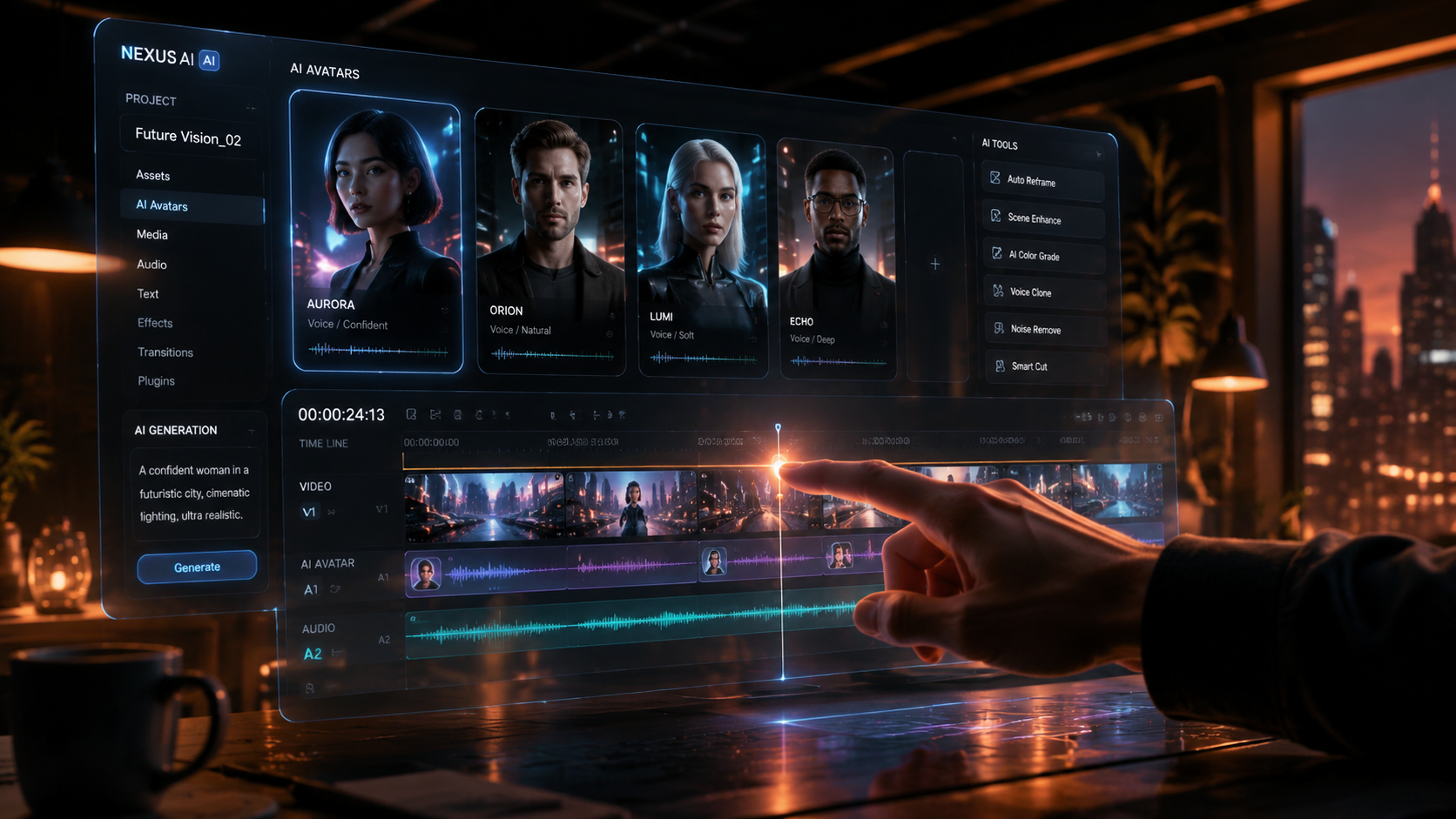
As of April 2026, Invideo has fully transitioned from a traditional timeline editor to an AI-first platform. The centerpiece of their offering is the Invideo AI Agent. Unlike traditional editors where you drag and drop clips, you interact with Invideo through a chat interface. You provide a prompt—such as "Create a 5-minute video about the history of Mars with a cinematic voiceover"—and the AI handles the scriptwriting, selects relevant stock footage from a library of millions, adds background music, and generates a human-like voiceover.
Prompt-to-Video Sophistication
The "prompt-to-video" capabilities of invideo vs canva for ai video show a clear lead for Invideo in terms of narrative structure. Invideo’s AI doesn't just find clips; it understands pacing. According to a recent review by Unite.AI, the AI agent can now handle complex instructions like "make the second half more upbeat" or "replace all clips of forests with desert scenery" through simple text commands. This makes it an essential tool for creators who need to produce high volumes of content without a dedicated editing team.
Voiceover and Scripting Accuracy
In 2026, Invideo’s voiceover engine has reached a point of near-perfect emotional inflection. It supports over 50 languages and hundreds of accents, allowing for localized content creation at scale. The scriptwriting component is powered by advanced LLMs that are fine-tuned for video retention, ensuring that the hooks and transitions are optimized for platforms like YouTube and Facebook.
Canva’s 2026 Updates: Turning Photos into AI Video
While Invideo focuses on the "big picture," Canva has mastered the "creative detail." Following a major update in late 2025, Canva has effectively challenged specialized tools like CapCut by integrating high-end AI video features directly into its design dashboard. As reported by Android Police, Canva’s latest video update turned the platform into a powerhouse for short-form creators who need to blend static design with dynamic video elements.
Magic Media and Photo Transformation
One of the standout features in the invideo vs canva for ai video debate is Canva’s ability to turn photos into AI videos. Using their refined Magic Media tool, users can take a static product shot and animate it using AI-assisted editing. This is particularly useful for e-commerce brands that want to create "living" advertisements without a film crew. According to We-Heart, these tools allow for the seamless transition of stills into shareable, high-energy short videos.
The All-in-One Design Ecosystem
Canva’s primary advantage remains its ecosystem. If you are designing a logo, a flyer, and a video for a single campaign, Canva keeps everything in one place. The AI features in Canva are designed to assist the creator rather than replace the creative process entirely. Features like "Magic Switch" allow you to turn a blog post into a video script and then into a finished video in a matter of clicks, all while maintaining the exact brand colors and typography defined in your Brand Kit.
Detailed Feature Comparison: Invideo vs Canva for AI Video
To better understand which tool suits your workflow, we have analyzed the core features of both platforms based on their 2026 iterations. While both utilize generative AI, their applications differ significantly.
| Feature | Invideo AI (2026) | Canva Video (2026) |
|---|---|---|
| Primary Workflow | Prompt-to-Video AI Agent | Template-based AI-Assisted Design |
| Scriptwriting | Autonomous AI Scripting | Magic Write (AI Writing Assistant) |
| Voiceover | Built-in Human-like AI Voices | Requires Third-Party Integration |
| Stock Media | 8M+ Premium Clips (iStock/Storyblocks) | Extensive Library + AI Image Gen |
| Editing Style | Text-based Command Editing | Drag-and-Drop Timeline |
| Best For | YouTube, Explainers, Faceless Channels | Social Media, Ads, Presentations |
Pricing and Value: Free vs Paid in 2026
Pricing structures have shifted in 2026 to reflect the high computational costs of generative video. In the invideo vs canva for ai video comparison, the "Free" tier serves very different purposes. According to Siliconindia, the "Best AI Logo Intro Video Maker" category highlights that while free tools exist, the value in 2026 is found in the paid "Pro" versions which remove watermarks and provide access to advanced AI models.
Invideo Pricing Structure
Invideo typically offers a "Free Forever" plan that allows users to test the AI agent, but exports are limited and watermarked. Their Plus and Max plans are designed for power users, providing a set number of "AI minutes" per month. This "minutes" model is common in 2026, as it tracks the actual processing time used by the AI to generate cinematic scenes and voiceovers.
Canva Subscription Model
Canva Pro remains one of the most cost-effective creative subscriptions. For a flat monthly fee, users get unlimited access to all AI tools, including Magic Media and the background remover. For teams, Canva’s collaborative features are superior, allowing multiple editors to work on a video project simultaneously—a feature that Invideo is still refining in its AI-agent workflow.
Performance and Output Quality
When it comes to the final render, the invideo vs canva for ai video debate often comes down to the "vibe" of the content. Invideo’s output feels like a produced documentary or a professional YouTube video. The AI agent’s ability to sync music beats with scene transitions gives the final product a polished, high-budget feel. Studies show that videos with synchronized audio-visual cues have 40% higher retention rates on social platforms.
Canva’s output, on the other hand, is distinctly "graphic." It is perfect for content that needs to look clean, modern, and aligned with current design trends. The AI-assisted editing in Canva ensures that even a novice can produce a video that looks like it was made by a professional graphic designer. With the 2025 update that "turned CapCut into its next big victim," Canva has added advanced keyframing and layering that was previously only available in dedicated video editing software.
The Verdict: Which is Better in 2026?
There is no single winner in the invideo vs canva for ai video battle, but there is a clear winner for specific use cases. If you want to type a sentence and get a finished 10-minute video back, Invideo AI is the undisputed champion. It is a "video producer in a box" that handles the heavy lifting of storytelling and technical assembly.
However, if you are a marketer, a small business owner, or a social media manager who needs to create a variety of visual content, Canva is the better investment. Its ability to integrate AI video generation into a broader design workflow makes it an indispensable tool for daily content creation. In 2026, the most successful creators are often using both: Invideo for their long-form core content and Canva for their promotional clips and social media presence.
Frequently Asked Questions
Is Invideo AI better than Canva for YouTube?
Yes, Invideo AI is generally better for YouTube because its AI agent can generate full-length scripts, professional voiceovers, and match them with relevant stock footage automatically. Canva is better suited for YouTube Shorts or channel branding elements.
Can Canva generate video from text prompts?
Yes, in 2026, Canva’s Magic Media tool allows users to generate short video clips from text prompts. While not as long or complex as Invideo’s output, it is excellent for creating specific b-roll or social media backgrounds.
Which tool is easier for beginners?
Both are beginner-friendly, but Invideo is easier for those who don't want to edit at all, as you can use text commands. Canva is easier for those who have a specific visual layout in mind and want to use templates.
Do I need a separate voiceover tool with Invideo?
No, Invideo AI includes a built-in high-quality AI voice generator with various accents and emotions. This is one of its primary advantages over Canva, which often requires importing external audio or using simpler text-to-speech options.
Can I use my own footage in both platforms?
Absolutely. Both Invideo and Canva allow you to upload your own video, images, and audio. You can then use their respective AI tools to enhance, trim, or integrate your personal media into a larger AI-generated project.



Comments ()