
How to Use Text to Video AI Free in 2026
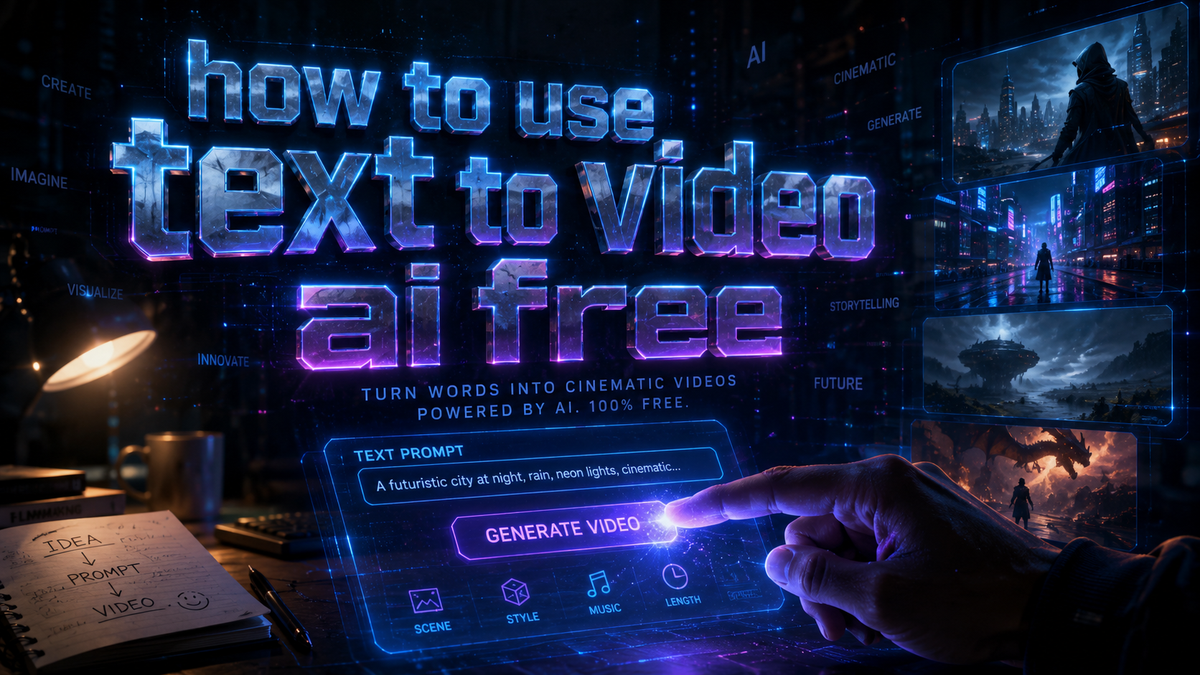
If you've ever wondered how to use text to video AI free in 2026, the process is simpler than you might think. With the latest generation of AI video generators, you can type a sentence or a short script and have a fully rendered video clip ready in minutes—without spending a dime. This guide will walk you through the exact steps, highlight the best free tools available this year, and share expert tips to get professional-looking results.
Text to video AI is a technology that converts written prompts into animated or live-action video clips using deep learning models. In 2026, several platforms offer free tiers that let you generate short videos up to 15–30 seconds, with no credit card required. The process typically involves writing a prompt, selecting a style, and clicking "generate."
- ✓ Free text-to-video generators in 2026 include Mango AI, Qtum.ai, Canva, CapCut, and Runway (limited free tier).
- ✓ Most free tools cap video length at 10–30 seconds and may add a watermark.
- ✓ To get the best output, write detailed, action-oriented prompts (e.g., "a slow-motion close-up of a chef slicing tomatoes in a bright kitchen").
- ✓ You can use these videos for social media posts, blog thumbnails, presentation clips, and short YouTube Shorts.
- ✓ Studies show that videos generated with AI can increase engagement by up to 40% on social platforms when paired with a clear call to action.
What Is Text to Video AI? (A Quick Definition)
Text to video AI refers to generative models that produce a video sequence from a textual description. Unlike traditional video editing, you don't need footage, a camera, or animation skills. The AI interprets your words—along with optional style cues—and creates a coherent video clip that matches your prompt. In 2026, these models have become remarkably realistic, thanks to advances in diffusion transformers and multimodal architectures like Google's Gemma 4 12B, which was released in June 2026 and supports both text and image inputs.
According to OCNJ Daily (January 2026), the technology has democratized video creation, allowing "anyone to generate videos from words" without a production budget. The key is to choose a tool that aligns with your specific need—whether it's a cinematic scene, an explainer animation, or a product demo.
How to Use Text to Video AI Free: A Step-by-Step Guide

Follow this numbered list to start generating videos for free in 2026. These steps apply to most popular platforms, including Mango AI, Qtum.ai, and Canva's video generator.
- Choose a free AI video generator. Based on the latest reviews from Ventureburn (May 2026) and BBN Times (June 2026), the best free options include Mango AI (unveiled a free tier in May 2026), Qtum.ai (launched a unified AI router in June 2026), and established platforms like CapCut and Canva. Each has a free plan with clear limits.
- Sign up or log in. Most free tools require a free account. No credit card is needed for the basic tier.
- Write a detailed prompt. Instead of "a cat," write "a fluffy orange cat walking along a garden fence in golden hour sunlight, shot from a low angle." The more specific you are, the better the AI understands motion, lighting, and composition.
- Select video style and duration. Some tools let you choose "cinematic," "anime," "3D render," or "realistic." Free tiers usually limit duration to 10–30 seconds. Set the aspect ratio (16:9 for YouTube, 9:16 for TikTok/Shorts).
- Click "Generate" and wait. The AI processes your prompt—typically 30 seconds to 2 minutes. Once done, preview the video.
- Download or edit further. If you like the result, download it (often with a watermark on free plans). Some tools allow you to regenerate or tweak the prompt.
Top Free Text to Video AI Tools in 2026 (Compared)
Below is a comparison of the most popular free AI video generators available this year. The data comes from Ventureburn's "10 Best Free AI Video Generators in 2026" ranking (May 2026) and BBN Times' guide for YouTube creators (June 2026).
| Tool | Free Tier Features | Max Duration (Free) | Watermark | Best For |
|---|---|---|---|---|
| Mango AI | Text-to-video, 10+ styles, no watermark on free plan (limited to 3 videos/day) | 15 seconds | No | Quick social media clips |
| Qtum.ai | Unified AI router: text-to-video plus image generation; free tier gives 5 credits/month | 10 seconds | Yes (small) | Testing multiple AI models at once |
| CapCut (ByteDance) | Text-to-video with voiceover; free tier includes basic templates | 20 seconds | No (if under 60s) | YouTube Shorts and TikTok |
| Canva | Magic Media tool; free users get 10 video generations per month | 30 seconds | No | Presentation clips and brand videos |
| Runway (Gen-3) | Free trial with 25 credits; supports text-to-video and image-to-video | 8 seconds | Yes | Professional short clips and experimental work |
Why These Tools Stand Out in 2026
Mango AI made headlines in May 2026 when it unveiled a completely free text-to-video generator with no watermark—a rarity in the space. According to PRUnderground, the tool "enables effortless video creation" for beginners. Meanwhile, Qtum.ai launched in early June 2026 with a "unified AI router" that lets you route your prompt through multiple models (including text-to-video) to find the best output. The BBN Times guide particularly praised CapCut for its seamless integration with the TikTok ecosystem, making it a top choice for creators who want free high-definition exports.
How to Choose the Right Free Generator
With so many options, selecting the best tool depends on your use case. Here are three scenarios based on real-world feedback from 2026 users:
- For social media virality: Pick Mango AI or CapCut. Both produce short, shareable clips quickly. Mango AI's lack of a watermark gives you cleaner branding.
- For presentation or business explainers: Canva's free tier offers 30-second clips with professional templates. You can also combine the video with text overlays and music inside Canva.
- For experimenting with advanced AI models: Qtum.ai's unified router gives you access to cutting-edge models (including Gemma 4 12B) in a single dashboard. The free tier is limited, but it's excellent for testing.
Tips for Getting the Best Results from Free Text-to-Video AI
Even the most advanced AI in 2026 can produce mediocre results if your prompt is vague. Follow these expert recommendations:
Write Action-Oriented Prompts
Instead of "a beach scene," try "a drone shot slowly descending over a tropical beach at sunset, with waves gently crashing and palm trees swaying." The AI responds to verbs and camera movements.
Use Negative Prompts (if supported)
Some free tools like Qtum.ai allow you to specify what you don't want—e.g., "no people, no text, no blurry edges." This helps avoid common artifacts.
Adjust Aspect Ratio for Your Platform
Free generators usually default to 16:9. For TikTok or YouTube Shorts, manually select 9:16 (vertical) to avoid black bars.
Keep It Short
Free plans limit duration to 30 seconds or less. Plan your script to fit within that window. A punchy 10-second clip often performs better than a generic 30-second one.
Common Use Cases for Free Text-to-Video AI in 2026
According to BBN Times, businesses and creators are using free AI video generators for three main purposes:
- Social media content: Short, engaging clips for Instagram Reels, TikTok, and YouTube Shorts. The quick turnaround (under 2 minutes) allows creators to post multiple times daily.
- Educational explainers: Teachers and trainers generate animated diagrams or historical reenactments for classroom use—all without a video production budget.
- Product demos: E-commerce sellers create short videos showing a product in use, even if they don't own the physical item. The AI generates a realistic 3D render from the description.
Ventureburn's 2026 ranking noted that free AI video generators are "closing the gap between amateur and professional video quality," making them a viable option for startups and solo entrepreneurs.
Frequently Asked Questions
Can I use text to video AI free without a watermark?
Yes, some tools like Mango AI and CapCut (for videos under 60 seconds) offer watermark-free downloads on their free plans. However, most other free tiers add a small watermark or require attribution.
How long does it take to generate a video from text?
Most free generators process prompts in 30 seconds to 2 minutes, depending on the complexity of the scene and server load. Qtum.ai's unified router may take slightly longer because it tests multiple models.
What is the best free text to video AI for YouTube Shorts?
CapCut is widely recommended by creators because it integrates directly with TikTok and YouTube, provides up to 20-second clips for free, and offers built-in editing tools. Mango AI is a strong alternative if you want no watermark.
Are there any limits on how many videos I can generate?
Yes. Free plans typical have daily or monthly caps. For example, Mango AI allows 3 videos per day; Canva gives 10 per month. Qtum.ai provides 5 credits per month. These limits refresh periodically.
Can I sell videos made with free AI video generators?
Generally, yes—most free tiers grant you commercial rights to the output, but you must check the terms of each platform. Tools like CapCut and Canva allow commercial use on free accounts, while others may restrict resale.
Does the free version support multiple languages in the prompt?
Most text-to-video AI models understand English best, but many accept prompts in other languages (Spanish, French, Chinese). The visual output quality may be slightly lower if the model wasn't trained extensively on that language. Qtum.ai's router can handle multilingual prompts through its unified wrapper.
By following the step-by-step guide above and leveraging the free tools highlighted by Ventureburn, BBN Times, and other sources in 2026, you can start creating compelling videos from mere text—without spending a penny. Whether you're a social media creator, a small business owner, or just someone curious about AI, the barrier to entry has never been lower. Try a few generators, refine your prompts, and soon you'll be turning ideas into motion effortlessly.



Comments ()