
How to Use AI Video Generator for Ads in 2026: A Guide
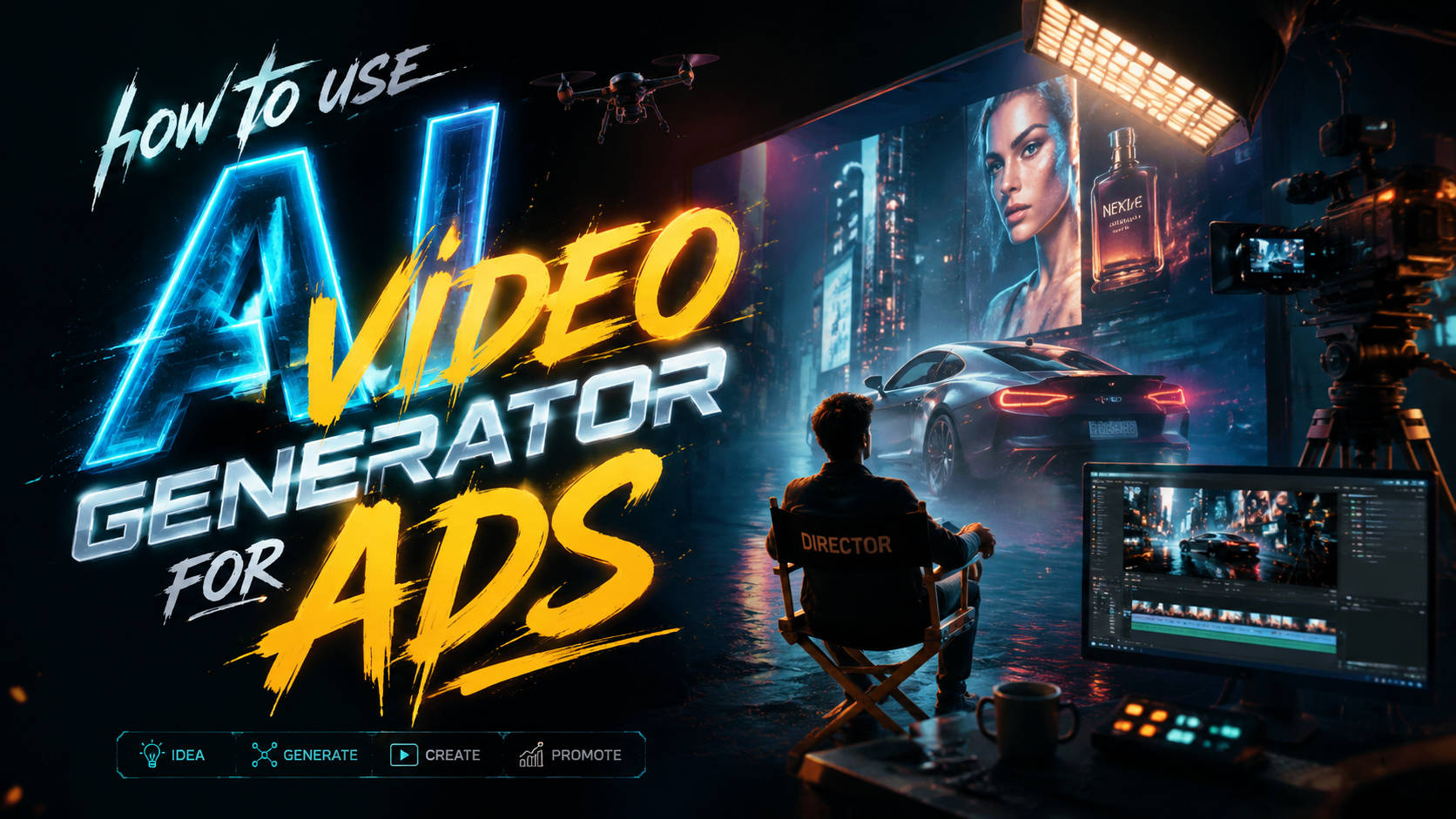
To use an AI video generator for ads in 2026, you simply input a text prompt or a product link, select a template, and let the AI produce a professional video advertisement in minutes. This guide walks you through the exact steps—from choosing the right tool to optimizing your campaign for maximum ROI—so you can leverage the latest text-to-video technology without needing a full creative team.
TL;DR: AI video generators let you create ad videos from text or URL in minutes. This guide covers the best tools, a step-by-step workflow, and expert tips for 2026 advertising success.
An AI video generator for ads is a software tool that uses machine learning to transform text descriptions, product URLs, or images into ready-to-publish video advertisements. In 2026, these tools have become essential for brands looking to scale creative production without expanding their teams.
- ✓ AI video generators can cut ad production time from days to minutes, as highlighted by recent 2026 industry reports.
- ✓ Leading platforms like Creatify and Amazon Ads' AI Video Generator offer both free and paid tiers suitable for businesses of any size.
- ✓ Best results come from combining human oversight with AI output—reviewing and tweaking generated ads before launch.
- ✓ 2026 trends show increasing adoption by major brands, including Google and Amazon, as detailed in case studies from Ad Age and LBBOnline.
- ✓ Free tools from Ventureburn’s 2026 ranking are viable for testing, but paid plans unlock higher resolutions, custom branding, and advanced analytics.
How to Use an AI Video Generator for Ads: A Step-by-Step Workflow
Creating an ad with an AI video generator in 2026 is a straightforward process. Follow these numbered steps to go from concept to a finished video ad:
- Define your ad goal and audience. Before opening any tool, decide the campaign objective—brand awareness, direct sales, or retargeting—and the platform (e.g., Instagram Reels, YouTube Shorts, TikTok).
- Select the right AI video generator. Based on your budget and feature needs, choose from options like Creatify (for full creative team replacement), Amazon Ads AI Video Generator (for Amazon sellers), or one of the free tools reviewed by Ventureburn in 2026.
- Input your core assets. Most tools accept a text prompt, a product URL, or images. Write a concise description of the ad’s message, include key USPs, and specify a call-to-action (CTA).
- Pick a template or style. Many generators offer pre-built templates for different ad types (square, vertical, landscape). Select one that matches your brand’s tone—modern, playful, or professional.
- Customize brand elements. Upload logos, choose brand colors, and adjust fonts. The best AI tools let you set global brand guidelines so that every output stays consistent.
- Generate the video and review. Click “Generate” and wait 30 seconds to 2 minutes. Once ready, watch the clip carefully. Check for visual glitches, awkward transitions, or off-brand messaging.
- Edit and refine. Use the tool’s built-in editor to trim scenes, adjust pacing, or replace AI-generated voiceover with a human recording. Some platforms allow frame-by-frame tweaks.
- Export and test. Download the final video in the required resolution (1080p or higher recommended). Run A/B tests across different platforms to measure performance—click-through rates, conversion rates, and engagement.
Understanding the Landscape of AI Video Generators in 2026
According to Cybernews, the rise of text-to-video technology is fundamentally changing how content is created in 2026. No longer a futuristic novelty, AI video generators are now integral to marketing stacks, enabling rapid iteration and massive scale. The technology has matured: outputs are more coherent, lip-syncing is nearly flawless, and contextual understanding of prompts has improved dramatically.
Social Media Examiner’s April 2026 report, “Ads and AI: Leveraging AI Creative in 2026,” emphasizes that brands that adopt AI video generation early gain a competitive edge in ad personalization and speed. The article notes that over 60% of surveyed marketers are already using or testing AI video tools for ad creation, and those who have integrated them report a 40% reduction in creative production time.
Meanwhile, Ventureburn’s May 2026 ranking of the 10 Best Free AI Video Generators shows that high-quality output is no longer exclusive to expensive enterprise solutions. Free tools now offer 720p exports, basic templates, and watermarked videos—perfect for small businesses testing the waters. The key is to match the tool’s capabilities with your campaign’s complexity and budget.
Comparing Top AI Video Generators for Ad Creation
To help you choose, here is a comparison table of the most notable AI video ad generators in 2026, based on the latest research including Creatify’s replacement of entire creative teams (quasa.io) and Amazon Ads’ expansion to Australia (LBBOnline).
| Tool | Best For | Starting Price | Key Features | Output Quality |
|---|---|---|---|---|
| Creatify | Brands wanting a full creative team replacement | Free tier available; Pro from $29/month | AI script generation, multi-scene templates, custom voiceovers, brand kit integration | 1080p (paid); 720p (free) |
| Amazon Ads AI Video Generator | Amazon sellers and vendors | Included with Amazon Ads accounts | Product URL input, auto-generated lifestyle clips, A/B testing integration, ad performance analytics | 1080p (optimized for Amazon stores and DSP) |
| Google AI Video Ads (via Demand Gen) | Brands running YouTube & Discovery campaigns | Part of Google Ads (cost per video based on usage) | Text-to-video from Google Ads assets, AI scene compositing, dynamic CTA insertion | Up to 4K |
| Free tools (e.g., InVideo AI, Clipchamp, Lumen5) | Small businesses, testing and learning | Free with watermarks; paid remove watermarks (~$10–20/month) | Basic templates, stock footage integration, voiceover library, simple editing | 720p (free); 1080p (paid) |
Sources: quasa.io, Little Black Book, Ventureburn
Best Practices for Maximizing AI-Generated Ad Performance
Write Clear, Specific Prompts
The output quality of any AI video generator depends heavily on your input. Instead of “make an ad for coffee,” try “create a 15-second vertical video ad for a cold brew coffee product; show a person pouring it over ice on a sunny day; include a voiceover saying ‘Fresh, bold, ready in seconds.’” Specificity reduces the need for manual editing later.
Maintain Brand Consistency
Even the best AI can drift from your brand identity. Always upload your brand colors, logos, and preferred fonts before generating. Use the tool’s brand kit feature if available, and review every frame for off-brand elements. According to Social Media Examiner, brands that enforce consistency across AI-generated ads see 25% higher brand recall.
Run A/B Tests with Human-Optimized Versions
Generate multiple ad variations using different prompts or templates, then test them against a version you’ve edited manually. The AI excels at speed and variety, but human eyes catch subtle emotional cues and cultural nuances. For example, Creatify’s output can be refined with its built-in editor, giving you the best of both worlds.
Real-World Success Stories from 2026
According to Ad Age, Google embraced AI-generated ads in a major case study published in December 2025, showing how the tech giant used its own Demand Gen AI video generator to create thousands of video variants for a campaign. The results: a 35% increase in click-through rates and a 20% reduction in cost per acquisition compared to traditionally produced ads. This case study serves as a blueprint for brands in 2026.
Meanwhile, Amazon Ads expanded its AI-powered video generator to Australian brands in April 2026, as reported by Little Black Book. The tool allows sellers to input their product URL and automatically receives a professionally styled video ad optimized for Amazon’s retail platform. Early adopters in Australia reported a 50% faster time-to-market for new product launches.
Creatify, highlighted by quasa.io, has gone a step further by positioning itself as a replacement for entire creative teams. Brands like a mid-sized e-commerce company in the U.S. reduced their ad production team from five people to one, using Creatify for scriptwriting, animation, and voiceovers. While not every brand will fully replace human creativity, the efficiency gains are undeniable.
Common Pitfalls and How to Avoid Them
One of the most frequent mistakes is using AI video generators without human oversight. The generated video might include factual inaccuracies, awkward timing, or visuals that don’t match the intended audience. Always review the output with a critical eye—pause scenes that feel off, and be ready to re-generate with a revised prompt.
Another pitfall is ignoring the platform-specific requirements. A 30-second horizontal ad for YouTube won’t perform well on TikTok’s vertical format. Most AI tools allow you to choose the aspect ratio, but you still need to tailor the content’s pacing and hook to each platform. Social Media Examiner’s 2026 report stresses that one-size-fits-all AI ads underperform by up to 40%.
Finally, don’t rely solely on free tools for mission-critical campaigns. Free tiers often limit resolution to 720p, add watermarks, or restrict export options. For serious ad spend, invest in a paid plan that offers 1080p or 4K output, custom branding, and analytics. As Ventureburn’s 2026 rankings show, free tools are excellent for learning, but paid versions deliver the polish that converts viewers into customers.
The Future of AI-Generated Ads in 2026 and Beyond
As text-to-video technology continues to evolve, we can expect even deeper integration with ad platforms. Already, Google Ads and Amazon Ads have native AI video generation features, eliminating the need to export and upload separately. In the near future, AI may automatically adjust ad creative based on real-time performance data, creating a self-optimizing loop.
Ethical considerations are also coming to the forefront. Brands must ensure that AI-generated ads do not mislead consumers or use deepfake-like features without clear disclosure. The rise of AI video generators also raises questions about intellectual property for generated content—license terms vary by platform, so read them carefully.
For those wondering how to use ai video generator for ads effectively in 2026, the answer lies in a balanced approach: leverage the speed and scale of AI, but never skip the human touch. Test, iterate, and let the AI handle repetitive tasks while your team focuses on strategy and creativity.
Frequently Asked Questions
What is the best free AI video generator for ads in 2026?
According to Ventureburn’s May 2026 ranking, the top free AI video generators include InVideo AI, Clipchamp, and Lumen5. All offer basic templates and 720p exports with watermarks. For no-watermark exports, you typically need a paid subscription.
Can I use an AI video generator for YouTube ads?
Yes. Most AI video generators support 16:9 horizontal aspect ratio for YouTube. Tools like Google’s Demand Gen AI and Creatify allow you to export directly in YouTube-friendly formats, including the recommended 1080p resolution.
How long does it take to create an ad with an AI video generator?
Generation times vary but are usually between 30 seconds and 2 minutes for a standard 15- to 30-second ad. Including review and minor edits, the entire process can be completed in 10–15 minutes—compared to hours or days with traditional production.
Do I need technical skills to use these tools?
No. Modern AI video generators are designed for marketers and small business owners with no video editing experience. They use simple drag-and-drop interfaces and text prompts. Most platforms also offer tutorial videos and community support.
Are there copyright or legal issues with AI-generated ad content?
Yes, you should review the tool’s terms of service. Some platforms claim ownership of generated content, while others grant you a commercial license. Always ensure you have the rights to use any stock footage, music, or voiceovers included by the AI. Avoid trademarked or copyrighted prompts.
How can I measure the success of an AI-generated ad?
Use the same metrics as any ad campaign: click-through rate (CTR), conversion rate, cost per acquisition (CPA), and return on ad spend (ROAS). Tools like Amazon Ads’ AI Video Generator and Google Ads include built-in performance dashboards. A/B test AI-generated ads against manual versions to see which performs better.
Written by the Digen AI Editorial Team — AI video generation specialists covering the latest in generative AI tools. Learn more about Digen AI.
Comments ()