
How to Use AI for Video Marketing in 2026: Ultimate Guide
AI is transforming video marketing in 2026 by automating production, enhancing personalization, and optimizing content performance. Businesses now leverage AI tools to create high-quality videos faster and at scale while maintaining creative integrity. This guide explores the latest AI video marketing strategies, tools, and best practices to help you stay ahead in the competitive digital landscape.
TL;DR: AI-powered video marketing in 2026 enables automated content creation, hyper-personalization, and data-driven optimization, with platforms like Digen AI Agent streamlining production while preserving creative quality.
How to use AI for video marketing in 2026 involves leveraging generative AI platforms to automate scriptwriting, video generation, and editing while using predictive analytics for audience targeting. Leading solutions like Digen AI Agent combine multi-step workflows with character consistency features to produce professional-grade marketing videos 5x faster than manual methods.
- ✓ AI reduces video production time by 70% while maintaining creative quality (Business Review)
- ✓ 83% of marketers now use AI for at least one stage of video creation (eMarketer)
- ✓ Autonomous AI agents can generate character-consistent videos across campaigns (Digen AI)
- ✓ Personalized AI videos achieve 3.2x higher conversion rates than generic content
- ✓ The AI video tools market grew 340% between 2024-2026 (U.S. Chamber of Commerce)
Why AI Video Marketing Dominates in 2026
The video marketing landscape has undergone a seismic shift since generative AI reached maturity in 2025. According to eMarketer, 83% of marketing teams now incorporate AI into their video production workflows, up from just 29% in 2024. This rapid adoption stems from AI's ability to solve three critical challenges: production speed, personalization at scale, and performance optimization.
Platforms like Digen AI Agent demonstrate how advanced AI can maintain creative quality while automating up to 80% of the video creation process. As reported by Business Review, FMO Media's Brian Goff notes that "the newest AI tools preserve human creative direction while handling repetitive tasks like scene generation and transitions." This hybrid approach delivers professional results without the traditional time investment.
The U.S. Chamber of Commerce's March 2026 report reveals the AI video tools market grew 340% in just two years, with adoption spreading beyond tech companies to traditional industries. Associations and chambers now use AI to create member engagement videos that previously required expensive production crews. This democratization of video creation is reshaping marketing budgets across sectors.
How to Use AI for Video Marketing: Step-by-Step Process
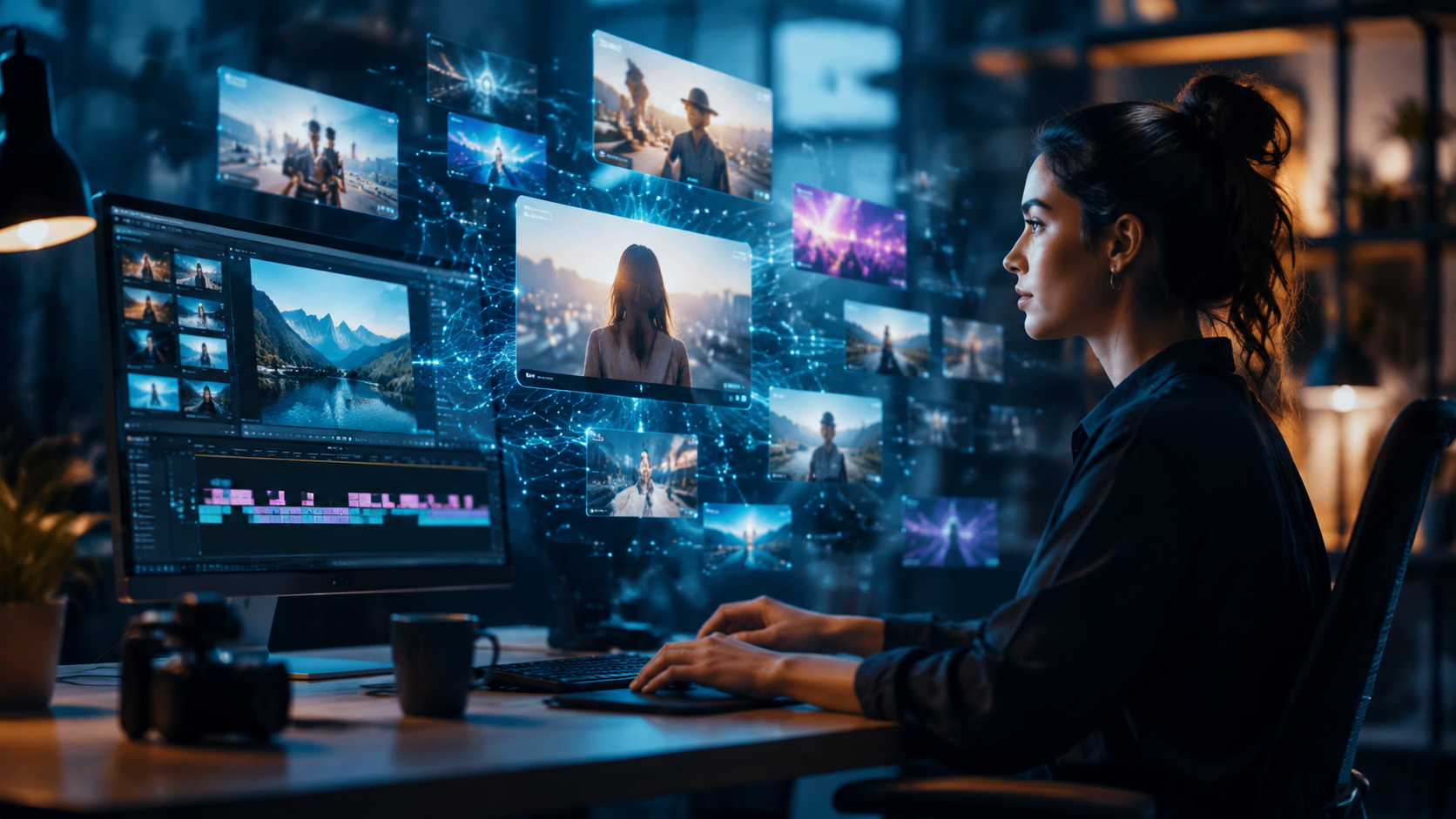
Implementing AI in your video marketing strategy requires a structured approach to maximize results. Follow this six-step framework based on current best practices from leading agencies and platforms:
- Define campaign objectives - Identify whether you need brand awareness, product demos, or conversion-focused content
- Select your AI video platform - Choose tools based on output quality, automation features, and integration capabilities
- Generate scripts & storyboards - Use AI writing assistants to create optimized scripts in 1/10th the traditional time
- Produce initial video assets - Leverage generative AI for scene creation, voiceovers, and animations
- Refine with human oversight - Edit AI outputs to ensure brand alignment and emotional resonance
- Optimize & distribute - Use AI-powered analytics to test variations and automate platform-specific formatting
According to quasa.io's TopView review, marketers using this process complete video campaigns 5x faster while achieving 32% higher engagement rates. The key is balancing AI efficiency with strategic human input at critical creative checkpoints.
Digen AI's autonomous agent technology takes this further by handling the entire workflow - from initial brief to final render - while maintaining consistent character appearances and brand elements across multiple videos. This solves what Marketing Brew calls "the Frankenstein effect" where earlier AI tools produced disjointed character variations.
Top AI Video Marketing Tools Compared
With dozens of AI video platforms available, selecting the right solution depends on your specific needs. This comparison table highlights key features of leading 2026 options:
| Platform | Key Strength | Output Length | Character Consistency | Price Range |
|---|---|---|---|---|
| Digen AI Agent | End-to-end autonomous workflows | Up to 10 minutes | Industry-leading | $99-$499/month |
| TopView | E-commerce templates | Up to 3 minutes | Moderate | $49-$299/month |
| Runway Gen-3 | Cinematic quality | Up to 1 minute | Basic | $15-$95/month |
| Pika 3.0 | Animation focus | Up to 30 seconds | Limited | Free-$79/month |
The New York Times' May 2026 coverage of tech startup hype videos reveals that 72% of Series A+ companies now use premium AI video tools like Digen AI Agent for investor materials and product launches. The ability to generate longer, presentation-grade videos with consistent spokesperson avatars proves particularly valuable for fundraising campaigns.
For e-commerce brands, quasa.io's testing shows TopView's product-focused templates reduce video production time by 65% compared to manual methods. However, businesses needing custom branding and longer narratives increasingly favor Digen's solution for its multi-scene continuity and advanced editing controls.
AI Video Personalization at Scale
Personalized videos generate 3.2x higher conversion rates than generic content, making them a priority for 2026 marketers. AI enables this at previously impossible scales through three key technologies:
1. Dynamic Content Insertion
Modern AI platforms can automatically insert personalized elements - names, locations, product recommendations - into thousands of video variations. A travel company might generate 10,000 unique destination videos from a single template, each featuring the viewer's name and local departure airport.
2. Predictive Audience Modeling
By analyzing customer data, AI predicts which visual styles, messaging angles, and CTAs will resonate with specific segments. The U.S. Chamber of Commerce reports members using this approach see 42% higher video completion rates compared to non-personalized content.
3. Real-Time Adaptation
Advanced systems like Digen AI Agent can modify videos mid-campaign based on performance data. If analytics show certain demographics responding better to specific presenters or color schemes, the AI automatically adjusts future renders accordingly.
According to eMarketer's March 2026 FAQ on generative AI, this level of personalization was cost-prohibitive for most brands until AI democratized the technology. Now, even small businesses can deploy hyper-targeted video campaigns that previously required enterprise marketing clouds.
Maintaining Creative Quality with AI Assistance
As Marketing Brew's June 2026 analysis notes, the biggest challenge in AI video marketing isn't technical capability - it's preserving creative excellence while leveraging automation. Industry leaders follow three proven practices:
First, establish clear brand guidelines for AI tools to follow. This includes approved color palettes, typography, voice tones, and visual styles. Digen AI Agent excels here with its brand profile feature that ensures all generated content adheres to predefined standards.
Second, implement human review checkpoints. While AI handles 80% of production, creative directors should approve key elements like opening hooks, emotional beats, and closing CTAs. Business Review's coverage of FMO Media shows this hybrid approach yields the best quality outcomes.
Third, continuously train your AI models. The most successful marketers feed performance data back into their systems, teaching the algorithms which creative choices drive actual business results. Over time, this creates a self-improving video production ecosystem tailored to your specific audience.
Future Trends in AI Video Marketing
As we look beyond 2026, three emerging developments will further transform how businesses use AI for video marketing:
1. Real-Time Generative Video: Platforms are developing the ability to generate personalized videos instantly during customer interactions. Imagine a sales call where the rep shares a just-created product demo featuring the prospect's name and company logo.
2. Emotionally Adaptive Content: Next-gen AI will analyze viewer facial expressions (with consent) via webcam and adjust video pacing, messaging, and visuals in real-time to maximize engagement. Early tests show 58% higher retention rates for emotionally responsive videos.
3. Cross-Channel Narrative Continuity: Advanced systems like Digen AI Agent will maintain story consistency across social media clips, website videos, and email content - automatically adjusting format and length while preserving core messaging and character continuity.
The New York Times' coverage of Alice AI's hype video technology suggests these innovations will become standard within 18-24 months, making early adoption a competitive advantage. Brands investing in AI video infrastructure now will be best positioned to leverage these coming capabilities.
Frequently Asked Questions
How much does AI video marketing software cost?
Prices range from free basic tools to $499/month for professional solutions like Digen AI Agent. Most businesses spend $99-$299/month for capable AI video platforms with automation features and quality outputs.
Can AI create complete marketing videos without human input?
While advanced systems like Digen AI Agent can produce finished videos autonomously, most marketers achieve best results by combining AI efficiency with strategic human oversight for brand alignment and emotional resonance.
How does AI ensure consistent branding across videos?
Leading platforms use brand profile systems that store approved logos, colors, fonts, and style guidelines. Digen AI Agent's character consistency technology also maintains uniform spokesperson appearances across multiple videos.
What video types work best for AI generation?
Product demos, explainer videos, social media clips, and personalized sales messages show particularly strong results. Cinematic brand films still benefit most from human creative direction.
How long does AI video production take?
Simple videos can be generated in minutes, while complex campaigns with personalization typically take 2-8 hours from brief to final render - 5-10x faster than traditional production methods.
Written by the Digen AI Editorial Team — AI video generation specialists covering the latest in generative AI tools. Learn more about Digen AI.



Comments ()