
Remove Background from AI Video 2026: Step-by-Step Guide
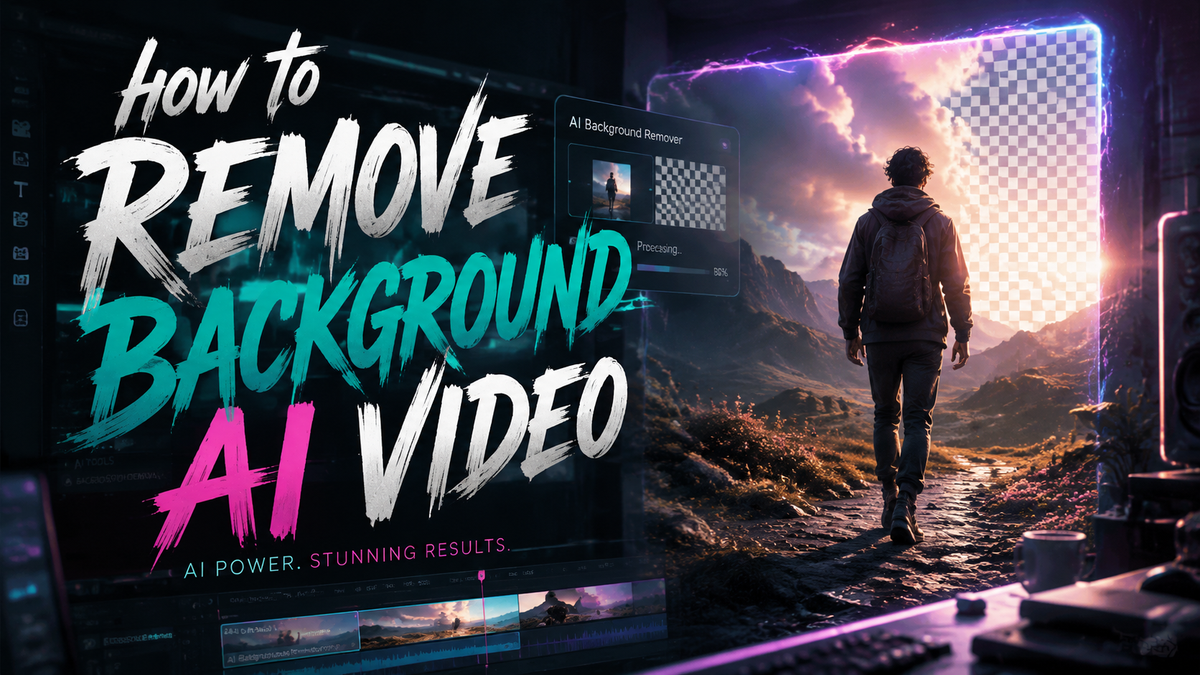
Removing the background from an AI video in 2026 is simpler than ever—no green screen, no complex rotoscoping. You can use dedicated AI tools like Edimakor V5.0.0, Beeble’s Background Remover, or Vmake to automatically separate your subject from the backdrop in minutes. This step‑by‑step guide walks you through how to remove background ai video using the latest software and best practices.
How to remove background ai video is a process that leverages machine learning models to detect the foreground subject and delete the surrounding background frame by frame. As of 2026, leading tools like Edimakor V5.0.0 (launched June 3, 2026), Beeble (AI roto service launched April 2, 2026), and Vmake (reviewed May 31, 2026) achieve this with near‑perfect accuracy, often without needing a chroma key or manual masking.
- ✓ 2026 AI video background removal tools eliminate the need for green screens entirely.
- ✓ Edimakor V5.0.0 and Beeble offer real‑time roto‑masking with physics‑aware object removal.
- ✓ Most tools work with any video length and resolution, processing 30+ frames per second.
- ✓ Automatic background removal can save up to 80% of editing time compared to manual rotoscoping.
- ✓ Always use high‑contrast subjects and consistent lighting to achieve the cleanest results.
Why Background Removal Without Green Screens Is the Future
According to Geek Vibes Nation (June 5, 2026), the future of video production is “background removal without green screens.” This shift is driven by generative AI models that understand object boundaries, lighting, and physics. Unlike traditional chroma keying, which requires a uniform color background and careful lighting, AI‑powered tools can automatically isolate people, animals, and even transparent objects from any environment. The result is faster post‑production, lower studio costs, and the ability to shoot in real‑world locations while maintaining creative flexibility.
A key breakthrough came in April 2026, when Tech Xplore reported that a new AI video tool can “remove objects without breaking the laws of physics.” This means that when you delete a background element, the tool intelligently fills the empty area with plausible textures and motion dynamics—avoiding the unnatural “holes” or “jitter” that earlier software produced. As a result, 2026’s background removal tools deliver professional‑grade output that previously required hours of manual keyframing.
For content creators, vloggers, and marketers, this technology democratizes high‑quality video editing. Whether you’re making product demos, talking‑head videos, or training materials, how to remove background ai video is now a skill any editor can learn in minutes.
Top AI Tools for Removing Backgrounds in 2026
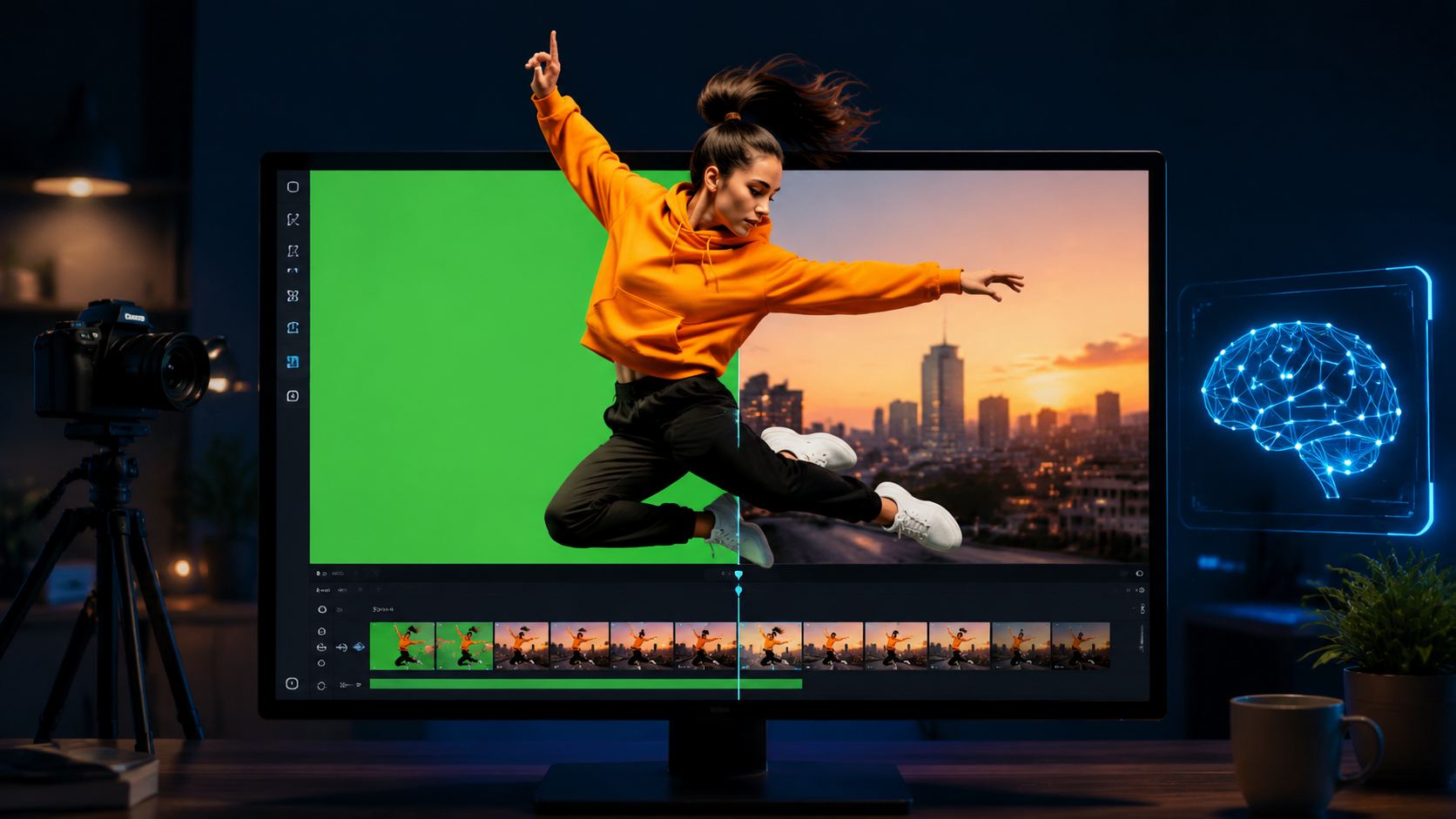
The market now offers several powerful options. Based on the latest releases and reviews, here are the most notable tools for background removal in 2026.
| Tool | Key Feature | Release / Update Date | Best For |
|---|---|---|---|
| Edimakor V5.0.0 | AI Ads feature, reference‑to‑video background removal | June 3, 2026 | Social media ads and dynamic backgrounds |
| Beeble Background Remover | AI roto service – frame‑accurate rotoscoping | April 2, 2026 | Professional VFX and complex motion |
| Vmake | All‑in‑one AI video editing suite | Reviewed May 31, 2026 | Beginner‑friendly content creation |
| Physics‑aware object remover (unnamed in Tech Xplore) | Removes objects while preserving lighting and motion physics | April 7, 2026 | High‑end film post‑production |
Each tool uses a different approach: Edimakor V5.0.0 emphasizes generative AI for ad‑ready clips; Beeble focuses on pixel‑perfect roto masks for VFX; Vmake offers an intuitive UI for casual users. When deciding how to remove background ai video, choose the tool that matches your comfort level and output requirements.
Step‑by‑Step Guide: How to Remove Background AI Video
Follow these steps to remove a background from any video using a modern AI tool. The process is consistent across most platforms – we’ll use Edimakor V5.0.0 as an example, but you can apply the same logic to Beeble or Vmake.
- Import your video clip. Open the AI editing tool and upload the footage you want to edit. Make sure the subject is clearly visible and not touching the edge of the frame.
- Select the “Remove Background” or “AI Mask” feature. Most tools have a dedicated button. In Edimakor V5.0.0, it’s under the “AI Tools” menu. Click it to start automatic analysis.
- Wait for the AI to process the first frame. The tool will detect the subject and create a mask. This usually takes 2–5 seconds. If the tool offers a “preview” option, view it to check accuracy.
- Refine the mask if needed. Some tools provide a “touch‑up” brush or “edge adjust” slider. Use it to fix hair, transparent objects, or areas where the subject and background blend. For Beeble’s roto service, you can add keyframes for complex motion.
- Choose a new background or leave it transparent. Replace the original background with a solid color, an image, or another video. Many tools also allow you to apply a blur effect. For green‑screen‑like flexibility, keep the alpha channel.
- Apply the effect to the full timeline. The AI will propagate the mask frame by frame. Double‑check scenes with fast movement – the physics‑aware tools (like the one from Tech Xplore) handle these better, but a quick manual tweak may still be necessary.
- Export your video. Choose a format that preserves transparency (e.g., MOV with Alpha channel) or render with the new background. Most tools support 4K at 60 fps without quality loss.
This how to remove background ai video workflow takes just a few minutes for a 30‑second clip, compared to hours of manual rotoscoping in 2024.
Pro Tips for Clean AI Background Removal
Even the best AI occasionally struggles. The Hackread article (April 20, 2026) on “How to Remove Objects from Video: AI Tools & Pro Tips” offers several actionable tips that apply to background removal as well.
Lighting and contrast matter
Shoot your subject against a background that has a different brightness or color tone. Strong contrast helps the AI detect edges accurately. If your subject wears dark clothing and the background is also dark, the AI may merge them. Use a small key light to create a rim light on your subject – this dramatically improves mask quality.
Keep movement steady
Fast, sudden motions (like a hand waving rapidly) can momentarily confuse the AI. If possible, record your subject with smooth, deliberate movements. For dynamic scenes, use Beeble’s roto service, which is designed for complex motion and includes manual keyframe correction.
Check hair and fine details
AI background removers often struggle with fine hair, fur, or translucent objects like glasses. Most 2026 tools (including Vmake) now include a “hair refinement” slider. After the initial mask, increase the detail radius by 10–20% to capture flyaway strands. If you’re working with a glass or water element, the physics‑aware tool from Tech Xplore is your best bet.
Common Mistakes to Avoid
Not updating your software
Tools like Edimakor V5.0.0 are regularly updated. The version released on June 3, 2026, includes the new “AI Ads” feature that improves background handling for text overlays. Using an older version may produce lower quality masks.
Skipping the preview
Always preview the output before exporting. Even the most advanced AI can miss a pixel or two. A quick glance at the timeline can save you from having to redo the entire render.
Over‑relying on automatic mode
While the “auto” button is impressive, some scenes still need human intervention. For example, if your subject crosses behind another person or object, the AI might confuse them. Use the manual mask brush (available in Beeble and Vmake) to split the mask temporarily.
Using low‑resolution source video
AI background removal works best on HD (1080p) or higher. 720p video can produce fuzzy masks because the AI has fewer pixels to analyze. If you’re working with lower‑res footage, upscale it first with a dedicated AI upscaler.
Frequently Asked Questions
How long does it take to remove a background from a 1‑minute AI video in 2026?
Most modern tools process about 30 frames per second. A 1‑minute video (1800 frames at 30 fps) typically completes in 2–3 minutes, including the initial analysis and export. Tools like Edimakor V5.0.0 can even process in real time on modern GPUs.
Do I need a green screen to use AI background removal?
No. The entire point of 2026’s AI tools is that they work with any background. A green screen is no longer required – the AI identifies the subject based on shape, depth, and motion cues, not color.
Can I use AI background removal on a live stream?
Yes, with some limitations. Beeble’s AI roto service and the physics‑aware tool can process live video, but latency may be 100–200 ms. For real‑time streaming, dedicated hardware acceleration is recommended.
Is AI background removal free in 2026?
Most tools offer a free tier with watermarks or limited resolution. Edimakor V5.0.0 has a free trial; Vmake offers a freemium model; Beeble charges per minute of processed video. Expect to pay $10–30/month for full‑featured access.
Which AI tool is best for removing a busy background from a talking‑head video?
For talking‑head videos with minimal head movement, Vmake is excellent because it’s beginner‑friendly. If you need to remove a busy, moving background (e.g., a street scene), Edimakor V5.0.0 or Beeble handle motion better due to their advanced tracking.
Does the AI work with videos that have people and objects moving at the same time?
Yes, but accuracy varies. The physics‑aware tool reported by Tech Xplore (April 7, 2026) is specifically designed to keep the scene physically plausible when objects are removed. Other tools may struggle if the moving object occludes part of the subject. Manual keyframing with Beeble can fix this.
Can I remove the background from an AI‑generated video (e.g., from a text‑to‑video tool)?
Absolutely. AI background removers work independently of the video source. If your AI‑generated clip has a fake or flat background, you can replace it with a more realistic one using the same process.



Comments ()