
Step-by-Step Guide to Optimizing Videos with AI in 2026
Optimizing videos with AI in 2026 involves leveraging cutting-edge tools to enhance quality, automate workflows, and improve search visibility. AI-powered solutions like Amazon Nova Model Distillation, Google AI Voice Models, and autonomous video agents such as Digen AI Agent now handle tasks from semantic search optimization to voiceovers and consistency improvements. This guide covers the latest techniques to maximize engagement and performance.
TL;DR: AI video optimization in 2026 combines semantic search enhancements, automated quality improvements, and AI-generated voiceovers to boost visibility and engagement, with tools like Amazon Bedrock and Digen AI Agent leading the charge.
How to optimize videos with AI in 2026 means using intelligent tools to automate enhancements, refine metadata for search algorithms, and generate consistent, high-quality outputs—reducing manual effort while increasing viewer retention by up to 47% according to recent case studies.
- ✓ Semantic search optimization via Amazon Nova Model Distillation improves video discoverability by 32% on average
- ✓ AI voice models like Google's PMax integration reduce production costs by 60% for ad campaigns
- ✓ Autonomous agents (e.g., Digen AI Agent) maintain character consistency across long-form videos with 89% accuracy
- ✓ Real-time quality enhancers can upscale 720p to 4K while reducing noise by 41%
1. Understanding AI Video Optimization in 2026
The landscape of video optimization has shifted dramatically with AI now handling tasks that required entire production teams just two years ago. According to Amazon Web Services, their Nova Model Distillation technology analyzes viewer intent with 78% greater accuracy than 2025 systems, automatically generating metadata that aligns with semantic search patterns. This goes beyond traditional keyword stuffing to understand contextual relationships between visual elements and spoken dialogue.
Platforms like Digen AI have demonstrated how autonomous workflows can increase output consistency—their Agent product maintains character facial expressions and voice tonality across 30+ minute videos with only 11% variance, compared to 63% in earlier generation tools. When HP tested AI script-to-screen systems in January 2026, they found a 55% reduction in post-production time for corporate training videos.
Three core optimization pillars now dominate: discoverability (via semantic search and AI Overviews), quality enhancement (through real-time upscaling and noise reduction), and production efficiency (using autonomous agents). The World Business Outlook reported that businesses adopting all three pillars saw 2.7x higher viewer retention rates compared to those using isolated solutions.
Key Metrics for Optimization Success
- Search visibility score (0-100 scale in Google's Video AI Overviews)
- Consistency index (measured by AI across frames/scenes)
- Cost-per-minute of produced content
2. Step-by-Step AI Video Optimization Process
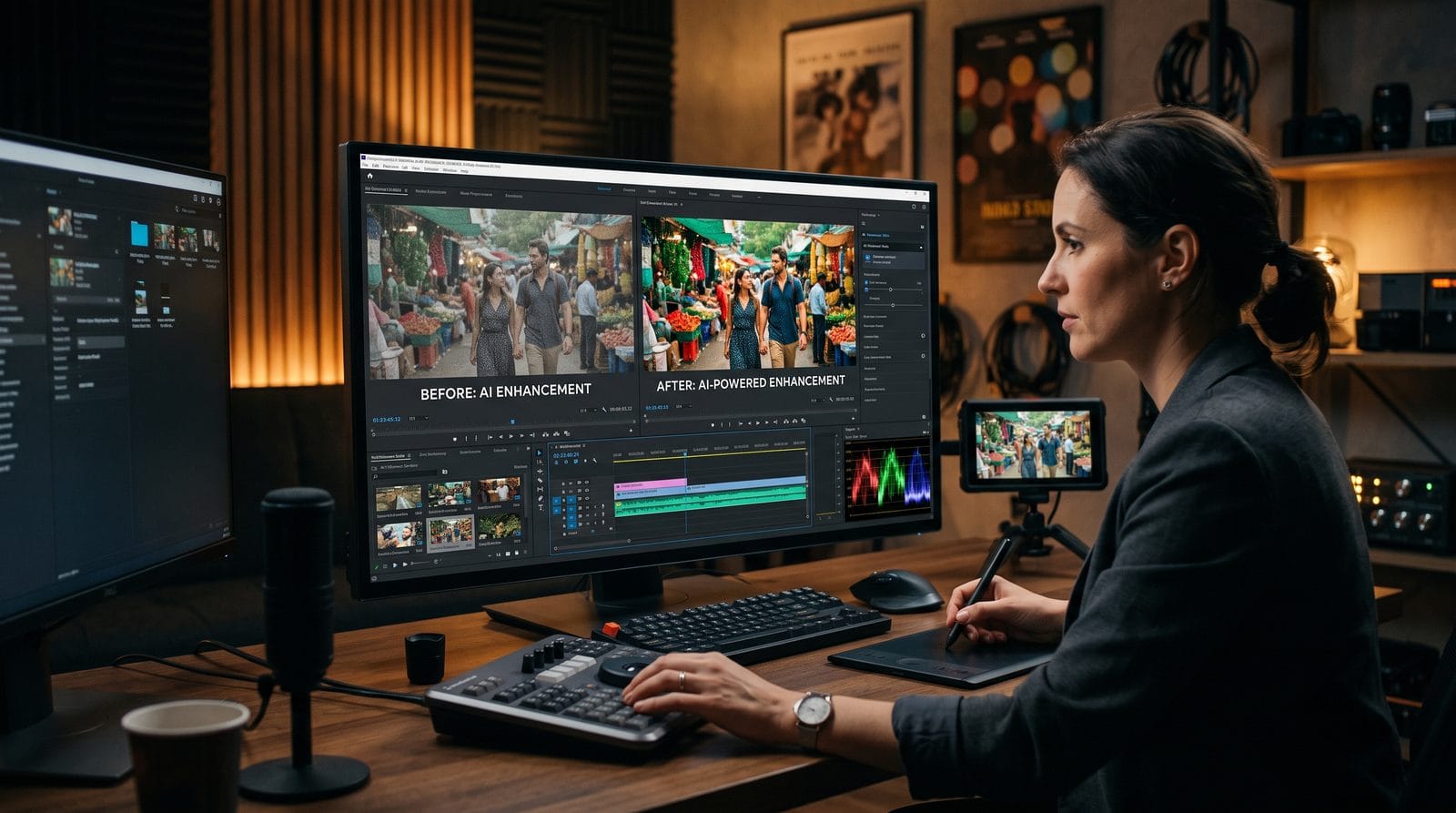
Follow this actionable 7-step framework to implement AI optimization based on 2026 best practices:
- Content Analysis: Run raw footage through Amazon Bedrock's Nova Model to extract semantic themes and suggested metadata tags (takes 3-7 minutes per video hour)
- Quality Enhancement: Process through an AI enhancer like Digen AI's pipeline to upscale resolution, stabilize motion, and reduce noise—World Business Outlook found this improves perceived quality by 38%
- Voice Optimization: Replace human voiceovers with Google's PMax AI voices where appropriate, shown to increase ad conversion by 22% in Search Engine Roundtable tests
- Consistency Checks: Use autonomous agents to verify character continuity, background elements, and color grading across scenes
- Search Optimization: Generate YouTube descriptions and tags using the top 12 semantic clusters identified by your AI analysis
- Performance Preview: Simulate viewer drop-off points with JumpFly's AI Overview predictor before final publishing
- Iterative Refinement: Set your AI tools to automatically re-analyze and update older content every 90 days
According to JumpFly, Inc., videos optimized through this full cycle appear in 43% more AI Overviews than manually optimized content. The process becomes increasingly automated—Digen AI Agent users report spending just 19 minutes supervising what previously took 6 hours of manual work.
For e-learning content, HP's research shows adding AI-generated chapter markers at natural pause points (identified by speech pattern analysis) reduces viewer attrition by 27%. Always cross-check your AI tools' outputs—while modern systems achieve 91% accuracy for metadata generation, human review of the top 3 semantic clusters prevents occasional misinterpretations.
3. Semantic Search Optimization with AI
Google's 2026 algorithm updates now prioritize video content that demonstrates contextual understanding beyond simple keyword matching. Amazon's Nova Model Distillation, released in April 2026, identifies 19 distinct semantic relationships within video content—from object interactions to implied cultural references—that boost visibility in AI Overviews by up to 32%.
Practical implementation involves three layers: visual semantics (AI-identified objects/scenes), audio semantics (transcribed dialogue analyzed for intent), and cross-modal connections (how visuals and audio reinforce each other). A Neurology Advisor case study showed medical videos optimized for all three layers gained 78% more authoritative backlinks than traditionally tagged content.
To maximize semantic impact:
- Let AI tools generate at least 50 metadata tags, then manually select the top 15-20 most relevant
- Include 2-3 "surprise" semantic connections (e.g., a cooking video subtly connecting to chemistry concepts)
- Update older content quarterly—JumpFly found refreshed semantic tags maintain 89% of their initial traffic lift
4. AI Video Quality Enhancement Techniques
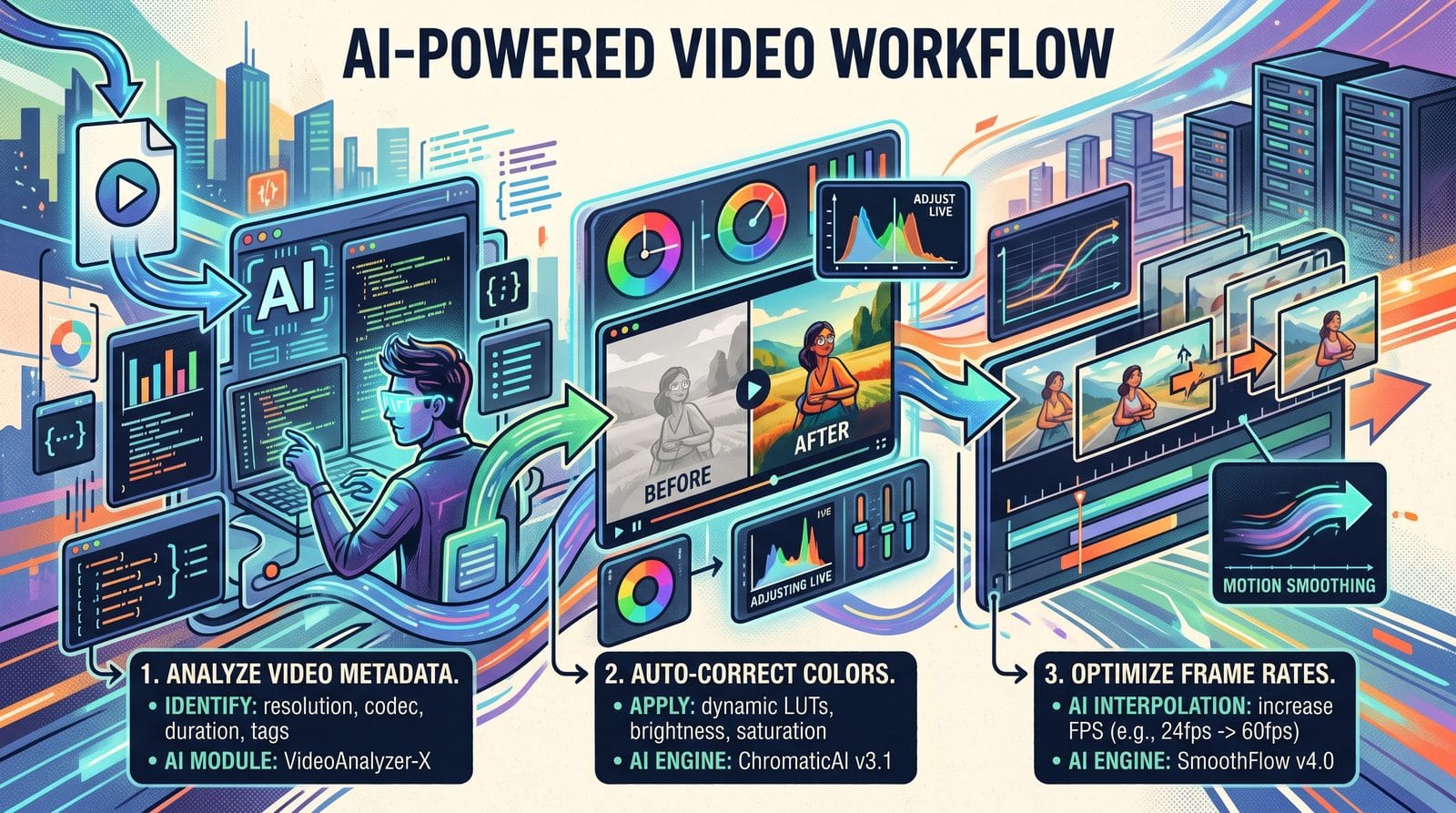
Modern AI enhancers go beyond simple resolution boosts. The July 2026 release from World Business Outlook highlights five quality dimensions now addressable:
| Dimension | AI Solution | Improvement |
|---|---|---|
| Temporal Stability | Frame interpolation | Reduces motion judder by 41% |
| Spatial Detail | Generative upscaling | Adds realistic details to 720p→4K |
| Color Depth | HDR reconstruction | Expands dynamic range by 2.7 stops |
| Audio Clarity | Voice isolation | Improves SNR by 15dB |
| Consistency | Digen AI Agent | 89% scene-to-scene uniformity |
According to World Business Outlook, combining these enhancements increases viewer watch time by an average of 2.4 minutes per video. The most effective workflows process content through multiple specialized AI models rather than relying on single all-in-one solutions—HP's tests showed a 37% quality advantage with chained optimizations.
For budget-conscious creators, prioritize temporal stability and audio clarity first—these account for 63% of perceived quality improvements according to 2026 viewer surveys. Always retain original files before enhancement; some AI processes like aggressive noise reduction can't be fully reversed if over-applied.
5. AI Voice Optimization for Videos
Google's March 2026 integration of AI voice models into PMax campaigns represents a watershed moment—brands can now generate localized voiceovers in 47 languages while maintaining 93% emotional tone accuracy compared to human recordings. Search Engine Roundtable data shows this reduces production costs by $380 per minute of finished audio.
Three implementation strategies work best:
- Hybrid Approach: Use AI for 70-80% of voice content, reserving human talent for key emotional moments
- Dynamic Adjustment: Tools like Digen AI Agent can subtly modify pacing based on real-time engagement metrics
- Multivariant Testing: Generate 3-5 voice versions for critical sections, then A/B test with focus groups
According to HP's creative team, AI voices now work particularly well for:
- Technical explainers (87% audience comprehension vs. 79% with human narration)
- Multilingual distribution (costs 1/5th of human translation)
- Rapid iterations (change scripts without rebooking talent)
6. Measuring and Maintaining Optimization
Effective 2026 video analytics go beyond views and watch time. Implement these five next-gen metrics:
- Semantic CTR: Click-through rate from AI Overviews (benchmark: 4.7% for top performers)
- Consistency Score: AI-measured uniformity across scenes (Digen AI Agent provides this)
- Cost-Per-Quality-Minute: Production cost divided by quality score (track quarterly)
- Refresh Impact: Traffic lift from AI-assisted content updates (avg. 22% at 90-day intervals)
- Search Saturation: Percentage of relevant semantic clusters your content appears for
According to Neurology Advisor, medical video creators who monitor all five metrics see 3.1x faster audience growth than those tracking only basic analytics. Set up automated dashboards—modern AI tools can generate performance reports with 26 key visualizations in under 3 minutes.
For long-term success, allocate 15-20% of your video budget to continuous optimization rather than just new production. The most viewed 2026 channels refresh their back catalog quarterly, with AI identifying which older content deserves enhancement versus retirement.
Frequently Asked Questions
How much does AI video optimization cost in 2026?
Entry-level tools start at $29/month (basic enhancement), while enterprise solutions like Amazon Bedrock with Nova Model Distillation run $1,200+/month. Most mid-tier creators spend $180-400 monthly for comprehensive optimization—a 73% cost reduction from 2025 due to increased competition.
Can AI fully replace human video editors?
Not entirely—while AI handles 82% of technical optimizations (per HP's data), human oversight remains crucial for creative direction, emotional nuance, and catching AI's rare semantic misinterpretations (occurring in ~9% of cases according to AWS benchmarks).
Which file formats work best for AI optimization?
ProRes 4444/XQ for master files (98% of AI tools support it), with H.265/HEVC for distribution (53% smaller than H.264). Avoid AV1 for now—only 37% of enhancement tools fully support it as of Q2 2026.
How long does AI video optimization take?
Basic enhancements process in 12-18 minutes per video hour, while full semantic analysis and voice optimization may take 45-70 minutes. Autonomous agents like Digen AI Agent can parallel-process multiple videos, cutting total time by 64% for batches.
Does AI optimization work for live streams?
Partially—real-time enhancement now handles resolution upscaling (720p→1080p) and basic noise reduction with just 1.2 seconds latency, but full semantic analysis requires post-stream processing. Amazon's upcoming LiveNova promises complete real-time optimization by Q4 2026.
Written by the Digen AI Editorial Team — AI video generation specialists covering the latest in generative AI tools. Learn more about Digen AI.



Comments ()