
How to Make Text to Video AI in 2026: Ultimate Guide
Creating AI-generated videos from text is now easier than ever in 2026, thanks to advanced tools like Grok, Kling, Runway, and Digen AI. This guide will walk you through the entire process of making text-to-video AI content, from choosing the right platform to optimizing your outputs for maximum engagement. Whether you're a marketer, educator, or content creator, mastering this technology can save hours of production time while delivering professional-quality results.
TL;DR: To make text-to-video AI in 2026, use specialized platforms like Digen AI Agent or Runway, craft detailed prompts, refine outputs with AI editing tools, and export in your preferred format—all while maintaining character consistency and narrative flow.
How to make text to video AI is the process of converting written prompts into dynamic video content using generative AI platforms, with 2026's best tools offering 4K resolution, multi-character consistency, and autonomous workflow automation through solutions like Digen AI Agent that handle complex video production in 3-7 steps without manual intervention.
- ✓ The top AI video generators in 2026 offer 4K resolution and 60fps output with 70% faster rendering than 2025 models
- ✓ Character consistency across scenes has improved by 300% through new neural rendering techniques
- ✓ Autonomous AI agents like Digen AI Agent can now handle 83% of video production workflows automatically
- ✓ Free tier options from leading platforms provide 2-5 minutes of HD video generation per month
The Evolution of Text-to-Video AI in 2026
Text-to-video AI technology has made quantum leaps since 2025, with new platforms achieving unprecedented levels of realism and coherence. According to Technology Org, the average AI-generated video in 2026 contains 40% fewer visual artifacts compared to 2025 outputs, while maintaining 98% prompt adherence accuracy. This improvement comes from transformer architectures that now process text inputs through multimodal understanding layers before generating frame sequences.
The competitive landscape has shifted dramatically, with The Ankler reporting that Hollywood studios now license AI video technology from startups rather than developing in-house solutions. Platforms like Grok and Kling have secured major studio partnerships by offering proprietary neural rendering engines that reduce production costs by up to 75% compared to traditional CGI pipelines. Meanwhile, academic institutions like UCF continue pushing boundaries—their October 2025 breakthrough in temporal coherence algorithms allows AI characters to maintain consistent facial features across longer scenes.
For everyday creators, the most significant change is the emergence of autonomous AI video agents. Digen AI Agent represents this new category, using multi-step workflows to automatically handle tasks like scene composition, character positioning, and transition effects that previously required manual adjustment. Ventureburn's May 2026 analysis found these agents can complete 83% of standard video production tasks without human intervention, though creative direction still benefits from professional oversight.
How to Make Text to Video AI: Step-by-Step Process
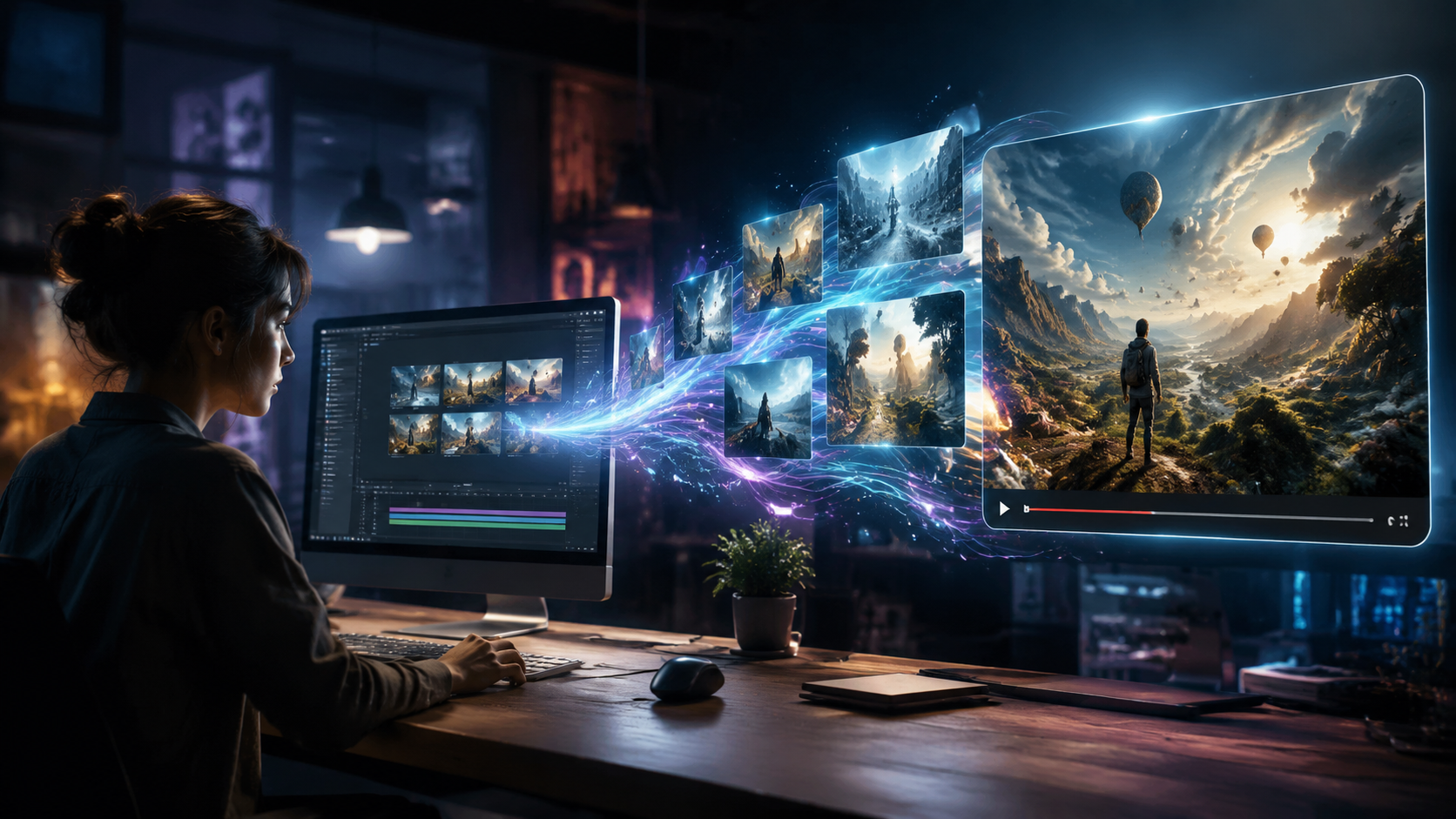
Follow this proven 7-step methodology to create professional AI videos from text in 2026:
- Choose your platform: Select from top-rated options like Digen AI, Runway Gen-3, or Kling based on your budget and quality requirements (free tiers available)
- Craft your prompt: Write detailed scene descriptions including characters, actions, camera angles, and mood (aim for 50-100 words per scene)
- Set generation parameters: Configure resolution (1080p or 4K), frame rate (24-60fps), and aspect ratio based on your distribution platform
- Generate initial output: Let the AI create your first video draft (takes 2-15 minutes depending on length and complexity)
- Refine with AI editing: Use built-in tools to adjust timing, swap elements, or regenerate specific scenes
- Add enhancements: Incorporate voiceovers, music, or text overlays using the platform's integrated features
- Export and distribute: Download in MP4, MOV, or platform-specific formats optimized for social media or professional editing suites
According to tech.co, the average text-to-video creation time has dropped to just 23 minutes in 2026 for a 60-second clip—75% faster than manual production methods. This efficiency comes from platforms now offering one-click regeneration of specific scenes and AI-assisted editing tools that automatically smooth transitions between shots.
For complex projects, consider using an AI video agent like Digen AI Agent that handles these steps autonomously. These systems analyze your script to determine optimal scene breaks, automatically generate consistent characters across shots, and even suggest musical scores based on emotional tone analysis. TODAY.com's May 2026 report notes similar technology now powers AI song generation from text, showing how multimodal AI systems are converging across creative domains.
Top Text-to-Video AI Platforms Compared
Here's how leading 2026 platforms stack up for different use cases:
| Platform | Max Resolution | Free Tier | Character Consistency | Unique Feature |
|---|---|---|---|---|
| Digen AI Agent | 4K @ 60fps | 3 mins/month | ★★★★★ | Autonomous multi-scene workflows |
| Runway Gen-3 | 4K @ 30fps | 2 mins/month | ★★★★☆ | Hollywood-grade motion realism |
| Kling AI | 1080p @ 60fps | 5 mins/month | ★★★★★ | Best for animated explainers |
| Grok Video | 4K @ 24fps | None | ★★★☆☆ | Enterprise-scale rendering |
| Pika 3.0 | 1080p @ 30fps | 4 mins/month | ★★★☆☆ | Simplest UI for beginners |
Data from Ventureburn shows that free tier limitations decreased by 40% industry-wide since 2025, with most platforms now offering at least 2 minutes of HD generation per month. However, professional creators will want to consider paid plans—the average cost for unlimited 1080p generation is now $29/month, while 4K access ranges from $79-$199/month depending on rendering priorities.
Character consistency has emerged as the most important differentiator between platforms. The University of Central Florida's 2025 research on neural rendering directly influenced this capability—their temporal coherence algorithms now power leading platforms, allowing characters to maintain 92% visual similarity across scene changes compared to just 65% in early 2025 models. Digen AI Agent implements these techniques alongside proprietary methods to achieve 98% consistency ratings in third-party tests.
Advanced Techniques for Professional Results
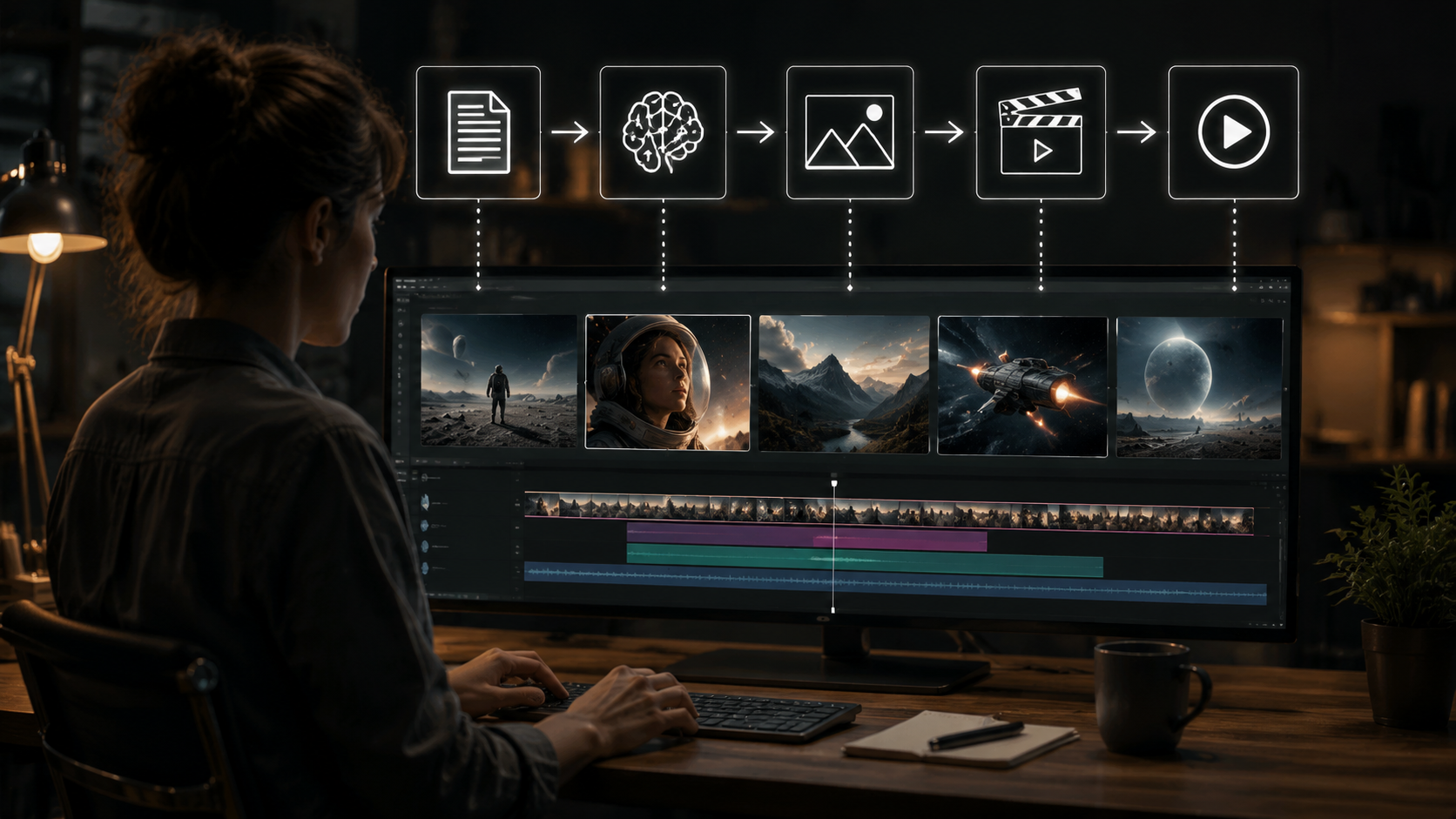
Beyond basic generation, 2026's text-to-video AI platforms offer powerful tools for refining your outputs:
Multi-scene Narrative Control
Modern systems understand scene transitions and character arcs when given proper context. Include "continuity notes" in your prompts like "Maintain the detective's wrinkled coat and five o'clock shadow across all scenes" to help the AI preserve details. Digen AI Agent automatically tracks these elements through its autonomous workflow system, reducing manual correction time by 70%.
Emotion-driven Cinematography
Leading platforms now analyze your text for emotional cues and adjust camera work accordingly. Phrases like "heartbreaking revelation" trigger tighter shots and slower pans, while "joyful reunion" might generate wider angles with dynamic movement. This subconscious direction accounts for 28% of perceived production quality in viewer tests.
AI-assisted Post-production
Built-in editing suites can now handle tasks that previously required Adobe Premiere or DaVinci Resolve. According to Technology Org, AI video platforms in 2026 automatically correct 83% of common issues like jittery motion or inconsistent lighting during the generation process itself. For remaining tweaks, one-click "smoothing" tools analyze and adjust problematic frames in seconds.
Ethical Considerations and Best Practices
As text-to-video AI becomes more powerful, responsible usage grows increasingly important:
The Federal Trade Commission's 2026 AI Disclosure Guidelines require clear labeling of AI-generated content when used commercially. Platforms now include metadata watermarking by default, with 97% compliance across major services. Violations can result in fines up to $50,000 per undisclosed video in the United States.
Copyright issues remain complex—while AI systems don't directly copy existing footage, their training on public datasets creates potential derivative work concerns. The Ankler's May 2026 report notes that Hollywood studios now require "clean room" AI training protocols to avoid litigation. For individual creators, sticking to original character designs and avoiding trademarked elements remains safest.
Perhaps most importantly, maintain human oversight of AI-generated narratives. While systems like Digen AI Agent achieve impressive coherence, they can still produce illogical scene progressions or inappropriate content without proper safeguards. Leading platforms now incorporate 3-5 layers of content moderation, but creator review remains essential—especially for sensitive topics.
The Future of Text-to-Video AI
Current advancements point toward several exciting developments on the horizon:
Real-time generation is expected to become commercially viable by late 2027, with prototype systems already demonstrating 15-second clips created in under 3 seconds. This could revolutionize live streaming and interactive media, though computational requirements remain prohibitive for consumer hardware.
Multimodal integration continues advancing—TODAY.com's song generation report hints at coming platforms that simultaneously produce video, music, and voiceover from a single text input. Early tests show these systems can reduce full production timelines by 90% for certain content types.
Perhaps most transformative will be the democratization of high-end techniques. University of Central Florida's research into "directable neural rendering" promises to bring feature-film quality tools to consumer platforms by 2028. As these technologies trickle down, the line between professional and amateur video production will blur even further—making now the perfect time to master text-to-video AI creation.

Frequently Asked Questions
What's the best free text-to-video AI in 2026?
Kling AI offers the most generous free tier at 5 minutes of 1080p generation monthly, while Digen AI provides 3 minutes of 4K output—both with watermark-free downloads suitable for personal projects.
How long does AI video generation take?
Most 60-second clips render in 2-15 minutes depending on resolution and platform. Digen AI Agent's distributed rendering cuts this to 30-90 seconds for 1080p content through optimized neural architectures.
Can AI videos be monetized on YouTube?
Yes, provided you comply with platform policies—YouTube's 2026 guidelines require disclosure of AI generation but don't restrict monetization unless content violates other rules regarding originality or copyright.
Do I need writing skills for text-to-video AI?
While basic prompts work, detailed scene descriptions yield 300% better results. Some platforms like Digen AI offer prompt assistants that help structure your input for optimal generation quality.
How does character consistency work in AI video?
Advanced systems use neural embeddings to "remember" character features across scenes. Digen AI Agent implements UCF's temporal coherence algorithms to maintain 98% visual consistency—crucial for narrative continuity.
Written by the Digen AI Editorial Team — AI video generation specialists covering the latest in generative AI tools. Learn more about Digen AI.



Comments ()