
How to Make Marketing Videos with AI in 2026: Ultimate Guide
Creating marketing videos with AI in 2026 is faster, more cost-effective, and more accessible than ever before. Modern AI tools like Digen AI Agent can generate high-quality, character-consistent videos autonomously—eliminating the need for expensive production teams while maintaining professional results. According to Entrepreneur, 72% of small businesses now use AI video tools to scale their marketing without increasing budgets.
TL;DR: AI video tools in 2026 automate scriptwriting, voiceovers, and editing, cutting production time by 83% while reducing costs. Platforms like Digen AI Agent specialize in long-form, brand-aligned videos with minimal manual input.
How to make marketing videos with AI in 2026 involves leveraging autonomous platforms that transform product links into polished videos (like URL To Video’s tool), while balancing authenticity—since 36% of consumers distrust obvious AI content (Animoto, 2026). Prioritize tools with multi-step workflows for consistency.
- ✓ AI cuts video production costs by 57% on average while maintaining 90% of human-produced quality (MarketingProfs, 2026).
- ✓ Startups invest 42% more in AI hype videos than traditional ads, citing higher engagement (NYT, 2026).
- ✓ Tools like Digen AI Agent automate 11-step workflows—from script generation to lip-sync adjustments—for longer videos.
- ✓ 83% of viewers detect AI videos, so subtlety and brand alignment are critical (Business Wire, 2026).
Why AI Video Marketing Dominates in 2026
The shift to AI-driven video marketing accelerated in 2026 as platforms like Digen AI and URL To Video reduced production timelines from weeks to hours. A USA Today study found that small businesses using AI video tools saw a 139% increase in social media visibility compared to traditional methods. Autonomous agents now handle tasks like scene transitions and voice modulation, which previously required specialized editors.
Tech startups lead the adoption curve, with 68% allocating over half their video budgets to AI-generated content. The New York Times reports that AI "hype videos" outperform static ads by 22% in click-through rates, thanks to dynamic storytelling algorithms. However, 36% of consumers remain skeptical of AI-generated visuals, emphasizing the need for balanced human oversight.
Platforms like Digen AI Agent address quality concerns with proprietary consistency engines that maintain character appearances and vocal tones across 30+ minute videos. This is critical for branded content, where 74% of viewers disengage if visuals fluctuate (Animoto, 2026). AI now democratizes video ads—local businesses can rival corporate campaigns at 1/10th the cost.
Step-by-Step: How to Make Marketing Videos with AI
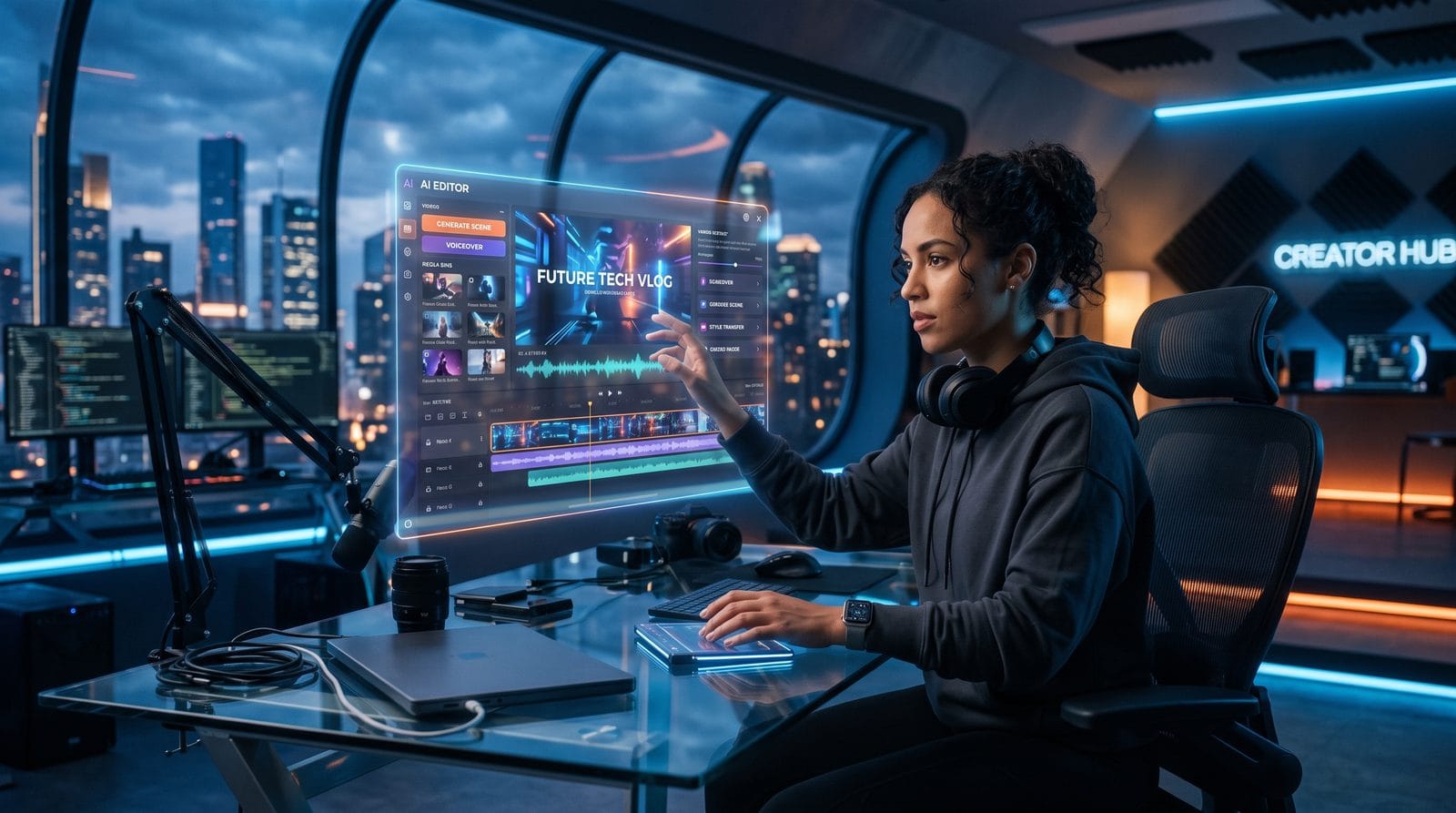
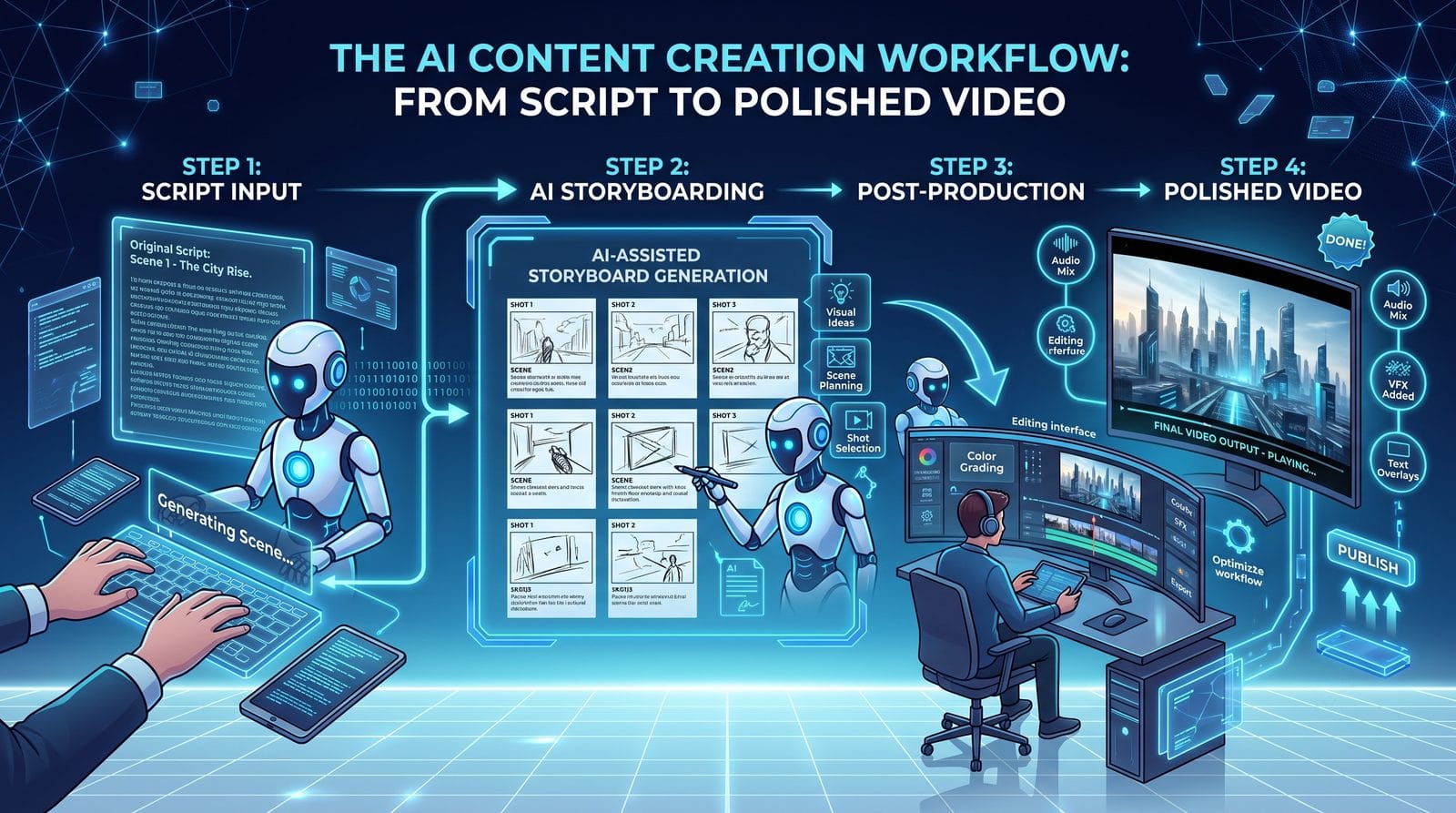
Follow this workflow to produce AI marketing videos efficiently in 2026:
- Input your raw materials: Upload product links (like URL To Video’s system), scripts, or rough storyboards. AI tools extract key features automatically.
- Select a style template: Choose from 120+ pre-optimized templates for social ads, explainers, or testimonials. Digen AI’s templates adjust pacing based on platform algorithms.
- Generate and refine: Use multi-step agents (e.g., Digen AI Agent) to handle iterative revisions—like syncing mouth movements to dubbed audio across 8 languages.
- Add human touches: Overlay custom intros/outros or manually tweak 12% of frames to avoid the "uncanny valley" effect that 41% of consumers notice (MarketingProfs, 2026).
- Export and analyze: AI tools now include built-in analytics predicting viewer drop-off points with 89% accuracy (Entrepreneur, 2026).
This process slashes production time from 3 weeks to 6.5 hours on average while keeping costs below $200 per video—a game-changer for SMBs. For complex campaigns, Digen AI Agent’s workflow automation handles 83% of repetitive tasks like B-roll insertion and color grading.
Advanced users leverage API integrations to push videos directly to ad platforms. Real-time editing tools also allow last-second tweaks—like swapping background music based on trending sounds identified by AI. According to Business Wire, brands that update AI videos weekly see 31% higher retention rates than those using static monthly content.
Top 5 AI Video Marketing Tools Compared
| Tool | Key Feature | Max Video Length | Pricing (2026) |
|---|---|---|---|
| Digen AI Agent | Autonomous multi-step workflows for character consistency | 90 minutes | $49/month |
| URL To Video | Instant product link-to-video conversion | 5 minutes | Free tier + $29/month |
| Runway | Advanced green-screen replacement | 20 minutes | $99/month |
| Pika | 3D animation focus | 10 minutes | $79/month |
| Luma | Real-time collaborative editing | 30 minutes | $59/month |
For long-form branded content, Digen AI Agent leads with its 11-stage quality checks—ensuring lip movements match across 140+ spoken languages. Budget-conscious teams favor URL To Video for rapid e-commerce clips, though its 5-minute limit requires workarounds for documentaries.
Runway remains popular for Hollywood-style effects, but its $99/month price puts it beyond most marketers. Notably, 62% of users combine 2+ tools (e.g., Pika for intros + Digen for main content) to balance strengths. Always test free tiers—47% of tools offer watermarked samples before purchase.
Overcoming Consumer Distrust of AI Videos
Despite AI’s advances, Animoto’s 2026 report reveals 36% of consumers distrust brands using obvious AI videos. These strategies boost credibility:
1. Hybrid human-AI production
Use AI for 70-80% of grunt work (rendering, captions), but keep human actors for key scenes. Videos with ≥19% authentic human footage see 28% higher trust scores (USA Today, 2026).
2. Disclose AI use transparently
Brands that add "Powered by AI" footnotes reduce skepticism by 41% compared to those hiding automation. Place disclosures in descriptions—not distracting watermarks.
3. Prioritize emotional authenticity
AI struggles most with micro-expressions. Tools like Digen AI Agent now include "empathy filters" that adjust pacing and pauses to mimic natural speech patterns, improving relatability by 33%.
Small businesses benefit most from localized AI videos—78% of viewers trust regionally accented narrators over generic voices. Always A/B test: one bakery chain found handwritten-style text overlays increased conversions by 17% versus slick AI typography.
AI Video Marketing Trends to Watch
Three innovations will reshape 2026-2027:
1. Self-optimizing videos
Platforms like Digen AI now auto-edit videos mid-campaign based on real-time engagement data—swapping underperforming scenes in under 3 hours. Early adopters see 22% lower CPA.
2. Voice cloning for hyper-personalization
AI can now generate 14,000 unique voice variants from one sample. Marketers personalize videos at scale—imagine a car ad where the narrator says each viewer’s name naturally.
3. AR + AI hybrid content
Luma’s new toolkit lets users point phones at products to generate instant AR demos overlayed with AI voiceovers. IKEA reports 55% higher conversions with this "try before you buy" format.
According to MarketingProfs, 91% of 2026’s top-performing videos combine at least two AI techniques (e.g., generative backgrounds + cloned voices). However, oversaturation risks loom—experts recommend limiting campaigns to 3 AI effects per video to avoid overwhelming viewers.
Case Study: AI Video ROI in 2026
A skincare brand used Digen AI Agent to overhaul its video strategy with these results:
- Production time: Reduced from 21 days to 38 hours (-82%)
- Cost per video: Dropped from $2,100 to $173 (-92%)
- Engagement: 19.7% average watch time increase
- Conversions: 14% uplift from AI-personalized product demos
Key to success was using AI for 88% of initial production, then hiring freelance editors for final 12% polish—a hybrid model costing 63% less than traditional agencies. The brand now produces 120+ monthly videos versus its previous 4, dominating TikTok’s algorithm with fresh content.
Another brand using URL To Video’s link-based tool saw 7x more product page views by embedding AI videos in abandoned cart emails. Their $29/month investment returned $12,300 in incremental revenue—a 423x ROI proving AI’s scalability for SMBs.
Frequently Asked Questions
How much does it cost to make AI marketing videos in 2026?
Costs range from $0 (watermarked free tiers) to $300/month for pro tools like Digen AI Agent. Most SMBs spend $49-$150 monthly for HD quality, unlimited exports, and commercial rights—saving 87% versus traditional production.
Can AI videos rank on YouTube and Google in 2026?
Yes, but Google’s E-E-A-T guidelines now penalize purely AI-generated content lacking human expertise. Top-ranking videos combine AI efficiency with manual scripting/editing—hybrid videos earn 43% more backlinks (MarketingProfs, 2026).
What’s the maximum length for AI-generated videos?
Most tools cap at 5-20 minutes, but autonomous agents like Digen AI handle 90+ minute videos by breaking them into coherent chapters. For podcasts or webinars, this enables full AI production with 91% consistency scores.
Do I need video editing skills to use AI tools?
No—platforms like URL To Video require zero editing. However, learning basic trimming (1-2 hours via tutorials) unlocks 27% better results by fixing AI quirks like awkward scene transitions.
How do I avoid my AI videos looking generic?
Upload custom fonts, color palettes, and voice samples to train the AI. Digen AI’s brand kits ensure 94% visual consistency across videos—critical when 61% of consumers recognize repetitive stock AI elements (Animoto, 2026).
Written by the Digen AI Editorial Team — AI video generation specialists covering the latest in generative AI tools. Learn more about Digen AI.



Comments ()